
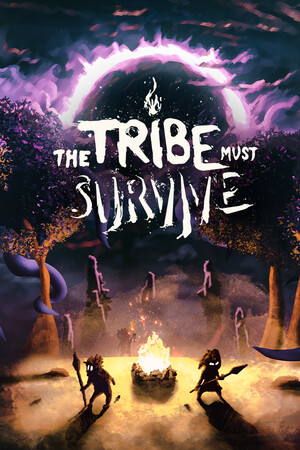
Compara los precios de The Tribe Must Survive en tiendas de claves de confianza y encuentra la mejor oferta. Desarrollado por Walking Tree Games GmbH. Publicado por Walking Tree Games GmbH. Lanzado el 23/5/2024. Disponible en PC, Mac. Géneros: Indie, Simulation, Strategy.

Frostpunk meets Lovecraft in prehistoric form: a punishing colony sim where your biggest threat is not the darkness outside, but the three warring factions inside your own camp.

My first few runs with The Tribe Must Survive ended the same way: a riot, a collapsed wood supply, and three tribe members sitting catatonic by a dying campfire. That is not a bad sign. That is, in fact, exactly what a well-designed pressure-cooker sim feels like when it is teaching you through failure rather than pop-up tooltips. This is a roguelite colony manager set in a gloomy Stone Age world tinged with Lovecraftian dread, viewed from an isometric perspective, and it draws comparisons to Frostpunk for good reason. The day-night resource loop is the spine of every run: chop wood, keep fires lit, send hunting parties out, and pray the eclipse does not arrive before your stockpile is ready. The mechanical hook that separates this from a straightforward base-builder is the social simulation underneath the camp. You do not directly command tribe members; instead, you nudge them indirectly through rituals, building assignments, and technology decisions. Each member carries individual personality traits, and over time those traits coalesce into factions. The three main factions, Servants of the Shepherd, Disciples of the Bear, and Children of the Mother, each champion a different philosophy: improvement, control, protection, or freedom. When two factions clash, you get an Inner Conflict. Ignore it long enough and it triggers a riot that halts all production, destroys structures, and can cascade into a full population collapse. The Cohesion Menu exists to let you see trouble brewing, and learning to read it early is the difference between a 40-minute run and a 4-hour one. Managing outposts with different faction compositions to keep ideological rivals physically separated adds a layer of lateral thinking that most games in this genre do not bother with. Where the game earns genuine respect is in its roguelite progression architecture. Procedurally generated maps, a rotating mix of event cards and perks, and escalating Challenge Levels mean each run has a different shape. Completing act-based goals unlocks meta-progression perks that carry into future attempts, so failure always deposits something useful into the next session. Post-launch, the Explorer Update added a distinct Explorer Mode alongside the core Survival Mode: no disasters, no Inner Conflicts, a population cap of 300, and a sandbox pace that lets newer players get reps in on the base mechanics without a disaster wiping the board every ten minutes. That is the correct approach to onboarding in a game this opaque, and I wish it had shipped at launch. The problems are real, though, and they sit in two buckets. The first is UI friction: important information sits behind several menu layers, the Cohesion and Tribe Member screens feel like they were designed for a smaller tribe than the game eventually hands you, and cycling through individual buildings to toggle them on or off as population grows becomes genuinely tedious. The second is structural repetition. The resource loop, gather-build-survive-expand, does not evolve quickly enough across acts to match the faction complexity the game adds, and some of the event writing contains the sort of grammatical roughness that signals a small team working fast. Steam user sentiment sits at a mixed 64 percent across roughly 178 reviews, which tracks: the players who click with it click hard, and the players who bounce tend to bounce in the first twenty minutes before the systems have time to reveal themselves. If you have the patience to push through two or three failed runs and internalize the wood-to-fire-to-fear feedback loop, there is a genuinely interesting mid-complexity colony sim here that Frostpunk fans and Anyone-Who-Survived-RimWorld-Without-Mods should find worth their time. Start on Explorer Mode, get a full run under your belt, then switch to Survival and start caring about faction philosophy. The depth rewards the investment, even if the game itself will not tell you that. Diego, Scout Team

The Tribe Must Survive

The Tribe Must Survive

23 may 2024Walking Tree Games GmbH
GamerScout opina

Frostpunk meets Lovecraft in prehistoric form: a punishing colony sim where your biggest threat is not the darkness outside, but the three warring factions inside your own camp.

PCMac
Steam Deck Playable
Mejor precio disponible
€0.00
en N/A
Mínimo histórico: €8.32

Comparar precios(0 tiendas)

Cargando precios...

We may earn a commission when you buy games through links on this page — at no extra cost to you. It never affects our rankings or verdicts.

Historial de precios

Historical low
€8.328 Jun 2026
Keyshops
€7.65€8.10€8.54€8.998 Jun13 Jun18 Jun23 Jun28 Jun
Tracking prices since 8 Jun 2026
Create alert

Capturas y multimedia

Acerca de The Tribe Must Survive

My first few runs with The Tribe Must Survive ended the same way: a riot, a collapsed wood supply, and three tribe members sitting catatonic by a dying campfire. That is not a bad sign. That is, in fact, exactly what a well-designed pressure-cooker sim feels like when it is teaching you through failure rather than pop-up tooltips. This is a roguelite colony manager set in a gloomy Stone Age world tinged with Lovecraftian dread, viewed from an isometric perspective, and it draws comparisons to Frostpunk for good reason. The day-night resource loop is the spine of every run: chop wood, keep fires lit, send hunting parties out, and pray the eclipse does not arrive before your stockpile is ready. The mechanical hook that separates this from a straightforward base-builder is the social simulation underneath the camp. You do not directly command tribe members; instead, you nudge them indirectly through rituals, building assignments, and technology decisions. Each member carries individual personality traits, and over time those traits coalesce into factions. The three main factions, Servants of the Shepherd, Disciples of the Bear, and Children of the Mother, each champion a different philosophy: improvement, control, protection, or freedom. When two factions clash, you get an Inner Conflict. Ignore it long enough and it triggers a riot that halts all production, destroys structures, and can cascade into a full population collapse. The Cohesion Menu exists to let you see trouble brewing, and learning to read it early is the difference between a 40-minute run and a 4-hour one. Managing outposts with different faction compositions to keep ideological rivals physically separated adds a layer of lateral thinking that most games in this genre do not bother with. Where the game earns genuine respect is in its roguelite progression architecture. Procedurally generated maps, a rotating mix of event cards and perks, and escalating Challenge Levels mean each run has a different shape. Completing act-based goals unlocks meta-progression perks that carry into future attempts, so failure always deposits something useful into the next session. Post-launch, the Explorer Update added a distinct Explorer Mode alongside the core Survival Mode: no disasters, no Inner Conflicts, a population cap of 300, and a sandbox pace that lets newer players get reps in on the base mechanics without a disaster wiping the board every ten minutes. That is the correct approach to onboarding in a game this opaque, and I wish it had shipped at launch. The problems are real, though, and they sit in two buckets. The first is UI friction: important information sits behind several menu layers, the Cohesion and Tribe Member screens feel like they were designed for a smaller tribe than the game eventually hands you, and cycling through individual buildings to toggle them on or off as population grows becomes genuinely tedious. The second is structural repetition. The resource loop, gather-build-survive-expand, does not evolve quickly enough across acts to match the faction complexity the game adds, and some of the event writing contains the sort of grammatical roughness that signals a small team working fast. Steam user sentiment sits at a mixed 64 percent across roughly 178 reviews, which tracks: the players who click with it click hard, and the players who bounce tend to bounce in the first twenty minutes before the systems have time to reveal themselves. If you have the patience to push through two or three failed runs and internalize the wood-to-fire-to-fear feedback loop, there is a genuinely interesting mid-complexity colony sim here that Frostpunk fans and Anyone-Who-Survived-RimWorld-Without-Mods should find worth their time. Start on Explorer Mode, get a full run under your belt, then switch to Survival and start caring about faction philosophy. The depth rewards the investment, even if the game itself will not tell you that.

Diego
Diego · Scout Team

Strategy & simulation

Etiquetas

singleplayerachievementstrading-cardstier:indieFaction ManagementRoguelite ProgressionExplorer ModeIndirect ControlDay-Night CycleInner Conflict SystemIsometric ViewAct-Based StructureChallenge Levels

Requisitos del sistema

Mínimos

OS
Windows 8
Memory
4 GB RAM
Storage
3 GB available space
Graphics
On-board graphic card
Processor
2,4 GHz Dual-Core

Recomendados

OS
Windows 10
Memory
8 GB RAM
Storage
3 GB available space
Graphics
Dedicated graphic card
Processor
2,4 GHz Quad-Core

Sigue explorando

Community Discussion

Be the first to comment on The Tribe Must Survive.

Reseñas y valoraciones

No hay valoraciones disponibles

Información del juego

Desarrolladora
Walking Tree Games GmbH
Distribuidora
Walking Tree Games GmbH
Fecha de lanzamiento
23 may 2024

Alerta de precio

¡Recibe un aviso cuando el precio baje de tu objetivo!

Crear alerta

Compra mejor: guías útiles

¿Buscas más? Mira juegos como The Tribe Must Survive →

Preguntas frecuentes sobre The Tribe Must Survive

¿Cuánto cuesta The Tribe Must Survive?

El precio de The Tribe Must Survive cambia a menudo y varía según la tienda, la edición y la región. La tabla de precios en vivo de esta página compara las ofertas más baratas en stock de tiendas de claves de confianza como Eneba y Kinguin, para que siempre veas el precio más bajo actual antes de comprar.

¿Dónde puedo comprar The Tribe Must Survive más barato?

Compara los precios de The Tribe Must Survive en todas las tiendas verificadas en la tabla de precios de esta página. Listamos las ofertas de claves y tiendas más baratas en stock, actualizadas con frecuencia, para que siempre veas la mejor oferta actual antes de comprar.

¿En qué plataformas está disponible The Tribe Must Survive?

The Tribe Must Survive está disponible en PC, Mac.

¿Cuándo se lanzó The Tribe Must Survive?

The Tribe Must Survive se lanzó el 23 de mayo de 2024.

¿Quién desarrolló The Tribe Must Survive?

The Tribe Must Survive fue desarrollado por Walking Tree Games GmbH.