Compara los precios de The Solus Project en tiendas de claves de confianza y encuentra la mejor oferta. Desarrollado por Hourences. Publicado por Teotl Studios. Lanzado el 7/6/2016. Disponible en PC. Géneros: Adventure, Indie, Simulation. Puntuación Metacritic: 68/100.

Atmosphere does the heavy lifting here: a solo alien-planet crawl with genuine dread and gorgeous weather systems, held back by clunky inventory, shallow survival loops, and fetchquest padding that tests patience well before the credits roll.

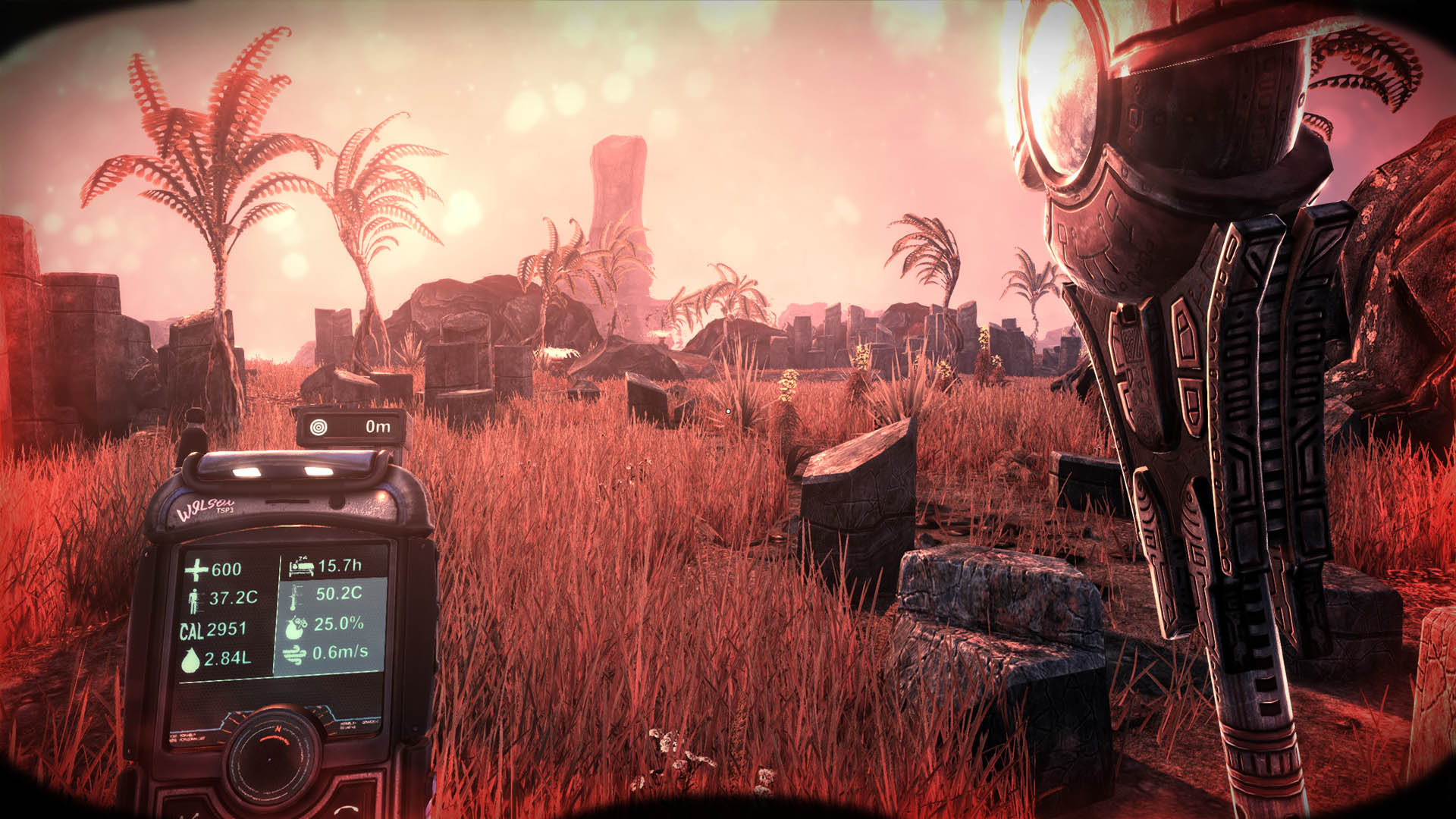
I went into The Solus Project half-expecting a systems-driven survival sim and came out the other side with something more complicated than a simple thumbs up or down. The setup is clean: you are the sole survivor of a crashed ship on the alien world of Gliese-6143-C, humanity is effectively extinct back home, and your only job is to survive long enough to send a signal out and unravel what happened to the civilization that lived here before you. No combat. No base building. No crafting tree to optimize. For someone like me who usually has a resource spreadsheet open in a second monitor, that stripped-back design is either liberating or deeply frustrating depending on what you came for. What the game genuinely nails is atmosphere and environmental spectacle. The real-time day/night cycle and dynamic weather are the standout systems: a tornado building on the horizon and forcing you to sprint for a cave is legitimately tense, and meteor showers cycling overhead while you pick through alien ruins create a convincing sense of isolation. The sound design is doing serious work throughout, from water dripping in underground crypts to the wind whipping debris across coastal cliffs. The lore, delivered through alien inscriptions your PDA translates and scattered notes about a civilization called the Sky Ones, rewards players willing to read everything. Around the midpoint the tone shifts toward outright horror, and that shift lands better than expected, relying on atmospheric dread over cheap scares. The problems are real, though, and they compound over a 12-to-16 hour playthrough. The survival mechanics are the most obvious weak point. Hunger, thirst, temperature, and tiredness are tracked on your PDA, but food and water are abundant enough that the threat rarely bites. The crafting system is almost vestigial: you can make a torch by combining alien roots with a metal tube, and that torch burns forever, which more or less defeats its own purpose. A personal teleporter lifts the traversal burden slightly, but the inventory is small, fiddly, and slow to sort through. Progress through the 10 large levels is gated almost entirely by fetchquests, find a key, find an alien idol, place an object on a weighted floor button. The underground ruins reuse textures and layouts heavily enough that distinguishing one ancient crypt from another becomes genuinely difficult by hour eight. Controls deserve a separate mention because several reviewers flagged them and my experience matched: the interaction system requires centering a small crosshair on an equally small target icon to pick up objects, which is tedious when object interaction is the primary verb of the entire game. The HUD, styled to mimic an astronaut helmet, shrinks peripheral vision to an uncomfortable degree. These are fixable-feeling problems that were never fully fixed, and a decade on from release, they are still present in the PC version. The difficulty slider (running from 0 to 100, from relaxed walk to brutal survival) is a thoughtful addition and gives newcomers a reasonable on-ramp, but it cannot paper over design decisions baked into the core loop. Who is this actually for? Players who prioritize environmental storytelling and alien-world mood over mechanical depth will find stretches of The Solus Project genuinely memorable. If you liked the isolation of early Subnautica or the archaeological slow-burn of something like Miasmata, there is enough here to justify the time. Survival-game purists chasing resource pressure and base defense will be bored quickly. The Metacritic sit around 68 and the Steam user score around 77 percent together tell the honest story: critics bounced off the clunk, but players who matched the specific vibe it is going for found something they appreciated. Diego, Scout Team

The Solus Project

The Solus Project

7 jun 2016HourencesTeotl Studios
GamerScout opina

Atmosphere does the heavy lifting here: a solo alien-planet crawl with genuine dread and gorgeous weather systems, held back by clunky inventory, shallow survival loops, and fetchquest padding that tests patience well before the credits roll.

PC
Steam Deck PlayableProtonDB Gold
Mejor precio disponible
€0.00
en N/A
Mínimo histórico: €12.98

Comparar precios(0 tiendas)

Cargando precios...

We may earn a commission when you buy games through links on this page — at no extra cost to you. It never affects our rankings or verdicts.

Historial de precios

Historical low
€12.9811 Jun 2026
Keyshops
€11.95€12.64€13.33€14.028 Jun13 Jun18 Jun23 Jun28 Jun
Tracking prices since 8 Jun 2026
Create alert

Capturas y multimedia

Captura

Acerca de The Solus Project

I went into The Solus Project half-expecting a systems-driven survival sim and came out the other side with something more complicated than a simple thumbs up or down. The setup is clean: you are the sole survivor of a crashed ship on the alien world of Gliese-6143-C, humanity is effectively extinct back home, and your only job is to survive long enough to send a signal out and unravel what happened to the civilization that lived here before you. No combat. No base building. No crafting tree to optimize. For someone like me who usually has a resource spreadsheet open in a second monitor, that stripped-back design is either liberating or deeply frustrating depending on what you came for. What the game genuinely nails is atmosphere and environmental spectacle. The real-time day/night cycle and dynamic weather are the standout systems: a tornado building on the horizon and forcing you to sprint for a cave is legitimately tense, and meteor showers cycling overhead while you pick through alien ruins create a convincing sense of isolation. The sound design is doing serious work throughout, from water dripping in underground crypts to the wind whipping debris across coastal cliffs. The lore, delivered through alien inscriptions your PDA translates and scattered notes about a civilization called the Sky Ones, rewards players willing to read everything. Around the midpoint the tone shifts toward outright horror, and that shift lands better than expected, relying on atmospheric dread over cheap scares. The problems are real, though, and they compound over a 12-to-16 hour playthrough. The survival mechanics are the most obvious weak point. Hunger, thirst, temperature, and tiredness are tracked on your PDA, but food and water are abundant enough that the threat rarely bites. The crafting system is almost vestigial: you can make a torch by combining alien roots with a metal tube, and that torch burns forever, which more or less defeats its own purpose. A personal teleporter lifts the traversal burden slightly, but the inventory is small, fiddly, and slow to sort through. Progress through the 10 large levels is gated almost entirely by fetchquests, find a key, find an alien idol, place an object on a weighted floor button. The underground ruins reuse textures and layouts heavily enough that distinguishing one ancient crypt from another becomes genuinely difficult by hour eight. Controls deserve a separate mention because several reviewers flagged them and my experience matched: the interaction system requires centering a small crosshair on an equally small target icon to pick up objects, which is tedious when object interaction is the primary verb of the entire game. The HUD, styled to mimic an astronaut helmet, shrinks peripheral vision to an uncomfortable degree. These are fixable-feeling problems that were never fully fixed, and a decade on from release, they are still present in the PC version. The difficulty slider (running from 0 to 100, from relaxed walk to brutal survival) is a thoughtful addition and gives newcomers a reasonable on-ramp, but it cannot paper over design decisions baked into the core loop. Who is this actually for? Players who prioritize environmental storytelling and alien-world mood over mechanical depth will find stretches of The Solus Project genuinely memorable. If you liked the isolation of early Subnautica or the archaeological slow-burn of something like Miasmata, there is enough here to justify the time. Survival-game purists chasing resource pressure and base defense will be bored quickly. The Metacritic sit around 68 and the Steam user score around 77 percent together tell the honest story: critics bounced off the clunk, but players who matched the specific vibe it is going for found something they appreciated.

Diego
Diego · Scout Team

Strategy & simulation

Etiquetas

singleplayerachievementscontroller-supporttrading-cardstier:indieNo-Combat SurvivalAlien ArchaeologyDynamic WeatherHorror ShiftDifficulty SliderVR-OptionalFetchquest GatingEnvironmental StorytellingClunky Inventory

Requisitos del sistema

Mínimos

OS
Windows 7 64 bit and newer
Memory
4 GB RAM
DirectX
Version 10
Storage
11 GB available space
Graphics
DirectX10 Compatible 3D Card - Minimum GeForce 460 or equivalent - Integrated graphics (Intel) may not work well and have not been tested. For use with Intel integrated graphics please run the game in DirectX10 compatib…
Processor
Dual Core 2GHZ+
Sound Card
Any Windows compatible card
VR Support
SteamVR or Oculus PC

Recomendados

OS
Windows 7 64 bit and newer
Memory
8 GB RAM
DirectX
Version 11
Storage
11 GB available space
Graphics
DirectX11 compatible 3D card strongly recommended - GeForce 760 or equivalent and higher
Processor
Quad Core 2GHZ+
Sound Card
Any Windows compatible card

Sigue explorando

Community Discussion

Be the first to comment on The Solus Project.

Reseñas y valoraciones

Metacritic
68

Información del juego

Desarrolladora
Hourences
Distribuidora
Teotl Studios
Fecha de lanzamiento
7 jun 2016

Alerta de precio

¡Recibe un aviso cuando el precio baje de tu objetivo!

Crear alerta

Compra mejor: guías útiles

¿Buscas más? Mira juegos como The Solus Project →

Preguntas frecuentes sobre The Solus Project

¿Cuánto cuesta The Solus Project?

El precio de The Solus Project cambia a menudo y varía según la tienda, la edición y la región. La tabla de precios en vivo de esta página compara las ofertas más baratas en stock de tiendas de claves de confianza como Eneba y Kinguin, para que siempre veas el precio más bajo actual antes de comprar.

¿Dónde puedo comprar The Solus Project más barato?

Compara los precios de The Solus Project en todas las tiendas verificadas en la tabla de precios de esta página. Listamos las ofertas de claves y tiendas más baratas en stock, actualizadas con frecuencia, para que siempre veas la mejor oferta actual antes de comprar.

¿En qué plataformas está disponible The Solus Project?

The Solus Project está disponible en PC.

¿Cuándo se lanzó The Solus Project?

The Solus Project se lanzó el 7 de junio de 2016.

¿Quién desarrolló The Solus Project?

The Solus Project fue desarrollado por Hourences y publicado por Teotl Studios.

¿Merece la pena comprar The Solus Project?

The Solus Project tiene una puntuación Metacritic de 68/100, lo que lo convierte en uno de los títulos destacados de Adventure. Mira las reseñas completas, las valoraciones y los tiempos de duración en esta página para decidir.