Compara los precios de The Gap en tiendas de claves de confianza y encuentra la mejor oferta. Desarrollado por Label This. Publicado por Crunching Koalas. Lanzado el 19/10/2023. Disponible en PC, Xbox. Géneros: Adventure, Casual, Indie. Puntuación Metacritic: 80/100.

Three to five hours, a two-person team, one of the quieter gut-punches in recent indie memory games. If grief-adjacent sci-fi done without melodrama sounds like your evening, clear your schedule.

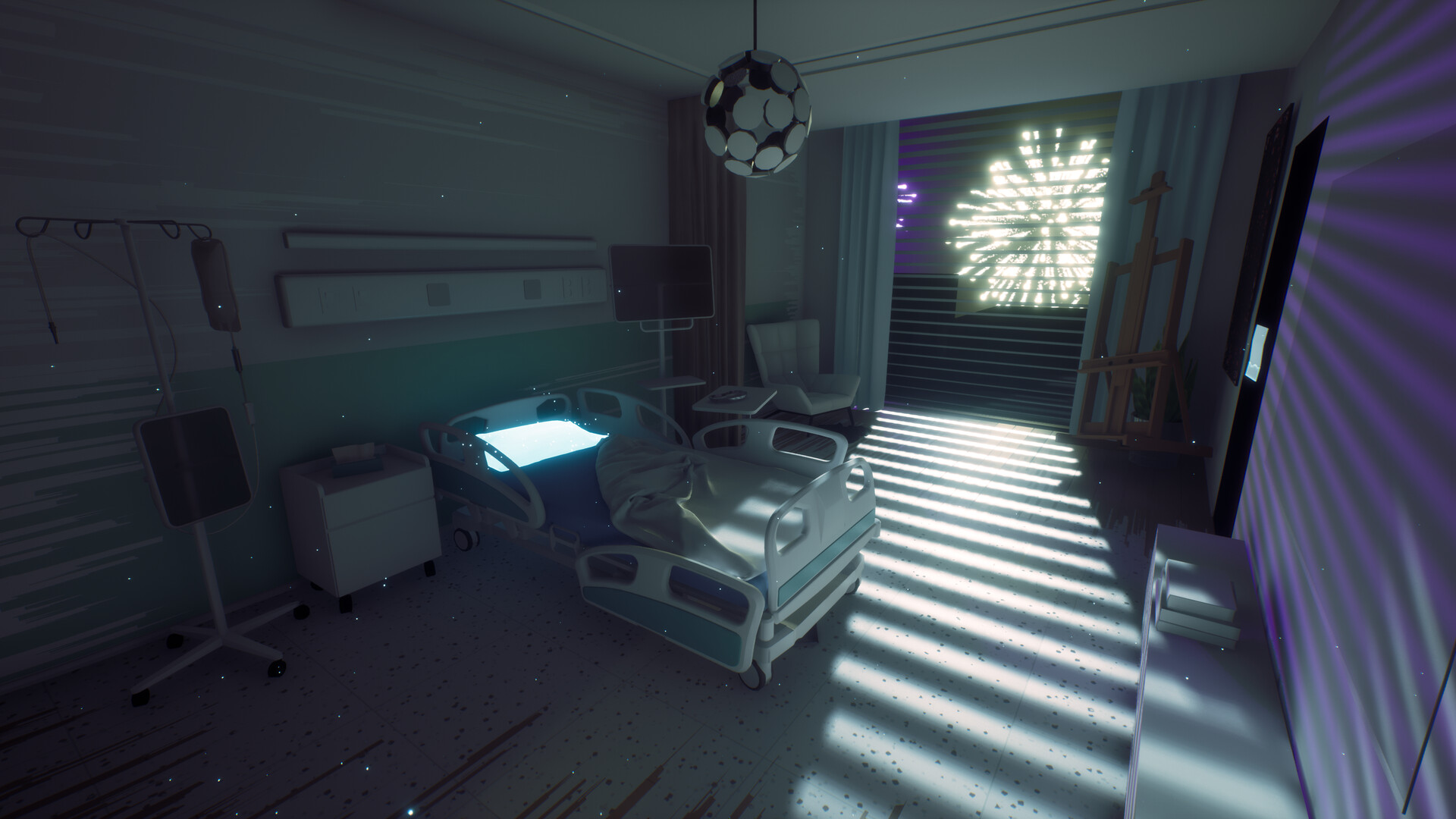
I keep a short list of games that prove a small headcount can outwrite a studio of fifty, and The Gap sits near the top of it now. Label This, a Slovenian duo, built something here that handles neurodegeneration and family loss without once resorting to the melodramatic musical swells or the weepy slow-motion that usually signal to the player how to feel. The restraint is the craft. You play as Joshua Hayes, a neuroscientist whose family carries a rare genetic neurological disorder. The starting image is his apartment in the year 2045: smashed picture frames, empty pill bottles, spray-painted walls, a voicemail from someone who hasn't heard from him in too long. The wreckage comes first; the tenderness has to be earned. From that wreckage you work outward, picking up phones, reading letters, cracking laptop passwords, and solving light environmental puzzles, each one seeding a déjà vu event that drops you into a parallel timeline. The core mechanic is genuinely clever: déjà vu is treated as the brief intersection of two timelines where the same event plays out across both, and Joshua's nano-machine research lets him hold that gateway open long enough to step through. It sounds heady on paper, but the game wears it lightly, never pausing to shout about how futuristic everything is. The near-future domestic details feel mundane in the best way. The structure is non-linear in a way that rewards patience rather than punishing it. A code scribbled in one timeline unlocks a computer in another. A photo on a wall in an early reality will have Joshua's face scratched out in a later one. The clue board in Joshua's apartment, somewhere between a detective's pinboard and a research whiteboard, fills in as you gather memories, and jumping back to timelines you've already visited to apply new knowledge is exactly as satisfying as the designers intended it to be. Where the design stumbles is in explaining its own rules: the game tells you early that triggering a memory requires two objects, then ignores that rule with many items, and the resulting ambiguity can make the first half-hour feel unmoored. The final chapter also has at least one puzzle where the interactable element is poorly signposted, a minor but real friction. Voice acting quality is genuinely disputed in reviews, ranging from praised as AAA-standard to criticised as wooden, and the supporting cast relationships can feel under-developed in their quieter moments. Two endings exist, and the game smartly lets you reload a checkpoint near the final decision to see both without replaying the whole run. What lands, and lands hard, is the environmental storytelling. The changing photographs, the evolving state of a daughter's bedroom across timelines, the way a happy memory of pushing a child on a swing sits right next to the knowledge of what comes later: these details accumulate slowly and then hit all at once. The game is also alert to its subject matter in a responsible way, touching on self-harm, substance use, and terminal illness without using any of it as pure shock value. For a three-to-five hour experience built by two people, the emotional architecture is genuinely impressive. Comparisons to Tacoma and Call of the Sea are fair in scope; SOMA comes up in player discussion when talking about the sci-fi intelligence, and that is not a small thing to be compared to. Kai, Scout Team

The Gap

The Gap

19 oct 2023Label ThisCrunching Koalas
GamerScout opina

Three to five hours, a two-person team, one of the quieter gut-punches in recent indie memory games. If grief-adjacent sci-fi done without melodrama sounds like your evening, clear your schedule.

PCXbox
Steam Deck VerifiedProtonDB Platinum
Mejor precio disponible
€0.00
en N/A
Mínimo histórico: €2.62

Comparar precios(0 tiendas)

Cargando precios...

We may earn a commission when you buy games through links on this page — at no extra cost to you. It never affects our rankings or verdicts.

Historial de precios

Historical low
€2.6222 Jun 2026
Keyshops
€2.44€2.58€2.73€2.876 Jun12 Jun17 Jun23 Jun28 Jun
Tracking prices since 6 Jun 2026
Create alert

Capturas y multimedia

Captura

Acerca de The Gap

I keep a short list of games that prove a small headcount can outwrite a studio of fifty, and The Gap sits near the top of it now. Label This, a Slovenian duo, built something here that handles neurodegeneration and family loss without once resorting to the melodramatic musical swells or the weepy slow-motion that usually signal to the player how to feel. The restraint is the craft. You play as Joshua Hayes, a neuroscientist whose family carries a rare genetic neurological disorder. The starting image is his apartment in the year 2045: smashed picture frames, empty pill bottles, spray-painted walls, a voicemail from someone who hasn't heard from him in too long. The wreckage comes first; the tenderness has to be earned. From that wreckage you work outward, picking up phones, reading letters, cracking laptop passwords, and solving light environmental puzzles, each one seeding a déjà vu event that drops you into a parallel timeline. The core mechanic is genuinely clever: déjà vu is treated as the brief intersection of two timelines where the same event plays out across both, and Joshua's nano-machine research lets him hold that gateway open long enough to step through. It sounds heady on paper, but the game wears it lightly, never pausing to shout about how futuristic everything is. The near-future domestic details feel mundane in the best way. The structure is non-linear in a way that rewards patience rather than punishing it. A code scribbled in one timeline unlocks a computer in another. A photo on a wall in an early reality will have Joshua's face scratched out in a later one. The clue board in Joshua's apartment, somewhere between a detective's pinboard and a research whiteboard, fills in as you gather memories, and jumping back to timelines you've already visited to apply new knowledge is exactly as satisfying as the designers intended it to be. Where the design stumbles is in explaining its own rules: the game tells you early that triggering a memory requires two objects, then ignores that rule with many items, and the resulting ambiguity can make the first half-hour feel unmoored. The final chapter also has at least one puzzle where the interactable element is poorly signposted, a minor but real friction. Voice acting quality is genuinely disputed in reviews, ranging from praised as AAA-standard to criticised as wooden, and the supporting cast relationships can feel under-developed in their quieter moments. Two endings exist, and the game smartly lets you reload a checkpoint near the final decision to see both without replaying the whole run. What lands, and lands hard, is the environmental storytelling. The changing photographs, the evolving state of a daughter's bedroom across timelines, the way a happy memory of pushing a child on a swing sits right next to the knowledge of what comes later: these details accumulate slowly and then hit all at once. The game is also alert to its subject matter in a responsible way, touching on self-harm, substance use, and terminal illness without using any of it as pure shock value. For a three-to-five hour experience built by two people, the emotional architecture is genuinely impressive. Comparisons to Tacoma and Call of the Sea are fair in scope; SOMA comes up in player discussion when talking about the sci-fi intelligence, and that is not a small thing to be compared to.

Kai
Kai · Scout Team

Indie & narrative

Etiquetas

singleplayerachievementscontroller-supportcloud-savestier:aaaNarrative PuzzleNon-Linear StorytellingEnvironmental StorytellingParallel RealitiesTwo EndingsMemory MechanicNear-Future Sci-FiShort & CompleteResponsible Depiction of Illness

Requisitos del sistema

Mínimos

OS
Windows 10
Memory
4 GB RAM
DirectX
Version 12
Storage
2 GB available space
Graphics
NVIDIA GeForce GTX 760 or AMD Radeon HD 7950
Processor
Intel Core i5-2500 or AMD Ryzen 3 1200

Sigue explorando

Community Discussion

Be the first to comment on The Gap.

Reseñas y valoraciones

Metacritic
80

Información del juego

Desarrolladora
Label This
Distribuidora
Crunching Koalas
Fecha de lanzamiento
19 oct 2023

Alerta de precio

¡Recibe un aviso cuando el precio baje de tu objetivo!

Crear alerta

Compra mejor: guías útiles

¿Buscas más? Mira juegos como The Gap →

Preguntas frecuentes sobre The Gap

¿Cuánto cuesta The Gap?

El precio de The Gap cambia a menudo y varía según la tienda, la edición y la región. La tabla de precios en vivo de esta página compara las ofertas más baratas en stock de tiendas de claves de confianza como Eneba y Kinguin, para que siempre veas el precio más bajo actual antes de comprar.

¿Dónde puedo comprar The Gap más barato?

Compara los precios de The Gap en todas las tiendas verificadas en la tabla de precios de esta página. Listamos las ofertas de claves y tiendas más baratas en stock, actualizadas con frecuencia, para que siempre veas la mejor oferta actual antes de comprar.

¿En qué plataformas está disponible The Gap?

The Gap está disponible en PC, Xbox.

¿Cuándo se lanzó The Gap?

The Gap se lanzó el 19 de octubre de 2023.

¿Quién desarrolló The Gap?

The Gap fue desarrollado por Label This y publicado por Crunching Koalas.

¿Merece la pena comprar The Gap?

The Gap tiene una puntuación Metacritic de 80/100, lo que lo convierte en uno de los títulos destacados de Adventure. Mira las reseñas completas, las valoraciones y los tiempos de duración en esta página para decidir.