Compara los precios de The Butterfly Sign en tiendas de claves de confianza y encuentra la mejor oferta. Desarrollado por Quantum Phoenix Studio. Publicado por Quantum Phoenix Studio. Lanzado el 13/12/2016. Disponible en PC, Mac. Géneros: Action, Adventure, Indie.

A micro-budget first-person mystery with genuine atmosphere and a clever drug-induced memory premise that its own technical roughness keeps from ever fully delivering on.

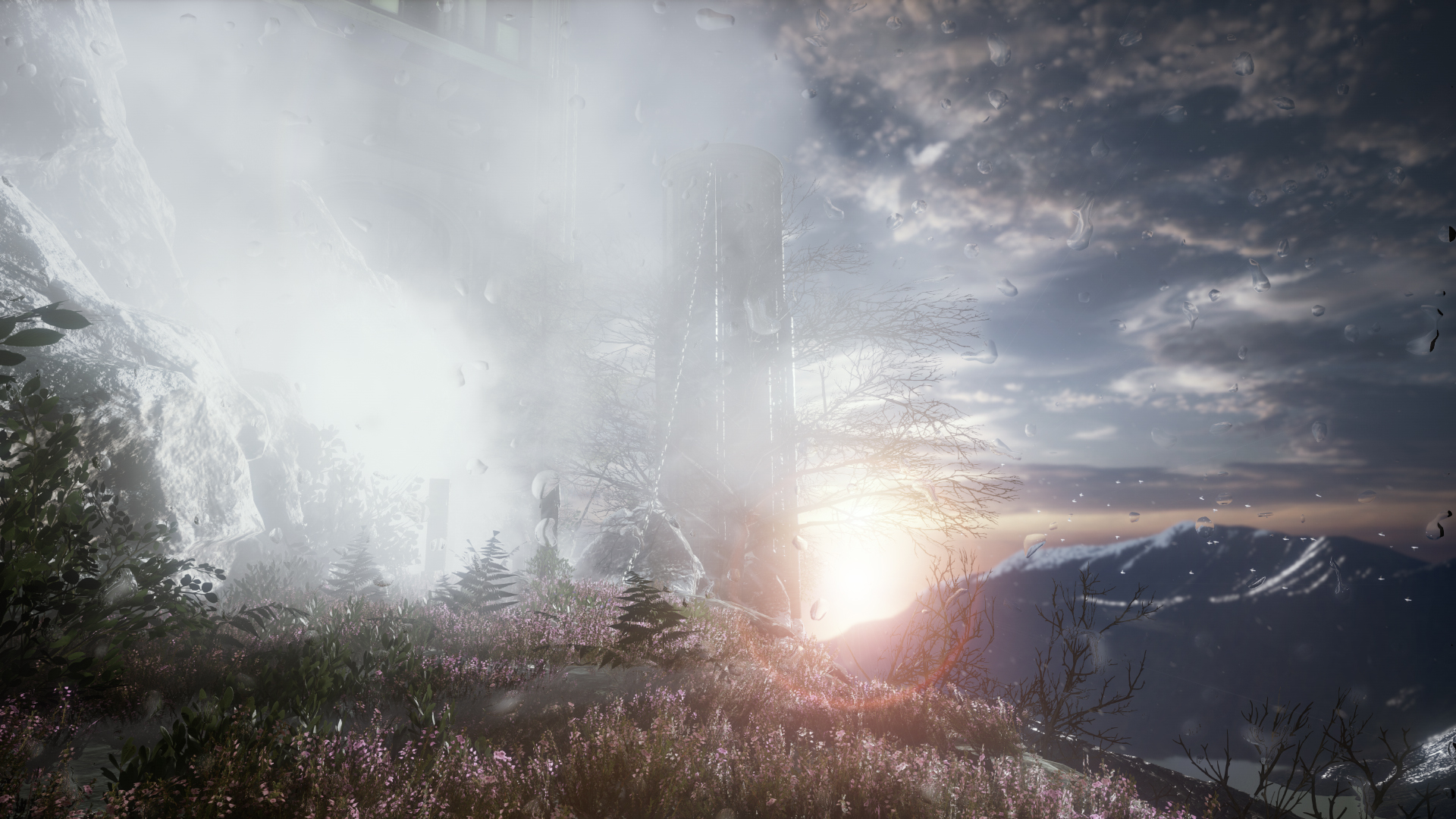
My honest first reaction to The Butterfly Sign was quiet fascination, the kind a small, handcrafted thing earns before you even press a button. A small Ukrainian studio built a first-person detective experience around one of the tidier psychological hooks I've seen at this price tier: you are Jack, the lone survivor of a massacre at Memority Hospital, and to prove your innocence you must take an experimental memory drug called Rammex and literally walk back through your own fractured past. Past and present coexist as separate layers of reality, and the world shifts between Jack's hospital bed in the present and the fog-soaked mountain path and darkened asylum halls of his memory. That structural conceit, quiet and melancholy, is the game's strongest card. When it works, the atmosphere does real things. The fog-draped exterior approach to Memority is genuinely beautiful, an open mountainside rendered in Unreal Engine 4 with photogrammetry-assisted textures that punch well above the game's scale. The sound design is a highlight that I'd argue even the more hostile reviews undersell. Each room carries its own ambient signature, and the whispers, dripping water, and half-heard movements that haunt the corridors create unease without ever leaning on a cheap jump scare. Headphones are not optional here; they're the difference between a tense walk and a memorable one. The shadow figures of former patients, frozen mid-action throughout the asylum, are a subtle and evocative touch that rewards players who actually explore. The core loop asks you to investigate crime scenes inside Jack's memory, examine clues, and then select a deduction from a list of possible conclusions. Difficulty settings range from Amateur, where computers auto-unlock and wrong guesses carry no consequence, up to Suicider, where a single wrong answer restarts the entire game. It's a genuinely interesting system on paper, but the environmental storytelling doesn't always give it the scaffolding it needs. Some deduction choices are obvious; others feel arbitrary because the scene doesn't clearly support either option. Collecting documents and hacking computers to find passwords adds a second layer of investigation that, unfortunately, rarely feels like it matters in practice. Non-linear dialogue with Dr. Romanov, who guides Jack through the process, adds texture to the fiction, but the conversation system has rough edges of its own. And then there are the problems that are harder to forgive. The game is capped at 30 frames per second with no option to lift it, and performance inside the asylum drops noticeably below that on many systems. Sprint arbitrarily deactivates in certain sections with no clear logic. Graphics options are limited to four presets; there is no gamma control, which matters because some interiors are almost unnavigably dark. Earlier chapters shipped with significant crash issues and input-detection bugs that turned launch-period play into a lottery. Whether those issues are fully resolved now is genuinely unclear, and that uncertainty alone should temper expectations. The planned trilogy also appears to have stalled after two chapters, meaning the story lands without a proper conclusion. For a very specific kind of patient player, the ones who will pause and absorb a soundscape the way others rush past to the next objective, The Butterfly Sign has something real in it. The premise earns its setup. The outside world is gorgeous. The sound work, for the most part, is the soul the game struggles to express elsewhere. But the execution is uneven in ways that go beyond rough-around-the-edges indie charm, and the abandoned third chapter leaves a wound in the story that atmosphere alone cannot close. Kai, Scout Team

The Butterfly Sign

The Butterfly Sign

13 dic 2016Quantum Phoenix Studio
GamerScout opina

A micro-budget first-person mystery with genuine atmosphere and a clever drug-induced memory premise that its own technical roughness keeps from ever fully delivering on.

PCMac
ProtonDB Gold
Mejor precio disponible
€0.00
en N/A
Mínimo histórico: €0.54

Comparar precios(0 tiendas)

Cargando precios...

We may earn a commission when you buy games through links on this page — at no extra cost to you. It never affects our rankings or verdicts.

Historial de precios

Historical low
€0.547 Jun 2026
Keyshops
€0.50€0.53€0.55€0.587 Jun12 Jun18 Jun23 Jun28 Jun
Tracking prices since 7 Jun 2026
Create alert

Capturas y multimedia

Captura

Acerca de The Butterfly Sign

My honest first reaction to The Butterfly Sign was quiet fascination, the kind a small, handcrafted thing earns before you even press a button. A small Ukrainian studio built a first-person detective experience around one of the tidier psychological hooks I've seen at this price tier: you are Jack, the lone survivor of a massacre at Memority Hospital, and to prove your innocence you must take an experimental memory drug called Rammex and literally walk back through your own fractured past. Past and present coexist as separate layers of reality, and the world shifts between Jack's hospital bed in the present and the fog-soaked mountain path and darkened asylum halls of his memory. That structural conceit, quiet and melancholy, is the game's strongest card. When it works, the atmosphere does real things. The fog-draped exterior approach to Memority is genuinely beautiful, an open mountainside rendered in Unreal Engine 4 with photogrammetry-assisted textures that punch well above the game's scale. The sound design is a highlight that I'd argue even the more hostile reviews undersell. Each room carries its own ambient signature, and the whispers, dripping water, and half-heard movements that haunt the corridors create unease without ever leaning on a cheap jump scare. Headphones are not optional here; they're the difference between a tense walk and a memorable one. The shadow figures of former patients, frozen mid-action throughout the asylum, are a subtle and evocative touch that rewards players who actually explore. The core loop asks you to investigate crime scenes inside Jack's memory, examine clues, and then select a deduction from a list of possible conclusions. Difficulty settings range from Amateur, where computers auto-unlock and wrong guesses carry no consequence, up to Suicider, where a single wrong answer restarts the entire game. It's a genuinely interesting system on paper, but the environmental storytelling doesn't always give it the scaffolding it needs. Some deduction choices are obvious; others feel arbitrary because the scene doesn't clearly support either option. Collecting documents and hacking computers to find passwords adds a second layer of investigation that, unfortunately, rarely feels like it matters in practice. Non-linear dialogue with Dr. Romanov, who guides Jack through the process, adds texture to the fiction, but the conversation system has rough edges of its own. And then there are the problems that are harder to forgive. The game is capped at 30 frames per second with no option to lift it, and performance inside the asylum drops noticeably below that on many systems. Sprint arbitrarily deactivates in certain sections with no clear logic. Graphics options are limited to four presets; there is no gamma control, which matters because some interiors are almost unnavigably dark. Earlier chapters shipped with significant crash issues and input-detection bugs that turned launch-period play into a lottery. Whether those issues are fully resolved now is genuinely unclear, and that uncertainty alone should temper expectations. The planned trilogy also appears to have stalled after two chapters, meaning the story lands without a proper conclusion. For a very specific kind of patient player, the ones who will pause and absorb a soundscape the way others rush past to the next objective, The Butterfly Sign has something real in it. The premise earns its setup. The outside world is gorgeous. The sound work, for the most part, is the soul the game struggles to express elsewhere. But the execution is uneven in ways that go beyond rough-around-the-edges indie charm, and the abandoned third chapter leaves a wound in the story that atmosphere alone cannot close.

Kai
Kai · Scout Team

Indie & narrative

Etiquetas

singleplayerachievementstrading-cardstier:sub-5First-Person InvestigationMemory MechanicAtmospheric HorrorEpisodicDeduction SystemUnreal Engine 4Walking Sim-AdjacentAsylum SettingAbandoned Series

Requisitos del sistema

Mínimos

OS
Windows 7, 8 or 10 (64bit)
Memory
4 GB RAM
DirectX
Version 11
Storage
18 GB available space
Graphics
GTX 560ti or R7 260x
Processor
Intel Pentium G3258 or AMD FX-4300

Recomendados

OS
Windows 10 (64bit)
Memory
8 GB RAM
DirectX
Version 11
Storage
18 GB available space
Graphics
GTX 680 or R9 280x
Processor
Intel Core i3-6100 or AMD FX-8300

Sigue explorando

Community Discussion

Be the first to comment on The Butterfly Sign.

Reseñas y valoraciones

No hay valoraciones disponibles

Información del juego

Desarrolladora
Quantum Phoenix Studio
Distribuidora
Quantum Phoenix Studio
Fecha de lanzamiento
13 dic 2016

Alerta de precio

¡Recibe un aviso cuando el precio baje de tu objetivo!

Crear alerta

Compra mejor: guías útiles

¿Buscas más? Mira juegos como The Butterfly Sign →

Preguntas frecuentes sobre The Butterfly Sign

¿Cuánto cuesta The Butterfly Sign?

El precio de The Butterfly Sign cambia a menudo y varía según la tienda, la edición y la región. La tabla de precios en vivo de esta página compara las ofertas más baratas en stock de tiendas de claves de confianza como Eneba y Kinguin, para que siempre veas el precio más bajo actual antes de comprar.

¿Dónde puedo comprar The Butterfly Sign más barato?

Compara los precios de The Butterfly Sign en todas las tiendas verificadas en la tabla de precios de esta página. Listamos las ofertas de claves y tiendas más baratas en stock, actualizadas con frecuencia, para que siempre veas la mejor oferta actual antes de comprar.

¿En qué plataformas está disponible The Butterfly Sign?

The Butterfly Sign está disponible en PC, Mac.

¿Cuándo se lanzó The Butterfly Sign?

The Butterfly Sign se lanzó el 13 de diciembre de 2016.

¿Quién desarrolló The Butterfly Sign?

The Butterfly Sign fue desarrollado por Quantum Phoenix Studio.