Compara los precios de Stories from the Outbreak en tiendas de claves de confianza y encuentra la mejor oferta. Desarrollado por Coldwild Games. Publicado por Coldwild Games. Lanzado el 20/2/2024. Disponible en PC, Mac, Linux. Géneros: RPG, Strategy.

Darkest Dungeon with zombies and a Latvian passport, a lean, punishing roguelite that makes every trinket slot and food ration count across runs that rarely overstay their welcome.

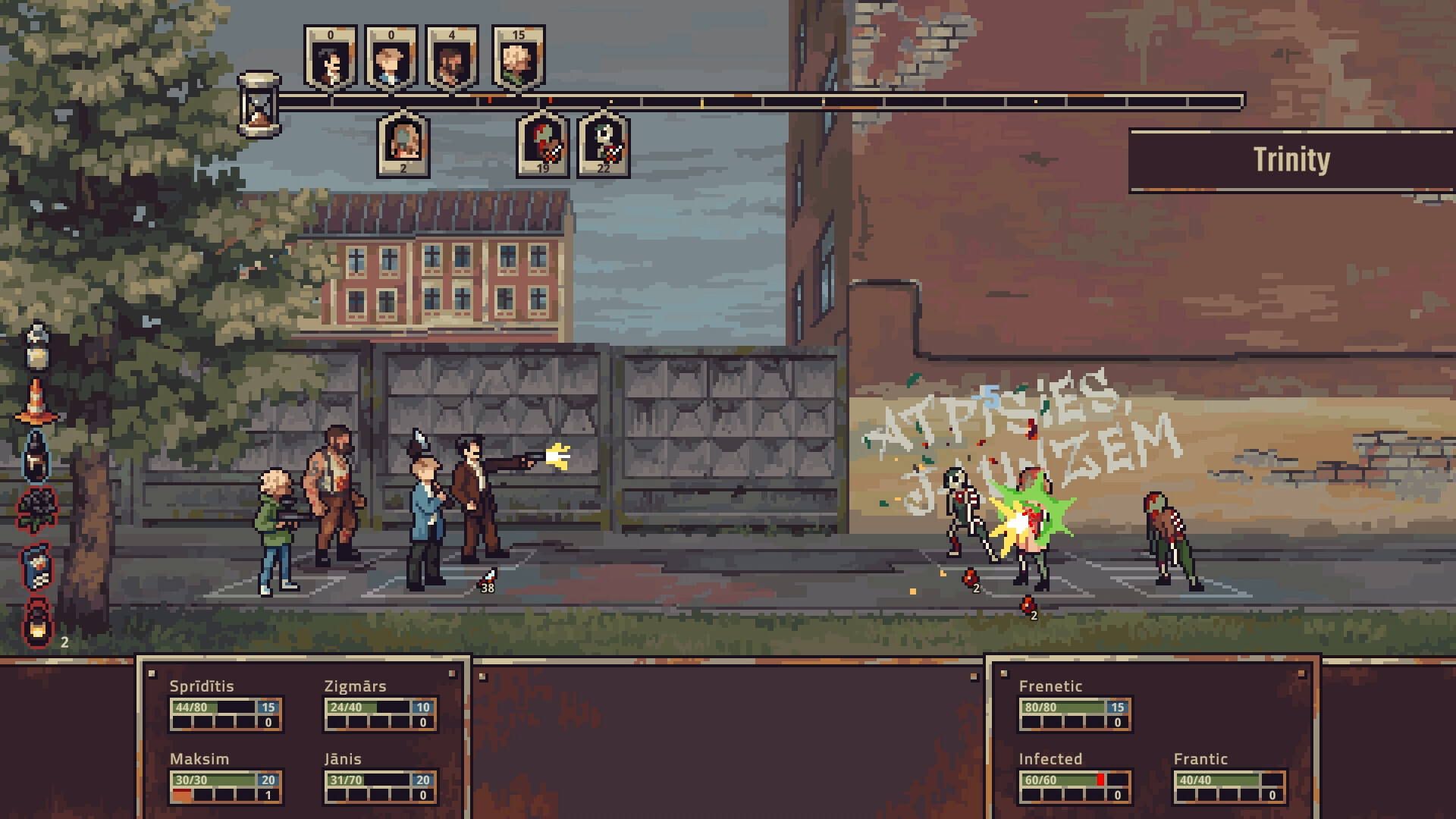
My first few runs through Stories from the Outbreak ended the same way: a mediocre team composition, a bad event roll mid-map, and a funeral for whoever I was counting on to tank the next fight. That loop, build, suffer, learn, rebuild, is exactly what Coldwild Games, a small three-person studio from Riga, has engineered here, and it works more reliably than the genre's crowded field usually delivers. The mechanical core is a turn-based party RPG with four character classes: Tanks (who taunt and shield), DPS dealers, Support characters with healing and buff abilities, and a Tactics class whose abilities only pay off in specific team setups. The meta-progression system unlocks characters and expands their movesets across runs, so the early game, where your roster options are thin, gradually opens into something with real build variety. Trinkets, which stack passive bonuses, are where a lot of the interesting decisions live; stacking the right passives around a Tactics character can produce some genuinely creative damage windows, but getting there requires the kind of deliberate resource planning that will bore players expecting a breezy zombie romp. Food and fuel are tracked separately and both bite hard: healing at a rest node costs two food per party member, meaning a bloated roster punishes you as much as an underpowered one. Every decision about who to recruit and when to rest is a real tradeoff, not just a throughput question. Between combat nodes, the game drops text-based events on you, moral dilemmas, supply gambles, character-specific story beats, backed by over 80,000 words of written content. The writing is solid enough that individual characters feel like people rather than stat blocks, and the polarised-society angle (team members holding genuinely opposed views that affect group dynamics) is a nice touch that most genre peers skip entirely. The event-card layer borrows from FTL's approach: pick your path on the map, weigh the risk-reward of harder encounters versus safer scavenging routes, manage towards the ferry destination. Newcomers should note that the game does very little hand-holding beyond its initial tutorial, and the UI has real gaps, ability upgrade paths are not visible upfront, which can lead to wasted progression investment on early runs. Steam's user score sits at around 80 percent positive from roughly 150 reviews at time of writing, which is a fair representation of the game's honest strengths and modest scope. Community commentary flags the characters as a standout and the challenge curve as appropriately firm without becoming sadistic. It is not a long game per run, and the content ceiling on a single playthrough is visible. Replayability comes from unlocking the full roster, chasing challenge modes, and optimising trinket builds, the kind of min-max repetition that will suit genre regulars more than casual players looking for a one-and-done narrative experience. Worth buying right now if you have any patience for the Slay the Spire school of "run-as-classroom", especially if the FTL-style moral event system sounds more interesting than annoying to you. Newcomers to party-based roguelites should start on normal difficulty, prioritise getting a Tank into every active roster, and accept that the first two or three runs are tuition fees. The depth is there once the meta-progression opens up. Diego, Scout Team

Stories from the Outbreak

Stories from the Outbreak

20 feb 2024Coldwild Games
GamerScout opina

Darkest Dungeon with zombies and a Latvian passport, a lean, punishing roguelite that makes every trinket slot and food ration count across runs that rarely overstay their welcome.

PCMacLinux
Steam Deck Verified
Mejor precio disponible
€0.00
en N/A
Mínimo histórico: €15.00

Comparar precios(0 tiendas)

Cargando precios...

We may earn a commission when you buy games through links on this page — at no extra cost to you. It never affects our rankings or verdicts.

Historial de precios

Historical low
€15.008 Jun 2026
Keyshops
€13.80€14.60€15.40€16.208 Jun13 Jun18 Jun23 Jun28 Jun
Tracking prices since 8 Jun 2026
Create alert

Capturas y multimedia

Captura

Acerca de Stories from the Outbreak

My first few runs through Stories from the Outbreak ended the same way: a mediocre team composition, a bad event roll mid-map, and a funeral for whoever I was counting on to tank the next fight. That loop, build, suffer, learn, rebuild, is exactly what Coldwild Games, a small three-person studio from Riga, has engineered here, and it works more reliably than the genre's crowded field usually delivers. The mechanical core is a turn-based party RPG with four character classes: Tanks (who taunt and shield), DPS dealers, Support characters with healing and buff abilities, and a Tactics class whose abilities only pay off in specific team setups. The meta-progression system unlocks characters and expands their movesets across runs, so the early game, where your roster options are thin, gradually opens into something with real build variety. Trinkets, which stack passive bonuses, are where a lot of the interesting decisions live; stacking the right passives around a Tactics character can produce some genuinely creative damage windows, but getting there requires the kind of deliberate resource planning that will bore players expecting a breezy zombie romp. Food and fuel are tracked separately and both bite hard: healing at a rest node costs two food per party member, meaning a bloated roster punishes you as much as an underpowered one. Every decision about who to recruit and when to rest is a real tradeoff, not just a throughput question. Between combat nodes, the game drops text-based events on you, moral dilemmas, supply gambles, character-specific story beats, backed by over 80,000 words of written content. The writing is solid enough that individual characters feel like people rather than stat blocks, and the polarised-society angle (team members holding genuinely opposed views that affect group dynamics) is a nice touch that most genre peers skip entirely. The event-card layer borrows from FTL's approach: pick your path on the map, weigh the risk-reward of harder encounters versus safer scavenging routes, manage towards the ferry destination. Newcomers should note that the game does very little hand-holding beyond its initial tutorial, and the UI has real gaps, ability upgrade paths are not visible upfront, which can lead to wasted progression investment on early runs. Steam's user score sits at around 80 percent positive from roughly 150 reviews at time of writing, which is a fair representation of the game's honest strengths and modest scope. Community commentary flags the characters as a standout and the challenge curve as appropriately firm without becoming sadistic. It is not a long game per run, and the content ceiling on a single playthrough is visible. Replayability comes from unlocking the full roster, chasing challenge modes, and optimising trinket builds, the kind of min-max repetition that will suit genre regulars more than casual players looking for a one-and-done narrative experience. Worth buying right now if you have any patience for the Slay the Spire school of "run-as-classroom", especially if the FTL-style moral event system sounds more interesting than annoying to you. Newcomers to party-based roguelites should start on normal difficulty, prioritise getting a Tank into every active roster, and accept that the first two or three runs are tuition fees. The depth is there once the meta-progression opens up.

Diego
Diego · Scout Team

Strategy & simulation

Etiquetas

singleplayerachievementscontroller-supporttrading-cardscloud-savestier:aaaParty CompositionResource AttritionTrinket BuildsMeta-ProgressionMoral Event SystemPermadeath RogueliteFTL-style MapChallenge Modes

Requisitos del sistema

Mínimos

OS
Windows 7 (SP1+) or later
Memory
1024 MB RAM
DirectX
Version 10
Storage
1024 MB available space
Graphics
DX10, DX11, DX12 capable
Processor
x86, x64 architecture with SSE2 instruction set support

Sigue explorando

Community Discussion

Be the first to comment on Stories from the Outbreak.

Reseñas y valoraciones

No hay valoraciones disponibles

Información del juego

Desarrolladora
Coldwild Games
Distribuidora
Coldwild Games
Fecha de lanzamiento
20 feb 2024

Alerta de precio

¡Recibe un aviso cuando el precio baje de tu objetivo!

Crear alerta

Más de Coldwild Games

Compra mejor: guías útiles

¿Buscas más? Mira juegos como Stories from the Outbreak →

Preguntas frecuentes sobre Stories from the Outbreak

¿Cuánto cuesta Stories from the Outbreak?

El precio de Stories from the Outbreak cambia a menudo y varía según la tienda, la edición y la región. La tabla de precios en vivo de esta página compara las ofertas más baratas en stock de tiendas de claves de confianza como Eneba y Kinguin, para que siempre veas el precio más bajo actual antes de comprar.

¿Dónde puedo comprar Stories from the Outbreak más barato?

Compara los precios de Stories from the Outbreak en todas las tiendas verificadas en la tabla de precios de esta página. Listamos las ofertas de claves y tiendas más baratas en stock, actualizadas con frecuencia, para que siempre veas la mejor oferta actual antes de comprar.

¿En qué plataformas está disponible Stories from the Outbreak?

Stories from the Outbreak está disponible en PC, Mac, Linux.

¿Cuándo se lanzó Stories from the Outbreak?

Stories from the Outbreak se lanzó el 20 de febrero de 2024.

¿Quién desarrolló Stories from the Outbreak?

Stories from the Outbreak fue desarrollado por Coldwild Games.