Compara los precios de Sovereign Syndicate en tiendas de claves de confianza y encuentra la mejor oferta. Desarrollado por Crimson Herring Studios. Publicado por Zugalu Entertainment. Lanzado el 15/1/2024. Disponible en PC, Xbox. Géneros: RPG. Puntuación Metacritic: 77/100.

Disco Elysium's spiritual cousin moves into a grime-soaked steampunk London, swaps the dice for tarot cards, and asks you to live inside the heads of a drunk minotaur, a cunning ex-corsair, and a dwarf monster hunter. The writing earns it.

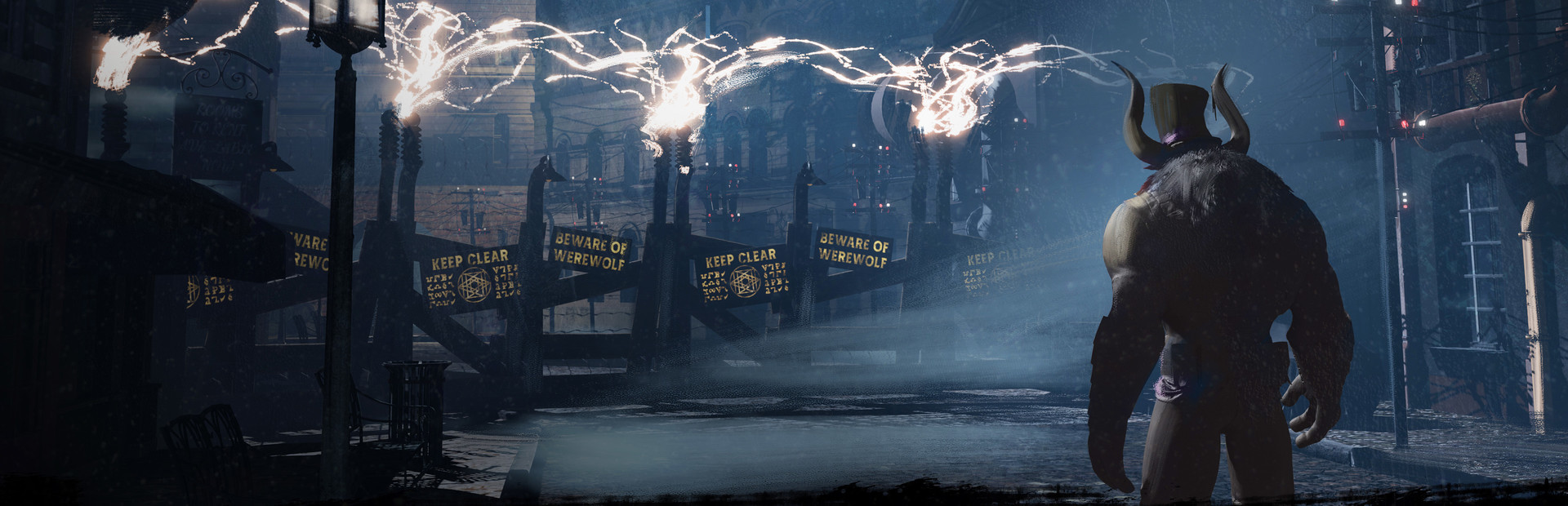
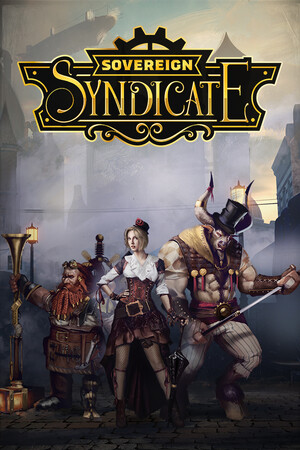
I came into Sovereign Syndicate as someone who has played through Disco Elysium enough times to have opinions about which build order hits hardest, and I want to be upfront: yes, the comparison is obvious, and yes, Crimson Herring Studios absolutely invited it. That's a high bar to clear for a debut title. The short version is that they mostly hold their own, and the places where they fall short are forgivable precisely because what they've built around those gaps is genuinely interesting. The setting is the game's most confident achievement. This is not the drawing-room steampunk of zeppelins and monocles. The East London you explore here is grimy, morally compromised, and densely imagined, with werewolves corralled into a containment zone at every full moon, centaur police officers patrolling cobblestoned docks, and blue-collar workers competing with steam-powered automata for work. You rotate between three protagonists across 18 chapters: Atticus Daley, an alcoholic minotaur illusionist drowning in debt; Clara Reed, a former corsair and high-society escort with an exit plan; and Teddy Redgrave, a dwarf engineer and monster hunter accompanied by his automaton Otto. Each character gets their own voice, their own web of relationships, and their own flavour of internal monologue that chimes in at decision points, very much in the Disco Elysium tradition of your own brain as unreliable narrator. The writing is thick and occasionally Oscar Wilde-adjacent, and hovering over highlighted slang gives quick glossary pop-ups so the world's invented vocabulary lands instead of alienating you. The mechanical spine is the tarot card system. Each character has four Minor Arcana decks, one per attribute, and skill checks draw from the relevant deck, adding the card's value to your base stat. The deck cycles, meaning a lucky run on a weak stat will eventually exhaust itself, which gives the randomness a satisfying pressure beyond a simple dice roll. Major Arcana cards function differently: they unlock personality traits that gate specific dialogue branches, so the build choices you make at character creation ripple into which conversations you can even access. A high self-discipline Atticus might lean into the Illusionist trait; a more desperate Clara might accumulate Despair instead of Hope, opening rougher, blunter paths through negotiations. Failure on a skill check is not always a bad outcome, and the game is smart enough to make some of its best story beats contingent on things going wrong. That design instinct is exactly right. Where Sovereign Syndicate stumbles is in the connective tissue. Moving between locations can feel hollow: the map is compact, but the density of meaningful interactions does not always justify how much time you spend walking the same stretches. Some side quests are genuinely rewarding; others feel thin, closer to errand-running than the morally textured vignettes the main narrative promises. The ending has been cited by multiple reviewers as rushed and undercooked relative to the setup, and there is no voice acting, which puts the full weight of characterisation on the prose. When the prose is good, that works. When it's merely competent, the absence of performance is felt. Minor launch bugs were present at release, and the roughly twelve-hour runtime means there is not a huge amount of room for the world to breathe. None of that undoes the core case for playing it. The three protagonists are some of the more distinctively written player characters in recent CRPG memory. The world has real texture and the kind of environmental storytelling, side conversations evolving without player intervention, locations shifting state across chapters, that makes you want to slow down and pay attention. For anyone who finished Disco Elysium and has been waiting for something to scratch that specific itch, this is the closest thing available and it is built with genuine care. Expect a contemplative, text-heavy experience with no traditional combat to speak of, a small studio's ambition occasionally outpacing its execution, and a Victorian London weird enough to stick in your head. Monika, Scout Team

Sovereign Syndicate

Sovereign Syndicate

15 ene 2024Crimson Herring StudiosZugalu Entertainment
GamerScout opina

Disco Elysium's spiritual cousin moves into a grime-soaked steampunk London, swaps the dice for tarot cards, and asks you to live inside the heads of a drunk minotaur, a cunning ex-corsair, and a dwarf monster hunter. The writing earns it.

PCXbox
Steam Deck PlayableProtonDB Gold
Mejor precio disponible
€0.00
en N/A
Mínimo histórico: €1.12

Comparar precios(0 tiendas)

Cargando precios...

We may earn a commission when you buy games through links on this page — at no extra cost to you. It never affects our rankings or verdicts.

Historial de precios

Historical low
€1.125 Jun 2026
Keyshops
€1.11€1.15€1.18€1.225 Jun11 Jun17 Jun22 Jun28 Jun
Tracking prices since 5 Jun 2026
Create alert

Capturas y multimedia

Acerca de Sovereign Syndicate

I came into Sovereign Syndicate as someone who has played through Disco Elysium enough times to have opinions about which build order hits hardest, and I want to be upfront: yes, the comparison is obvious, and yes, Crimson Herring Studios absolutely invited it. That's a high bar to clear for a debut title. The short version is that they mostly hold their own, and the places where they fall short are forgivable precisely because what they've built around those gaps is genuinely interesting. The setting is the game's most confident achievement. This is not the drawing-room steampunk of zeppelins and monocles. The East London you explore here is grimy, morally compromised, and densely imagined, with werewolves corralled into a containment zone at every full moon, centaur police officers patrolling cobblestoned docks, and blue-collar workers competing with steam-powered automata for work. You rotate between three protagonists across 18 chapters: Atticus Daley, an alcoholic minotaur illusionist drowning in debt; Clara Reed, a former corsair and high-society escort with an exit plan; and Teddy Redgrave, a dwarf engineer and monster hunter accompanied by his automaton Otto. Each character gets their own voice, their own web of relationships, and their own flavour of internal monologue that chimes in at decision points, very much in the Disco Elysium tradition of your own brain as unreliable narrator. The writing is thick and occasionally Oscar Wilde-adjacent, and hovering over highlighted slang gives quick glossary pop-ups so the world's invented vocabulary lands instead of alienating you. The mechanical spine is the tarot card system. Each character has four Minor Arcana decks, one per attribute, and skill checks draw from the relevant deck, adding the card's value to your base stat. The deck cycles, meaning a lucky run on a weak stat will eventually exhaust itself, which gives the randomness a satisfying pressure beyond a simple dice roll. Major Arcana cards function differently: they unlock personality traits that gate specific dialogue branches, so the build choices you make at character creation ripple into which conversations you can even access. A high self-discipline Atticus might lean into the Illusionist trait; a more desperate Clara might accumulate Despair instead of Hope, opening rougher, blunter paths through negotiations. Failure on a skill check is not always a bad outcome, and the game is smart enough to make some of its best story beats contingent on things going wrong. That design instinct is exactly right. Where Sovereign Syndicate stumbles is in the connective tissue. Moving between locations can feel hollow: the map is compact, but the density of meaningful interactions does not always justify how much time you spend walking the same stretches. Some side quests are genuinely rewarding; others feel thin, closer to errand-running than the morally textured vignettes the main narrative promises. The ending has been cited by multiple reviewers as rushed and undercooked relative to the setup, and there is no voice acting, which puts the full weight of characterisation on the prose. When the prose is good, that works. When it's merely competent, the absence of performance is felt. Minor launch bugs were present at release, and the roughly twelve-hour runtime means there is not a huge amount of room for the world to breathe. None of that undoes the core case for playing it. The three protagonists are some of the more distinctively written player characters in recent CRPG memory. The world has real texture and the kind of environmental storytelling, side conversations evolving without player intervention, locations shifting state across chapters, that makes you want to slow down and pay attention. For anyone who finished Disco Elysium and has been waiting for something to scratch that specific itch, this is the closest thing available and it is built with genuine care. Expect a contemplative, text-heavy experience with no traditional combat to speak of, a small studio's ambition occasionally outpacing its execution, and a Victorian London weird enough to stick in your head.

Monika
Monika · Scout Team

RPGs

Etiquetas

singleplayerachievementscontroller-supportcloud-savestier:aaaTarot Skill ChecksNo-Combat RPGMulti-ProtagonistHope-Despair MeterBranching DialogueVictorian FantasyInner Voice SystemNoir MysteryDebut Studio

Requisitos del sistema

Mínimos

OS
Windows 10
Memory
8 GB RAM
DirectX
Version 11
Storage
20 GB available space
Graphics
Direct X Compatible Video Card with 2GB Memory
Processor
Intel Core i3 or equivalent

Recomendados

OS
Windows 10
Memory
12 GB RAM
DirectX
Version 11
Storage
20 GB available space
Graphics
Direct X Compatible Video Card with 4GB Memory
Processor
Intel Core i7 or equivalent

Sigue explorando

Community Discussion

Be the first to comment on Sovereign Syndicate.

Reseñas y valoraciones

Metacritic
77

Información del juego

Desarrolladora
Crimson Herring Studios
Distribuidora
Zugalu Entertainment
Fecha de lanzamiento
15 ene 2024

Alerta de precio

¡Recibe un aviso cuando el precio baje de tu objetivo!

Crear alerta

Más de Crimson Herring Studios

Compra mejor: guías útiles

¿Buscas más? Mira juegos como Sovereign Syndicate →

Preguntas frecuentes sobre Sovereign Syndicate

¿Cuánto cuesta Sovereign Syndicate?

El precio de Sovereign Syndicate cambia a menudo y varía según la tienda, la edición y la región. La tabla de precios en vivo de esta página compara las ofertas más baratas en stock de tiendas de claves de confianza como Eneba y Kinguin, para que siempre veas el precio más bajo actual antes de comprar.

¿Dónde puedo comprar Sovereign Syndicate más barato?

Compara los precios de Sovereign Syndicate en todas las tiendas verificadas en la tabla de precios de esta página. Listamos las ofertas de claves y tiendas más baratas en stock, actualizadas con frecuencia, para que siempre veas la mejor oferta actual antes de comprar.

¿En qué plataformas está disponible Sovereign Syndicate?

Sovereign Syndicate está disponible en PC, Xbox.

¿Cuándo se lanzó Sovereign Syndicate?

Sovereign Syndicate se lanzó el 15 de enero de 2024.

¿Quién desarrolló Sovereign Syndicate?

Sovereign Syndicate fue desarrollado por Crimson Herring Studios y publicado por Zugalu Entertainment.

¿Merece la pena comprar Sovereign Syndicate?

Sovereign Syndicate tiene una puntuación Metacritic de 77/100, lo que lo convierte en uno de los títulos destacados de RPG. Mira las reseñas completas, las valoraciones y los tiempos de duración en esta página para decidir.