Compara los precios de Sokobond en tiendas de claves de confianza y encuentra la mejor oferta. Desarrollado por Alan Hazelden. Publicado por Draknek & Friends. Lanzado el 21/7/2014. Disponible en PC, Mac. Géneros: Indie. Puntuación Metacritic: 82/100.

If quiet, well-crafted puzzle design is your language, Sokobond speaks it fluently - 105 grid levels that start with water molecules and end somewhere much harder than high school chemistry.

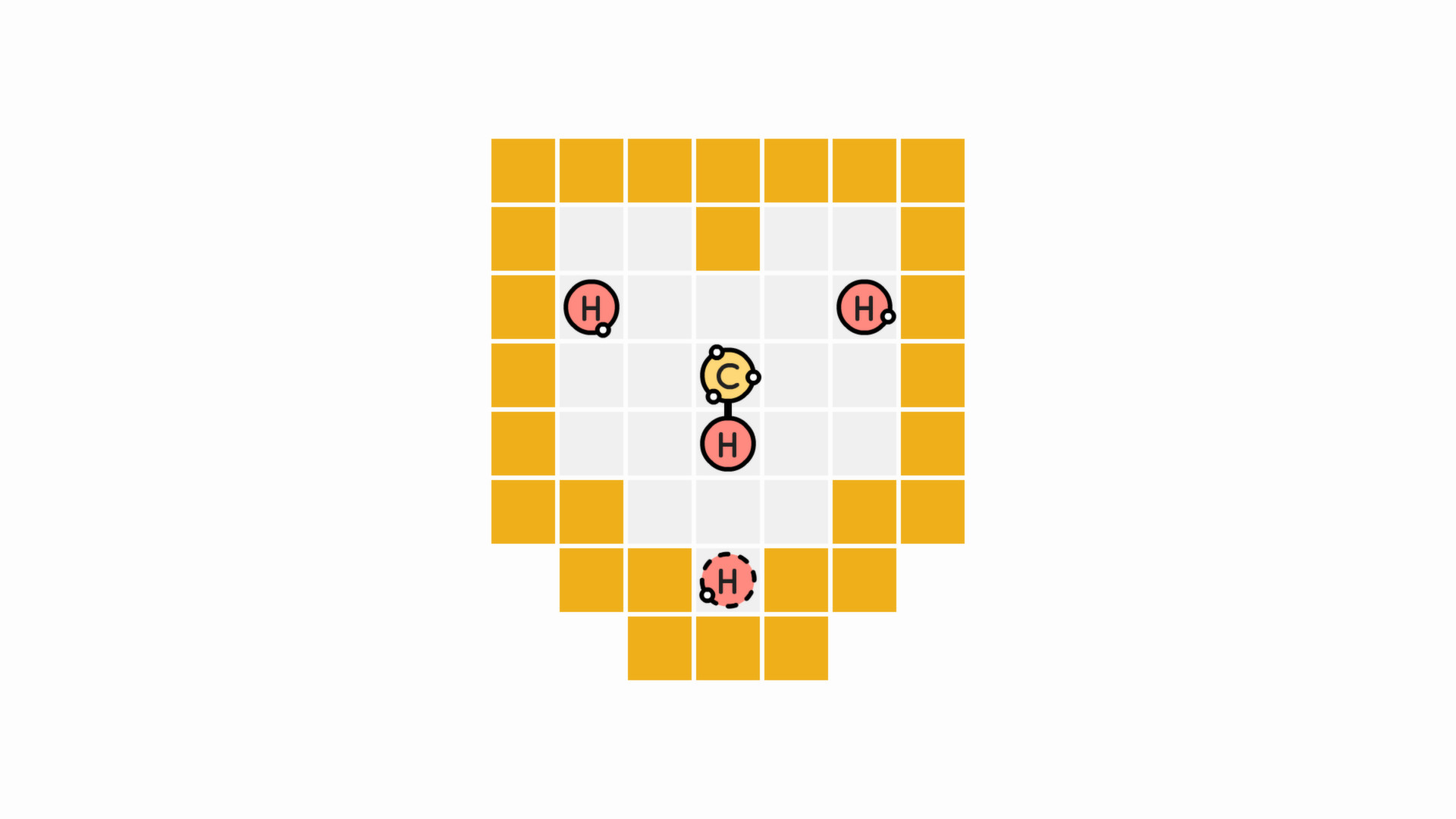
I keep coming back to the moment Sokobond first clicks. You are sliding a single carbon atom around a spare white grid, and without any tutorial text prompting you, hydrogen atoms attach themselves to your growing chain, their little orbital dots disappearing one by one as bonds form. A soft tone rings out. Another rings. The molecule completes, and a small trivia card tells you what you just built. It is quiet, intentional, and genuinely lovely. At its core, Sokobond is a Sokoban-descendant with a chemistry skin that turns out to be more than cosmetic. The five elements in play - carbon, nitrogen, oxygen, hydrogen, and helium - each carry a fixed number of bonding slots: carbon bonds four times, oxygen twice, hydrogen once, and helium never bonds at all but still matters as an obstacle-moving tool. Those rules are the whole grammar of the game, and the 105 levels squeeze every possible sentence out of them. Early sections ease you in through simple shapes, building the molecular vocabulary you need. Later sections introduce bond-cleaving objects that snap your growing chain apart, plus-sign tiles that force double or triple bonds, and rotation mechanics that let you flip the shape of a molecule mid-construction. The non-linear level-select map, which quietly takes on the silhouette of the periodic table as you progress, lets you branch sideways when a puzzle has you stumped rather than grinding the same wall repeatedly. That structural kindness is rare in the genre and I appreciate it. The difficulty curve deserves an honest word, because the second half of the game is genuinely demanding. Casual experimentation stops working around the midpoint. The later puzzles require sitting still, planning every move in sequence, and occasionally accepting that one wrong step ten moves ago is why you are stuck now. Unlimited undo and a quick reset soften this, but players looking for a gentle cozy puzzler should know the back third of Sokobond is closer to a logic workout. A handful of levels also have non-obvious alternate solutions tied to achievements, which will send completionists to a guide. That is a fair criticism: the game offers no hint system, and its commitment to minimalist silence occasionally tips into leaving you stranded without even a nudge. What holds the whole thing together is the audiovisual restraint. Allison Walker's soundtrack layers ambient tones that feel genuinely reactive - each bond formed adds a note to the background drone, so you are incidentally composing something as you solve. Critics have compared this quality to early Brian Eno, and that is not an overreach. The visual design is flat, clean, and color-coded with enough precision that the grid never feels cluttered even when your molecule has grown arms in four directions. Some reviewers have wished for more screen decoration and I understand the impulse, but I think the emptiness is load-bearing here. It keeps your eye exactly where the puzzle needs it. Sokobond carries a Metacritic score of 82 and the community reception has been warmly consistent across a decade. The main criticisms are the absence of a hint system and a perceived thinness of presentation for the price at full release cost. Neither breaks the experience for dedicated puzzle fans. If you have cleared your Zachtronics backlog, exhausted Stephen's Sausage Roll, and want something more meditative but still precise, this is the right next game. Chemistry background genuinely not required. Kai, Scout Team

Sokobond

Sokobond

21 jul 2014Alan HazeldenDraknek & Friends
GamerScout opina

If quiet, well-crafted puzzle design is your language, Sokobond speaks it fluently - 105 grid levels that start with water molecules and end somewhere much harder than high school chemistry.

PCMac
Steam Deck PlayableProtonDB Platinum
Mejor precio disponible
€0.00
en N/A
Mínimo histórico: €1.47

Comparar precios(0 tiendas)

Cargando precios...

We may earn a commission when you buy games through links on this page — at no extra cost to you. It never affects our rankings or verdicts.

Historial de precios

Historical low
€1.475 Jun 2026
Keyshops
€1.35€1.43€1.51€1.595 Jun11 Jun17 Jun22 Jun28 Jun
Tracking prices since 5 Jun 2026
Create alert

Capturas y multimedia

Captura

Acerca de Sokobond

I keep coming back to the moment Sokobond first clicks. You are sliding a single carbon atom around a spare white grid, and without any tutorial text prompting you, hydrogen atoms attach themselves to your growing chain, their little orbital dots disappearing one by one as bonds form. A soft tone rings out. Another rings. The molecule completes, and a small trivia card tells you what you just built. It is quiet, intentional, and genuinely lovely. At its core, Sokobond is a Sokoban-descendant with a chemistry skin that turns out to be more than cosmetic. The five elements in play - carbon, nitrogen, oxygen, hydrogen, and helium - each carry a fixed number of bonding slots: carbon bonds four times, oxygen twice, hydrogen once, and helium never bonds at all but still matters as an obstacle-moving tool. Those rules are the whole grammar of the game, and the 105 levels squeeze every possible sentence out of them. Early sections ease you in through simple shapes, building the molecular vocabulary you need. Later sections introduce bond-cleaving objects that snap your growing chain apart, plus-sign tiles that force double or triple bonds, and rotation mechanics that let you flip the shape of a molecule mid-construction. The non-linear level-select map, which quietly takes on the silhouette of the periodic table as you progress, lets you branch sideways when a puzzle has you stumped rather than grinding the same wall repeatedly. That structural kindness is rare in the genre and I appreciate it. The difficulty curve deserves an honest word, because the second half of the game is genuinely demanding. Casual experimentation stops working around the midpoint. The later puzzles require sitting still, planning every move in sequence, and occasionally accepting that one wrong step ten moves ago is why you are stuck now. Unlimited undo and a quick reset soften this, but players looking for a gentle cozy puzzler should know the back third of Sokobond is closer to a logic workout. A handful of levels also have non-obvious alternate solutions tied to achievements, which will send completionists to a guide. That is a fair criticism: the game offers no hint system, and its commitment to minimalist silence occasionally tips into leaving you stranded without even a nudge. What holds the whole thing together is the audiovisual restraint. Allison Walker's soundtrack layers ambient tones that feel genuinely reactive - each bond formed adds a note to the background drone, so you are incidentally composing something as you solve. Critics have compared this quality to early Brian Eno, and that is not an overreach. The visual design is flat, clean, and color-coded with enough precision that the grid never feels cluttered even when your molecule has grown arms in four directions. Some reviewers have wished for more screen decoration and I understand the impulse, but I think the emptiness is load-bearing here. It keeps your eye exactly where the puzzle needs it. Sokobond carries a Metacritic score of 82 and the community reception has been warmly consistent across a decade. The main criticisms are the absence of a hint system and a perceived thinness of presentation for the price at full release cost. Neither breaks the experience for dedicated puzzle fans. If you have cleared your Zachtronics backlog, exhausted Stephen's Sausage Roll, and want something more meditative but still precise, this is the right next game. Chemistry background genuinely not required.

Kai
Kai · Scout Team

Indie & narrative

Etiquetas

singleplayerachievementscontroller-supportcloud-savestier:aaaSokoban-styleLogic PuzzlesMinimalist DesignAmbient SoundtrackNon-linear ProgressionGrid-basedChemistry ThemeNo Hint System

Requisitos del sistema

Mínimos

OS
Windows 7+
Memory
512 MB RAM
Storage
100 MB available space

Sigue explorando

Community Discussion

Be the first to comment on Sokobond.

Reseñas y valoraciones

Metacritic
82

Información del juego

Desarrolladora
Alan Hazelden
Distribuidora
Draknek & Friends
Fecha de lanzamiento
21 jul 2014

Alerta de precio

¡Recibe un aviso cuando el precio baje de tu objetivo!

Crear alerta

Más de Alan Hazelden

Compra mejor: guías útiles

¿Buscas más? Mira juegos como Sokobond →

Preguntas frecuentes sobre Sokobond

¿Cuánto cuesta Sokobond?

El precio de Sokobond cambia a menudo y varía según la tienda, la edición y la región. La tabla de precios en vivo de esta página compara las ofertas más baratas en stock de tiendas de claves de confianza como Eneba y Kinguin, para que siempre veas el precio más bajo actual antes de comprar.

¿Dónde puedo comprar Sokobond más barato?

Compara los precios de Sokobond en todas las tiendas verificadas en la tabla de precios de esta página. Listamos las ofertas de claves y tiendas más baratas en stock, actualizadas con frecuencia, para que siempre veas la mejor oferta actual antes de comprar.

¿En qué plataformas está disponible Sokobond?

Sokobond está disponible en PC, Mac.

¿Cuándo se lanzó Sokobond?

Sokobond se lanzó el 21 de julio de 2014.

¿Quién desarrolló Sokobond?

Sokobond fue desarrollado por Alan Hazelden y publicado por Draknek & Friends.

¿Merece la pena comprar Sokobond?

Sokobond tiene una puntuación Metacritic de 82/100, lo que lo convierte en uno de los títulos destacados de Indie. Mira las reseñas completas, las valoraciones y los tiempos de duración en esta página para decidir.