Compara los precios de Roman Triumph: Survival City Builder en tiendas de claves de confianza y encuentra la mejor oferta. Desarrollado por Coreffect Interactive. Publicado por Forklift Interactive. Lanzado el 16/9/2025. Disponible en PC. Géneros: Indie, Simulation, Strategy.

Banished meets Caesar III with Hydras crashing the party - a solo-dev Roman city-builder that earns its Very Positive rating by actually making the god system matter.

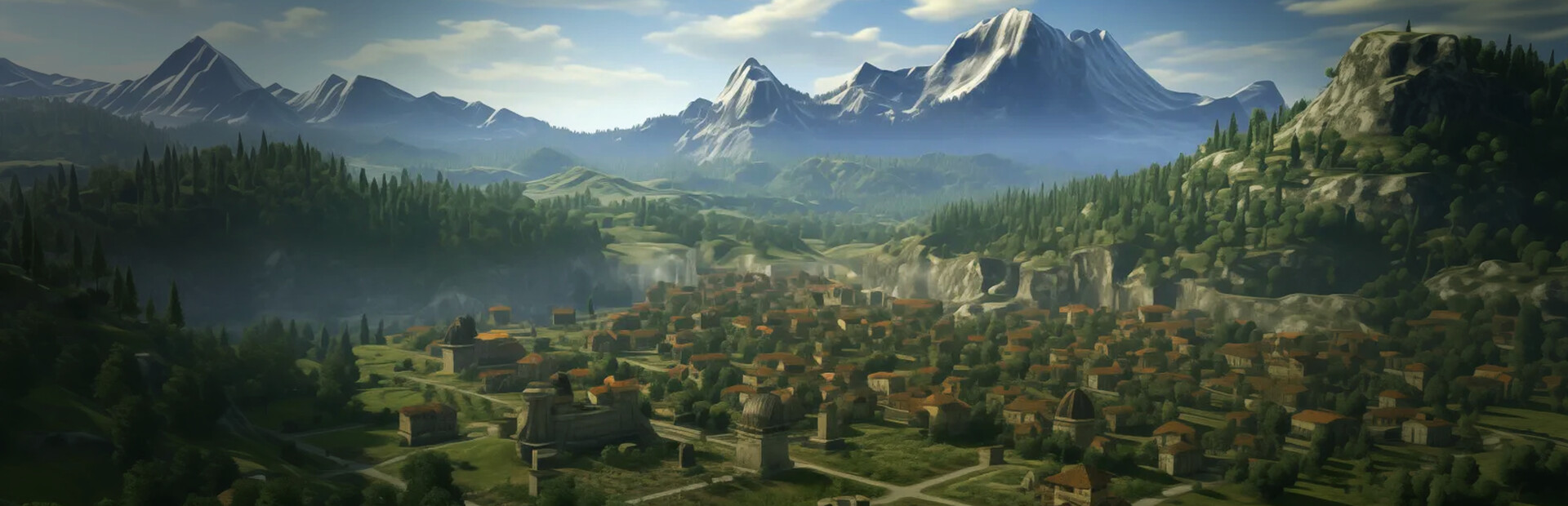
I've clocked enough hours in Banished and Caesar III to know exactly where most Roman city-builders lose the plot: they promise survival pressure but deliver a gentle economy puzzle with barbarians as a cosmetic afterthought. Roman Triumph does not make that mistake. The threat calendar here runs on two tracks simultaneously - escalating barbarian raids from the north and mythological creatures that wake up the moment your city gets large enough to disturb their territory. A Hydra showing up while your granary supply chain is still half-built is genuinely alarming in a way that keeps your urban planning honest from the first session. The loop will feel immediately familiar if you have spent time with colony-sims. You start with a handful of settlers, basic wood and stone, and a procedurally generated map that reshapes each run. From there it is the classic snowball: houses draw workers, workers need food, food needs farms, farms need cleared land, and cleared land attracts bandits. What Roman Triumph layers on top is a research tree unlocking over 80 buildings - from clay workshops and aqueducts through to ballistae, scorpios, and legionnaire barracks - and a god management system that acts as a ticking secondary threat. Neglect your temples and the divine consequences are mechanical, not cosmetic: crops wither, lightning strikes key buildings, plagues spread. Keeping Ceres or Jupiter satisfied is a genuine resource-allocation decision that competes with your wall budget every single time an attack wave is inbound. The desert biome added at 1.0 launch sharpens this even further - barren soil means aqueducts become a prerequisite for any farming at all, timber is scarce enough to push you into trade dependency, and the flat open terrain strips away the choke-point advantages you leaned on in the forested northern maps. For newcomers to the genre, this is actually a reasonable entry point, and I want to spend a moment making that case. The building requirements are clearly telegraphed - need iron, build an iron quarry - and the sandbox mode lets you remove enemy pressure entirely while you learn the production chains. The research tree gives you a defined progression path rather than dumping eighty buildings on you at once. Experienced players can ramp directly to higher difficulties and start worrying about the Phoenix encounter, which the community broadly agrees is the roughest spike in the current balance sheet. That specific complaint is worth noting: some mythological enemies feel less like designed difficulty curves and more like brick walls, and the UI does not always communicate incoming threat composition clearly enough to course-correct in time. The rougher edges are real. Performance degrades noticeably once citizen counts push past 700 to 800, which is exactly the population tier where the interesting late-game decisions start happening. The graphics are functional rather than striking - this is a solo-developer project from one person after five years of work, and knowing that reframes expectations appropriately. Combat depth is thinner than the building side; once your legionnaire count reaches critical mass, most raids resolve without much tactical input. Players wanting the kind of granular army control you get in an RTS will feel the gap. What you do get instead is the satisfaction of a well-optimized city layout holding a wave that should have broken you, which is its own kind of reward. Steam reception settled at Very Positive across several hundred reviews, and that verdict tracks with what the game actually delivers. It is a confident, playable 1.0 with a meaningful god system, two distinct biomes, and enough building variety to support multiple layout strategies per run. The ask from the community - more economic depth, harbor trade, richer late-game city management - points at where the developer should take it next rather than at fundamental design failures. A free demo is available on Steam if you want to audit the first hour before committing. Diego, Scout Team

Roman Triumph: Survival City Builder

Roman Triumph: Survival City Builder

16 sept 2025Coreffect InteractiveForklift Interactive
GamerScout opina

Banished meets Caesar III with Hydras crashing the party - a solo-dev Roman city-builder that earns its Very Positive rating by actually making the god system matter.

PC
Steam Deck PlayableProtonDB Platinum
Mejor precio disponible
€0.00
en N/A
Mínimo histórico: €11.00

Comparar precios(0 tiendas)

Cargando precios...

We may earn a commission when you buy games through links on this page — at no extra cost to you. It never affects our rankings or verdicts.

Historial de precios

Historical low
€11.008 Jun 2026
Keyshops
€10.12€10.71€11.29€11.888 Jun13 Jun18 Jun23 Jun28 Jun
Tracking prices since 8 Jun 2026
Create alert

Capturas y multimedia

Acerca de Roman Triumph: Survival City Builder

I've clocked enough hours in Banished and Caesar III to know exactly where most Roman city-builders lose the plot: they promise survival pressure but deliver a gentle economy puzzle with barbarians as a cosmetic afterthought. Roman Triumph does not make that mistake. The threat calendar here runs on two tracks simultaneously - escalating barbarian raids from the north and mythological creatures that wake up the moment your city gets large enough to disturb their territory. A Hydra showing up while your granary supply chain is still half-built is genuinely alarming in a way that keeps your urban planning honest from the first session. The loop will feel immediately familiar if you have spent time with colony-sims. You start with a handful of settlers, basic wood and stone, and a procedurally generated map that reshapes each run. From there it is the classic snowball: houses draw workers, workers need food, food needs farms, farms need cleared land, and cleared land attracts bandits. What Roman Triumph layers on top is a research tree unlocking over 80 buildings - from clay workshops and aqueducts through to ballistae, scorpios, and legionnaire barracks - and a god management system that acts as a ticking secondary threat. Neglect your temples and the divine consequences are mechanical, not cosmetic: crops wither, lightning strikes key buildings, plagues spread. Keeping Ceres or Jupiter satisfied is a genuine resource-allocation decision that competes with your wall budget every single time an attack wave is inbound. The desert biome added at 1.0 launch sharpens this even further - barren soil means aqueducts become a prerequisite for any farming at all, timber is scarce enough to push you into trade dependency, and the flat open terrain strips away the choke-point advantages you leaned on in the forested northern maps. For newcomers to the genre, this is actually a reasonable entry point, and I want to spend a moment making that case. The building requirements are clearly telegraphed - need iron, build an iron quarry - and the sandbox mode lets you remove enemy pressure entirely while you learn the production chains. The research tree gives you a defined progression path rather than dumping eighty buildings on you at once. Experienced players can ramp directly to higher difficulties and start worrying about the Phoenix encounter, which the community broadly agrees is the roughest spike in the current balance sheet. That specific complaint is worth noting: some mythological enemies feel less like designed difficulty curves and more like brick walls, and the UI does not always communicate incoming threat composition clearly enough to course-correct in time. The rougher edges are real. Performance degrades noticeably once citizen counts push past 700 to 800, which is exactly the population tier where the interesting late-game decisions start happening. The graphics are functional rather than striking - this is a solo-developer project from one person after five years of work, and knowing that reframes expectations appropriately. Combat depth is thinner than the building side; once your legionnaire count reaches critical mass, most raids resolve without much tactical input. Players wanting the kind of granular army control you get in an RTS will feel the gap. What you do get instead is the satisfaction of a well-optimized city layout holding a wave that should have broken you, which is its own kind of reward. Steam reception settled at Very Positive across several hundred reviews, and that verdict tracks with what the game actually delivers. It is a confident, playable 1.0 with a meaningful god system, two distinct biomes, and enough building variety to support multiple layout strategies per run. The ask from the community - more economic depth, harbor trade, richer late-game city management - points at where the developer should take it next rather than at fundamental design failures. A free demo is available on Steam if you want to audit the first hour before committing.

Diego
Diego · Scout Team

Strategy & simulation

Etiquetas

singleplayerachievementscloud-savestier:indieGod ManagementMythological ThreatsResearch TreeSandbox ModeProcedural MapsTower Defense LayerColony SimDesert BiomeEscalating Waves

Requisitos del sistema

Mínimos

OS
Microsoft Windows 7/8/8.1 (64-bit)
Memory
8 GB RAM
DirectX
Version 11
Storage
5 GB available space
Graphics
AMD/NVIDIA dedicated GPU, 2GB dedicated VRAM (Radeon RX 560, Geforce GTX 1050)
Processor
AMD or Intel, 3.3 GHz (AMD FX 8300, Intel i5 3000)

Recomendados

Requires a 64-bit processor and operating system

Sigue explorando

Community Discussion

Be the first to comment on Roman Triumph: Survival City Builder.

Reseñas y valoraciones

No hay valoraciones disponibles

Información del juego

Desarrolladora
Coreffect Interactive
Distribuidora
Forklift Interactive
Fecha de lanzamiento
16 sept 2025

Alerta de precio

¡Recibe un aviso cuando el precio baje de tu objetivo!

Crear alerta

Compra mejor: guías útiles

¿Buscas más? Mira juegos como Roman Triumph: Survival City Builder →

Preguntas frecuentes sobre Roman Triumph: Survival City Builder

¿Cuánto cuesta Roman Triumph: Survival City Builder?

El precio de Roman Triumph: Survival City Builder cambia a menudo y varía según la tienda, la edición y la región. La tabla de precios en vivo de esta página compara las ofertas más baratas en stock de tiendas de claves de confianza como Eneba y Kinguin, para que siempre veas el precio más bajo actual antes de comprar.

¿Dónde puedo comprar Roman Triumph: Survival City Builder más barato?

Compara los precios de Roman Triumph: Survival City Builder en todas las tiendas verificadas en la tabla de precios de esta página. Listamos las ofertas de claves y tiendas más baratas en stock, actualizadas con frecuencia, para que siempre veas la mejor oferta actual antes de comprar.

¿En qué plataformas está disponible Roman Triumph: Survival City Builder?

Roman Triumph: Survival City Builder está disponible en PC.

¿Cuándo se lanzó Roman Triumph: Survival City Builder?

Roman Triumph: Survival City Builder se lanzó el 16 de septiembre de 2025.

¿Quién desarrolló Roman Triumph: Survival City Builder?

Roman Triumph: Survival City Builder fue desarrollado por Coreffect Interactive y publicado por Forklift Interactive.