
Compara los precios de Rabi-Ribi en tiendas de claves de confianza y encuentra la mejor oferta. Desarrollado por CreSpirit. Publicado por CreSpirit. Lanzado el 28/1/2016. Disponible en PC. Géneros: Action, Adventure, Casual, Indie.

Looks like a pastel anime joke, plays like a meticulously crafted puzzle where every boss is trying to end you with a wall of snowflake-shaped bullets. Don't let the bunny ears fool you.

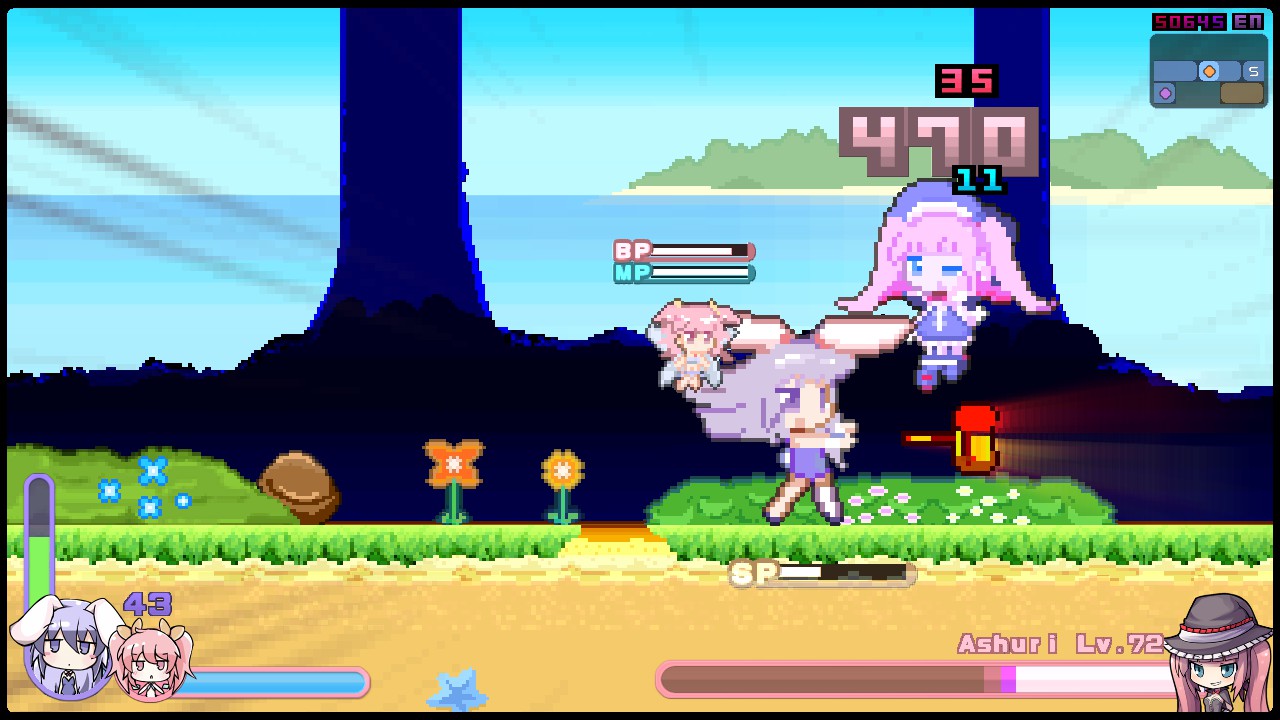
My first instinct with Rabi-Ribi was pure skepticism. A Taiwanese indie from 2016 built around a bunny girl in a Playboy costume, pixel-art anime faces, yuri overtones, and a fairy who shoots magic for you. Then I actually started playing it, and the game had the audacity to be genuinely, craftily excellent. What CreSpirit built here sits at a very specific crossroads: Metroidvania exploration wrapped around bullet-hell boss encounters. The two halves each pull their weight. The world across Rabi-Rabi Island is segmented into nine distinct areas, from snowy tundras to underground pyramids to a scientific bunker, and the map design does that classic thing where a newly unlocked ability, a slide, a double-jump, a wall-jump, peels back a whole wing of territory you quietly filed away as inaccessible. Exploration is generous with secrets and the warp system keeps backtracking from turning into a chore. Where it leans more on action than on pure platforming puzzles, that is a deliberate choice, not a shortcut. The platforming challenges are straightforward; the combat is where the design ambition lives. And the bosses, sincerely, are something. Each one is a character with a personality and a distinct bullet pattern roster so deep that reviewers noted it takes three or four attempts just to see all the attack combinations a single boss carries. You control Erina's melee Piko Hammer at close range and guide Ribbon's magic projectiles at distance, both mapped simultaneously in a setup that clicks fast and stays readable even when the screen fills with spiraling missiles and color-coded laser sweeps. There is a boss rush mode for the masochists, unlockable "Bunny Hell" and "Bunny Extinction" difficulty modes that sound like jokes and are not, and an alternative progression mode that forces you to track down specific abilities before a boss fight becomes survivable. The flexibility in difficulty settings, from a casual story mode up to the genuinely punishing high-end options, means this game can accommodate a wide band of players without feeling like it is watering itself down for anyone. The weaknesses are real and worth naming. The opening hour drags, Erina moves slowly before you upgrade her speed and the hammer lacks aerial mobility early on, so first impressions underserve the game. The story is cheerfully inconsequential, a web of anime archetypes and blunt exposition that mostly serves as a delivery mechanism for the next boss introduction. Some reviewers found the boss structure a little repetitive in the back half, health bars that grow long without the encounters always escalating in creativity. And the anime aesthetic, specifically the fanservice direction with the character designs, is going to send a portion of players straight to their refund button. That is a legitimate reaction and not one to dismiss. For those who stay: the soundtrack rewards attention. Synthesized electronics layered over melodic flute passages, each area with its own sound identity, boss themes that shift intensity with the fight phases. It is the kind of score that earns its own DLC release, and CreSpirit obliged with both an original and an orchestral arrangement. The Steam workshop support and post-launch content additions have kept the community active well past launch. Completion for main story runs sits around 13 hours; full 100% exploration pushes well past 20, and the NG+ loop and bonus bosses are there for those who want to chase the harder ceiling. Kai, Scout Team

Rabi-Ribi

Rabi-Ribi

28 ene 2016CreSpirit
GamerScout opina

Looks like a pastel anime joke, plays like a meticulously crafted puzzle where every boss is trying to end you with a wall of snowflake-shaped bullets. Don't let the bunny ears fool you.

PC
Steam Deck VerifiedProtonDB Platinum
Mejor precio disponible
€0.00
en N/A
Mínimo histórico: €1.52

Comparar precios(0 tiendas)

Cargando precios...

We may earn a commission when you buy games through links on this page — at no extra cost to you. It never affects our rankings or verdicts.

Historial de precios

Historical low
€1.529 Jun 2026
Keyshops
€1.44€1.52€1.61€1.695 Jun11 Jun17 Jun22 Jun28 Jun
Tracking prices since 5 Jun 2026
Create alert

Capturas y multimedia

Captura

Acerca de Rabi-Ribi

My first instinct with Rabi-Ribi was pure skepticism. A Taiwanese indie from 2016 built around a bunny girl in a Playboy costume, pixel-art anime faces, yuri overtones, and a fairy who shoots magic for you. Then I actually started playing it, and the game had the audacity to be genuinely, craftily excellent. What CreSpirit built here sits at a very specific crossroads: Metroidvania exploration wrapped around bullet-hell boss encounters. The two halves each pull their weight. The world across Rabi-Rabi Island is segmented into nine distinct areas, from snowy tundras to underground pyramids to a scientific bunker, and the map design does that classic thing where a newly unlocked ability, a slide, a double-jump, a wall-jump, peels back a whole wing of territory you quietly filed away as inaccessible. Exploration is generous with secrets and the warp system keeps backtracking from turning into a chore. Where it leans more on action than on pure platforming puzzles, that is a deliberate choice, not a shortcut. The platforming challenges are straightforward; the combat is where the design ambition lives. And the bosses, sincerely, are something. Each one is a character with a personality and a distinct bullet pattern roster so deep that reviewers noted it takes three or four attempts just to see all the attack combinations a single boss carries. You control Erina's melee Piko Hammer at close range and guide Ribbon's magic projectiles at distance, both mapped simultaneously in a setup that clicks fast and stays readable even when the screen fills with spiraling missiles and color-coded laser sweeps. There is a boss rush mode for the masochists, unlockable "Bunny Hell" and "Bunny Extinction" difficulty modes that sound like jokes and are not, and an alternative progression mode that forces you to track down specific abilities before a boss fight becomes survivable. The flexibility in difficulty settings, from a casual story mode up to the genuinely punishing high-end options, means this game can accommodate a wide band of players without feeling like it is watering itself down for anyone. The weaknesses are real and worth naming. The opening hour drags, Erina moves slowly before you upgrade her speed and the hammer lacks aerial mobility early on, so first impressions underserve the game. The story is cheerfully inconsequential, a web of anime archetypes and blunt exposition that mostly serves as a delivery mechanism for the next boss introduction. Some reviewers found the boss structure a little repetitive in the back half, health bars that grow long without the encounters always escalating in creativity. And the anime aesthetic, specifically the fanservice direction with the character designs, is going to send a portion of players straight to their refund button. That is a legitimate reaction and not one to dismiss. For those who stay: the soundtrack rewards attention. Synthesized electronics layered over melodic flute passages, each area with its own sound identity, boss themes that shift intensity with the fight phases. It is the kind of score that earns its own DLC release, and CreSpirit obliged with both an original and an orchestral arrangement. The Steam workshop support and post-launch content additions have kept the community active well past launch. Completion for main story runs sits around 13 hours; full 100% exploration pushes well past 20, and the NG+ loop and bonus bosses are there for those who want to chase the harder ceiling.

Kai
Kai · Scout Team

Indie & narrative

Etiquetas

singleplayerachievementscontroller-supporttrading-cardsworkshopcloud-savestier:sub-5Bullet-Hell Boss FightsBadge CustomizationOpen-Ended ExplorationBoss Rush ModeAnime AestheticDifficulty OptionsDual-Character CombatPost-Launch Content

Requisitos del sistema

Mínimos

OS
Windows XP or above
Memory
8 GB RAM
DirectX
Version 9.0
Storage
1 GB available space
Graphics
Any DirectX 9.0 supported card
Processor
1.0 Ghz or above

Recomendados

OS
Windows XP or above
Memory
16 GB RAM
DirectX
Version 9.0
Storage
1 GB available space
Graphics
Any non-integrated card with DirectX 9.0 support w/ 1280 x 720 or above
Processor
2.0 Ghz or above

Sigue explorando

Community Discussion

Be the first to comment on Rabi-Ribi.

Reseñas y valoraciones

No hay valoraciones disponibles

Información del juego

Desarrolladora
CreSpirit
Distribuidora
CreSpirit
Fecha de lanzamiento
28 ene 2016

Alerta de precio

¡Recibe un aviso cuando el precio baje de tu objetivo!

Crear alerta

Más de CreSpirit

Compra mejor: guías útiles

¿Buscas más? Mira juegos como Rabi-Ribi →

Preguntas frecuentes sobre Rabi-Ribi

¿Cuánto cuesta Rabi-Ribi?

El precio de Rabi-Ribi cambia a menudo y varía según la tienda, la edición y la región. La tabla de precios en vivo de esta página compara las ofertas más baratas en stock de tiendas de claves de confianza como Eneba y Kinguin, para que siempre veas el precio más bajo actual antes de comprar.

¿Dónde puedo comprar Rabi-Ribi más barato?

Compara los precios de Rabi-Ribi en todas las tiendas verificadas en la tabla de precios de esta página. Listamos las ofertas de claves y tiendas más baratas en stock, actualizadas con frecuencia, para que siempre veas la mejor oferta actual antes de comprar.

¿En qué plataformas está disponible Rabi-Ribi?

Rabi-Ribi está disponible en PC.

¿Cuándo se lanzó Rabi-Ribi?

Rabi-Ribi se lanzó el 28 de enero de 2016.

¿Quién desarrolló Rabi-Ribi?

Rabi-Ribi fue desarrollado por CreSpirit.