Compara los precios de Qvadriga en tiendas de claves de confianza y encuentra la mejor oferta. Desarrollado por Turnopia. Publicado por Slitherine Ltd.. Lanzado el 13/6/2014. Disponible en PC. Géneros: Racing, Simulation, Sports, Strategy. Puntuación Metacritic: 72/100.

Turn-based tactics dressed up as a Roman blood sport: Qvadriga makes every corner, whip crack, and lane choice feel like a genuine decision with consequence. Niche as they come, but nothing else scratches this itch on PC.

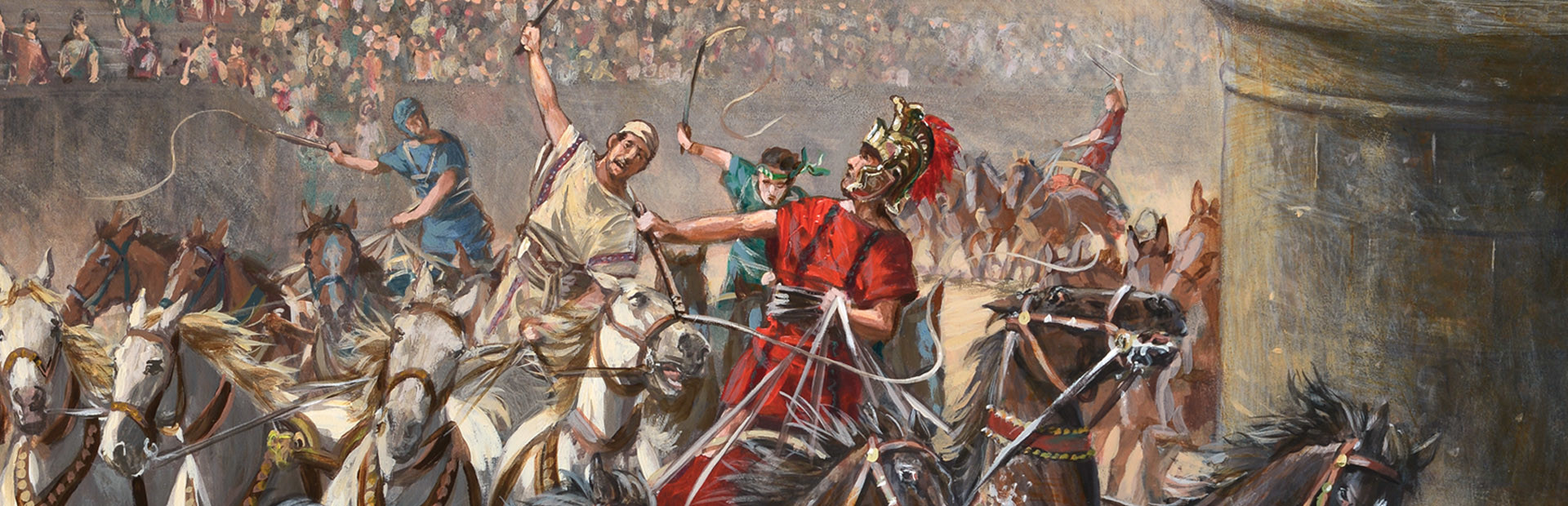
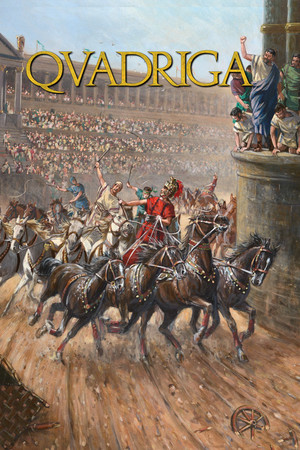
I will admit I approached Qvadriga with exactly the scepticism it deserves from a strategy player: a chariot racing game, really? Ten races in, I was min-maxing horse endurance builds and swearing at the AI for cutting my auriga off at the spina. That's the trick this game pulls. It looks like a curiosity, and it plays like a compact tactics problem with a management layer stitched underneath. At its core, Qvadriga is a turn-based tactics game viewed from the top down. Each turn you issue a single order to your driver: accelerate, change lane, whip the horses into overdrive, block an opponent, or swing your whip at a rival to lacerate their horses or their constitution. The genius is that those orders resolve simultaneously with every other chariot on track. Cornering too fast is a flip risk. Flogging your horses past their top speed pays dividends in the short term but degrades their health and top-end performance, so a pace-management calculation runs underneath every race. When a chariot ahead of you breaks a wheel and becomes wreckage on the track, you now have an obstacle problem too. Races between four and sixteen competitors mean the chaos dial has a wide range, and the sixteen-rival carnage events play very differently from tight, tactical four-team bouts. The campaign structure is where the depth opens up. You start in provincial circuits, pick one of six historic factions, each carrying different stat bonuses to aurigae skill or horse speed, and grind fame and denarii outward toward Rome. Seven regions, 43 historically modelled circuses (the developer consulted actual archaeological research and visited Iberian peninsula sites in person), unique city bonuses, and a support roster of medics, craftsmen, and veterinaries to manage between events. The upgrade tree for charioteers covers skill and constitution; horses split between speed and endurance; chariots balance acceleration against structural size. No single build dominates, and the faction choice nudges you toward a preferred approach rather than locking you in. For a solo indie project, the decision surface is impressive. The static (fully paused) and dynamic (real-time with frequent pause prompts) race modes also mean players with different stress tolerances can both find a comfortable pace. The honest weaknesses are worth flagging. The management layer is shallower than it first promises: once you understand the stat matrix, between-race decisions become fairly routine, and some players report grinding the same few tracks repeatedly to bank enough denarii to unlock the next region. The randomness weighting in late-campaign races, when every team is comparably equipped, has drawn fair criticism since launch, and it is genuinely harder to feel in control when the dice variance tightens. There is no multiplayer, which stings given that the whole design philosophy maps perfectly onto asynchronous head-to-head, and no mod ecosystem to speak of. The visuals are strictly functional; the circuses are readable and historically informed, but nobody is buying this for aesthetics. Rock Paper Shotgun named it the best racing game of 2014, Metacritic sits at 72, and those two data points together tell you exactly what it is: a well-executed niche product, not a broad-audience release. If you can accept the graphical spareness and the absence of multiplayer, Qvadriga rewards patience and systems thinking in a way almost no other racing game on PC does. Strategy players who already navigate Slitherine's catalogue will feel at home immediately. Complete newcomers to turn-based tactics can also land here without pain, because the one-click order interface is genuinely clean and the static mode gives you unlimited thinking time. It is a surprisingly good entry point into the "every action has cascading consequences" style of design, inside a theme you cannot find anywhere else. Diego, Scout Team

Qvadriga

Qvadriga

13 jun 2014TurnopiaSlitherine Ltd.
GamerScout opina

Turn-based tactics dressed up as a Roman blood sport: Qvadriga makes every corner, whip crack, and lane choice feel like a genuine decision with consequence. Niche as they come, but nothing else scratches this itch on PC.

PC
Steam Deck UnsupportedProtonDB Gold
Mejor precio disponible
€0.00
en N/A
Mínimo histórico: €0.79

Comparar precios(0 tiendas)

Cargando precios...

We may earn a commission when you buy games through links on this page — at no extra cost to you. It never affects our rankings or verdicts.

Historial de precios

Historical low
€0.7916 Jun 2026
Keyshops
€0.73€0.77€0.82€0.8610 Jun15 Jun19 Jun24 Jun28 Jun
Tracking prices since 10 Jun 2026
Create alert

Capturas y multimedia

Acerca de Qvadriga

I will admit I approached Qvadriga with exactly the scepticism it deserves from a strategy player: a chariot racing game, really? Ten races in, I was min-maxing horse endurance builds and swearing at the AI for cutting my auriga off at the spina. That's the trick this game pulls. It looks like a curiosity, and it plays like a compact tactics problem with a management layer stitched underneath. At its core, Qvadriga is a turn-based tactics game viewed from the top down. Each turn you issue a single order to your driver: accelerate, change lane, whip the horses into overdrive, block an opponent, or swing your whip at a rival to lacerate their horses or their constitution. The genius is that those orders resolve simultaneously with every other chariot on track. Cornering too fast is a flip risk. Flogging your horses past their top speed pays dividends in the short term but degrades their health and top-end performance, so a pace-management calculation runs underneath every race. When a chariot ahead of you breaks a wheel and becomes wreckage on the track, you now have an obstacle problem too. Races between four and sixteen competitors mean the chaos dial has a wide range, and the sixteen-rival carnage events play very differently from tight, tactical four-team bouts. The campaign structure is where the depth opens up. You start in provincial circuits, pick one of six historic factions, each carrying different stat bonuses to aurigae skill or horse speed, and grind fame and denarii outward toward Rome. Seven regions, 43 historically modelled circuses (the developer consulted actual archaeological research and visited Iberian peninsula sites in person), unique city bonuses, and a support roster of medics, craftsmen, and veterinaries to manage between events. The upgrade tree for charioteers covers skill and constitution; horses split between speed and endurance; chariots balance acceleration against structural size. No single build dominates, and the faction choice nudges you toward a preferred approach rather than locking you in. For a solo indie project, the decision surface is impressive. The static (fully paused) and dynamic (real-time with frequent pause prompts) race modes also mean players with different stress tolerances can both find a comfortable pace. The honest weaknesses are worth flagging. The management layer is shallower than it first promises: once you understand the stat matrix, between-race decisions become fairly routine, and some players report grinding the same few tracks repeatedly to bank enough denarii to unlock the next region. The randomness weighting in late-campaign races, when every team is comparably equipped, has drawn fair criticism since launch, and it is genuinely harder to feel in control when the dice variance tightens. There is no multiplayer, which stings given that the whole design philosophy maps perfectly onto asynchronous head-to-head, and no mod ecosystem to speak of. The visuals are strictly functional; the circuses are readable and historically informed, but nobody is buying this for aesthetics. Rock Paper Shotgun named it the best racing game of 2014, Metacritic sits at 72, and those two data points together tell you exactly what it is: a well-executed niche product, not a broad-audience release. If you can accept the graphical spareness and the absence of multiplayer, Qvadriga rewards patience and systems thinking in a way almost no other racing game on PC does. Strategy players who already navigate Slitherine's catalogue will feel at home immediately. Complete newcomers to turn-based tactics can also land here without pain, because the one-click order interface is genuinely clean and the static mode gives you unlimited thinking time. It is a surprisingly good entry point into the "every action has cascading consequences" style of design, inside a theme you cannot find anywhere else.

Diego
Diego · Scout Team

Strategy & simulation

Etiquetas

singleplayertier:aaaTurn-Based TacticsCampaign ProgressionHorse Stamina ManagementFaction BuildsHistorical SettingRisk-Reward RacingSlitherine-Published

Requisitos del sistema

Mínimos

OS
Vista/7/8/10
Memory
2 GB RAM
DirectX
Version 9.0c
Storage
2 GB available space
Graphics
DirectX 9.0c compatible video card
Processor
1.6 GHz
Sound Card
Compatible sound card

Sigue explorando

Community Discussion

Be the first to comment on Qvadriga.

Reseñas y valoraciones

Metacritic
72

Información del juego

Desarrolladora
Turnopia
Distribuidora
Slitherine Ltd.
Fecha de lanzamiento
13 jun 2014

Alerta de precio

¡Recibe un aviso cuando el precio baje de tu objetivo!

Crear alerta

Más de Turnopia

Compra mejor: guías útiles

¿Buscas más? Mira juegos como Qvadriga →

Preguntas frecuentes sobre Qvadriga

¿Cuánto cuesta Qvadriga?

El precio de Qvadriga cambia a menudo y varía según la tienda, la edición y la región. La tabla de precios en vivo de esta página compara las ofertas más baratas en stock de tiendas de claves de confianza como Eneba y Kinguin, para que siempre veas el precio más bajo actual antes de comprar.

¿Dónde puedo comprar Qvadriga más barato?

Compara los precios de Qvadriga en todas las tiendas verificadas en la tabla de precios de esta página. Listamos las ofertas de claves y tiendas más baratas en stock, actualizadas con frecuencia, para que siempre veas la mejor oferta actual antes de comprar.

¿En qué plataformas está disponible Qvadriga?

Qvadriga está disponible en PC.

¿Cuándo se lanzó Qvadriga?

Qvadriga se lanzó el 13 de junio de 2014.

¿Quién desarrolló Qvadriga?

Qvadriga fue desarrollado por Turnopia y publicado por Slitherine Ltd..

¿Merece la pena comprar Qvadriga?

Qvadriga tiene una puntuación Metacritic de 72/100, lo que lo convierte en uno de los títulos destacados de Racing. Mira las reseñas completas, las valoraciones y los tiempos de duración en esta página para decidir.