
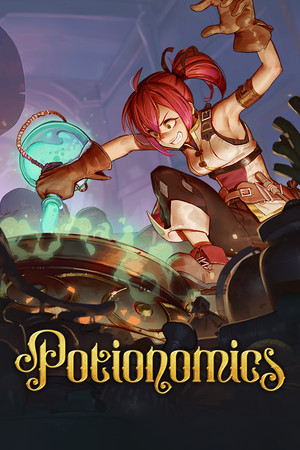
Compara los precios de Potionomics en tiendas de claves de confianza y encuentra la mejor oferta. Desarrollado por Voracious Games. Publicado por XSEED Games. Lanzado el 17/10/2022. Disponible en PC. Géneros: Indie, RPG, Simulation, Strategy. Puntuación Metacritic: 79/100.

Debt, potions, and a surprisingly deep haggling deck to build, Potionomics earns its strategy credentials behind a deceptively cute facade.

I went into Potionomics expecting a light shop-keeper romp and came out having spent an embarrassing number of late nights optimising ingredient ratios and haggling decks. The core loop is tighter than it looks on paper: you play as Sylvia, a young witch saddled with an enormous debt and a crumbling potion shop, and you have roughly 50 in-game days to claw your way through five escalating competitions before the whole thing collapses. That hard deadline creates the same pleasant pressure you get from a well-tuned grand strategy campaign, every single time slot matters, because you only get six action slots per day, and opening the shop burns two of them before you even think about brewing or socialising. The mechanics layer in fast. Brewing is an ingredient-balancing exercise built around magimin values across five elemental types, getting the ratios right lifts potion quality and adds buff properties that carry into the selling phase. Then selling itself is its own card-based haggling minigame: you play cards from a 20-card deck to raise customer Interest while managing their Patience and Sylvia's own Stress meter. It reads like a stripped-down Slay the Spire encounter, and the build variety is real. Cards like Chorus (which copies the previous card played), Captivate, and Bravado each suggest different archetypes, and the community has already mapped out strong synergies around draw-engine builds that can max customer Interest by turn two. The clever twist is that your deck grows entirely through NPC relationships, every character you befriend or romance unlocks cards that reflect their personality. Befriending the laid-back wood elf Saffron gives Sylvia stress-reduction tools; levelling up Quinn or Mint opens supply lines for rare ingredients. The social and mechanical layers are genuinely fused rather than bolted on as separate modes. Where it stumbles is time pressure, and not in a fun way for every player. Early playthroughs can hit an XCOM-style death spiral if you misread the early pacing: too many social calls, not enough potions brewed, and suddenly you are behind on tournament quality with no easy recovery. The Masterwork Edition update addressed this directly by adding adjustable difficulty settings, including a "cozy" mode that removes the financial death-spiral risk and lets you focus on the story and deck experimentation. That update also added full voice acting for the entire cast, which transforms the experience, the character animations were already described by multiple critics as Pixar-quality in expressiveness, and the voice performances match that bar. Some UI friction remains: adding items to Quinn's inventory for purchase requires clicking through each one individually, and shop upgrades demand an unequip-upgrade-re-equip sequence with slow animations. These are real friction points, not dealbreakers, but worth knowing going in. For strategy and sim fans specifically, the depth-to-runtime ratio is solid. A single story run sits comfortably in the 20-to-30 hour range, with genuine replay motivation from trying different deck archetypes and NPC friendship paths. The absence of a freeplay or sandbox mode after the story ends is the one legitimate structural gap, once the debt is paid, you are done. That will frustrate players who want an endless optimisation sandbox. Everyone else, particularly anyone who likes the idea of a resource-management game where the "combat" is a tight card-based negotiation, will find that Potionomics respects their intelligence without demanding a wiki to start. The tutorial introduces mechanics gradually across the first several in-game days, which means a newcomer to deck-builders or shop sims can acclimate without being buried. Play on cozy mode for your first run, switch to normal once you know the ingredient systems, and the game opens up considerably. Diego, Scout Team

Potionomics

Potionomics

17 oct 2022Voracious GamesXSEED Games
GamerScout opina

Debt, potions, and a surprisingly deep haggling deck to build, Potionomics earns its strategy credentials behind a deceptively cute facade.

PC
Steam Deck VerifiedProtonDB Gold
Mejor precio disponible
€0.00
en N/A
Mínimo histórico: €11.20

Comparar precios(0 tiendas)

Cargando precios...

We may earn a commission when you buy games through links on this page — at no extra cost to you. It never affects our rankings or verdicts.

Historial de precios

Historical low
€11.2028 Jun 2026
Keyshops
€9.79€14.66€19.53€24.408 Jun13 Jun18 Jun23 Jun28 Jun
Tracking prices since 8 Jun 2026
Create alert

Capturas y multimedia

Acerca de Potionomics

I went into Potionomics expecting a light shop-keeper romp and came out having spent an embarrassing number of late nights optimising ingredient ratios and haggling decks. The core loop is tighter than it looks on paper: you play as Sylvia, a young witch saddled with an enormous debt and a crumbling potion shop, and you have roughly 50 in-game days to claw your way through five escalating competitions before the whole thing collapses. That hard deadline creates the same pleasant pressure you get from a well-tuned grand strategy campaign, every single time slot matters, because you only get six action slots per day, and opening the shop burns two of them before you even think about brewing or socialising. The mechanics layer in fast. Brewing is an ingredient-balancing exercise built around magimin values across five elemental types, getting the ratios right lifts potion quality and adds buff properties that carry into the selling phase. Then selling itself is its own card-based haggling minigame: you play cards from a 20-card deck to raise customer Interest while managing their Patience and Sylvia's own Stress meter. It reads like a stripped-down Slay the Spire encounter, and the build variety is real. Cards like Chorus (which copies the previous card played), Captivate, and Bravado each suggest different archetypes, and the community has already mapped out strong synergies around draw-engine builds that can max customer Interest by turn two. The clever twist is that your deck grows entirely through NPC relationships, every character you befriend or romance unlocks cards that reflect their personality. Befriending the laid-back wood elf Saffron gives Sylvia stress-reduction tools; levelling up Quinn or Mint opens supply lines for rare ingredients. The social and mechanical layers are genuinely fused rather than bolted on as separate modes. Where it stumbles is time pressure, and not in a fun way for every player. Early playthroughs can hit an XCOM-style death spiral if you misread the early pacing: too many social calls, not enough potions brewed, and suddenly you are behind on tournament quality with no easy recovery. The Masterwork Edition update addressed this directly by adding adjustable difficulty settings, including a "cozy" mode that removes the financial death-spiral risk and lets you focus on the story and deck experimentation. That update also added full voice acting for the entire cast, which transforms the experience, the character animations were already described by multiple critics as Pixar-quality in expressiveness, and the voice performances match that bar. Some UI friction remains: adding items to Quinn's inventory for purchase requires clicking through each one individually, and shop upgrades demand an unequip-upgrade-re-equip sequence with slow animations. These are real friction points, not dealbreakers, but worth knowing going in. For strategy and sim fans specifically, the depth-to-runtime ratio is solid. A single story run sits comfortably in the 20-to-30 hour range, with genuine replay motivation from trying different deck archetypes and NPC friendship paths. The absence of a freeplay or sandbox mode after the story ends is the one legitimate structural gap, once the debt is paid, you are done. That will frustrate players who want an endless optimisation sandbox. Everyone else, particularly anyone who likes the idea of a resource-management game where the "combat" is a tight card-based negotiation, will find that Potionomics respects their intelligence without demanding a wiki to start. The tutorial introduces mechanics gradually across the first several in-game days, which means a newcomer to deck-builders or shop sims can acclimate without being buried. Play on cozy mode for your first run, switch to normal once you know the ingredient systems, and the game opens up considerably.

Diego
Diego · Scout Team

Strategy & simulation

Etiquetas

singleplayerachievementscontroller-supporttrading-cardscloud-savestier:aaaShop SimDeck-BuilderResource ManagementTime ManagementCozy Difficulty OptionRelationship MechanicsCard SynergiesNarrative-DrivenCompetition Structure

Requisitos del sistema

Mínimos

OS
Windows 7
Memory
8 GB RAM
Storage
7 GB available space
Graphics
Nvidia GTX 650 Ti or AMD HD 7850
Processor
Intel Core 2 DUO 2.4 GHz / AMD Athlon X2 2.7 GHz

Recomendados

OS
Windows 10
Memory
16 GB RAM
Storage
7 GB available space
Graphics
GeForce GTX 1060 6GB or Radeon RX 470
Processor
Quad Core Processor

Sigue explorando

Community Discussion

Be the first to comment on Potionomics.

Reseñas y valoraciones

Metacritic
79

Información del juego

Desarrolladora
Voracious Games
Distribuidora
XSEED Games
Fecha de lanzamiento
17 oct 2022

Alerta de precio

¡Recibe un aviso cuando el precio baje de tu objetivo!

Crear alerta

Compra mejor: guías útiles

Potionomics en directo en Twitch

¿Buscas más? Mira juegos como Potionomics →

Preguntas frecuentes sobre Potionomics

¿Cuánto cuesta Potionomics?

El precio de Potionomics cambia a menudo y varía según la tienda, la edición y la región. La tabla de precios en vivo de esta página compara las ofertas más baratas en stock de tiendas de claves de confianza como Eneba y Kinguin, para que siempre veas el precio más bajo actual antes de comprar.

¿Dónde puedo comprar Potionomics más barato?

Compara los precios de Potionomics en todas las tiendas verificadas en la tabla de precios de esta página. Listamos las ofertas de claves y tiendas más baratas en stock, actualizadas con frecuencia, para que siempre veas la mejor oferta actual antes de comprar.

¿En qué plataformas está disponible Potionomics?

Potionomics está disponible en PC.

¿Cuándo se lanzó Potionomics?

Potionomics se lanzó el 17 de octubre de 2022.

¿Quién desarrolló Potionomics?

Potionomics fue desarrollado por Voracious Games y publicado por XSEED Games.

¿Merece la pena comprar Potionomics?

Potionomics tiene una puntuación Metacritic de 79/100, lo que lo convierte en uno de los títulos destacados de Indie. Mira las reseñas completas, las valoraciones y los tiempos de duración en esta página para decidir.