
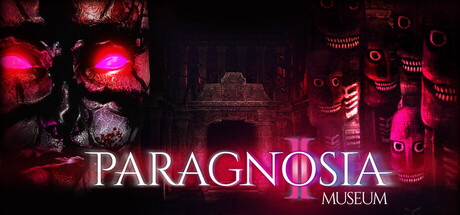
Compara los precios de Paragnosia: Museum en tiendas de claves de confianza y encuentra la mejor oferta. Desarrollado por Sine Coda. Publicado por Sine Coda. Lanzado el 30/3/2026. Disponible en PC. Géneros: Adventure, Casual, Indie, Simulation.

Ninety-one percent positive Steam reviews say more than any press blurb: this atmospheric anomaly-hunter earns that score by raising the bar on its predecessor in nearly every way, though it will punish casual observers hard.

I went in expecting a light horror curiosity and came out several sessions later still mentally cataloguing exhibit layouts. Paragnosia: Museum is the follow-up to Sine Coda's apartment-based anomaly game, and the step up in scale is the first thing that hits you: the intimate rooms of the original are gone, replaced by the sprawling, multi-wing Duskheath Museum, a fictional institution packed with exhibits ranging from ancient Egypt and pre-Columbian civilizations to cursed artifacts and funeral relics. The setting does real work here, not just as wallpaper, but as a pool of detail your brain has to memorize and then re-audit on every pass. The core mechanic is built around your rail-mounted camera. Rather than cutting between fixed security feeds, the camera rides a physical track through the exhibition halls, which means your angle on every object shifts as you move. That single design choice changes the game completely. An anomaly hidden behind a column at one position becomes obvious from three meters further along the rail, which means route planning and attention pacing matter in a way that static feed-switchers never demand. You play as Claire Ballard, dispatched by the Cam-on-Rail Company to monitor the museum through eight rounds representing a single night. Each round, new anomalies appear across the 130 total catalogued in the game. Miss one, and one of the six locks protecting you from the entity inside breaks. Lose all six before 8:00 AM and the night ends badly. Some anomalies also require precise exorcism actions at specific moments, not just a photograph, which adds a second layer of pressure on top of observation. The narrative is more present here than in the first game, and it is integrated into the mechanics rather than delivered through text dumps. The Necronomicon sits at the physical and thematic center of the museum, and certain anomalies directly reference it: objects animate, a demonic entity named Juno warps entire rooms on exorcism, a cosmic color palette bleeding fuchsia and turquoise through the exhibits telegraphs escalating threat level. There is a hidden ending tied to anomaly completion, and community guides confirm multiple distinct runs are needed to chase it, which gives the completionist crowd a concrete target. The museum architecture itself reportedly draws from real institutions including the Louvre and Musée d'Orsay, and that density of reference points means knowing the "normal" state of each room is its own quiet challenge. The honest criticism is difficulty. One preview described the sequel as a step up in challenge that "can be incredibly subtle" paired with an environment of "overwhelming size", and that friction is real. The first game balanced ease and tension tightly. Museum tilts harder toward demanding, and players who bounced off the scale in the demo may not find the full game any more forgiving. The six-lock failure state is uncompromising: miss too many anomalies in a run and you are done regardless of how well the rest went. That said, Steam players sitting at 91 percent positive suggest most people who buy in are finding the difficulty satisfying rather than punishing, and the structured round system means failed runs are short enough to restart without significant time loss. For a strategy and observation mindset, this is actually a readable purchase. The game rewards building a mental model of the museum, refining your sweep order each run, and learning which exhibit zones harbor the subtlest changes. That is a decisional loop, not a reflex loop, which puts it closer to a logic puzzle with atmosphere than to a jump-scare ride. New players should try the free demo first, which covers roughly 60 anomalies and ends on a cliffhanger, to calibrate whether the museum's scale appeals or overwhelms before committing to the full version. Diego, Scout Team

Paragnosia: Museum

Paragnosia: Museum

30 mar 2026Sine Coda
GamerScout opina

Ninety-one percent positive Steam reviews say more than any press blurb: this atmospheric anomaly-hunter earns that score by raising the bar on its predecessor in nearly every way, though it will punish casual observers hard.

PC
Steam Deck Playable
Mejor precio disponible
€0.00
en N/A
Mínimo histórico: €4.48

Comparar precios(0 tiendas)

Cargando precios...

We may earn a commission when you buy games through links on this page — at no extra cost to you. It never affects our rankings or verdicts.

Historial de precios

Historical low
€4.4828 Jun 2026
Keyshops
€4.37€4.75€5.12€5.508 Jun13 Jun18 Jun23 Jun28 Jun
Tracking prices since 8 Jun 2026
Create alert

Capturas y multimedia

Acerca de Paragnosia: Museum

I went in expecting a light horror curiosity and came out several sessions later still mentally cataloguing exhibit layouts. Paragnosia: Museum is the follow-up to Sine Coda's apartment-based anomaly game, and the step up in scale is the first thing that hits you: the intimate rooms of the original are gone, replaced by the sprawling, multi-wing Duskheath Museum, a fictional institution packed with exhibits ranging from ancient Egypt and pre-Columbian civilizations to cursed artifacts and funeral relics. The setting does real work here, not just as wallpaper, but as a pool of detail your brain has to memorize and then re-audit on every pass. The core mechanic is built around your rail-mounted camera. Rather than cutting between fixed security feeds, the camera rides a physical track through the exhibition halls, which means your angle on every object shifts as you move. That single design choice changes the game completely. An anomaly hidden behind a column at one position becomes obvious from three meters further along the rail, which means route planning and attention pacing matter in a way that static feed-switchers never demand. You play as Claire Ballard, dispatched by the Cam-on-Rail Company to monitor the museum through eight rounds representing a single night. Each round, new anomalies appear across the 130 total catalogued in the game. Miss one, and one of the six locks protecting you from the entity inside breaks. Lose all six before 8:00 AM and the night ends badly. Some anomalies also require precise exorcism actions at specific moments, not just a photograph, which adds a second layer of pressure on top of observation. The narrative is more present here than in the first game, and it is integrated into the mechanics rather than delivered through text dumps. The Necronomicon sits at the physical and thematic center of the museum, and certain anomalies directly reference it: objects animate, a demonic entity named Juno warps entire rooms on exorcism, a cosmic color palette bleeding fuchsia and turquoise through the exhibits telegraphs escalating threat level. There is a hidden ending tied to anomaly completion, and community guides confirm multiple distinct runs are needed to chase it, which gives the completionist crowd a concrete target. The museum architecture itself reportedly draws from real institutions including the Louvre and Musée d'Orsay, and that density of reference points means knowing the "normal" state of each room is its own quiet challenge. The honest criticism is difficulty. One preview described the sequel as a step up in challenge that "can be incredibly subtle" paired with an environment of "overwhelming size", and that friction is real. The first game balanced ease and tension tightly. Museum tilts harder toward demanding, and players who bounced off the scale in the demo may not find the full game any more forgiving. The six-lock failure state is uncompromising: miss too many anomalies in a run and you are done regardless of how well the rest went. That said, Steam players sitting at 91 percent positive suggest most people who buy in are finding the difficulty satisfying rather than punishing, and the structured round system means failed runs are short enough to restart without significant time loss. For a strategy and observation mindset, this is actually a readable purchase. The game rewards building a mental model of the museum, refining your sweep order each run, and learning which exhibit zones harbor the subtlest changes. That is a decisional loop, not a reflex loop, which puts it closer to a logic puzzle with atmosphere than to a jump-scare ride. New players should try the free demo first, which covers roughly 60 anomalies and ends on a cliffhanger, to calibrate whether the museum's scale appeals or overwhelms before committing to the full version.

Diego
Diego · Scout Team

Strategy & simulation

Etiquetas

singleplayerachievementscontroller-supporttier:indieAnomaly-HuntingRail CameraObservation PuzzlerHidden EndingOccult SettingCompletionist-FriendlyNight Survival LoopCritical Anomaly Events

Requisitos del sistema

Mínimos

OS
Windows 7 (SP1+), Windows 10 and Windows 11
Memory
4 GB RAM
DirectX
Version 11
Storage
4 GB available space
Graphics
DX10, DX11, DX12 capable.
Processor
x86, x64 architecture with SSE2 instruction set support.

Sigue explorando

Community Discussion

Be the first to comment on Paragnosia: Museum.

Reseñas y valoraciones

No hay valoraciones disponibles

Información del juego

Desarrolladora
Sine Coda
Distribuidora
Sine Coda
Fecha de lanzamiento
30 mar 2026

Alerta de precio

¡Recibe un aviso cuando el precio baje de tu objetivo!

Crear alerta

Compra mejor: guías útiles

¿Buscas más? Mira juegos como Paragnosia: Museum →

Preguntas frecuentes sobre Paragnosia: Museum

¿Cuánto cuesta Paragnosia: Museum?

El precio de Paragnosia: Museum cambia a menudo y varía según la tienda, la edición y la región. La tabla de precios en vivo de esta página compara las ofertas más baratas en stock de tiendas de claves de confianza como Eneba y Kinguin, para que siempre veas el precio más bajo actual antes de comprar.

¿Dónde puedo comprar Paragnosia: Museum más barato?

Compara los precios de Paragnosia: Museum en todas las tiendas verificadas en la tabla de precios de esta página. Listamos las ofertas de claves y tiendas más baratas en stock, actualizadas con frecuencia, para que siempre veas la mejor oferta actual antes de comprar.

¿En qué plataformas está disponible Paragnosia: Museum?

Paragnosia: Museum está disponible en PC.

¿Cuándo se lanzó Paragnosia: Museum?

Paragnosia: Museum se lanzó el 30 de marzo de 2026.

¿Quién desarrolló Paragnosia: Museum?

Paragnosia: Museum fue desarrollado por Sine Coda.