
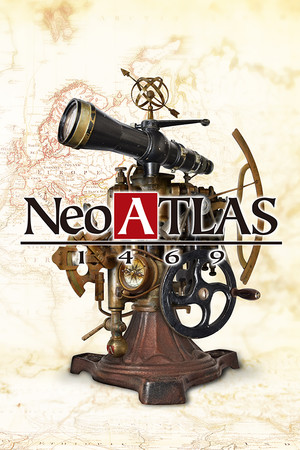
Compara los precios de Neo ATLAS 1469 en tiendas de claves de confianza y encuentra la mejor oferta. Desarrollado por ARTDINK. Publicado por Arc System Works. Lanzado el 14/2/2017. Disponible en PC. Géneros: Simulation.

Running a 15th-century Portuguese trading empire sounds grand until your admiral files a report claiming there are sea monsters blocking the route to Asia. Approve it or not: that one binary choice reshapes the entire world map.

I've spent enough time with grand-strategy and sim titles to spot a game that mistakes busywork for depth from across the room, and Neo ATLAS 1469 sits awkwardly on that line. The core hook is genuinely clever: you run a Portuguese trading company starting in 1469, dispatching admirals into uncharted waters and then deciding whether to approve or reject their expedition reports. Reject a claim that Africa ends in a wall of ice and the icy barrier disappears from your map. Approve a report of a continent called Mu sitting in the Pacific and there it is, drawn in ink, permanent. Your map becomes a personal document shaped by your choices, not a fixed historical truth. That is the kind of systemic decision-making I can get behind. The three gameplay pillars are exploration, trade route management, and treasure hunting. Trade works like a light production chain: pair two ports carrying compatible goods, assign a ship to the route, and you collect steady income. Combine grapes with oak barrels and Lisbon starts producing wine; combine sulfur with saltpeter and you have blackpowder. None of it reaches the complexity of a Patrician or a Port Royale, but the layering is satisfying enough to keep cash flow interesting. Admirals each carry levellable stats, and the game nudges you to match admiral skills to mission types: a high-charisma commander for hostile coasts, a veteran sailor for rough open-ocean routes. Ship upgrades come from finding technical manuals during play, and the fleet options diversify meaningfully as you progress, making later-game fleet composition a genuine planning exercise. The treasure hunting, however, is where the design cracks show. Items are only visible at extreme zoom levels on a large map, meaning you will spend real minutes scrolling and squinting for a speck that may or may not be there. A dowsing mechanic exists to help but burns through limited charges fast. The tutorial runs close to an hour of heavy visual-novel dialogue before the game releases you to manage freely. That opening is the most common complaint across every review I tracked, and it is warranted. The story framing, delivered through chibi-styled talking heads, interrupts gameplay constantly throughout the full run, and the writing is thin enough that you will be clicking through it rather than reading it within a few sessions. The PC port specifically drew criticism for a UI designed around a handheld touchscreen that never fully adapted to mouse-and-keyboard, making the map navigation feel friction-heavy compared to what a native PC sim would offer. Who is this actually for? Players who enjoy passive, almost meditative sims where ships move autonomously while you manage the macro picture will find a comfortable loop here. The approve-or-disapprove world-shaping mechanic gives each playthrough a different geographical outcome, which provides real replay motivation for completionists chasing different map configurations. Newcomers to the trading-sim genre will find the low financial pressure and minimal punishments genuinely accessible. Hardcore Paradox fans expecting deep AI behavior, complex diplomacy trees, or meaningful late-game escalation will be disappointed: the strategic ceiling is low, and money rarely becomes tight enough to create real tension. Sessions work better in one-to-two hour bursts than in extended marathon play, where the repetition of the exploration loop becomes apparent. Reviewed without a current Metacritic aggregate, but the critical consensus across outlets is squarely in the "interesting concept, execution falls short" range. Diego, Scout Team

Neo ATLAS 1469

Neo ATLAS 1469

14 feb 2017ARTDINKArc System Works
GamerScout opina

Running a 15th-century Portuguese trading empire sounds grand until your admiral files a report claiming there are sea monsters blocking the route to Asia. Approve it or not: that one binary choice reshapes the entire world map.

PC
Steam Deck Playable
Mejor precio disponible
€0.00
en N/A
Mínimo histórico: €8.62

Comparar precios(0 tiendas)

Cargando precios...

We may earn a commission when you buy games through links on this page — at no extra cost to you. It never affects our rankings or verdicts.

Historial de precios

Historical low
€8.6225 Jun 2026
Keyshops
€7.94€8.40€8.86€9.328 Jun13 Jun18 Jun23 Jun28 Jun
Tracking prices since 8 Jun 2026
Create alert

Capturas y multimedia

Acerca de Neo ATLAS 1469

I've spent enough time with grand-strategy and sim titles to spot a game that mistakes busywork for depth from across the room, and Neo ATLAS 1469 sits awkwardly on that line. The core hook is genuinely clever: you run a Portuguese trading company starting in 1469, dispatching admirals into uncharted waters and then deciding whether to approve or reject their expedition reports. Reject a claim that Africa ends in a wall of ice and the icy barrier disappears from your map. Approve a report of a continent called Mu sitting in the Pacific and there it is, drawn in ink, permanent. Your map becomes a personal document shaped by your choices, not a fixed historical truth. That is the kind of systemic decision-making I can get behind. The three gameplay pillars are exploration, trade route management, and treasure hunting. Trade works like a light production chain: pair two ports carrying compatible goods, assign a ship to the route, and you collect steady income. Combine grapes with oak barrels and Lisbon starts producing wine; combine sulfur with saltpeter and you have blackpowder. None of it reaches the complexity of a Patrician or a Port Royale, but the layering is satisfying enough to keep cash flow interesting. Admirals each carry levellable stats, and the game nudges you to match admiral skills to mission types: a high-charisma commander for hostile coasts, a veteran sailor for rough open-ocean routes. Ship upgrades come from finding technical manuals during play, and the fleet options diversify meaningfully as you progress, making later-game fleet composition a genuine planning exercise. The treasure hunting, however, is where the design cracks show. Items are only visible at extreme zoom levels on a large map, meaning you will spend real minutes scrolling and squinting for a speck that may or may not be there. A dowsing mechanic exists to help but burns through limited charges fast. The tutorial runs close to an hour of heavy visual-novel dialogue before the game releases you to manage freely. That opening is the most common complaint across every review I tracked, and it is warranted. The story framing, delivered through chibi-styled talking heads, interrupts gameplay constantly throughout the full run, and the writing is thin enough that you will be clicking through it rather than reading it within a few sessions. The PC port specifically drew criticism for a UI designed around a handheld touchscreen that never fully adapted to mouse-and-keyboard, making the map navigation feel friction-heavy compared to what a native PC sim would offer. Who is this actually for? Players who enjoy passive, almost meditative sims where ships move autonomously while you manage the macro picture will find a comfortable loop here. The approve-or-disapprove world-shaping mechanic gives each playthrough a different geographical outcome, which provides real replay motivation for completionists chasing different map configurations. Newcomers to the trading-sim genre will find the low financial pressure and minimal punishments genuinely accessible. Hardcore Paradox fans expecting deep AI behavior, complex diplomacy trees, or meaningful late-game escalation will be disappointed: the strategic ceiling is low, and money rarely becomes tight enough to create real tension. Sessions work better in one-to-two hour bursts than in extended marathon play, where the repetition of the exploration loop becomes apparent. Reviewed without a current Metacritic aggregate, but the critical consensus across outlets is squarely in the "interesting concept, execution falls short" range.

Diego
Diego · Scout Team

Strategy & simulation

Etiquetas

singleplayerachievementstrading-cardscloud-savestier:indieAge of SailCartography MechanicApprove-Disapprove SystemTrade Route BuilderFleet ManagementVisual Novel ElementsPassive Exploration LoopJapanese SimBranching World Map

Requisitos del sistema

Mínimos

OS
Windows 7/8/8.1/10 (32bit/64bit)
Memory
4 GB RAM
DirectX
Version 9.0c
Storage
1 GB available space
Processor
Celeron @ 2.16GHz and above
Sound Card
DirectSound compatible sound card

Sigue explorando

Community Discussion

Be the first to comment on Neo ATLAS 1469.

Reseñas y valoraciones

No hay valoraciones disponibles

Información del juego

Desarrolladora
ARTDINK
Distribuidora
Arc System Works
Fecha de lanzamiento
14 feb 2017

Alerta de precio

¡Recibe un aviso cuando el precio baje de tu objetivo!

Crear alerta

Más de ARTDINK

Compra mejor: guías útiles

Preguntas frecuentes sobre Neo ATLAS 1469

¿Cuánto cuesta Neo ATLAS 1469?

El precio de Neo ATLAS 1469 cambia a menudo y varía según la tienda, la edición y la región. La tabla de precios en vivo de esta página compara las ofertas más baratas en stock de tiendas de claves de confianza como Eneba y Kinguin, para que siempre veas el precio más bajo actual antes de comprar.

¿Dónde puedo comprar Neo ATLAS 1469 más barato?

Compara los precios de Neo ATLAS 1469 en todas las tiendas verificadas en la tabla de precios de esta página. Listamos las ofertas de claves y tiendas más baratas en stock, actualizadas con frecuencia, para que siempre veas la mejor oferta actual antes de comprar.

¿En qué plataformas está disponible Neo ATLAS 1469?

Neo ATLAS 1469 está disponible en PC.

¿Cuándo se lanzó Neo ATLAS 1469?

Neo ATLAS 1469 se lanzó el 14 de febrero de 2017.

¿Quién desarrolló Neo ATLAS 1469?

Neo ATLAS 1469 fue desarrollado por ARTDINK y publicado por Arc System Works.