
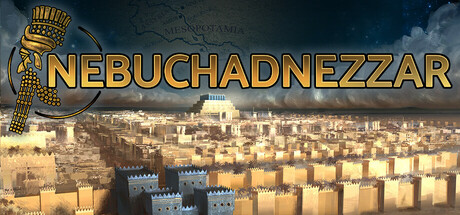
Compara los precios de Nebuchadnezzar en tiendas de claves de confianza y encuentra la mejor oferta. Desarrollado por Nepos Games. Publicado por Astra Logical. Lanzado el 17/2/2021. Disponible en PC, Linux. Géneros: Indie, Simulation, Strategy. Puntuación Metacritic: 73/100.

If Caesar III and Pharaoh had a Mesopotamian heir built by two people, this is it, a logistics-heavy city-builder with charm and a few too many rough edges.

My spreadsheet instincts fired up the moment I saw the supply chain layout in Nebuchadnezzar. Two developers at Nepos Games set out to resurrect the Impressions Games formula, the same walker-based logistics, the tiered housing upgrades, the monument-as-capstone structure, and transplant it into ancient Mesopotamia, a setting that the genre has almost entirely ignored for the past two decades. That alone earns it some serious goodwill from anyone who logged hundreds of hours in Caesar III or Pharaoh. The question worth answering here is not whether the nostalgia lands (it does), but whether the systems underneath hold up for a modern session. The production chain depth is real. Over a full campaign you will build butchers, carpenters, coppersmiths, breweries, wineries, and tablet-makers, each requiring its own inputs, transport routes, and workforce allocation. Warehouses and caravans form the backbone of your distribution network, and getting those caravan routes dialed in is legitimately satisfying when it clicks. The campaign itself spans more than a dozen historical missions, taking you from the early colonization of Mesopotamia through cities like Ur, Nineveh, and Babylon, capping each level with a major wonder, the Hanging Gardens, Ashurbanipal's Library, or a custom monument you design yourself through the in-game editor. That monument editor, where you control layout, color scheme, and fine detail, is the most distinctive thing here and the clearest signal that the developers wanted to give players genuine creative ownership. Where it gets complicated is the mid-to-late game. Market vendor routes require manual configuration for every single vendor in a settlement, and that becomes a real chore once your city scales up. Gold income is almost entirely trade-dependent, which creates a bottleneck in the early mission phases before your trading relationships mature. Post-launch updates, including a significant 1.2 patch, added crime, disease, firefighters, taxes, and wage management, addressing some of the loudest complaints from launch. Those additions meaningfully deepen the threat landscape the original shipped without: fire spreads if your firefighters are underfunded, and disease forces you to choose between folk healers and upper-class doctors based on your population class balance. The game at current patch is measurably more complete than at launch. For newcomers to this style of city-builder, the learning curve is genuine but manageable. The in-game encyclopedia does real work explaining the walker system and distribution logic. Where it falls short is in city-state complexity, there is no military, no rival political pressure from neighboring rulers, and the religion system, while present (choosing between deities like Inanna for trade bonuses or Enlil for population growth is a real decision), is thinner than what Pharaoh shipped with in 1999. Mod support is built in from the ground up, with nearly every game element, buildings, production chains, maps, and missions, open to Workshop customization. That is the long-term value proposition: the base game leaves gaps that the community is actively filling. Steam user sentiment sits at 79% positive across over 1,400 reviews, which roughly tracks the Metacritic 73. It is a game that rewards patience and punishes players who expect the friction-free onboarding of modern builders. Anyone coming in cold from Cities: Skylines will find the walker-route micromanagement alienating. Anyone who remembers manually plotting priest routes in Pharaoh will feel right at home, and will appreciate that the monument editor does something none of those classics ever did. Diego, Scout Team

Nebuchadnezzar

Nebuchadnezzar

17 feb 2021Nepos GamesAstra Logical
GamerScout opina

If Caesar III and Pharaoh had a Mesopotamian heir built by two people, this is it, a logistics-heavy city-builder with charm and a few too many rough edges.

PCLinux
Steam Deck Playable
Mejor precio disponible
€0.00
en N/A
Mínimo histórico: €3.00

Comparar precios(0 tiendas)

Cargando precios...

We may earn a commission when you buy games through links on this page — at no extra cost to you. It never affects our rankings or verdicts.

Historial de precios

Historical low
€3.0010 Jun 2026
Keyshops
€2.76€2.92€3.08€3.2410 Jun15 Jun19 Jun24 Jun28 Jun
Tracking prices since 10 Jun 2026
Create alert

Capturas y multimedia

Acerca de Nebuchadnezzar

My spreadsheet instincts fired up the moment I saw the supply chain layout in Nebuchadnezzar. Two developers at Nepos Games set out to resurrect the Impressions Games formula, the same walker-based logistics, the tiered housing upgrades, the monument-as-capstone structure, and transplant it into ancient Mesopotamia, a setting that the genre has almost entirely ignored for the past two decades. That alone earns it some serious goodwill from anyone who logged hundreds of hours in Caesar III or Pharaoh. The question worth answering here is not whether the nostalgia lands (it does), but whether the systems underneath hold up for a modern session. The production chain depth is real. Over a full campaign you will build butchers, carpenters, coppersmiths, breweries, wineries, and tablet-makers, each requiring its own inputs, transport routes, and workforce allocation. Warehouses and caravans form the backbone of your distribution network, and getting those caravan routes dialed in is legitimately satisfying when it clicks. The campaign itself spans more than a dozen historical missions, taking you from the early colonization of Mesopotamia through cities like Ur, Nineveh, and Babylon, capping each level with a major wonder, the Hanging Gardens, Ashurbanipal's Library, or a custom monument you design yourself through the in-game editor. That monument editor, where you control layout, color scheme, and fine detail, is the most distinctive thing here and the clearest signal that the developers wanted to give players genuine creative ownership. Where it gets complicated is the mid-to-late game. Market vendor routes require manual configuration for every single vendor in a settlement, and that becomes a real chore once your city scales up. Gold income is almost entirely trade-dependent, which creates a bottleneck in the early mission phases before your trading relationships mature. Post-launch updates, including a significant 1.2 patch, added crime, disease, firefighters, taxes, and wage management, addressing some of the loudest complaints from launch. Those additions meaningfully deepen the threat landscape the original shipped without: fire spreads if your firefighters are underfunded, and disease forces you to choose between folk healers and upper-class doctors based on your population class balance. The game at current patch is measurably more complete than at launch. For newcomers to this style of city-builder, the learning curve is genuine but manageable. The in-game encyclopedia does real work explaining the walker system and distribution logic. Where it falls short is in city-state complexity, there is no military, no rival political pressure from neighboring rulers, and the religion system, while present (choosing between deities like Inanna for trade bonuses or Enlil for population growth is a real decision), is thinner than what Pharaoh shipped with in 1999. Mod support is built in from the ground up, with nearly every game element, buildings, production chains, maps, and missions, open to Workshop customization. That is the long-term value proposition: the base game leaves gaps that the community is actively filling. Steam user sentiment sits at 79% positive across over 1,400 reviews, which roughly tracks the Metacritic 73. It is a game that rewards patience and punishes players who expect the friction-free onboarding of modern builders. Anyone coming in cold from Cities: Skylines will find the walker-route micromanagement alienating. Anyone who remembers manually plotting priest routes in Pharaoh will feel right at home, and will appreciate that the monument editor does something none of those classics ever did.

Diego
Diego · Scout Team

Strategy & simulation

Etiquetas

singleplayerachievementsworkshopcloud-savestier:aaaWalker-Based LogisticsMonument EditorAncient MesopotamiaProduction ChainsIsometric City-BuilderMod-FriendlyPost-Launch UpdatesTrade Economy

Requisitos del sistema

Mínimos

OS
Windows 7+
Memory
3 GB RAM
Storage
2 GB available space
Graphics
ATI Radeon HD 6750 / NVIDIA GeForce 320 / Intel HD 4000, 1024MB VRAM required
Processor
Intel i3+ and equivalents

Recomendados

OS
Windows 7+
Memory
3 GB RAM
Storage
2 GB available space
Graphics
ATI Radeon HD 6750 / NVIDIA GeForce 320 / Intel HD 4000, 1024MB VRAM required
Processor
Intel i3+ and equivalents

Sigue explorando

Community Discussion

Be the first to comment on Nebuchadnezzar.

Reseñas y valoraciones

Metacritic
73

Información del juego

Desarrolladora
Nepos Games
Distribuidora
Astra Logical
Fecha de lanzamiento
17 feb 2021

Alerta de precio

¡Recibe un aviso cuando el precio baje de tu objetivo!

Crear alerta

Compra mejor: guías útiles

¿Buscas más? Mira juegos como Nebuchadnezzar →

Preguntas frecuentes sobre Nebuchadnezzar

¿Cuánto cuesta Nebuchadnezzar?

El precio de Nebuchadnezzar cambia a menudo y varía según la tienda, la edición y la región. La tabla de precios en vivo de esta página compara las ofertas más baratas en stock de tiendas de claves de confianza como Eneba y Kinguin, para que siempre veas el precio más bajo actual antes de comprar.

¿Dónde puedo comprar Nebuchadnezzar más barato?

Compara los precios de Nebuchadnezzar en todas las tiendas verificadas en la tabla de precios de esta página. Listamos las ofertas de claves y tiendas más baratas en stock, actualizadas con frecuencia, para que siempre veas la mejor oferta actual antes de comprar.

¿En qué plataformas está disponible Nebuchadnezzar?

Nebuchadnezzar está disponible en PC, Linux.

¿Cuándo se lanzó Nebuchadnezzar?

Nebuchadnezzar se lanzó el 17 de febrero de 2021.

¿Quién desarrolló Nebuchadnezzar?

Nebuchadnezzar fue desarrollado por Nepos Games y publicado por Astra Logical.

¿Merece la pena comprar Nebuchadnezzar?

Nebuchadnezzar tiene una puntuación Metacritic de 73/100, lo que lo convierte en uno de los títulos destacados de Indie. Mira las reseñas completas, las valoraciones y los tiempos de duración en esta página para decidir.