Compara los precios de Narita Boy en tiendas de claves de confianza y encuentra la mejor oferta. Desarrollado por Studio Koba. Publicado por Team17. Lanzado el 30/3/2021. Disponible en PC, Mac, Xbox. Géneros: Adventure, Indie. Puntuación Metacritic: 74/100.

A Kickstarter love letter to the 80s that leads with breathtaking pixel art and a pulsing synthwave score, then asks whether gorgeous aesthetics alone can carry a seven-to-nine hour action-adventure. Mostly, they can.

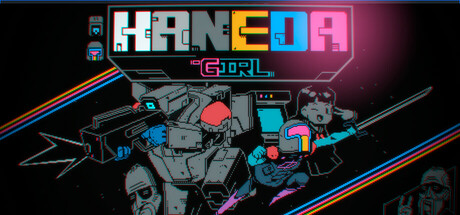
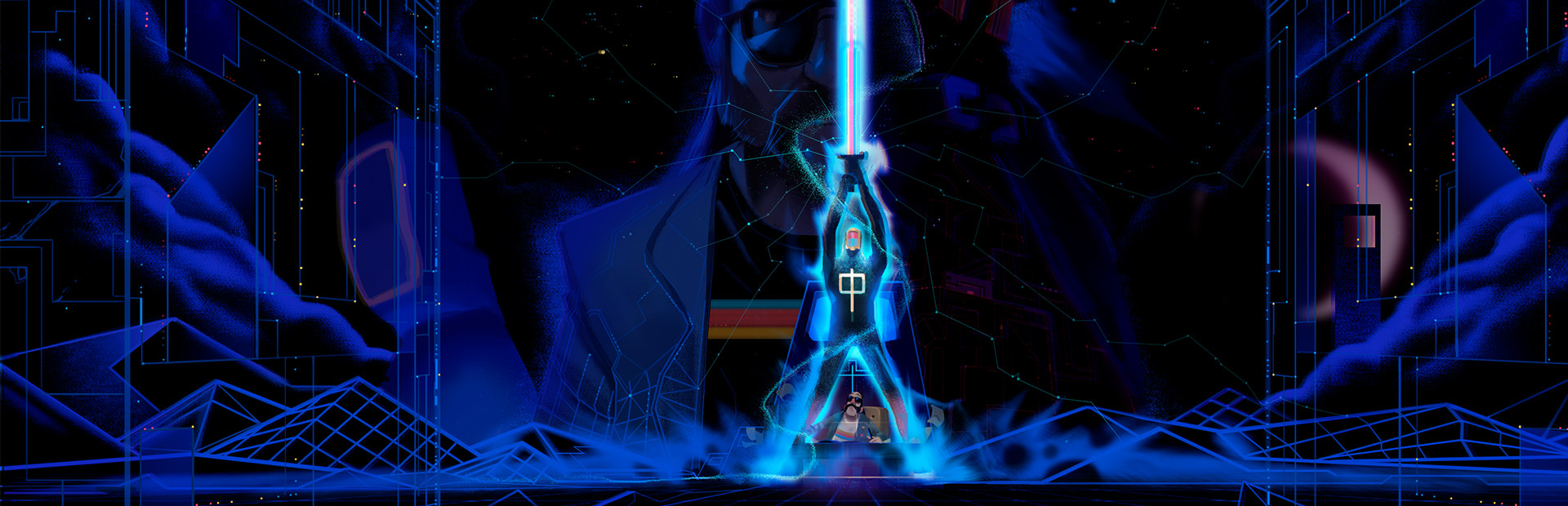
My first few minutes with Narita Boy felt like pressing play on a VHS tape I'd been searching for at a car boot sale for years. The CRT filter, the neon grids, the hand-drawn pixel animations that move like nothing you've seen at this resolution - Studio Koba, a tiny team that crowdfunded this on Kickstarter in 2017, clearly poured everything they had into making this world feel like a relic from an era that never quite existed. That craftsmanship is real, and it deserves to be named upfront. The Digital Kingdom you travel through is genuinely original in its construction. Three distinct Beams carry you across a desert, a pixel-drenched onsen, and a city in ruins, each populated by enemies that look like psychedelic 80s album covers given form. You fight using the Techno-Sword as your spine: basic slashes expand over time into an uppercut-style swing that opens new traversal, a charged heavy strike, a close-range shotgun blast, and wild screen-clearing summons tied to the Wild Fire system. Wild Fire comes in three colors - yellow, blue, red - each letting you deal bonus damage to color-matched enemies at the cost of your own resistance. On paper, that interplay sounds rich. In practice, the combat sits somewhere between satisfying and undercooked depending on the encounter. Arena fights against waves of enemies test your ability to read and counter a genuinely varied roster; an armored shield-carrier will have you cycling through your toolkit, while certain combo chains feel weightier than others. The shotgun sidearm gets talked about more than it gets used. The inconsistency is real, and critics who found the combat "undecided on what it exactly wants to be" are not wrong. Where the game earns its reputation, and earns it hard, is the layer beneath all the digital mythology. Running parallel to the neon-coded action is the Creator's story: a quiet, deeply personal series of memory sequences that pull you out of the Digital Kingdom and into something more intimate - a childhood in Narita, Japan, a life shaped by grief and nostalgia. These flashback moments breathe differently from the rest of the game. The pace drops, the palette shifts, and suddenly you are not playing a power fantasy at all. You are watching someone process loss through the lens of the games they made. That tonal contrast is the best thing Narita Boy does, and it is quietly remarkable for a Kickstarter debut. The director's stated desire to mix the organic with the non-organic bleeds into the structure itself. The friction points are consistent across reviews and worth naming honestly. There is no map, which stings in a world this labyrinthine. Fetch-questing for Techno-Keys involves backtracking that wears out its welcome before the credits. The NPC dialogue leans so hard into invented technobabble - houses of the Trichroma, creator totems, binary-coded prophecy - that it tips from atmospheric world-building into noise that many players will simply start skipping. Checkpoint placement is uneven in places, and health recovery relies on death more than it probably should. None of these are fatal problems for a seven-to-nine hour game, but they are the reason the critical reception landed in the mid-70s rather than higher. For players who come to this as an experience - mood, score, handcrafted pixel art, a story about what games mean to the people who made them - Narita Boy delivers something that lingers well past the credits. For players whose primary interest is tight Metroidvania combat depth, there are sharper tools in the genre. Know which one you are before you boot it up. Kai, Scout Team

Narita Boy

Narita Boy

30 mar 2021Studio KobaTeam17
GamerScout opina

A Kickstarter love letter to the 80s that leads with breathtaking pixel art and a pulsing synthwave score, then asks whether gorgeous aesthetics alone can carry a seven-to-nine hour action-adventure. Mostly, they can.

PCMacXbox
Steam Deck VerifiedProtonDB Platinum
Mejor precio disponible
€0.00
en N/A
Mínimo histórico: €0.40

Comparar precios(0 tiendas)

Cargando precios...

We may earn a commission when you buy games through links on this page — at no extra cost to you. It never affects our rankings or verdicts.

Historial de precios

Historical low
€0.406 Jun 2026
Keyshops
€0.39€0.43€0.47€0.516 Jun12 Jun17 Jun23 Jun28 Jun
Tracking prices since 6 Jun 2026
Create alert

Capturas y multimedia

Acerca de Narita Boy

My first few minutes with Narita Boy felt like pressing play on a VHS tape I'd been searching for at a car boot sale for years. The CRT filter, the neon grids, the hand-drawn pixel animations that move like nothing you've seen at this resolution - Studio Koba, a tiny team that crowdfunded this on Kickstarter in 2017, clearly poured everything they had into making this world feel like a relic from an era that never quite existed. That craftsmanship is real, and it deserves to be named upfront. The Digital Kingdom you travel through is genuinely original in its construction. Three distinct Beams carry you across a desert, a pixel-drenched onsen, and a city in ruins, each populated by enemies that look like psychedelic 80s album covers given form. You fight using the Techno-Sword as your spine: basic slashes expand over time into an uppercut-style swing that opens new traversal, a charged heavy strike, a close-range shotgun blast, and wild screen-clearing summons tied to the Wild Fire system. Wild Fire comes in three colors - yellow, blue, red - each letting you deal bonus damage to color-matched enemies at the cost of your own resistance. On paper, that interplay sounds rich. In practice, the combat sits somewhere between satisfying and undercooked depending on the encounter. Arena fights against waves of enemies test your ability to read and counter a genuinely varied roster; an armored shield-carrier will have you cycling through your toolkit, while certain combo chains feel weightier than others. The shotgun sidearm gets talked about more than it gets used. The inconsistency is real, and critics who found the combat "undecided on what it exactly wants to be" are not wrong. Where the game earns its reputation, and earns it hard, is the layer beneath all the digital mythology. Running parallel to the neon-coded action is the Creator's story: a quiet, deeply personal series of memory sequences that pull you out of the Digital Kingdom and into something more intimate - a childhood in Narita, Japan, a life shaped by grief and nostalgia. These flashback moments breathe differently from the rest of the game. The pace drops, the palette shifts, and suddenly you are not playing a power fantasy at all. You are watching someone process loss through the lens of the games they made. That tonal contrast is the best thing Narita Boy does, and it is quietly remarkable for a Kickstarter debut. The director's stated desire to mix the organic with the non-organic bleeds into the structure itself. The friction points are consistent across reviews and worth naming honestly. There is no map, which stings in a world this labyrinthine. Fetch-questing for Techno-Keys involves backtracking that wears out its welcome before the credits. The NPC dialogue leans so hard into invented technobabble - houses of the Trichroma, creator totems, binary-coded prophecy - that it tips from atmospheric world-building into noise that many players will simply start skipping. Checkpoint placement is uneven in places, and health recovery relies on death more than it probably should. None of these are fatal problems for a seven-to-nine hour game, but they are the reason the critical reception landed in the mid-70s rather than higher. For players who come to this as an experience - mood, score, handcrafted pixel art, a story about what games mean to the people who made them - Narita Boy delivers something that lingers well past the credits. For players whose primary interest is tight Metroidvania combat depth, there are sharper tools in the genre. Know which one you are before you boot it up.

Kai
Kai · Scout Team

Indie & narrative

Etiquetas

singleplayerachievementscontroller-supportcloud-savestier:aaaCRT FilterSynthwave SoundtrackMemory SequencesWild Fire SystemArena CombatFetch-Quest HeavyKickstarter IndieLinear Metroidvania

Requisitos del sistema

Mínimos

OS
Windows 7
Memory
2 GB RAM
DirectX
Version 10
Storage
2 GB available space
Graphics
NVIDIA GeForce 9800 GTX, 1 GB or AMD Radeon HD 4870, 1 GB
Processor
Dual Core processor, 2.0 GHz
Sound Card
Windows Compatible Soundcard

Sigue explorando

Community Discussion

Be the first to comment on Narita Boy.

Reseñas y valoraciones

Metacritic
74

Información del juego

Desarrolladora
Studio Koba
Distribuidora
Team17
Fecha de lanzamiento
30 mar 2021

Alerta de precio

¡Recibe un aviso cuando el precio baje de tu objetivo!

Crear alerta

Más de Studio Koba

Compra mejor: guías útiles

¿Buscas más? Mira juegos como Narita Boy →

Preguntas frecuentes sobre Narita Boy

¿Cuánto cuesta Narita Boy?

El precio de Narita Boy cambia a menudo y varía según la tienda, la edición y la región. La tabla de precios en vivo de esta página compara las ofertas más baratas en stock de tiendas de claves de confianza como Eneba y Kinguin, para que siempre veas el precio más bajo actual antes de comprar.

¿Dónde puedo comprar Narita Boy más barato?

Compara los precios de Narita Boy en todas las tiendas verificadas en la tabla de precios de esta página. Listamos las ofertas de claves y tiendas más baratas en stock, actualizadas con frecuencia, para que siempre veas la mejor oferta actual antes de comprar.

¿En qué plataformas está disponible Narita Boy?

Narita Boy está disponible en PC, Mac, Xbox.

¿Cuándo se lanzó Narita Boy?

Narita Boy se lanzó el 30 de marzo de 2021.

¿Quién desarrolló Narita Boy?

Narita Boy fue desarrollado por Studio Koba y publicado por Team17.

¿Merece la pena comprar Narita Boy?

Narita Boy tiene una puntuación Metacritic de 74/100, lo que lo convierte en uno de los títulos destacados de Adventure. Mira las reseñas completas, las valoraciones y los tiempos de duración en esta página para decidir.