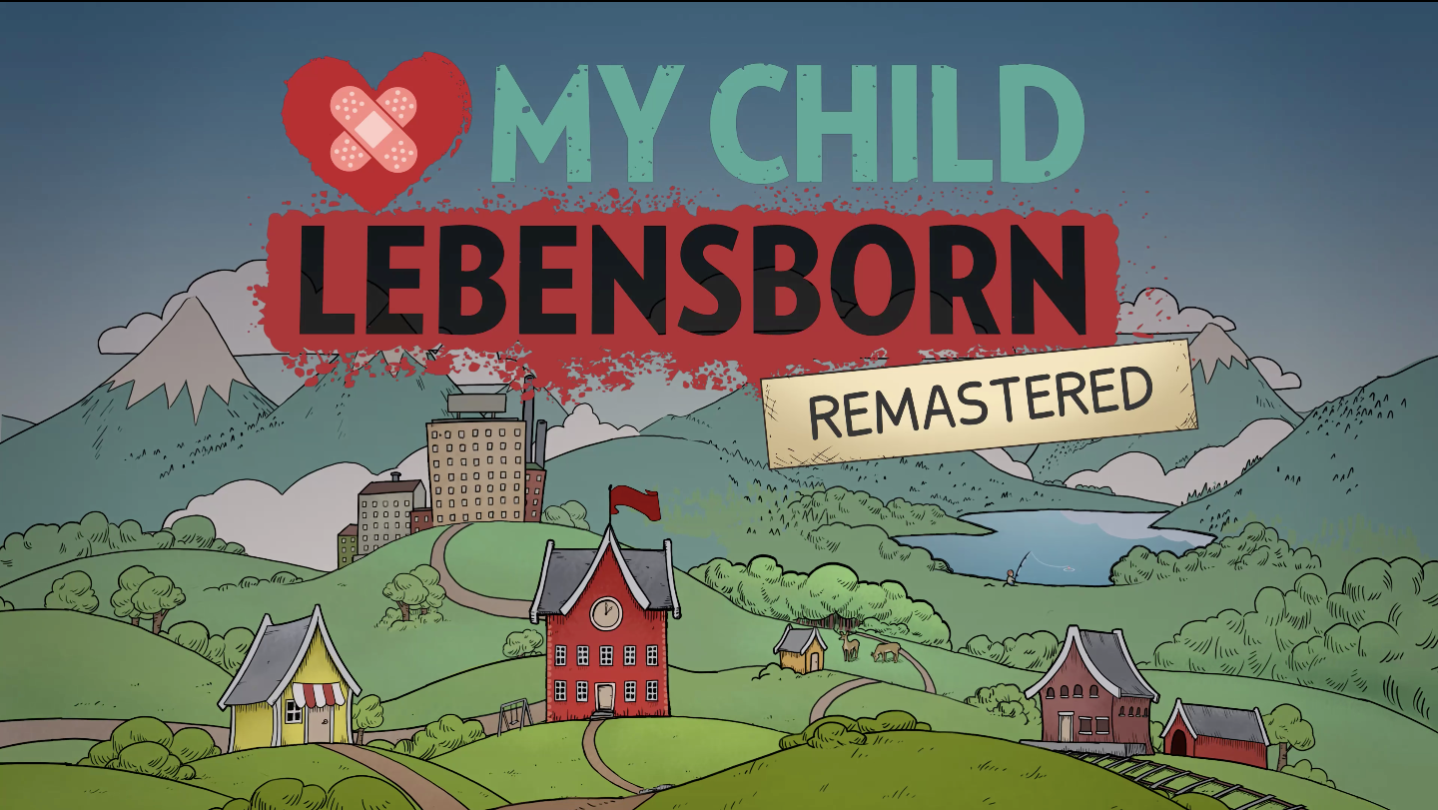
Compara los precios de My Child Lebensborn en tiendas de claves de confianza y encuentra la mejor oferta. Desarrollado por Sarepta Studio AS. Publicado por Sarepta Studio AS. Lanzado el 18/7/2023. Disponible en PC. Géneros: Indie, Simulation.

A story-driven nurture sim based on real post-WWII history, where raising a Lebensborn child means managing scarce resources while absorbing genuinely heavy emotional punches.

My Child Lebensborn is not a comfort game. It is a resource-management and narrative sim built around one of the darker chapters of post-war European history: the fate of Lebensborn children, born of Nazi program policies, who faced severe social ostracism in occupied Norway after 1945. You play the adoptive parent of either Karin or Klaus, and the game wastes no time dropping you into a routine that is equal parts logistical puzzle and emotional gut-check. Every day you balance a tight budget of time and food against your child's needs: feeding them, helping with homework, answering their increasingly difficult questions about why the other kids will not talk to them. The mechanical loop is simple on paper but the decisions are not. From a systems standpoint, the game is far leaner than the strategy titles I usually cover. There is no tech tree, no diplomacy ledger, no unit composition to obsess over. What it does share with deep sims is the concept of resource tension under incomplete information. You rarely have enough of anything. You have to decide whether tonight's limited time goes toward mending clothes, buying food, or sitting with your child to process what happened at school. Those tradeoffs compound across sessions the way economic decisions compound across a campaign. Players who enjoy optimization under constraint will recognise the feeling even if the subject matter is miles away from a Paradox title. The writing is where the game earns its 97-percent approval rating. Sarepta Studio worked with historians and drew on documented testimonies, and that groundwork shows. Dialogue does not moralize at you or spoon-feed conclusions. The children ask questions the game does not fully answer, because historically many of those answers were never given. There is no tutorial explaining how to handle a child asking why their classmates call them names rooted in wartime slurs. You make a choice, you see the consequence, and the next session the emotional debt is still sitting there. It respects the player's intelligence in the same way a dense historical grand-strategy game does: it trusts you to sit with uncomfortable data. The weaknesses are real and worth naming. The visual style is deliberately lo-fi, almost illustrated-storybook, which works thematically but will be a turn-off if you need production polish to stay engaged. The gameplay loop can feel repetitive in the middle stretch when the daily routine becomes familiar before the story escalates again. There is no mod ecosystem to speak of, no replayability hooks beyond choosing the alternate child protagonist, and the runtime is relatively short for a sim. If you come in expecting mechanical depth comparable to the genre's heavier entries you will finish the game having barely scratched a spreadsheet. But that is also not what this is for. For newcomers to story-driven sims, this is actually a reasonable entry point precisely because of that simplicity. The resource loop is accessible in under twenty minutes. The emotional content, however, is not beginner difficulty. Go in knowing the subject matter is handled seriously and without softening. For veteran strategy and sim players looking for something that uses sim mechanics as a delivery system for historical empathy rather than conquest, My Child Lebensborn does something most genre titles never attempt: it makes the day-to-day human cost of ideology legible through repeated small decisions rather than abstract numbers on a map. Diego, Scout Team

My Child Lebensborn

My Child Lebensborn

18 jul 2023Sarepta Studio AS
GamerScout opina

A story-driven nurture sim based on real post-WWII history, where raising a Lebensborn child means managing scarce resources while absorbing genuinely heavy emotional punches.

PC
Steam Deck Verified
Mejor precio disponible
€0.00
en N/A
Mínimo histórico: €9.99

Comparar precios(0 tiendas)

Cargando precios...

We may earn a commission when you buy games through links on this page — at no extra cost to you. It never affects our rankings or verdicts.

Historial de precios

Historical low
€9.995 Jun 2026
Keyshops
€9.19€9.72€10.26€10.795 Jun11 Jun17 Jun22 Jun28 Jun
Tracking prices since 5 Jun 2026
Create alert

Capturas y multimedia

Acerca de My Child Lebensborn

My Child Lebensborn is not a comfort game. It is a resource-management and narrative sim built around one of the darker chapters of post-war European history: the fate of Lebensborn children, born of Nazi program policies, who faced severe social ostracism in occupied Norway after 1945. You play the adoptive parent of either Karin or Klaus, and the game wastes no time dropping you into a routine that is equal parts logistical puzzle and emotional gut-check. Every day you balance a tight budget of time and food against your child's needs: feeding them, helping with homework, answering their increasingly difficult questions about why the other kids will not talk to them. The mechanical loop is simple on paper but the decisions are not. From a systems standpoint, the game is far leaner than the strategy titles I usually cover. There is no tech tree, no diplomacy ledger, no unit composition to obsess over. What it does share with deep sims is the concept of resource tension under incomplete information. You rarely have enough of anything. You have to decide whether tonight's limited time goes toward mending clothes, buying food, or sitting with your child to process what happened at school. Those tradeoffs compound across sessions the way economic decisions compound across a campaign. Players who enjoy optimization under constraint will recognise the feeling even if the subject matter is miles away from a Paradox title. The writing is where the game earns its 97-percent approval rating. Sarepta Studio worked with historians and drew on documented testimonies, and that groundwork shows. Dialogue does not moralize at you or spoon-feed conclusions. The children ask questions the game does not fully answer, because historically many of those answers were never given. There is no tutorial explaining how to handle a child asking why their classmates call them names rooted in wartime slurs. You make a choice, you see the consequence, and the next session the emotional debt is still sitting there. It respects the player's intelligence in the same way a dense historical grand-strategy game does: it trusts you to sit with uncomfortable data. The weaknesses are real and worth naming. The visual style is deliberately lo-fi, almost illustrated-storybook, which works thematically but will be a turn-off if you need production polish to stay engaged. The gameplay loop can feel repetitive in the middle stretch when the daily routine becomes familiar before the story escalates again. There is no mod ecosystem to speak of, no replayability hooks beyond choosing the alternate child protagonist, and the runtime is relatively short for a sim. If you come in expecting mechanical depth comparable to the genre's heavier entries you will finish the game having barely scratched a spreadsheet. But that is also not what this is for. For newcomers to story-driven sims, this is actually a reasonable entry point precisely because of that simplicity. The resource loop is accessible in under twenty minutes. The emotional content, however, is not beginner difficulty. Go in knowing the subject matter is handled seriously and without softening. For veteran strategy and sim players looking for something that uses sim mechanics as a delivery system for historical empathy rather than conquest, My Child Lebensborn does something most genre titles never attempt: it makes the day-to-day human cost of ideology legible through repeated small decisions rather than abstract numbers on a map.

Diego
Diego · Scout Team

Strategy & simulation

Etiquetas

steamStory-RichHistoricalEmotionalResource ManagementSingle ProtagonistShort PlaythroughDecision-MakingNarrative Sim

Requisitos del sistema

Mínimos

OS
Windows XP
Processor
1Ghz
Memory
1 MB RAM
Graphics
GeForce 7800, AMD HD 4600, Intel HD Graphics 3000 or above
Storage
1 GB available space
Sound Card
Any

Recomendados

Requires a 64-bit processor and operating system

Sigue explorando

Community Discussion

Be the first to comment on My Child Lebensborn.

Reseñas y valoraciones

Steam
97%(1,272)

Información del juego

Desarrolladora
Sarepta Studio AS
Distribuidora
Sarepta Studio AS
Fecha de lanzamiento
18 jul 2023

Alerta de precio

¡Recibe un aviso cuando el precio baje de tu objetivo!

Crear alerta

Compra mejor: guías útiles

¿Buscas más? Mira juegos como My Child Lebensborn →

Preguntas frecuentes sobre My Child Lebensborn

¿Cuánto cuesta My Child Lebensborn?

El precio de My Child Lebensborn cambia a menudo y varía según la tienda, la edición y la región. La tabla de precios en vivo de esta página compara las ofertas más baratas en stock de tiendas de claves de confianza como Eneba y Kinguin, para que siempre veas el precio más bajo actual antes de comprar.

¿Dónde puedo comprar My Child Lebensborn más barato?

Compara los precios de My Child Lebensborn en todas las tiendas verificadas en la tabla de precios de esta página. Listamos las ofertas de claves y tiendas más baratas en stock, actualizadas con frecuencia, para que siempre veas la mejor oferta actual antes de comprar.

¿En qué plataformas está disponible My Child Lebensborn?

My Child Lebensborn está disponible en PC.

¿Cuándo se lanzó My Child Lebensborn?

My Child Lebensborn se lanzó el 18 de julio de 2023.

¿Quién desarrolló My Child Lebensborn?

My Child Lebensborn fue desarrollado por Sarepta Studio AS.