Compara los precios de Moncage en tiendas de claves de confianza y encuentra la mejor oferta. Desarrollado por Optillusion. Publicado por XD. Lanzado el 15/11/2021. Disponible en PC. Géneros: Adventure, Casual, Indie, Simulation, Strategy. Puntuación Metacritic: 70/100.

Sixty-odd optical illusion puzzles wrapped in a wordless tragedy about a father and son. Tightly built, criminally short, and occasionally maddening in the best way.

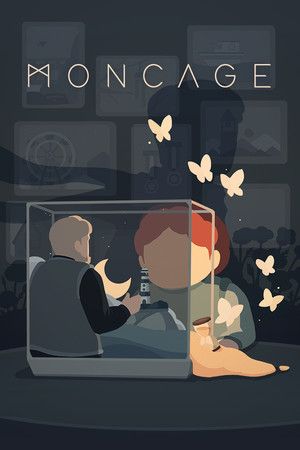
My spreadsheet instincts kicked in the moment I picked up Moncage and started cataloguing which face of the cube connects to which. Then the game quietly made me feel ridiculous, because none of that analytical overhead actually helps you here. What helps is learning to look sideways, literally. Optillusion's debut drops you in front of a rotatable cube whose five visible faces each display a distinct vignette: an old factory, a lighthouse, an amusement park, a church, and a handful of other scenes that seem random until they very much are not. The core mechanic is pure spatial reasoning: spin the cube until an object on one face lines up with a matching object on an adjacent face, triggering an animation that bridges both worlds and advances the puzzle. A toy truck completes a broken factory lorry. A fairground ride bleeds into the ruins of a war zone. The connections start simple and grow quietly unsettling. With over 60 puzzles spread across roughly 50 scene states, the game clocks in at somewhere between three and five hours depending on how stubborn you are with hints. That runtime is the most common complaint, and it is a fair one, though the counter-argument is that Moncage never outstays its welcome. Every puzzle feels handcrafted rather than padded. The standout sequences involve Rube Goldberg-style chain reactions where you have to keep an object moving across multiple faces without losing momentum, and those sections land harder than most boss fights I have sat through this year. There are also zoomed-in hotspots nested inside each face, so what looks like a single scene actually hides a second layer of interactable details. Updating a wall calendar in one sub-scene can unlock a new toolset in the main view. That layering is smart and keeps the loop from going flat. The hint system deserves a separate mention because it is unusually well designed for a puzzle game. Pressing the highlight button makes key objects glow, which is subtle enough to feel like a nudge rather than a spoiler. If that is not enough, written clues follow, and if you burn through those, a short video clip shows the full solution. Puzzle veterans who loathe hint systems can ignore it entirely. Newcomers to perspective-based games can lean on it without shame. The one legitimate frustration is precision: some puzzles require very exact cube angles before the game registers the match, and a handful of players report feeling like they had the right idea but kept getting rejected on technicality. It does not happen constantly, but it is noticeable in the back half. The story, told entirely without words through collectible photographs and the scenes themselves, tracks the relationship between a father and his son against a backdrop that turns darker as you progress. Kotaku described the emotional pivot well: what starts as playful domestic puzzles gradually forces you to connect violence and loss in ways that sneak up on you. The photographs you gather from hidden corners are the only explicit narrative thread, and completionists should know upfront that a true alternate ending requires finding all of them and then running through the game a second time. There is also a speedrun achievement, which is an odd inclusion for a contemplative puzzle game. Save management is minimal, with no manual save slots or level select after completion, which stings if you miss achievements on a first run. For the target audience, which is anyone who appreciated Gorogoa or Monument Valley and wants something with a bit more three-dimensional crunch, Moncage delivers something genuinely singular. The low-poly art with muted palettes reads cleanly on screen and is never decorative for its own sake: the simplified shapes are what make the optical illusions function. The soundtrack, composed by Berlinist (the same team behind the GRIS score), sits quietly in the background and earns its place. At Metacritic 70 and with 87 percent positive Steam ratings across thousands of reviews, critical and player sentiment land in roughly the same place: clever, beautiful, slightly thin on narrative, and worth the hours it asks for. Diego, Scout Team

Moncage

Moncage

15 nov 2021OptillusionXD
GamerScout opina

Sixty-odd optical illusion puzzles wrapped in a wordless tragedy about a father and son. Tightly built, criminally short, and occasionally maddening in the best way.

PC
Steam Deck PlayableProtonDB Platinum
Mejor precio disponible
€0.00
en N/A
Mínimo histórico: €6.63

Comparar precios(0 tiendas)

Cargando precios...

We may earn a commission when you buy games through links on this page — at no extra cost to you. It never affects our rankings or verdicts.

Historial de precios

Historical low
€6.638 Jun 2026
Keyshops
€6.10€6.45€6.81€7.168 Jun13 Jun18 Jun23 Jun28 Jun
Tracking prices since 8 Jun 2026
Create alert

Capturas y multimedia

Acerca de Moncage

My spreadsheet instincts kicked in the moment I picked up Moncage and started cataloguing which face of the cube connects to which. Then the game quietly made me feel ridiculous, because none of that analytical overhead actually helps you here. What helps is learning to look sideways, literally. Optillusion's debut drops you in front of a rotatable cube whose five visible faces each display a distinct vignette: an old factory, a lighthouse, an amusement park, a church, and a handful of other scenes that seem random until they very much are not. The core mechanic is pure spatial reasoning: spin the cube until an object on one face lines up with a matching object on an adjacent face, triggering an animation that bridges both worlds and advances the puzzle. A toy truck completes a broken factory lorry. A fairground ride bleeds into the ruins of a war zone. The connections start simple and grow quietly unsettling. With over 60 puzzles spread across roughly 50 scene states, the game clocks in at somewhere between three and five hours depending on how stubborn you are with hints. That runtime is the most common complaint, and it is a fair one, though the counter-argument is that Moncage never outstays its welcome. Every puzzle feels handcrafted rather than padded. The standout sequences involve Rube Goldberg-style chain reactions where you have to keep an object moving across multiple faces without losing momentum, and those sections land harder than most boss fights I have sat through this year. There are also zoomed-in hotspots nested inside each face, so what looks like a single scene actually hides a second layer of interactable details. Updating a wall calendar in one sub-scene can unlock a new toolset in the main view. That layering is smart and keeps the loop from going flat. The hint system deserves a separate mention because it is unusually well designed for a puzzle game. Pressing the highlight button makes key objects glow, which is subtle enough to feel like a nudge rather than a spoiler. If that is not enough, written clues follow, and if you burn through those, a short video clip shows the full solution. Puzzle veterans who loathe hint systems can ignore it entirely. Newcomers to perspective-based games can lean on it without shame. The one legitimate frustration is precision: some puzzles require very exact cube angles before the game registers the match, and a handful of players report feeling like they had the right idea but kept getting rejected on technicality. It does not happen constantly, but it is noticeable in the back half. The story, told entirely without words through collectible photographs and the scenes themselves, tracks the relationship between a father and his son against a backdrop that turns darker as you progress. Kotaku described the emotional pivot well: what starts as playful domestic puzzles gradually forces you to connect violence and loss in ways that sneak up on you. The photographs you gather from hidden corners are the only explicit narrative thread, and completionists should know upfront that a true alternate ending requires finding all of them and then running through the game a second time. There is also a speedrun achievement, which is an odd inclusion for a contemplative puzzle game. Save management is minimal, with no manual save slots or level select after completion, which stings if you miss achievements on a first run. For the target audience, which is anyone who appreciated Gorogoa or Monument Valley and wants something with a bit more three-dimensional crunch, Moncage delivers something genuinely singular. The low-poly art with muted palettes reads cleanly on screen and is never decorative for its own sake: the simplified shapes are what make the optical illusions function. The soundtrack, composed by Berlinist (the same team behind the GRIS score), sits quietly in the background and earns its place. At Metacritic 70 and with 87 percent positive Steam ratings across thousands of reviews, critical and player sentiment land in roughly the same place: clever, beautiful, slightly thin on narrative, and worth the hours it asks for.

Diego
Diego · Scout Team

Strategy & simulation

Etiquetas

singleplayerachievementscloud-savestier:indieOptical IllusionPerspective PuzzlesWordless NarrativeCompletionist-UnfriendlyShort-FormCollectiblesMulti-Layer PuzzlesAward-Winning Indie

Requisitos del sistema

Mínimos

OS
Windows 7/8/8.1/10(64bit)
Memory
6 GB RAM
DirectX
Version 11
Storage
2500 MB available space
Graphics
NVIDIA GeForce GT 730
Processor
Intel Celeron G1820 | AMD A4-7300

Recomendados

OS
Windows 7/8/8.1/10(64bit)
Memory
8 GB RAM
DirectX
Version 11
Storage
2500 MB available space
Graphics
NVIDIA GeForce GTX 960
Processor
Intel Core i3 6100 | AMD FX-6300

Sigue explorando

Community Discussion

Be the first to comment on Moncage.

Reseñas y valoraciones

Metacritic
70

Información del juego

Desarrolladora
Optillusion
Distribuidora
XD
Fecha de lanzamiento
15 nov 2021

Alerta de precio

¡Recibe un aviso cuando el precio baje de tu objetivo!

Crear alerta

Más de Optillusion

Compra mejor: guías útiles

¿Buscas más? Mira juegos como Moncage →

Preguntas frecuentes sobre Moncage

¿Cuánto cuesta Moncage?

El precio de Moncage cambia a menudo y varía según la tienda, la edición y la región. La tabla de precios en vivo de esta página compara las ofertas más baratas en stock de tiendas de claves de confianza como Eneba y Kinguin, para que siempre veas el precio más bajo actual antes de comprar.

¿Dónde puedo comprar Moncage más barato?

Compara los precios de Moncage en todas las tiendas verificadas en la tabla de precios de esta página. Listamos las ofertas de claves y tiendas más baratas en stock, actualizadas con frecuencia, para que siempre veas la mejor oferta actual antes de comprar.

¿En qué plataformas está disponible Moncage?

Moncage está disponible en PC.

¿Cuándo se lanzó Moncage?

Moncage se lanzó el 15 de noviembre de 2021.

¿Quién desarrolló Moncage?

Moncage fue desarrollado por Optillusion y publicado por XD.

¿Merece la pena comprar Moncage?

Moncage tiene una puntuación Metacritic de 70/100, lo que lo convierte en uno de los títulos destacados de Adventure. Mira las reseñas completas, las valoraciones y los tiempos de duración en esta página para decidir.