Compara los precios de Millennia en tiendas de claves de confianza y encuentra la mejor oferta. Desarrollado por C Prompt Games. Publicado por Paradox Interactive. Lanzado el 26/3/2024. Disponible en PC. Géneros: Simulation, Strategy.

A Civ-like that earns its shelf space by bending history into alternate timelines, but arrives with enough rough edges to make patient buyers the smart ones.

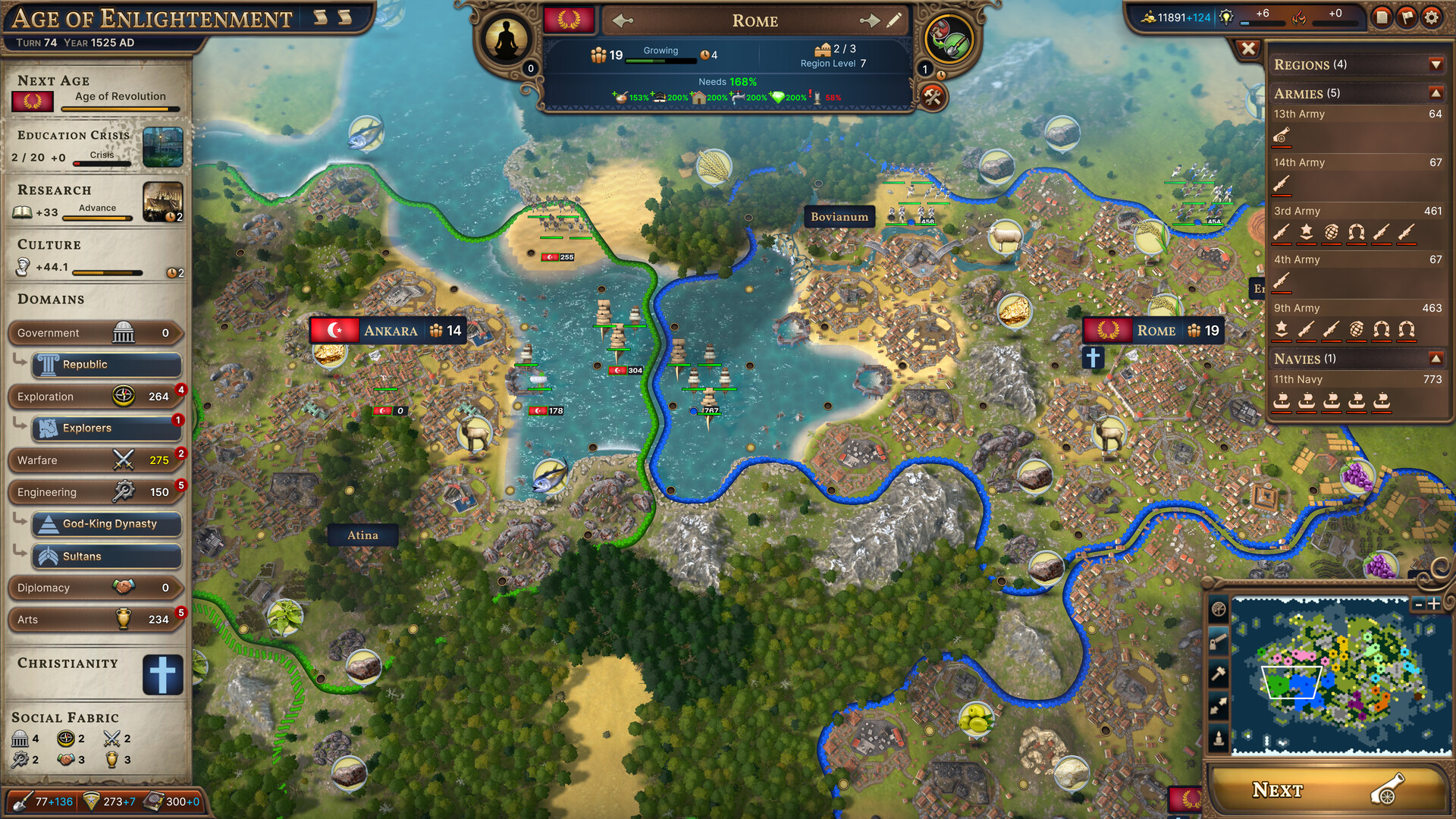
I have a colour-coded folder of every 4X launch that promised to dethrone Civilization. Millennia is the latest entry, and my honest read after working through its systems is this: the ideas are genuinely interesting, the execution is genuinely uneven, and where you land on that trade-off will decide everything. The headline mechanic is the Ages system. Each run moves through ten ages, and while the early stretch from Stone to Bronze Age plays out predictably, the real texture arrives mid-game. Accomplish certain objectives and you can push the world into a Variant Age with entirely different rules, units, and technology. Neglect sanitation and you may trigger a Crisis Age instead, with plague doctors replacing your carefully planned expansion. What makes this more than a gimmick is the shared-world logic: the first nation to research a new age locks it in for everyone. Steer the world into the Age of Aether and suddenly everyone is dealing with steampunk airships; fail to manage unrest and an Age of Intolerance sends crusades across the map. The feeling that your decisions ripple outward in genuinely unexpected ways is Millennia's strongest argument for itself. Building on those ages is the National Spirits framework, which replaces the fixed civ-leader bonuses of genre competitors. You earn XP across six Domains: Exploration, Government, Warfare, Diplomacy, Engineering, and Arts. That XP can be spent on Domain Powers or funnelled into National Spirit trees, each of which reshapes your nation's identity. Wild Hunters unlock elephant tile improvements; Chivalry lets you spawn peasant units upgradeable into knights. The combination of which Spirits you pick and which ages you push toward creates meaningful build diversity across playthroughs, and that is where the game's replay value actually lives. The early turns, by contrast, are fairly thin. Capital placement is not in the player's hands, nations feel interchangeable before the first couple of ages have passed, and the opening stretches can feel routine after a handful of runs. The problems that blunt the experience are consistent across reviews and player feedback. Diplomacy is the most glaring: the AI nations settle aggressively, declare war with little provocation, and offer almost no interesting negotiation surface. Combat is functional but the presentation is poor; a pop-up battle screen replaces on-map action, and while it gives you blow-by-blow information for adjusting army composition, the visual quality is well behind genre peers. The UI carries rough edges that matter, particularly around tracking unrest and flagging emerging crises before they spiral. Late-game pacing is also a known issue, with snowballing difficult to check and some victory paths reducing to mechanical repetition once your lead is clear. For strategy players who prioritise depth of decision-making over visual polish, there is a real game here. The supply-chain economy, army size limits that prevent doom-stacking, and the interaction between domain investment and age progression form a more interconnected system than the mixed Steam reception suggests. The question is whether you buy it now, in its current state, or wait for post-launch patches and expansions like the Atomic Ambitions DLC to fill in the remaining gaps. If alternate-history 4X is your specific itch and you can tolerate a rough diplomacy layer and a slow opening, Millennia will hold your attention through multiple runs. Everyone else should watch the patch notes. Diego, Scout Team

Millennia

Millennia

26 mar 2024C Prompt GamesParadox Interactive
GamerScout opina

A Civ-like that earns its shelf space by bending history into alternate timelines, but arrives with enough rough edges to make patient buyers the smart ones.

PC
Steam Deck PlayableProtonDB Platinum
Mejor precio disponible
€0.00
en N/A
Mínimo histórico: €14.71

Comparar precios(0 tiendas)

Cargando precios...

We may earn a commission when you buy games through links on this page — at no extra cost to you. It never affects our rankings or verdicts.

Historial de precios

Historical low
€14.718 Jun 2026
Keyshops
€13.53€14.32€15.10€15.898 Jun13 Jun18 Jun23 Jun28 Jun
Tracking prices since 8 Jun 2026
Create alert

Capturas y multimedia

Captura

Acerca de Millennia

I have a colour-coded folder of every 4X launch that promised to dethrone Civilization. Millennia is the latest entry, and my honest read after working through its systems is this: the ideas are genuinely interesting, the execution is genuinely uneven, and where you land on that trade-off will decide everything. The headline mechanic is the Ages system. Each run moves through ten ages, and while the early stretch from Stone to Bronze Age plays out predictably, the real texture arrives mid-game. Accomplish certain objectives and you can push the world into a Variant Age with entirely different rules, units, and technology. Neglect sanitation and you may trigger a Crisis Age instead, with plague doctors replacing your carefully planned expansion. What makes this more than a gimmick is the shared-world logic: the first nation to research a new age locks it in for everyone. Steer the world into the Age of Aether and suddenly everyone is dealing with steampunk airships; fail to manage unrest and an Age of Intolerance sends crusades across the map. The feeling that your decisions ripple outward in genuinely unexpected ways is Millennia's strongest argument for itself. Building on those ages is the National Spirits framework, which replaces the fixed civ-leader bonuses of genre competitors. You earn XP across six Domains: Exploration, Government, Warfare, Diplomacy, Engineering, and Arts. That XP can be spent on Domain Powers or funnelled into National Spirit trees, each of which reshapes your nation's identity. Wild Hunters unlock elephant tile improvements; Chivalry lets you spawn peasant units upgradeable into knights. The combination of which Spirits you pick and which ages you push toward creates meaningful build diversity across playthroughs, and that is where the game's replay value actually lives. The early turns, by contrast, are fairly thin. Capital placement is not in the player's hands, nations feel interchangeable before the first couple of ages have passed, and the opening stretches can feel routine after a handful of runs. The problems that blunt the experience are consistent across reviews and player feedback. Diplomacy is the most glaring: the AI nations settle aggressively, declare war with little provocation, and offer almost no interesting negotiation surface. Combat is functional but the presentation is poor; a pop-up battle screen replaces on-map action, and while it gives you blow-by-blow information for adjusting army composition, the visual quality is well behind genre peers. The UI carries rough edges that matter, particularly around tracking unrest and flagging emerging crises before they spiral. Late-game pacing is also a known issue, with snowballing difficult to check and some victory paths reducing to mechanical repetition once your lead is clear. For strategy players who prioritise depth of decision-making over visual polish, there is a real game here. The supply-chain economy, army size limits that prevent doom-stacking, and the interaction between domain investment and age progression form a more interconnected system than the mixed Steam reception suggests. The question is whether you buy it now, in its current state, or wait for post-launch patches and expansions like the Atomic Ambitions DLC to fill in the remaining gaps. If alternate-history 4X is your specific itch and you can tolerate a rough diplomacy layer and a slow opening, Millennia will hold your attention through multiple runs. Everyone else should watch the patch notes.

Diego
Diego · Scout Team

Strategy & simulation

Etiquetas

singleplayermultiplayerpvponline-pvpachievementscloud-savestier:aaaAlternate History AgesNational SpiritsSupply Chain EconomyDomain PowersVictory AgeCrisis ManagementHex-BasedHotseat MultiplayerArmy Composition

Requisitos del sistema

Mínimos

OS
Windows® 10 Home 64 Bit
Memory
8 GB RAM
DirectX
Version 11
Storage
10 GB available space
Graphics
Nvidia® GeForce™ GTX 660 (2GB) | AMD® Radeon™ R9 380 (4GB)
Processor
Intel® Core™ i5-6600K | AMD® Ryzen™ 3 2300X

Recomendados

OS
Windows® 11
Memory
16 GB RAM
DirectX
Version 11
Storage
10 GB available space
Graphics
Nvidia® GeForce™ GTX 1060 (6GB) | AMD® Radeon™ RX 590 (8GB)
Processor
Intel® Core™ i7-9700K | AMD® Ryzen™ 5 5600X

Sigue explorando

Community Discussion

Be the first to comment on Millennia.

Reseñas y valoraciones

No hay valoraciones disponibles

Información del juego

Desarrolladora
C Prompt Games
Distribuidora
Paradox Interactive
Fecha de lanzamiento
26 mar 2024

Alerta de precio

¡Recibe un aviso cuando el precio baje de tu objetivo!

Crear alerta

Compra mejor: guías útiles

Preguntas frecuentes sobre Millennia

¿Cuánto cuesta Millennia?

El precio de Millennia cambia a menudo y varía según la tienda, la edición y la región. La tabla de precios en vivo de esta página compara las ofertas más baratas en stock de tiendas de claves de confianza como Eneba y Kinguin, para que siempre veas el precio más bajo actual antes de comprar.

¿Dónde puedo comprar Millennia más barato?

Compara los precios de Millennia en todas las tiendas verificadas en la tabla de precios de esta página. Listamos las ofertas de claves y tiendas más baratas en stock, actualizadas con frecuencia, para que siempre veas la mejor oferta actual antes de comprar.

¿En qué plataformas está disponible Millennia?

Millennia está disponible en PC.

¿Cuándo se lanzó Millennia?

Millennia se lanzó el 26 de marzo de 2024.

¿Quién desarrolló Millennia?

Millennia fue desarrollado por C Prompt Games y publicado por Paradox Interactive.