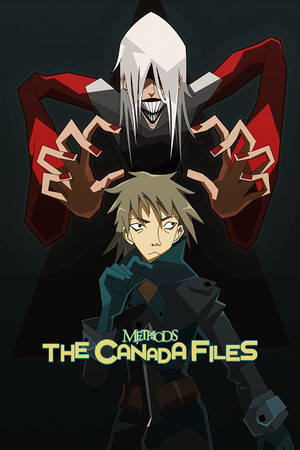
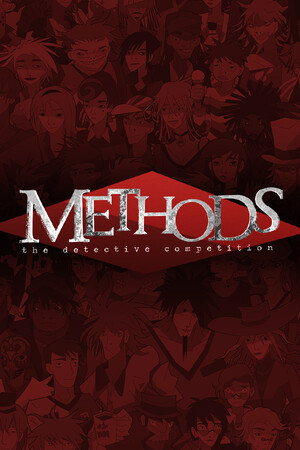
Compara los precios de Methods: The Detective Competition en tiendas de claves de confianza y encuentra la mejor oferta. Desarrollado por LockedOn Games. Publicado por Erabit. Lanzado el 1/6/2020. Disponible en PC, Mac, Linux. Géneros: Casual, Indie, Strategy.

A shonen-anime tournament arc wearing a detective fiction costume, and it works far better than it has any right to. If you read faster than you strategize, this one is squarely in your lane.

I spend most of my time with games that reward spreadsheet thinking and long-horizon planning, so Methods: The Detective Competition is about as far outside my usual orbit as you can get. And yet I kept playing. The hook is genuinely strange: a sealed building, a hundred detectives, a hundred criminals called Masterminds who construct the crime scenes those detectives must solve, and a million-dollar prize that comes with parole for any criminal who wins. That setup alone carries enough tension to make you read past chapter boundaries you meant to stop at. The core gameplay loop is built around locked-room mystery rounds. Criminals stage a crime scene using doll stand-ins, and you work with a rotating detective partner to examine clickable evidence points, then lock in your deductions through multiple-choice questions. There are 27 of these mini-mysteries spread across 100 chapters totalling roughly 139,000 words, which translates to about ten hours depending on your reading pace. The difficulty calibration is on the gentle side: wrong answers are not penalized outright, and you can reverse your choices to keep the story moving. Hardened puzzle fans looking for the kind of deductive rigour you get from a locked-room mystery novel will be disappointed. Think of the competition rounds less as logical puzzles and more as interactive riddles whose primary job is to pace the narrative. Once you reframe expectations that way, they work. What actually carries Methods is the writing and the cast. The game rotates its playable protagonist every few chapters, which keeps the elimination tension real because you genuinely cannot predict who is still in the competition from your current vantage point. You play first as Detective Hackett, a rough-edged investigator whose skills are a work in progress, then later as Nell, whose sharp eye for small details plays out differently in investigation segments. The supporting cast runs absurdly deep for a solo-developer project: Detective Slakes, who is terrible at solving crimes but excellent at inventing them; his Mastermind alter ego who is the precise inverse; Detective 77-something, a man raised by clowns who prefers to solve crimes while standing on his head. The game pokes constant fun at detective fiction clichés, and the jokes land more often than they miss. The art is cartoonish and deliberately misshapen in ways that feel jarring for roughly the first hour, then start to read as a consistent stylistic choice rather than a budget limitation. The clash between the flat 2D character sprites and slick 3D rendered backgrounds is the one visual element that never fully resolves. For strategy and systems players like me, the honest caveat is that there is almost no decision-making in the traditional sense. The overarching mystery of the competition itself is resolved entirely by the characters; player input is limited to the competition round segments. The narrative also ends on an open note that points clearly toward sequels, so do not expect full closure. On the positive side, the game is a solo-developer achievement that sustains an over-80-character cast with enough individual personality that even minor detectives feel considered rather than filler. Steam's community has pushed it to a 91 percent positive rating across several hundred reviews, which is a signal worth respecting for a niche visual novel with unconventional art. Diego, Scout Team

Methods: The Detective Competition

Methods: The Detective Competition

1 jun 2020LockedOn GamesErabit
GamerScout opina

A shonen-anime tournament arc wearing a detective fiction costume, and it works far better than it has any right to. If you read faster than you strategize, this one is squarely in your lane.

PCMacLinux
Steam Deck Playable
Mejor precio disponible
€0.00
en N/A
Mínimo histórico: €6.79

Comparar precios(0 tiendas)

Cargando precios...

We may earn a commission when you buy games through links on this page — at no extra cost to you. It never affects our rankings or verdicts.

Historial de precios

Historical low
€6.798 Jun 2026
Keyshops
€6.25€6.61€6.97€7.338 Jun13 Jun18 Jun23 Jun28 Jun
Tracking prices since 8 Jun 2026
Create alert

Capturas y multimedia

Acerca de Methods: The Detective Competition

I spend most of my time with games that reward spreadsheet thinking and long-horizon planning, so Methods: The Detective Competition is about as far outside my usual orbit as you can get. And yet I kept playing. The hook is genuinely strange: a sealed building, a hundred detectives, a hundred criminals called Masterminds who construct the crime scenes those detectives must solve, and a million-dollar prize that comes with parole for any criminal who wins. That setup alone carries enough tension to make you read past chapter boundaries you meant to stop at. The core gameplay loop is built around locked-room mystery rounds. Criminals stage a crime scene using doll stand-ins, and you work with a rotating detective partner to examine clickable evidence points, then lock in your deductions through multiple-choice questions. There are 27 of these mini-mysteries spread across 100 chapters totalling roughly 139,000 words, which translates to about ten hours depending on your reading pace. The difficulty calibration is on the gentle side: wrong answers are not penalized outright, and you can reverse your choices to keep the story moving. Hardened puzzle fans looking for the kind of deductive rigour you get from a locked-room mystery novel will be disappointed. Think of the competition rounds less as logical puzzles and more as interactive riddles whose primary job is to pace the narrative. Once you reframe expectations that way, they work. What actually carries Methods is the writing and the cast. The game rotates its playable protagonist every few chapters, which keeps the elimination tension real because you genuinely cannot predict who is still in the competition from your current vantage point. You play first as Detective Hackett, a rough-edged investigator whose skills are a work in progress, then later as Nell, whose sharp eye for small details plays out differently in investigation segments. The supporting cast runs absurdly deep for a solo-developer project: Detective Slakes, who is terrible at solving crimes but excellent at inventing them; his Mastermind alter ego who is the precise inverse; Detective 77-something, a man raised by clowns who prefers to solve crimes while standing on his head. The game pokes constant fun at detective fiction clichés, and the jokes land more often than they miss. The art is cartoonish and deliberately misshapen in ways that feel jarring for roughly the first hour, then start to read as a consistent stylistic choice rather than a budget limitation. The clash between the flat 2D character sprites and slick 3D rendered backgrounds is the one visual element that never fully resolves. For strategy and systems players like me, the honest caveat is that there is almost no decision-making in the traditional sense. The overarching mystery of the competition itself is resolved entirely by the characters; player input is limited to the competition round segments. The narrative also ends on an open note that points clearly toward sequels, so do not expect full closure. On the positive side, the game is a solo-developer achievement that sustains an over-80-character cast with enough individual personality that even minor detectives feel considered rather than filler. Steam's community has pushed it to a 91 percent positive rating across several hundred reviews, which is a signal worth respecting for a niche visual novel with unconventional art.

Diego
Diego · Scout Team

Strategy & simulation

Etiquetas

singleplayerachievementstrading-cardstier:indieVisual NovelMultiple ProtagonistsLocked-Room MysteryDark ComedyAnime-Style TournamentPOV-Switching NarrativeLight PuzzleSolo DeveloperSeries Entry

Requisitos del sistema

Mínimos

OS
XP
Memory
2 GB RAM
Storage
2 GB available space
Processor
1 GHz

Recomendados

OS
Windows 10
Memory
2 GB RAM
Storage
2 GB available space
Processor
2 GHz

Sigue explorando

Community Discussion

Be the first to comment on Methods: The Detective Competition.

Reseñas y valoraciones

No hay valoraciones disponibles

Información del juego

Desarrolladora
LockedOn Games
Distribuidora
Erabit
Fecha de lanzamiento
1 jun 2020

Alerta de precio

¡Recibe un aviso cuando el precio baje de tu objetivo!

Crear alerta

Más de LockedOn Games

Compra mejor: guías útiles

¿Buscas más? Mira juegos como Methods: The Detective Competition →

Preguntas frecuentes sobre Methods: The Detective Competition

¿Cuánto cuesta Methods: The Detective Competition?

El precio de Methods: The Detective Competition cambia a menudo y varía según la tienda, la edición y la región. La tabla de precios en vivo de esta página compara las ofertas más baratas en stock de tiendas de claves de confianza como Eneba y Kinguin, para que siempre veas el precio más bajo actual antes de comprar.

¿Dónde puedo comprar Methods: The Detective Competition más barato?

Compara los precios de Methods: The Detective Competition en todas las tiendas verificadas en la tabla de precios de esta página. Listamos las ofertas de claves y tiendas más baratas en stock, actualizadas con frecuencia, para que siempre veas la mejor oferta actual antes de comprar.

¿En qué plataformas está disponible Methods: The Detective Competition?

Methods: The Detective Competition está disponible en PC, Mac, Linux.

¿Cuándo se lanzó Methods: The Detective Competition?

Methods: The Detective Competition se lanzó el 1 de junio de 2020.

¿Quién desarrolló Methods: The Detective Competition?

Methods: The Detective Competition fue desarrollado por LockedOn Games y publicado por Erabit.