Compara los precios de Lunacid en tiendas de claves de confianza y encuentra la mejor oferta. Desarrollado por KIRA LLC. Publicado por KIRA LLC. Lanzado el 30/10/2023. Disponible en PC. Géneros: Indie, RPG.

The King's Field revival nobody expected from a solo horror developer, and it lands harder than it has any right to. Slow starters and spell-casters welcome; dodge-rollers, look elsewhere.

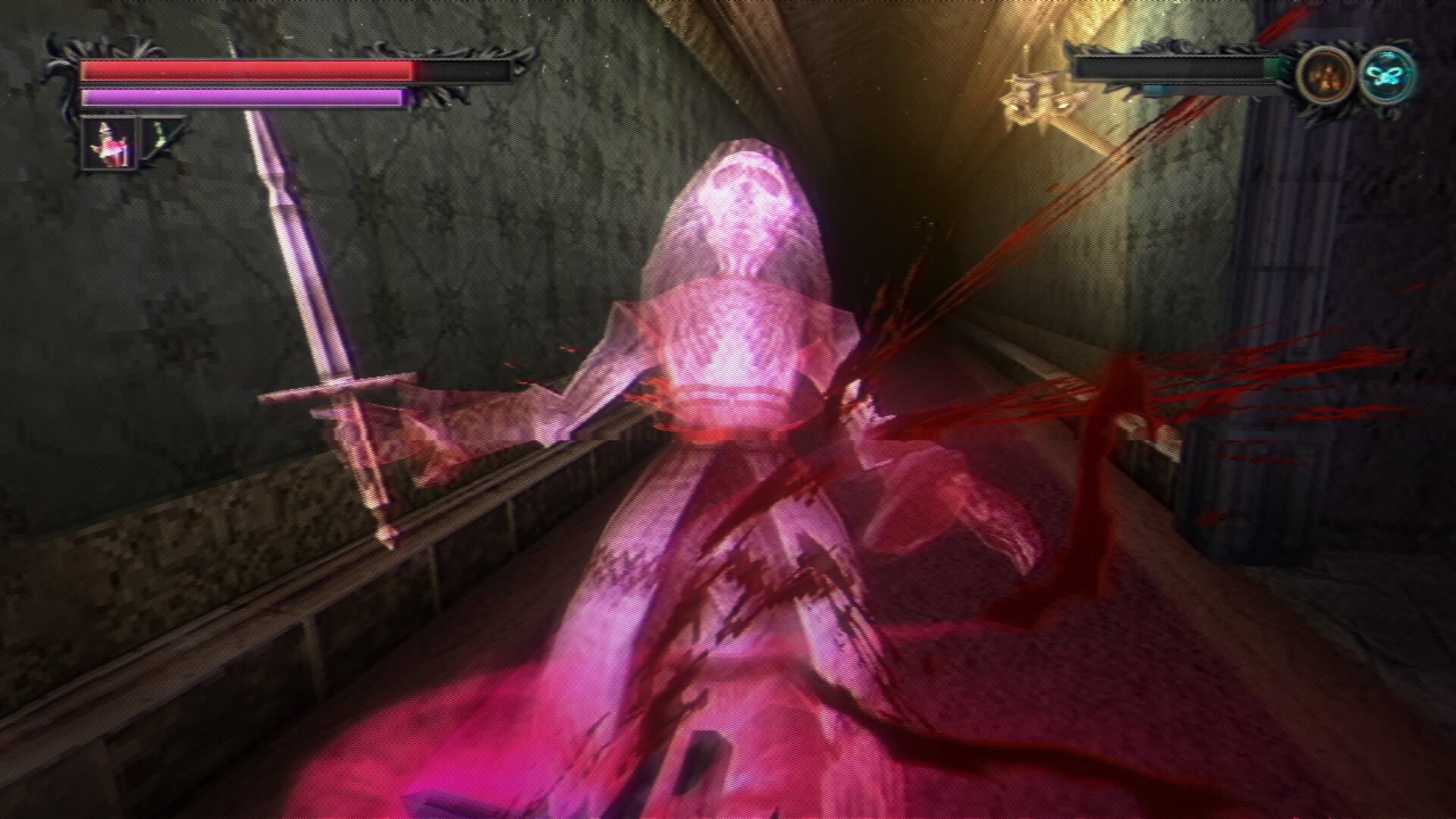
My first hour in Lunacid felt like stumbling into a room that wasn't meant for me, in the best possible way. Solo developer Akuma Kira, the mind behind Lost in Vivo and Spooky's Jump Scare Mansion, has quietly built one of the most sincere acts of genre archaeology on PC: a first-person action RPG that traces its bloodline not to Dark Souls but to King's Field and Shadow Tower, FromSoftware's pre-Souls dungeon crawlers that most modern players have never touched. The result is something that feels genuinely rare: a game with a mood so specific, so committed, that it practically has its own body temperature. The structure is a first-person dungeon crawler built around exploration and accumulation. You pick one of nine starting classes, each with its own passive ability and elemental resistances rather than rigidly locked stat paths. A Knight starts with healing and defensive gear; a Thief or Vampire brings a unique in-game skill that shifts how you approach encounters. From there, every level-up hands you free stat points to spend across Strength, Defense, Intelligence, Speed, Dexterity, and Resistance. Want to build a character who sprints through corridors like Quake and pelts enemies with crossbow bolts from unreachable ledges? Dexterity and Speed will get you there. Want to lean into the Lunacy system, where casting spells raises your damage taken but also multiplies your XP gain? Stack Intelligence, court the risk, collect the reward. The arsenal is enormous: over 75 weapons each with their own charge speed, reach, and thrust value, plus 37 spells that interact with the environment in ways the combat tutorials never spell out for you. Stacking summoned coffins to reach a secret ledge in the Forbidden Archive is not a joke; it's a legitimate route. The world itself is the real argument for playing this. Dingy catacombs, haunted mausoleums, a vampire castle, an Egyptian-themed temple, a fetid sewage mire, and stranger spaces besides. Each zone has its own soundtrack credit displayed in the lower corner, which is a small touch that tells you a lot about how carefully this was made. The composers, including Kira, Jarren Crist, and ThorHighHeels, pull from industrial ambience, lo-fi house, and Silent Hill-adjacent piano in ways that feel wildly eclectic on paper but coalesce into a single, unsettling atmosphere in practice. Environmental storytelling does much of the narrative lifting: lore buried in item descriptions, NPC dialogue from a skeletal barfly named Clive, books tucked into corners of rooms that were clearly not intended to be found easily. Multiple endings reward players who read everything. The cracks are real, though, and they deserve mention. Melee combat is functional but blunt: a charge-and-release system where timing matters but the feedback rarely satisfies, and boss fights in particular expose the system's limits through inflated health pools that drag on. The game balance tilts noticeably toward magic builds, so pure melee runs will feel like they're fighting the design as much as the enemies. The UI carries genuine old-school friction, and some secrets are cryptic enough to feel accidental rather than intentional. If you need moment-to-moment combat tension to stay engaged, Lunacid will lose you somewhere in the Fetid Mire. This is a game whose primary pleasure is wandering, listening, and piecing together a world from fragments. The horror elements fold in cleanly: well-placed jump scares, one area with a pursuer enemy that appears if you linger, environmental dread that creeps in through architecture and audio rather than explicit set-pieces. That care for atmosphere is where Kira's horror background pays the clearest dividend. A prequel, Lunacid: Tears of the Moon, released free in 2025 and was built on the actual Sword of Moonlight tools used for the original King's Field trilogy. That kind of dedication to source material is either charming or obsessive depending on your disposition, and it tells you exactly what kind of developer KIRA LLC is. If you have even a passing curiosity about what FromSoftware was doing before they invented the Souls genre, this is the most accessible and best-realized entry point available. Kai, Scout Team

Lunacid

Lunacid

30 oct 2023KIRA LLC
GamerScout opina

The King's Field revival nobody expected from a solo horror developer, and it lands harder than it has any right to. Slow starters and spell-casters welcome; dodge-rollers, look elsewhere.

PC
Steam Deck VerifiedProtonDB Platinum
Mejor precio disponible
€0.00
en N/A
Mínimo histórico: €2.15

Comparar precios(0 tiendas)

Cargando precios...

We may earn a commission when you buy games through links on this page — at no extra cost to you. It never affects our rankings or verdicts.

Historial de precios

Historical low
€2.1526 Jun 2026
Keyshops
€2.12€2.21€2.31€2.405 Jun11 Jun17 Jun22 Jun28 Jun
Tracking prices since 5 Jun 2026
Create alert

Capturas y multimedia

Captura

Acerca de Lunacid

My first hour in Lunacid felt like stumbling into a room that wasn't meant for me, in the best possible way. Solo developer Akuma Kira, the mind behind Lost in Vivo and Spooky's Jump Scare Mansion, has quietly built one of the most sincere acts of genre archaeology on PC: a first-person action RPG that traces its bloodline not to Dark Souls but to King's Field and Shadow Tower, FromSoftware's pre-Souls dungeon crawlers that most modern players have never touched. The result is something that feels genuinely rare: a game with a mood so specific, so committed, that it practically has its own body temperature. The structure is a first-person dungeon crawler built around exploration and accumulation. You pick one of nine starting classes, each with its own passive ability and elemental resistances rather than rigidly locked stat paths. A Knight starts with healing and defensive gear; a Thief or Vampire brings a unique in-game skill that shifts how you approach encounters. From there, every level-up hands you free stat points to spend across Strength, Defense, Intelligence, Speed, Dexterity, and Resistance. Want to build a character who sprints through corridors like Quake and pelts enemies with crossbow bolts from unreachable ledges? Dexterity and Speed will get you there. Want to lean into the Lunacy system, where casting spells raises your damage taken but also multiplies your XP gain? Stack Intelligence, court the risk, collect the reward. The arsenal is enormous: over 75 weapons each with their own charge speed, reach, and thrust value, plus 37 spells that interact with the environment in ways the combat tutorials never spell out for you. Stacking summoned coffins to reach a secret ledge in the Forbidden Archive is not a joke; it's a legitimate route. The world itself is the real argument for playing this. Dingy catacombs, haunted mausoleums, a vampire castle, an Egyptian-themed temple, a fetid sewage mire, and stranger spaces besides. Each zone has its own soundtrack credit displayed in the lower corner, which is a small touch that tells you a lot about how carefully this was made. The composers, including Kira, Jarren Crist, and ThorHighHeels, pull from industrial ambience, lo-fi house, and Silent Hill-adjacent piano in ways that feel wildly eclectic on paper but coalesce into a single, unsettling atmosphere in practice. Environmental storytelling does much of the narrative lifting: lore buried in item descriptions, NPC dialogue from a skeletal barfly named Clive, books tucked into corners of rooms that were clearly not intended to be found easily. Multiple endings reward players who read everything. The cracks are real, though, and they deserve mention. Melee combat is functional but blunt: a charge-and-release system where timing matters but the feedback rarely satisfies, and boss fights in particular expose the system's limits through inflated health pools that drag on. The game balance tilts noticeably toward magic builds, so pure melee runs will feel like they're fighting the design as much as the enemies. The UI carries genuine old-school friction, and some secrets are cryptic enough to feel accidental rather than intentional. If you need moment-to-moment combat tension to stay engaged, Lunacid will lose you somewhere in the Fetid Mire. This is a game whose primary pleasure is wandering, listening, and piecing together a world from fragments. The horror elements fold in cleanly: well-placed jump scares, one area with a pursuer enemy that appears if you linger, environmental dread that creeps in through architecture and audio rather than explicit set-pieces. That care for atmosphere is where Kira's horror background pays the clearest dividend. A prequel, Lunacid: Tears of the Moon, released free in 2025 and was built on the actual Sword of Moonlight tools used for the original King's Field trilogy. That kind of dedication to source material is either charming or obsessive depending on your disposition, and it tells you exactly what kind of developer KIRA LLC is. If you have even a passing curiosity about what FromSoftware was doing before they invented the Souls genre, this is the most accessible and best-realized entry point available.

Kai
Kai · Scout Team

Indie & narrative

Etiquetas

singleplayerachievementscontroller-supporttrading-cardstier:sub-5King's Field-likeCharge Attack CombatLunacy Risk SystemEnvironmental StorytellingMultiple EndingsHorror AtmosphereBody-Part DismembermentRetro FiltersMagic-Focused Build

Requisitos del sistema

Mínimos

OS
Windows 7
Memory
4 MB RAM
Storage
800 MB available space
Graphics
2GB Intregraded graphics
Processor
Intel Core i3 1.3 GHz
Sound Card
Windows Audio

Sigue explorando

Community Discussion

Be the first to comment on Lunacid.

Reseñas y valoraciones

No hay valoraciones disponibles

Información del juego

Desarrolladora
KIRA LLC
Distribuidora
KIRA LLC
Fecha de lanzamiento
30 oct 2023

Alerta de precio

¡Recibe un aviso cuando el precio baje de tu objetivo!

Crear alerta

Compra mejor: guías útiles

Lunacid en directo en Twitch

¿Buscas más? Mira juegos como Lunacid →

Preguntas frecuentes sobre Lunacid

¿Cuánto cuesta Lunacid?

El precio de Lunacid cambia a menudo y varía según la tienda, la edición y la región. La tabla de precios en vivo de esta página compara las ofertas más baratas en stock de tiendas de claves de confianza como Eneba y Kinguin, para que siempre veas el precio más bajo actual antes de comprar.

¿Dónde puedo comprar Lunacid más barato?

Compara los precios de Lunacid en todas las tiendas verificadas en la tabla de precios de esta página. Listamos las ofertas de claves y tiendas más baratas en stock, actualizadas con frecuencia, para que siempre veas la mejor oferta actual antes de comprar.

¿En qué plataformas está disponible Lunacid?

Lunacid está disponible en PC.

¿Cuándo se lanzó Lunacid?

Lunacid se lanzó el 30 de octubre de 2023.

¿Quién desarrolló Lunacid?

Lunacid fue desarrollado por KIRA LLC.