
Compara los precios de Let Them Trade en tiendas de claves de confianza y encuentra la mejor oferta. Desarrollado por Spaceflower. Publicado por ByteRockers' Games. Lanzado el 24/7/2025. Disponible en PC. Géneros: Indie, Simulation, Strategy. Puntuación Metacritic: 75/100.

Finally, a city-builder that trusts you to think like an economist rather than a firefighter - but know going in that the depth ceiling arrives faster than expected.

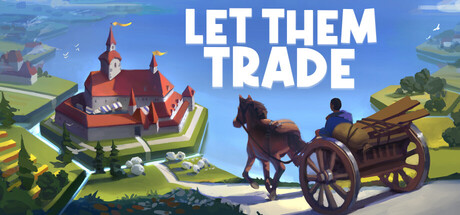
My spreadsheet brain spent the first hour of Let Them Trade quietly impressed. The core proposition is genuinely different from the genre default: you are not a panicked mayor putting out hunger fires or scrambling against a disaster clock. You place cities, connect them with roads, assign production buildings to the hex tiles that actually support them (forests for woodcutters, lakes for fishing huts, mountains for stone quarries), and then you step back and watch an autonomous economic machine run. Cities buy from and sell to each other according to their own needs and wealth levels - a poor fishing village wants wood, a richer settlement up the mountain demands processed wool goods - and your tax income flows directly from the volume and value of that inter-city commerce. That indirect-control philosophy is the thing that makes Let Them Trade feel distinct, and it works. The progression loop layers on satisfying complexity gradually. Peasants level up into workers, workers into citizens, and eventually your cities can house aristocrats, with each tier unlocking more demanding supply chains and more profitable trade. The research tree, accessed through a central research centre, is where you unlock new building types - bakeries, forges, more advanced housing - and upgrade existing ones for better output or throughput. Tax management adds a secondary decision layer: you can collect levies from individual cities on a cooldown and redistribute gold to weaker towns that need a growth injection. It is not Paradox-tier economic simulation, but there are real decisions to make about where to invest, which city to prioritise, and how to balance hex-slot scarcity as your settlements grow. The limited number of tile slots per city level is the main spatial constraint that forces genuine trade-offs, and it is the most interesting pressure the game applies. The tutorial is one of the better ones in the genre. It uses short visual clips rather than walls of text, and the campaign's ten scenarios function as a structured extension of that teaching, introducing bandits, bridge logistics, and advanced supply chains at a measured pace. The bandit system itself is deliberately light - knights and watchtowers handle raids without demanding any real tactical input. You send a knight, you upgrade the barracks when threats escalate mid-to-late game, and you move on. That is the correct design call for this game's tone, even if it means the "threat" layer never creates genuine tension. A free sandbox mode and a Steam Workshop-connected map editor round out the content, giving chain-optimisers a longer runway once the campaign wraps. Here is where I have to be straight with genre veterans: the depth ceiling arrives sooner than the setup suggests. Experienced builders will clock the full campaign and hit a noticeable content wall inside twenty hours. Map variation is limited - tile types matter less than raw empty space for placing buildings, which undercuts the promise of meaningfully different playthroughs. The UI lacks a proper kingdom-wide resource overview, forcing you to click through individual cities to diagnose bottlenecks, which becomes genuinely irritating at scale. And the build order, for all its apparent flexibility, is more linear in practice than it feels at first. Critics are right that the trading mechanics, which are the most promising thing here, are underutilised relative to the game's potential. For a strategy newcomer or someone who wants a weekend palette cleanser between heavier titles, this hits the target precisely. The board-game-on-a-living-room-table visual presentation is consistently charming, performance is solid even on busy maps, and the campaign's gentle difficulty ramp is genuinely newcomer-friendly without being condescending. Veterans should probably wait for post-launch updates to flesh out the late-game before committing. The foundation is good enough that more content would make it considerably more compelling. Diego, Scout Team

Let Them Trade

Let Them Trade

24 jul 2025SpaceflowerByteRockers' Games
GamerScout opina

Finally, a city-builder that trusts you to think like an economist rather than a firefighter - but know going in that the depth ceiling arrives faster than expected.

PC
Steam Deck PlayableProtonDB Platinum
Mejor precio disponible
€0.00
en N/A
Mínimo histórico: €3.98

Comparar precios(0 tiendas)

Cargando precios...

We may earn a commission when you buy games through links on this page — at no extra cost to you. It never affects our rankings or verdicts.

Historial de precios

Historical low
€3.9822 Jun 2026
Keyshops
€3.95€4.06€4.18€4.299 Jun14 Jun19 Jun23 Jun28 Jun
Tracking prices since 9 Jun 2026
Create alert

Capturas y multimedia

Acerca de Let Them Trade

My spreadsheet brain spent the first hour of Let Them Trade quietly impressed. The core proposition is genuinely different from the genre default: you are not a panicked mayor putting out hunger fires or scrambling against a disaster clock. You place cities, connect them with roads, assign production buildings to the hex tiles that actually support them (forests for woodcutters, lakes for fishing huts, mountains for stone quarries), and then you step back and watch an autonomous economic machine run. Cities buy from and sell to each other according to their own needs and wealth levels - a poor fishing village wants wood, a richer settlement up the mountain demands processed wool goods - and your tax income flows directly from the volume and value of that inter-city commerce. That indirect-control philosophy is the thing that makes Let Them Trade feel distinct, and it works. The progression loop layers on satisfying complexity gradually. Peasants level up into workers, workers into citizens, and eventually your cities can house aristocrats, with each tier unlocking more demanding supply chains and more profitable trade. The research tree, accessed through a central research centre, is where you unlock new building types - bakeries, forges, more advanced housing - and upgrade existing ones for better output or throughput. Tax management adds a secondary decision layer: you can collect levies from individual cities on a cooldown and redistribute gold to weaker towns that need a growth injection. It is not Paradox-tier economic simulation, but there are real decisions to make about where to invest, which city to prioritise, and how to balance hex-slot scarcity as your settlements grow. The limited number of tile slots per city level is the main spatial constraint that forces genuine trade-offs, and it is the most interesting pressure the game applies. The tutorial is one of the better ones in the genre. It uses short visual clips rather than walls of text, and the campaign's ten scenarios function as a structured extension of that teaching, introducing bandits, bridge logistics, and advanced supply chains at a measured pace. The bandit system itself is deliberately light - knights and watchtowers handle raids without demanding any real tactical input. You send a knight, you upgrade the barracks when threats escalate mid-to-late game, and you move on. That is the correct design call for this game's tone, even if it means the "threat" layer never creates genuine tension. A free sandbox mode and a Steam Workshop-connected map editor round out the content, giving chain-optimisers a longer runway once the campaign wraps. Here is where I have to be straight with genre veterans: the depth ceiling arrives sooner than the setup suggests. Experienced builders will clock the full campaign and hit a noticeable content wall inside twenty hours. Map variation is limited - tile types matter less than raw empty space for placing buildings, which undercuts the promise of meaningfully different playthroughs. The UI lacks a proper kingdom-wide resource overview, forcing you to click through individual cities to diagnose bottlenecks, which becomes genuinely irritating at scale. And the build order, for all its apparent flexibility, is more linear in practice than it feels at first. Critics are right that the trading mechanics, which are the most promising thing here, are underutilised relative to the game's potential. For a strategy newcomer or someone who wants a weekend palette cleanser between heavier titles, this hits the target precisely. The board-game-on-a-living-room-table visual presentation is consistently charming, performance is solid even on busy maps, and the campaign's gentle difficulty ramp is genuinely newcomer-friendly without being condescending. Veterans should probably wait for post-launch updates to flesh out the late-game before committing. The foundation is good enough that more content would make it considerably more compelling.

Diego
Diego · Scout Team

Strategy & simulation

Etiquetas

singleplayerachievementsworkshoptier:aaaAutonomous City AISupply Chain OptimizationHex-Grid PlacementTax ManagementCozy StrategyReal-Time with PauseMap EditorSteam Workshop IntegrationBandit Defense

Requisitos del sistema

Mínimos

OS
Windows® 10 Home 64 Bit
Memory
8 GB RAM
DirectX
Version 12
Storage
4 GB available space
Graphics
nVidia 1660 or RX Vega 56
Processor
Intel® Core™ i5-2500K or AMD® Ryzen™ 5 1600X

Recomendados

OS
Windows® 10 Home 64 Bit or Windows® 11
Memory
16 GB RAM
DirectX
Version 12
Storage
4 GB available space
Graphics
nVidia RTX 3070 TI or RX 6750 XT
Processor
Intel® Core™ i7-9700K or AMD® Ryzen™ 5 5600X

Sigue explorando

Community Discussion

Be the first to comment on Let Them Trade.

Reseñas y valoraciones

Metacritic
75

Información del juego

Desarrolladora
Spaceflower
Distribuidora
ByteRockers' Games
Fecha de lanzamiento
24 jul 2025

Alerta de precio

¡Recibe un aviso cuando el precio baje de tu objetivo!

Crear alerta

Compra mejor: guías útiles

¿Buscas más? Mira juegos como Let Them Trade →

Preguntas frecuentes sobre Let Them Trade

¿Cuánto cuesta Let Them Trade?

El precio de Let Them Trade cambia a menudo y varía según la tienda, la edición y la región. La tabla de precios en vivo de esta página compara las ofertas más baratas en stock de tiendas de claves de confianza como Eneba y Kinguin, para que siempre veas el precio más bajo actual antes de comprar.

¿Dónde puedo comprar Let Them Trade más barato?

Compara los precios de Let Them Trade en todas las tiendas verificadas en la tabla de precios de esta página. Listamos las ofertas de claves y tiendas más baratas en stock, actualizadas con frecuencia, para que siempre veas la mejor oferta actual antes de comprar.

¿En qué plataformas está disponible Let Them Trade?

Let Them Trade está disponible en PC.

¿Cuándo se lanzó Let Them Trade?

Let Them Trade se lanzó el 24 de julio de 2025.

¿Quién desarrolló Let Them Trade?

Let Them Trade fue desarrollado por Spaceflower y publicado por ByteRockers' Games.

¿Merece la pena comprar Let Them Trade?

Let Them Trade tiene una puntuación Metacritic de 75/100, lo que lo convierte en uno de los títulos destacados de Indie. Mira las reseñas completas, las valoraciones y los tiempos de duración en esta página para decidir.