
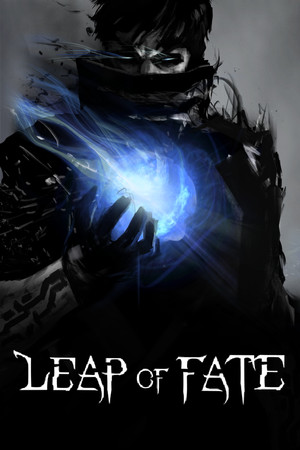
Compara los precios de Leap of Fate en tiendas de claves de confianza y encuentra la mejor oferta. Desarrollado por Clever Plays. Publicado por Clever Plays. Lanzado el 30/3/2016. Disponible en PC. Géneros: Action, Indie. Puntuación Metacritic: 80/100.

Four technomages, a tarot-card dungeon, and combat so fast it punishes blinking. Clever Plays built something small-studio scrappy that earns its 80 Metacritic the hard way.

My first hour with Leap of Fate was humbling in the best way. I picked Aeon, the shadow mage, assumed my roguelite experience would carry me through, and watched the Crucible of Fates swallow me whole before I reached the second chapter. Coming back was not a chore. It was compulsive. What Clever Plays built here is a top-down twin-stick action game threaded through with roguelite structure, set in a cyberpunk-inflected New York where magic and street-level grime share the same zip code. The core loop runs through six chapters, each laid out as a pyramid of cards drawn from a tarot-inspired Deck of Fate. You pick a card, fight or loot or upgrade, and the adjacent cards beneath it are revealed. The pyramid format means every run branches differently without ever feeling like a map you are memorizing. Combat cards carry a skull rating for difficulty and a treasure rating for reward, so there is genuine strategic weight to each choice before the arena even loads. The four playable characters are the game's strongest argument for multiple playthroughs. Aeon is the well-balanced starting point with a reliable ranged attack. Big Mo, the cyborg technomancer, brings a laser cannon that mows through crowds. Mukai is the close-range spirit channeler who rewards aggression. Rasimov, the rogue occultist, feeds on the souls of enemies he kills with his abilities, earning upgrades and health in the process, which makes him feel genuinely different to pilot. Three of the four require unlocking, and because each character has their own story told through illustrated cinematics, the drip-feed of lore gives you a reason to persist beyond pure score-chasing. The skill system reinforces this: instead of gear drops, you spend Mana on a randomly generated skill tree each run, split into Passive, Attack, and Mobility branches. The layout shuffles every time, which means you cannot pre-plan a build, only adapt to what appears. Some runs that adaptation feels inspired; others, the RNG is simply not on your side. Two mechanics define survival once enemy density spikes. The Glyph is a character-specific offensive spell, collectible and swappable across runs, with everything from explosive traps to crowd-freeze variants. Shadow Walk is a teleport-dash that lets you warp across the arena without taking damage, and when upgraded it can leave behind a decoy or damage enemies in its path. Relying on basic attacks alone stops working fast. The game is really asking you to chain these tools together, and when a chain clicks, the combat feels genuinely kinetic. The arenas are compact and cluttered by design, which cuts both ways: it keeps pressure high, but it also means dead ends appear exactly when you least want them. A loose difficulty curve makes the game approachable early, with boss encounters providing the sharpest spikes. Permanent upgrades carry across deaths, softening the roguelite's otherwise harsh restart penalty without removing the sting entirely. Where the game shows its indie seams is in enemy variety. Critics broadly agreed that repetition creeps in after several runs, and the card events, while varied enough early, eventually cycle through familiar territory. The story setup, four psychologically fractured mages confronting their own fears, is more atmospheric mood-board than deep narrative. It sketches character rather than building it, which suits the pace but may disappoint players who wanted Shadowrun-level writing. The voice acting, notably, punches above the budget. So does the overall aesthetic: the cyberpunk fantasy palette is confident, the visual effects pop, and the soundtrack keeps the tempo without becoming exhausting. For a small Montreal studio, the craft is real and the intentionality shows. Kai, Scout Team

Leap of Fate

Leap of Fate

30 mar 2016Clever Plays
GamerScout opina

Four technomages, a tarot-card dungeon, and combat so fast it punishes blinking. Clever Plays built something small-studio scrappy that earns its 80 Metacritic the hard way.

PC
ProtonDB Silver
Mejor precio disponible
€0.00
en N/A
Mínimo histórico: €1.80

Comparar precios(0 tiendas)

Cargando precios...

We may earn a commission when you buy games through links on this page — at no extra cost to you. It never affects our rankings or verdicts.

Historial de precios

Historical low
€1.8023 Jun 2026
Keyshops
€1.77€1.86€1.95€2.047 Jun12 Jun18 Jun23 Jun28 Jun
Tracking prices since 7 Jun 2026
Create alert

Capturas y multimedia

Acerca de Leap of Fate

My first hour with Leap of Fate was humbling in the best way. I picked Aeon, the shadow mage, assumed my roguelite experience would carry me through, and watched the Crucible of Fates swallow me whole before I reached the second chapter. Coming back was not a chore. It was compulsive. What Clever Plays built here is a top-down twin-stick action game threaded through with roguelite structure, set in a cyberpunk-inflected New York where magic and street-level grime share the same zip code. The core loop runs through six chapters, each laid out as a pyramid of cards drawn from a tarot-inspired Deck of Fate. You pick a card, fight or loot or upgrade, and the adjacent cards beneath it are revealed. The pyramid format means every run branches differently without ever feeling like a map you are memorizing. Combat cards carry a skull rating for difficulty and a treasure rating for reward, so there is genuine strategic weight to each choice before the arena even loads. The four playable characters are the game's strongest argument for multiple playthroughs. Aeon is the well-balanced starting point with a reliable ranged attack. Big Mo, the cyborg technomancer, brings a laser cannon that mows through crowds. Mukai is the close-range spirit channeler who rewards aggression. Rasimov, the rogue occultist, feeds on the souls of enemies he kills with his abilities, earning upgrades and health in the process, which makes him feel genuinely different to pilot. Three of the four require unlocking, and because each character has their own story told through illustrated cinematics, the drip-feed of lore gives you a reason to persist beyond pure score-chasing. The skill system reinforces this: instead of gear drops, you spend Mana on a randomly generated skill tree each run, split into Passive, Attack, and Mobility branches. The layout shuffles every time, which means you cannot pre-plan a build, only adapt to what appears. Some runs that adaptation feels inspired; others, the RNG is simply not on your side. Two mechanics define survival once enemy density spikes. The Glyph is a character-specific offensive spell, collectible and swappable across runs, with everything from explosive traps to crowd-freeze variants. Shadow Walk is a teleport-dash that lets you warp across the arena without taking damage, and when upgraded it can leave behind a decoy or damage enemies in its path. Relying on basic attacks alone stops working fast. The game is really asking you to chain these tools together, and when a chain clicks, the combat feels genuinely kinetic. The arenas are compact and cluttered by design, which cuts both ways: it keeps pressure high, but it also means dead ends appear exactly when you least want them. A loose difficulty curve makes the game approachable early, with boss encounters providing the sharpest spikes. Permanent upgrades carry across deaths, softening the roguelite's otherwise harsh restart penalty without removing the sting entirely. Where the game shows its indie seams is in enemy variety. Critics broadly agreed that repetition creeps in after several runs, and the card events, while varied enough early, eventually cycle through familiar territory. The story setup, four psychologically fractured mages confronting their own fears, is more atmospheric mood-board than deep narrative. It sketches character rather than building it, which suits the pace but may disappoint players who wanted Shadowrun-level writing. The voice acting, notably, punches above the budget. So does the overall aesthetic: the cyberpunk fantasy palette is confident, the visual effects pop, and the soundtrack keeps the tempo without becoming exhausting. For a small Montreal studio, the craft is real and the intentionality shows.

Kai
Kai · Scout Team

Indie & narrative

Etiquetas

singleplayerachievementscontroller-supporttrading-cardscloud-savestier:aaaTwin-Stick ActionTarot Card ProgressionCyberpunk FantasyPermanent UpgradesPer-Character StoryGlyph SystemShadow WalkIsometric RogueliteMultiple Endings

Requisitos del sistema

Mínimos

OS
Win XP
Memory
4 GB RAM
Storage
2000 MB available space
Graphics
Discreet video card
Processor
Core 2 Duo
Sound Card
Yes

Sigue explorando

Community Discussion

Be the first to comment on Leap of Fate.

Reseñas y valoraciones

Metacritic
80

Información del juego

Desarrolladora
Clever Plays
Distribuidora
Clever Plays
Fecha de lanzamiento
30 mar 2016

Alerta de precio

¡Recibe un aviso cuando el precio baje de tu objetivo!

Crear alerta

Más de Clever Plays

Compra mejor: guías útiles

¿Buscas más? Mira juegos como Leap of Fate →

Preguntas frecuentes sobre Leap of Fate

¿Cuánto cuesta Leap of Fate?

El precio de Leap of Fate cambia a menudo y varía según la tienda, la edición y la región. La tabla de precios en vivo de esta página compara las ofertas más baratas en stock de tiendas de claves de confianza como Eneba y Kinguin, para que siempre veas el precio más bajo actual antes de comprar.

¿Dónde puedo comprar Leap of Fate más barato?

Compara los precios de Leap of Fate en todas las tiendas verificadas en la tabla de precios de esta página. Listamos las ofertas de claves y tiendas más baratas en stock, actualizadas con frecuencia, para que siempre veas la mejor oferta actual antes de comprar.

¿En qué plataformas está disponible Leap of Fate?

Leap of Fate está disponible en PC.

¿Cuándo se lanzó Leap of Fate?

Leap of Fate se lanzó el 30 de marzo de 2016.

¿Quién desarrolló Leap of Fate?

Leap of Fate fue desarrollado por Clever Plays.

¿Merece la pena comprar Leap of Fate?

Leap of Fate tiene una puntuación Metacritic de 80/100, lo que lo convierte en uno de los títulos destacados de Action. Mira las reseñas completas, las valoraciones y los tiempos de duración en esta página para decidir.