Compara los precios de KLETKA en tiendas de claves de confianza y encuentra la mejor oferta. Desarrollado por Callback. Publicado por Callback. Lanzado el 19/2/2026. Disponible en PC, Linux. Géneros: Action, Adventure, Indie.

Six condemned prisoners, one carnivorous elevator, and a brutalist megastructure that stretches down forever. Bring fuel, or bring a friend to sacrifice.

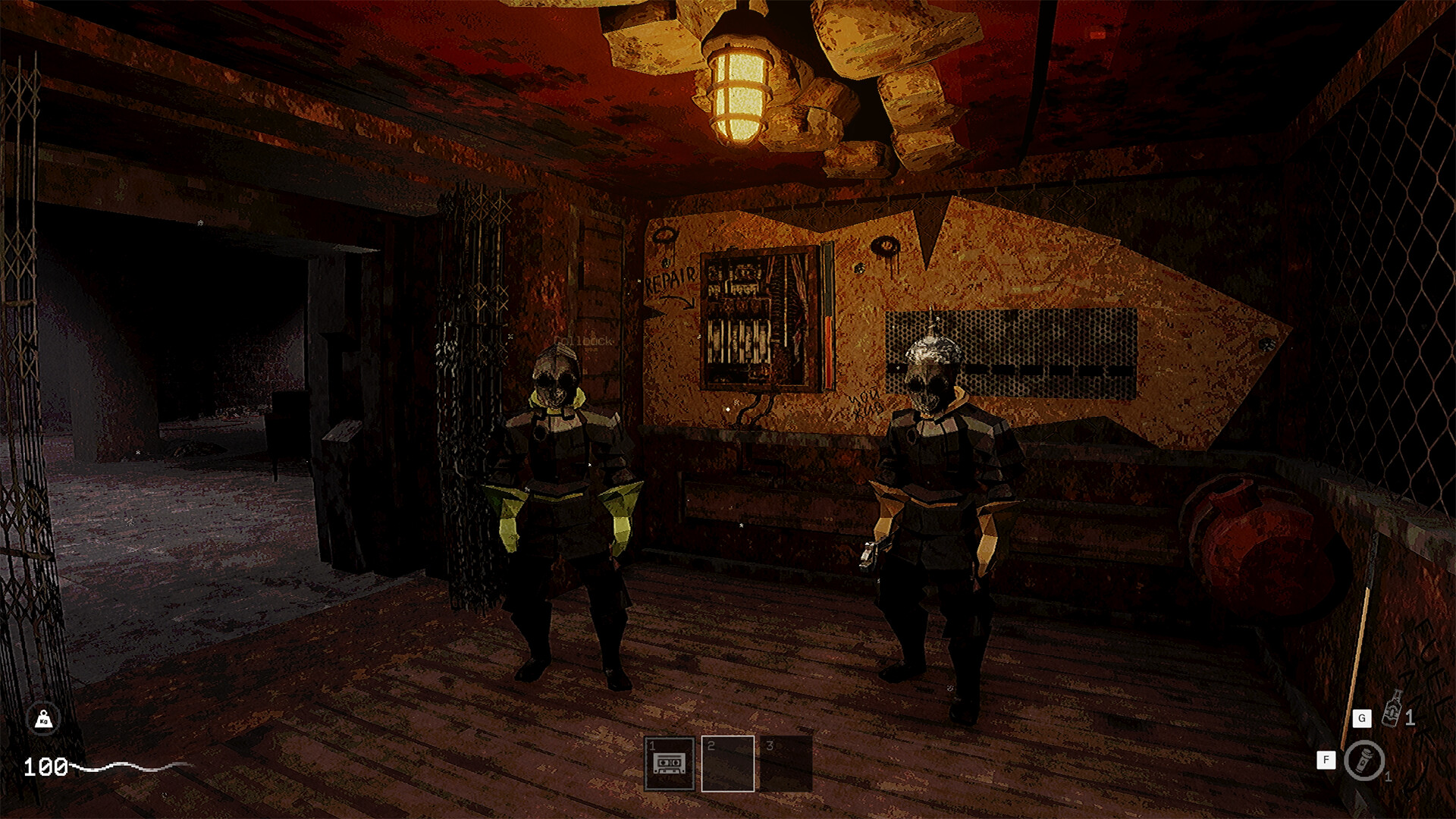
My first instinct after a few hours with KLETKA was to call it a Lethal Company clone and move on. That instinct was wrong. Where that game frames dread in corporate bureaucracy, KLETKA roots itself in something stranger and heavier: a post-Soviet surrealism that feels genuinely authored. The Gigakhrushchevka, an infinitely restructuring megabuilding styled after Soviet-era residential blocks, is not just a backdrop. It is a worldview rendered in concrete, rust, and procedurally generated dread. Each floor remixes industrial basements, prison wings, and collapsed housing into a labyrinth that feels purposefully oppressive rather than randomly assembled. The central mechanic is the thing that makes KLETKA worth your time. The elevator, the Kletka itself, is a semi-organic biomechanical creature you are forced to maintain as both captor and lifeline. Players must scavenge fuel, repair its systems, and, when resources run dry, feed it meat. Enemy meat, ideally. Teammate meat, if you are being pragmatic. That single design decision reframes every scavenging run as a negotiation between survival and sacrifice. The team of up to six can split into scavengers sweeping floors, defenders holding corridors, and one unlucky soul managing the elevator's hunger meter back at the cage. Communication matters here in a way that feels earned rather than mandatory, because the cost of silence is someone getting randomly consumed. Layered on top of that is the Samosbor, a floor-wiping anomaly that triggers without warning beyond a siren. When it fires, everyone drops what they are holding and sprints. The first time it catches your group mid-loot, scattering supplies and teammates in a blind panic, you will understand why so many players report it as their strongest memory of the game. It punishes greed with elegant brutality. The campaign runs 100 floors deep with a final encounter at the bottom, and an endless mode opens up after that for groups who want to keep descending. Runs are self-contained with knowledge-based progression rather than persistent stats, so dying teaches rather than punishes in a compound way. Resurrection bottles collected from floors let downed teammates be revived at scattered machines, but the detour always costs time and tests whether the group's cooperation holds under pressure. The sound design deserves to be called out specifically. The mechanical groaning of the elevator, the distant structural rumble of the Gigastructure, the way the Samosbor siren cuts through ambient noise are all doing real atmospheric heavy lifting. This is not a game that relies on jump scares. The dread is architectural and acoustic. Visually it leans into 3D pixel aesthetics with flickering industrial lighting that hides movement just enough to keep everyone slightly paranoid without obscuring the layout. The developers have been consistently active post-launch, upgrading to Unreal Engine 5.7, adding new anomalous floors like Lenin, Red Square, and Parable, and patching the netcode issues that troubled early builds. There are still balance complaints around certain biomes feeling loot-starved, and solo play is noticeably harder to tune for since the design breathes in groups. Playing alone is possible but the game clearly was not built with you in mind if you go in that way. For co-op horror fans who can reliably fill a lobby, KLETKA earns its Very Positive reception. For solo players or those without a regular group, the value proposition is narrower. The Workshop support, crossplay, and active development pipeline give it longevity that most small-team co-op horror releases never reach. Kai, Scout Team

KLETKA

KLETKA

19 feb 2026Callback
GamerScout opina

Six condemned prisoners, one carnivorous elevator, and a brutalist megastructure that stretches down forever. Bring fuel, or bring a friend to sacrifice.

PCLinux
Steam Deck VerifiedProtonDB Platinum
Mejor precio disponible
€0.00
en N/A
Mínimo histórico: €6.97

Comparar precios(0 tiendas)

Cargando precios...

We may earn a commission when you buy games through links on this page — at no extra cost to you. It never affects our rankings or verdicts.

Historial de precios

Historical low
€6.975 Jun 2026
Keyshops
€6.83€7.30€7.78€8.255 Jun11 Jun17 Jun22 Jun28 Jun
Tracking prices since 5 Jun 2026
Create alert

Capturas y multimedia

Captura

Acerca de KLETKA

My first instinct after a few hours with KLETKA was to call it a Lethal Company clone and move on. That instinct was wrong. Where that game frames dread in corporate bureaucracy, KLETKA roots itself in something stranger and heavier: a post-Soviet surrealism that feels genuinely authored. The Gigakhrushchevka, an infinitely restructuring megabuilding styled after Soviet-era residential blocks, is not just a backdrop. It is a worldview rendered in concrete, rust, and procedurally generated dread. Each floor remixes industrial basements, prison wings, and collapsed housing into a labyrinth that feels purposefully oppressive rather than randomly assembled. The central mechanic is the thing that makes KLETKA worth your time. The elevator, the Kletka itself, is a semi-organic biomechanical creature you are forced to maintain as both captor and lifeline. Players must scavenge fuel, repair its systems, and, when resources run dry, feed it meat. Enemy meat, ideally. Teammate meat, if you are being pragmatic. That single design decision reframes every scavenging run as a negotiation between survival and sacrifice. The team of up to six can split into scavengers sweeping floors, defenders holding corridors, and one unlucky soul managing the elevator's hunger meter back at the cage. Communication matters here in a way that feels earned rather than mandatory, because the cost of silence is someone getting randomly consumed. Layered on top of that is the Samosbor, a floor-wiping anomaly that triggers without warning beyond a siren. When it fires, everyone drops what they are holding and sprints. The first time it catches your group mid-loot, scattering supplies and teammates in a blind panic, you will understand why so many players report it as their strongest memory of the game. It punishes greed with elegant brutality. The campaign runs 100 floors deep with a final encounter at the bottom, and an endless mode opens up after that for groups who want to keep descending. Runs are self-contained with knowledge-based progression rather than persistent stats, so dying teaches rather than punishes in a compound way. Resurrection bottles collected from floors let downed teammates be revived at scattered machines, but the detour always costs time and tests whether the group's cooperation holds under pressure. The sound design deserves to be called out specifically. The mechanical groaning of the elevator, the distant structural rumble of the Gigastructure, the way the Samosbor siren cuts through ambient noise are all doing real atmospheric heavy lifting. This is not a game that relies on jump scares. The dread is architectural and acoustic. Visually it leans into 3D pixel aesthetics with flickering industrial lighting that hides movement just enough to keep everyone slightly paranoid without obscuring the layout. The developers have been consistently active post-launch, upgrading to Unreal Engine 5.7, adding new anomalous floors like Lenin, Red Square, and Parable, and patching the netcode issues that troubled early builds. There are still balance complaints around certain biomes feeling loot-starved, and solo play is noticeably harder to tune for since the design breathes in groups. Playing alone is possible but the game clearly was not built with you in mind if you go in that way. For co-op horror fans who can reliably fill a lobby, KLETKA earns its Very Positive reception. For solo players or those without a regular group, the value proposition is narrower. The Workshop support, crossplay, and active development pipeline give it longevity that most small-team co-op horror releases never reach.

Kai
Kai · Scout Team

Indie & narrative

Etiquetas

singleplayermultiplayercooponline-coopcross-platformachievementscontroller-supporttrading-cardsworkshopcloud-savestier:indiePost-Soviet HorrorRoguelite Co-opSamosbor MechanicResource SacrificeProcedural FloorsElevator MaintenanceSix-Player Co-opKnowledge Progression

Requisitos del sistema

Mínimos

OS
Windows 10
Memory
6 GB RAM
DirectX
Version 12
Storage
3 GB available space
Graphics
GeForce GTX 650
Processor
Intel Core i5

Recomendados

OS
Windows 10
Memory
8 GB RAM
DirectX
Version 12
Network
Broadband Internet connection
Storage
4 GB available space
Graphics
Geforce GTX 1080
Processor
Intel Core i7

Sigue explorando

Community Discussion

Be the first to comment on KLETKA.

Reseñas y valoraciones

No hay valoraciones disponibles

Información del juego

Desarrolladora
Callback
Distribuidora
Callback
Fecha de lanzamiento
19 feb 2026

Alerta de precio

¡Recibe un aviso cuando el precio baje de tu objetivo!

Crear alerta

Compra mejor: guías útiles

¿Buscas más? Mira juegos como KLETKA →

Preguntas frecuentes sobre KLETKA

¿Cuánto cuesta KLETKA?

El precio de KLETKA cambia a menudo y varía según la tienda, la edición y la región. La tabla de precios en vivo de esta página compara las ofertas más baratas en stock de tiendas de claves de confianza como Eneba y Kinguin, para que siempre veas el precio más bajo actual antes de comprar.

¿Dónde puedo comprar KLETKA más barato?

Compara los precios de KLETKA en todas las tiendas verificadas en la tabla de precios de esta página. Listamos las ofertas de claves y tiendas más baratas en stock, actualizadas con frecuencia, para que siempre veas la mejor oferta actual antes de comprar.

¿En qué plataformas está disponible KLETKA?

KLETKA está disponible en PC, Linux.

¿Cuándo se lanzó KLETKA?

KLETKA se lanzó el 19 de febrero de 2026.

¿Quién desarrolló KLETKA?

KLETKA fue desarrollado por Callback.