Compara los precios de Inkbound en tiendas de claves de confianza y encuentra la mejor oferta. Desarrollado por Shiny Shoe. Publicado por Shiny Shoe. Lanzado el 9/4/2024. Disponible en PC. Géneros: Action, Indie, Massively Multiplayer, RPG, Simulation, Strategy. Puntuación Metacritic: 80/100.

Monster Train's studio swaps deckbuilding for gridless tactical combat, and the result is one of the more mechanically honest co-op roguelikes in recent memory - if you can stomach its rough difficulty spikes.

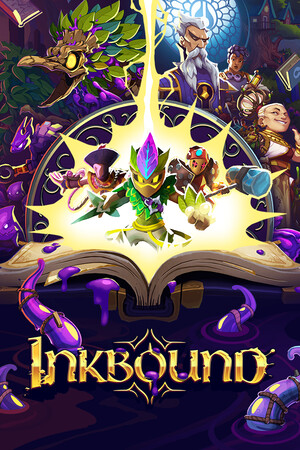
I've logged enough hours with Inkbound to say this plainly: the combat system is the reason to buy it, and almost everything around it is just scaffolding you tolerate to get back there. Shiny Shoe dropped the card-drafting that made Monster Train special and replaced it with a gridless, turn-based tactical loop where your character moves freely inside a radius, burns Will (mana) on abilities called Bindings, and has to read enemy telegraphs to survive. There are no grid squares to hide behind as an excuse. Every mistake is yours. That clarity is refreshing, and the engine underneath it is genuinely fast when you want it to be loose and deliberate when a fight demands focus. The class roster, called Aspects, is where the build depth lives. You start with access to the Magma Miner, Mosscloak, and Weaver, which cover a brute heat-stacking warrior, a poison-or-burst agility fighter, and a thread-slinging crowd controller respectively. Locked behind quest completion are the shield-absorbing Obelisk, the Clairvoyant aura mage, the fist-combo Chainbreaker, and the positioning-heavy spear fighter Godkeeper, among others. Each Aspect plays so differently from the others that picking a new one after a dozen runs genuinely resets your mental model of how the game works. Build variety is real in the low-to-mid difficulty range (Deep Dives 1-14 or so), mixing crit, burn, bleed, poison, and thorns paths across classes. The concern that surfaces in the community at higher Deep Dive levels is that enemy HP scaling compresses viable options toward pure damage-per-turn builds, which flattens the decision space the game is otherwise proud of. That is a real ceiling to keep in mind if you chase max difficulty. The Vestiges and trinket systems layer on top cleanly. Vestiges are artifacts that unlock perks at point thresholds, and the Vestige Set mechanic rewards matching sets for compounding bonuses, which makes every mid-run loot choice feel like a small optimization puzzle. Importantly, unlocking more Vestiges through metaprogression does not hand you power - the new options generally pool with existing ones rather than replacing them, which keeps the baseline experience fair for newcomers without removing the long-term reward loop for veterans. The one persistent complaint from player-side coverage is that later-game content and stronger items are gated behind a mission structure that a lot of people find tedious to engage with. That friction is real, but the core runs are complete enough that you can ignore much of it for the first thirty or forty hours. Co-op up to four players uses a simultaneous-action variant of the turn structure, meaning everyone moves and acts within the same turn window rather than waiting in a queue. Difficulty scales with group size, but the game distributes enemy targeting loosely enough that it does not feel purely punishing to bring friends in. Co-op-specific upgrade options that buff allies also push build decisions toward party composition thinking, which is the closest Inkbound gets to a proper support-role fantasy. For the solo player, the Mosscloak's independence and the Magma Miner's relative tankiness make them the sensible starting points. The game has controller support and cloud saves as well, so sessions on different machines or from the couch are both viable. The always-online requirement is the sharpest caveat: player reports confirm save corruption on unstable connections, and server disconnects mid-run have cost people progress. That is not a minor footnote if your internet is unreliable. The writing and world do not match the mechanical quality. The Atheneum hub is visually distinctive with its high-contrast palette of purples and greens, but the narrative around it is thin and the characters mostly exist to funnel you toward the next quest objective. Shiny Shoe's instinct for core loops is exceptional. Their instinct for storytelling is not. If you come for lore immersion, you will bounce off. If you come to theory-craft an eight-ability poison Mosscloak build and then test it against a boss that signals every attack in advance, you will find a game that respects your time and your brain in equal measure. The 80 Metacritic score is accurate: this is a well-constructed game with a few obvious rough edges, not a revelation. Diego, Scout Team

Inkbound

Inkbound

9 abr 2024Shiny Shoe
GamerScout opina

Monster Train's studio swaps deckbuilding for gridless tactical combat, and the result is one of the more mechanically honest co-op roguelikes in recent memory - if you can stomach its rough difficulty spikes.

PC
Steam Deck PlayableProtonDB Gold
Mejor precio disponible
€0.00
en N/A
Mínimo histórico: €3.93

Comparar precios(0 tiendas)

Cargando precios...

We may earn a commission when you buy games through links on this page — at no extra cost to you. It never affects our rankings or verdicts.

Historial de precios

Historical low
€3.939 Jun 2026
Keyshops
€3.72€3.94€4.15€4.379 Jun14 Jun19 Jun23 Jun28 Jun
Tracking prices since 9 Jun 2026
Create alert

Capturas y multimedia

Acerca de Inkbound

I've logged enough hours with Inkbound to say this plainly: the combat system is the reason to buy it, and almost everything around it is just scaffolding you tolerate to get back there. Shiny Shoe dropped the card-drafting that made Monster Train special and replaced it with a gridless, turn-based tactical loop where your character moves freely inside a radius, burns Will (mana) on abilities called Bindings, and has to read enemy telegraphs to survive. There are no grid squares to hide behind as an excuse. Every mistake is yours. That clarity is refreshing, and the engine underneath it is genuinely fast when you want it to be loose and deliberate when a fight demands focus. The class roster, called Aspects, is where the build depth lives. You start with access to the Magma Miner, Mosscloak, and Weaver, which cover a brute heat-stacking warrior, a poison-or-burst agility fighter, and a thread-slinging crowd controller respectively. Locked behind quest completion are the shield-absorbing Obelisk, the Clairvoyant aura mage, the fist-combo Chainbreaker, and the positioning-heavy spear fighter Godkeeper, among others. Each Aspect plays so differently from the others that picking a new one after a dozen runs genuinely resets your mental model of how the game works. Build variety is real in the low-to-mid difficulty range (Deep Dives 1-14 or so), mixing crit, burn, bleed, poison, and thorns paths across classes. The concern that surfaces in the community at higher Deep Dive levels is that enemy HP scaling compresses viable options toward pure damage-per-turn builds, which flattens the decision space the game is otherwise proud of. That is a real ceiling to keep in mind if you chase max difficulty. The Vestiges and trinket systems layer on top cleanly. Vestiges are artifacts that unlock perks at point thresholds, and the Vestige Set mechanic rewards matching sets for compounding bonuses, which makes every mid-run loot choice feel like a small optimization puzzle. Importantly, unlocking more Vestiges through metaprogression does not hand you power - the new options generally pool with existing ones rather than replacing them, which keeps the baseline experience fair for newcomers without removing the long-term reward loop for veterans. The one persistent complaint from player-side coverage is that later-game content and stronger items are gated behind a mission structure that a lot of people find tedious to engage with. That friction is real, but the core runs are complete enough that you can ignore much of it for the first thirty or forty hours. Co-op up to four players uses a simultaneous-action variant of the turn structure, meaning everyone moves and acts within the same turn window rather than waiting in a queue. Difficulty scales with group size, but the game distributes enemy targeting loosely enough that it does not feel purely punishing to bring friends in. Co-op-specific upgrade options that buff allies also push build decisions toward party composition thinking, which is the closest Inkbound gets to a proper support-role fantasy. For the solo player, the Mosscloak's independence and the Magma Miner's relative tankiness make them the sensible starting points. The game has controller support and cloud saves as well, so sessions on different machines or from the couch are both viable. The always-online requirement is the sharpest caveat: player reports confirm save corruption on unstable connections, and server disconnects mid-run have cost people progress. That is not a minor footnote if your internet is unreliable. The writing and world do not match the mechanical quality. The Atheneum hub is visually distinctive with its high-contrast palette of purples and greens, but the narrative around it is thin and the characters mostly exist to funnel you toward the next quest objective. Shiny Shoe's instinct for core loops is exceptional. Their instinct for storytelling is not. If you come for lore immersion, you will bounce off. If you come to theory-craft an eight-ability poison Mosscloak build and then test it against a boss that signals every attack in advance, you will find a game that respects your time and your brain in equal measure. The 80 Metacritic score is accurate: this is a well-constructed game with a few obvious rough edges, not a revelation.

Diego
Diego · Scout Team

Strategy & simulation

Etiquetas

singleplayermultiplayercooponline-coopachievementscontroller-supporttrading-cardscloud-savestier:aaaGridless TacticsAspect BuildsDeep Dive DifficultyVestige CraftingSimultaneous Co-opBinding UpgradesMetaprogression UnlocksAlways-Online

Requisitos del sistema

Mínimos

OS
Windows 10
Memory
4 GB RAM
DirectX
Version 11
Network
Broadband Internet connection
Storage
3 GB available space
Graphics
IGP or better - 2 GB of VRAM
Processor
Core i3

Recomendados

OS
Windows 10
Memory
8 GB RAM
DirectX
Version 11
Network
Broadband Internet connection
Storage
3 GB available space
Graphics
GTX 970
Processor
Core i5

Sigue explorando

Community Discussion

Be the first to comment on Inkbound.

Reseñas y valoraciones

Metacritic
80

Información del juego

Desarrolladora
Shiny Shoe
Distribuidora
Shiny Shoe
Fecha de lanzamiento
9 abr 2024

Alerta de precio

¡Recibe un aviso cuando el precio baje de tu objetivo!

Crear alerta

Más de Shiny Shoe

Compra mejor: guías útiles

¿Buscas más? Mira juegos como Inkbound →

Preguntas frecuentes sobre Inkbound

¿Cuánto cuesta Inkbound?

El precio de Inkbound cambia a menudo y varía según la tienda, la edición y la región. La tabla de precios en vivo de esta página compara las ofertas más baratas en stock de tiendas de claves de confianza como Eneba y Kinguin, para que siempre veas el precio más bajo actual antes de comprar.

¿Dónde puedo comprar Inkbound más barato?

Compara los precios de Inkbound en todas las tiendas verificadas en la tabla de precios de esta página. Listamos las ofertas de claves y tiendas más baratas en stock, actualizadas con frecuencia, para que siempre veas la mejor oferta actual antes de comprar.

¿En qué plataformas está disponible Inkbound?

Inkbound está disponible en PC.

¿Cuándo se lanzó Inkbound?

Inkbound se lanzó el 9 de abril de 2024.

¿Quién desarrolló Inkbound?

Inkbound fue desarrollado por Shiny Shoe.

¿Merece la pena comprar Inkbound?

Inkbound tiene una puntuación Metacritic de 80/100, lo que lo convierte en uno de los títulos destacados de Action. Mira las reseñas completas, las valoraciones y los tiempos de duración en esta página para decidir.