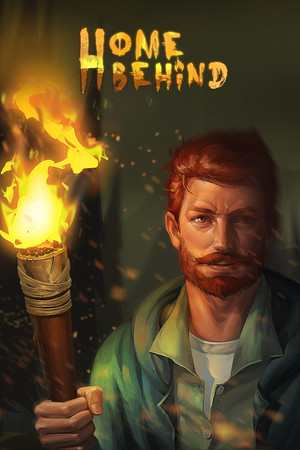
Compara los precios de Home Behind en tiendas de claves de confianza y encuentra la mejor oferta. Desarrollado por TPP Studio. Publicado por TPP Studio. Lanzado el 2/6/2016. Disponible en PC, Mac, Linux. Géneros: Adventure, Casual, Indie, RPG, Simulation, Strategy.

Survival mechanics wrapped around a refugee's desperate march toward Europe, a concept stronger than its execution, built for players who can forgive a rough mobile-port feel in exchange for a genuinely grim subject.

My spreadsheet instincts told me to evaluate the systems first, and the systems here are, on paper, interesting. You pick one of 15 unlockable jobs before each run, each with its own starting gear and stat weighting, then manage a constant three-way pressure between nutrition, hydration, and mood as you push a left-to-right side-scrolling route across 1,500 kilometers of war-torn territory. Random events fire throughout, NPCs toggle between helpful and threatening depending on context, and the crafting tree lets you fashion weapons and armor from scavenged materials. There is a day-night cycle, weather variation, and a boss fight at the end of each zone's four checkpoints. On paper, that reads like a lean but credible survival roguelike with some resource-management teeth. In practice, the depth does not hold up to scrutiny. The core interaction loop amounts to walking right and clicking on objects as you pass them, reviewers have consistently described it as closer to a mobile clicker than a PC survival game, and that framing is hard to argue against once you are ten minutes in. The job system offers tangible differences in playstyle (a Medic dramatically changes your supply calculus compared to a combat-focused build), but most of the 15 jobs feel like stat reskins rather than genuinely distinct strategies. The crafting system is one of the game's brighter ideas, but resource scarcity means you rarely assemble anything meaningful before a run ends. Enemy encounters are handled with left and right mouse buttons and, while rage attacks add a small timing wrinkle, combat rarely demands more than patience. The thematic ambition deserves a separate paragraph, because it is the one area where Home Behind punches above its budget. The premise, a father crossing a civil-war landscape to find his missing daughter while managing the same material deprivations real refugees face, carries genuine weight. Moral choices appear: you can steal from civilians, exploit vulnerable NPCs, or play the long ethical road and suffer for it. Reviewers noted that the consequences for those choices are thin, which undercuts the premise, but the intent is there. If you have any interest in the subject matter, that framing gives the run-to-run repetition a bit more meaning than a pure genre exercise would. On the technical side, the localization was incomplete at launch and remained patchy well into the game's life. Mixing translated and untranslated options within the same menu screen is the kind of issue that breaks immersion immediately. Sound design is minimal to the point of being almost absent in places. The 2D hand-drawn art has charm but leans on heavy sprite repetition, the same two NPC models populate every settlement regardless of size. None of this is catastrophic for a budget indie from a small studio, but it matters when the mood the game is trying to build depends on consistency. For strategy and sim players specifically: there is not enough systemic complexity here to satisfy genre expectations. The decision tree is shallow, AI is passive, and there is no mod ecosystem to extend the experience. Newcomers to survival roguelikes might get a few runs out of the job variety and the randomized events before the loop feels exhausted. If you want the thematic territory done with deeper mechanics, This War of Mine is the obvious referral. Home Behind is a modest, earnest game that reached further than its budget allowed. Diego, Scout Team

Home Behind

Home Behind

2 jun 2016TPP Studio
GamerScout opina

Survival mechanics wrapped around a refugee's desperate march toward Europe, a concept stronger than its execution, built for players who can forgive a rough mobile-port feel in exchange for a genuinely grim subject.

PCMacLinux
Steam Deck Playable
Mejor precio disponible
€0.00
en N/A
Mínimo histórico: €1.68

Comparar precios(0 tiendas)

Cargando precios...

We may earn a commission when you buy games through links on this page — at no extra cost to you. It never affects our rankings or verdicts.

Historial de precios

Historical low
€1.6826 Jun 2026
Keyshops
€1.66€1.73€1.81€1.8810 Jun15 Jun19 Jun24 Jun28 Jun
Tracking prices since 10 Jun 2026
Create alert

Capturas y multimedia

Acerca de Home Behind

My spreadsheet instincts told me to evaluate the systems first, and the systems here are, on paper, interesting. You pick one of 15 unlockable jobs before each run, each with its own starting gear and stat weighting, then manage a constant three-way pressure between nutrition, hydration, and mood as you push a left-to-right side-scrolling route across 1,500 kilometers of war-torn territory. Random events fire throughout, NPCs toggle between helpful and threatening depending on context, and the crafting tree lets you fashion weapons and armor from scavenged materials. There is a day-night cycle, weather variation, and a boss fight at the end of each zone's four checkpoints. On paper, that reads like a lean but credible survival roguelike with some resource-management teeth. In practice, the depth does not hold up to scrutiny. The core interaction loop amounts to walking right and clicking on objects as you pass them, reviewers have consistently described it as closer to a mobile clicker than a PC survival game, and that framing is hard to argue against once you are ten minutes in. The job system offers tangible differences in playstyle (a Medic dramatically changes your supply calculus compared to a combat-focused build), but most of the 15 jobs feel like stat reskins rather than genuinely distinct strategies. The crafting system is one of the game's brighter ideas, but resource scarcity means you rarely assemble anything meaningful before a run ends. Enemy encounters are handled with left and right mouse buttons and, while rage attacks add a small timing wrinkle, combat rarely demands more than patience. The thematic ambition deserves a separate paragraph, because it is the one area where Home Behind punches above its budget. The premise, a father crossing a civil-war landscape to find his missing daughter while managing the same material deprivations real refugees face, carries genuine weight. Moral choices appear: you can steal from civilians, exploit vulnerable NPCs, or play the long ethical road and suffer for it. Reviewers noted that the consequences for those choices are thin, which undercuts the premise, but the intent is there. If you have any interest in the subject matter, that framing gives the run-to-run repetition a bit more meaning than a pure genre exercise would. On the technical side, the localization was incomplete at launch and remained patchy well into the game's life. Mixing translated and untranslated options within the same menu screen is the kind of issue that breaks immersion immediately. Sound design is minimal to the point of being almost absent in places. The 2D hand-drawn art has charm but leans on heavy sprite repetition, the same two NPC models populate every settlement regardless of size. None of this is catastrophic for a budget indie from a small studio, but it matters when the mood the game is trying to build depends on consistency. For strategy and sim players specifically: there is not enough systemic complexity here to satisfy genre expectations. The decision tree is shallow, AI is passive, and there is no mod ecosystem to extend the experience. Newcomers to survival roguelikes might get a few runs out of the job variety and the randomized events before the loop feels exhausted. If you want the thematic territory done with deeper mechanics, This War of Mine is the obvious referral. Home Behind is a modest, earnest game that reached further than its budget allowed.

Diego
Diego · Scout Team

Strategy & simulation

Etiquetas

singleplayerachievementstrading-cardscloud-savestier:sub-5Refugee SurvivalJob SystemRoguelike Run-BasedResource ScarcityMoral ChoicesClicker-AdjacentDay-Night CycleBoss EncountersCrafting-Light

Requisitos del sistema

Mínimos

OS
Windows XP/Vista/Windows 7/8/8.1/10 (32bit/64bit)
Memory
2 GB RAM
Storage
1 GB available space
Processor
1.6 GHz

Sigue explorando

Community Discussion

Be the first to comment on Home Behind.

Reseñas y valoraciones

No hay valoraciones disponibles

Información del juego

Desarrolladora
TPP Studio
Distribuidora
TPP Studio
Fecha de lanzamiento
2 jun 2016

Alerta de precio

¡Recibe un aviso cuando el precio baje de tu objetivo!

Crear alerta

Más de TPP Studio

Compra mejor: guías útiles

¿Buscas más? Mira juegos como Home Behind →

Preguntas frecuentes sobre Home Behind

¿Cuánto cuesta Home Behind?

El precio de Home Behind cambia a menudo y varía según la tienda, la edición y la región. La tabla de precios en vivo de esta página compara las ofertas más baratas en stock de tiendas de claves de confianza como Eneba y Kinguin, para que siempre veas el precio más bajo actual antes de comprar.

¿Dónde puedo comprar Home Behind más barato?

Compara los precios de Home Behind en todas las tiendas verificadas en la tabla de precios de esta página. Listamos las ofertas de claves y tiendas más baratas en stock, actualizadas con frecuencia, para que siempre veas la mejor oferta actual antes de comprar.

¿En qué plataformas está disponible Home Behind?

Home Behind está disponible en PC, Mac, Linux.

¿Cuándo se lanzó Home Behind?

Home Behind se lanzó el 2 de junio de 2016.

¿Quién desarrolló Home Behind?

Home Behind fue desarrollado por TPP Studio.