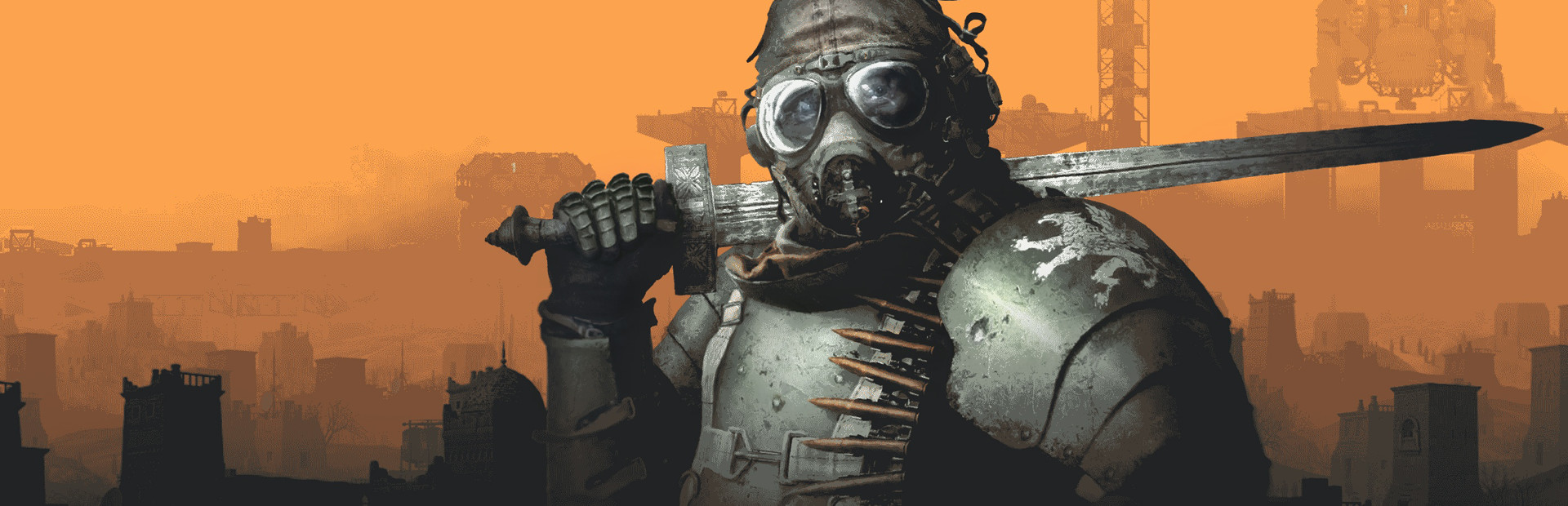
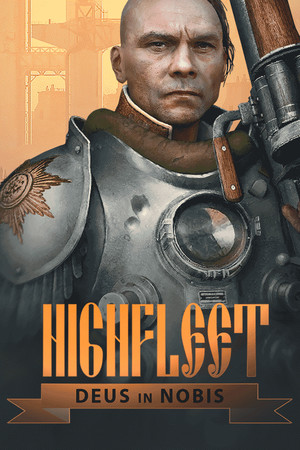
Compara los precios de HighFleet en tiendas de claves de confianza y encuentra la mejor oferta. Desarrollado por Konstantin Koshutin. Publicado por MicroProse Software. Lanzado el 27/7/2021. Disponible en PC. Géneros: Action, Adventure, Indie, Strategy. Puntuación Metacritic: 74/100.

A one-man dieselpunk sim that asks you to track radar ghosts, decode encrypted transmissions, and dogfight thousand-ton warships through desert skies - it will lose impatient players in the first hour and reward everyone else for fifty more.

My first hour with HighFleet involved manually triangulating enemy fleet positions by marking two radar contacts on a paper map and measuring the vector between them. That is either going to sound like paradise or a restraining order, and whichever camp you fall into will tell you exactly whether this game is for you. Konstantin Koshutin built something that feels closer to a Cold War naval simulation transplanted into a dieselpunk fantasy world than anything you could comfortably slot into a genre box. The strategic layer runs like a stripped-down wargame: you command the House of Sayadi task force pushing northward across a procedurally generated continent toward the rebel capital of Khiva, managing fuel, supplies, repairs, ship composition, and diplomatic relations with local Tarkhan warlords simultaneously. Every city on the map has a specialty. Every resupply stop is a tradeoff. Run out of fuel in the wrong corridor and the campaign is functionally over. The systems stack intelligently. Electronic warfare sits at the center of the strategic game - you have radar with long range but a detectable emission signature, IRST for passive short-range tracking, jammers that scramble incoming missile guidance at the cost of broadcasting your position across half the map, and a radio intercept minigame where you decode encrypted enemy transmissions to get advance warning of strike group movements. The three or four major enemy strike groups patrolling the map function as a persistent threat clock: linger too long at a settlement or let a trader convoy slip past with your coordinates and you will have something very angry bearing down on you within minutes. Fleet composition decisions matter enormously here. A dedicated decoy ship loaded with radar emitters can draw pursuers away from your main column. An oil tanker built for range trades combat teeth for operational reach. A fast corvette in your combat order can absorb a strike and retreat before the heavier cruisers even need to move. Combat switches gears entirely into a side-scrolling arcade shooter, which is the point where HighFleet splits its audience most sharply. You control ships one at a time via WASD while the enemy can field multiple vessels simultaneously. Ships are not hit-point sponges - components blow out individually, engines catch fire, hulls crack, weapons fall silent. A heavy cruiser bristling with 130mm guns and close-in weapon systems moves like a barge and eats hits gracefully; a nimble destroyer can outmaneuver incoming fire but crumples fast if anything connects. The ship editor lets you build custom vessels from scratch, and the community has produced some genuinely inventive designs ranging from missile barges armed exclusively with conventional cruise missiles (the game only gives you nukes by default, and using nukes invites AI nuclear retaliation, so the pressure to build alternatives is real) to ultra-light bait ships designed purely to absorb radar attention. The weaknesses are real and worth pricing in. The tutorial explains what buttons do but largely skips why or when to use them, leaving new players to reconstruct the decision logic through failure. The single-save structure - partially addressed by an easy mode with free saves added in a post-launch patch - amplifies every mistake into a potential campaign-ender. The radio intercept minigame that has you tuning frequencies and decoding messages gets genuinely tedious by hour fifteen. There is no skirmish mode, which is a significant gap given how good individual combat encounters feel. The Metacritic score of 74 reflects critics who bounced off the opacity; the Steam user score sitting near 87 percent reflects the players who pushed through it. For a certain kind of strategy player - the kind who reads the tooltip twice, who draws notes on the in-game map, who treats a successful deception operation as more satisfying than a clean kill - HighFleet is the kind of game that gets better every run. The roguelike structure and procedural map mean no two campaigns open the same way, and the ship editor adds a genuine build-crafting dimension that extends replayability well past a single playthrough. The mod community is active enough that custom ship packs and rebalance mods exist if vanilla starts feeling solved. Go in with the easy mode save setting turned on for your first run, spend an evening with a community guide on electronic warfare, and the game opens up into something that genuinely does not exist anywhere else. Diego, Scout Team

HighFleet

HighFleet

27 jul 2021Konstantin KoshutinMicroProse Software
GamerScout opina

A one-man dieselpunk sim that asks you to track radar ghosts, decode encrypted transmissions, and dogfight thousand-ton warships through desert skies - it will lose impatient players in the first hour and reward everyone else for fifty more.

PC
Steam Deck UnsupportedProtonDB Gold
Mejor precio disponible
€0.00
en N/A
Mínimo histórico: €14.21

Comparar precios(0 tiendas)

Cargando precios...

We may earn a commission when you buy games through links on this page — at no extra cost to you. It never affects our rankings or verdicts.

Historial de precios

Historical low
€14.2126 Jun 2026
Keyshops
€12.92€17.37€21.83€26.288 Jun13 Jun18 Jun23 Jun28 Jun
Tracking prices since 8 Jun 2026
Create alert

Capturas y multimedia

Acerca de HighFleet

My first hour with HighFleet involved manually triangulating enemy fleet positions by marking two radar contacts on a paper map and measuring the vector between them. That is either going to sound like paradise or a restraining order, and whichever camp you fall into will tell you exactly whether this game is for you. Konstantin Koshutin built something that feels closer to a Cold War naval simulation transplanted into a dieselpunk fantasy world than anything you could comfortably slot into a genre box. The strategic layer runs like a stripped-down wargame: you command the House of Sayadi task force pushing northward across a procedurally generated continent toward the rebel capital of Khiva, managing fuel, supplies, repairs, ship composition, and diplomatic relations with local Tarkhan warlords simultaneously. Every city on the map has a specialty. Every resupply stop is a tradeoff. Run out of fuel in the wrong corridor and the campaign is functionally over. The systems stack intelligently. Electronic warfare sits at the center of the strategic game - you have radar with long range but a detectable emission signature, IRST for passive short-range tracking, jammers that scramble incoming missile guidance at the cost of broadcasting your position across half the map, and a radio intercept minigame where you decode encrypted enemy transmissions to get advance warning of strike group movements. The three or four major enemy strike groups patrolling the map function as a persistent threat clock: linger too long at a settlement or let a trader convoy slip past with your coordinates and you will have something very angry bearing down on you within minutes. Fleet composition decisions matter enormously here. A dedicated decoy ship loaded with radar emitters can draw pursuers away from your main column. An oil tanker built for range trades combat teeth for operational reach. A fast corvette in your combat order can absorb a strike and retreat before the heavier cruisers even need to move. Combat switches gears entirely into a side-scrolling arcade shooter, which is the point where HighFleet splits its audience most sharply. You control ships one at a time via WASD while the enemy can field multiple vessels simultaneously. Ships are not hit-point sponges - components blow out individually, engines catch fire, hulls crack, weapons fall silent. A heavy cruiser bristling with 130mm guns and close-in weapon systems moves like a barge and eats hits gracefully; a nimble destroyer can outmaneuver incoming fire but crumples fast if anything connects. The ship editor lets you build custom vessels from scratch, and the community has produced some genuinely inventive designs ranging from missile barges armed exclusively with conventional cruise missiles (the game only gives you nukes by default, and using nukes invites AI nuclear retaliation, so the pressure to build alternatives is real) to ultra-light bait ships designed purely to absorb radar attention. The weaknesses are real and worth pricing in. The tutorial explains what buttons do but largely skips why or when to use them, leaving new players to reconstruct the decision logic through failure. The single-save structure - partially addressed by an easy mode with free saves added in a post-launch patch - amplifies every mistake into a potential campaign-ender. The radio intercept minigame that has you tuning frequencies and decoding messages gets genuinely tedious by hour fifteen. There is no skirmish mode, which is a significant gap given how good individual combat encounters feel. The Metacritic score of 74 reflects critics who bounced off the opacity; the Steam user score sitting near 87 percent reflects the players who pushed through it. For a certain kind of strategy player - the kind who reads the tooltip twice, who draws notes on the in-game map, who treats a successful deception operation as more satisfying than a clean kill - HighFleet is the kind of game that gets better every run. The roguelike structure and procedural map mean no two campaigns open the same way, and the ship editor adds a genuine build-crafting dimension that extends replayability well past a single playthrough. The mod community is active enough that custom ship packs and rebalance mods exist if vanilla starts feeling solved. Go in with the easy mode save setting turned on for your first run, spend an evening with a community guide on electronic warfare, and the game opens up into something that genuinely does not exist anywhere else.

Diego
Diego · Scout Team

Strategy & simulation

Etiquetas

singleplayertier:aaaDieselpunkFleet ManagementElectronic WarfareShip BuilderPermadeathSingle-Save RoguelikeWargame-AdjacentDiegetic UI

Requisitos del sistema

Mínimos

OS
64-bit Windows 10 / 64-bit 8.1
Memory
4 GB RAM
Storage
2 GB available space
Graphics
Nvidia GeForce GT 950
Processor
Intel i3-2100 , AMD Athlon 200GE
Sound Card
DirectX Compatible Sound Card

Recomendados

OS
64-bit Windows 10 / 64-bit 8.1
Memory
8 GB RAM
Storage
2 GB available space
Graphics
Nvidia Geforce GTX 1070
Processor
4 cores Intel | AMD CPU (Intel i3-8100, AMD Ryzen 3 1200)
Sound Card
DirectX Compatible Sound Card

Sigue explorando

Community Discussion

Be the first to comment on HighFleet.

Reseñas y valoraciones

Metacritic
74

Información del juego

Desarrolladora
Konstantin Koshutin
Distribuidora
MicroProse Software
Fecha de lanzamiento
27 jul 2021

Alerta de precio

¡Recibe un aviso cuando el precio baje de tu objetivo!

Crear alerta

Más de Konstantin Koshutin

Compra mejor: guías útiles

¿Buscas más? Mira juegos como HighFleet →

Preguntas frecuentes sobre HighFleet

¿Cuánto cuesta HighFleet?

El precio de HighFleet cambia a menudo y varía según la tienda, la edición y la región. La tabla de precios en vivo de esta página compara las ofertas más baratas en stock de tiendas de claves de confianza como Eneba y Kinguin, para que siempre veas el precio más bajo actual antes de comprar.

¿Dónde puedo comprar HighFleet más barato?

Compara los precios de HighFleet en todas las tiendas verificadas en la tabla de precios de esta página. Listamos las ofertas de claves y tiendas más baratas en stock, actualizadas con frecuencia, para que siempre veas la mejor oferta actual antes de comprar.

¿En qué plataformas está disponible HighFleet?

HighFleet está disponible en PC.

¿Cuándo se lanzó HighFleet?

HighFleet se lanzó el 27 de julio de 2021.

¿Quién desarrolló HighFleet?

HighFleet fue desarrollado por Konstantin Koshutin y publicado por MicroProse Software.

¿Merece la pena comprar HighFleet?

HighFleet tiene una puntuación Metacritic de 74/100, lo que lo convierte en uno de los títulos destacados de Action. Mira las reseñas completas, las valoraciones y los tiempos de duración en esta página para decidir.