
Compara los precios de Gravity Field en tiendas de claves de confianza y encuentra la mejor oferta. Desarrollado por Kazakov Studios. Publicado por Kazakov Studios. Lanzado el 22/2/2023. Disponible en PC. Géneros: Simulation.

Portal's budget cousin with a gravity-flip gimmick and a community split between genuine fans and fraud allegations. Approach with calibrated expectations.

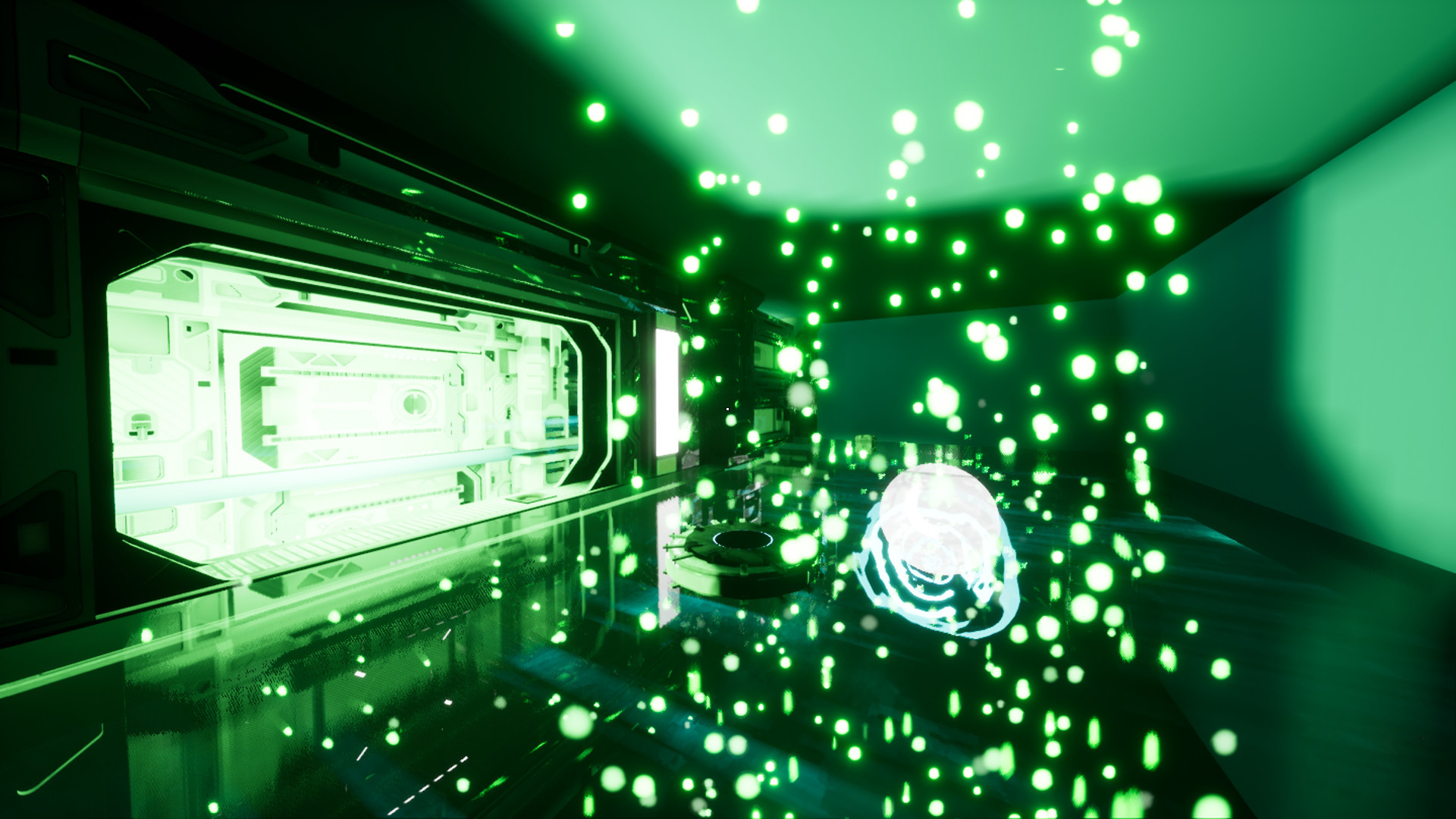
My first red flag with Gravity Field wasn't the game itself. It was the review section. The Steam rating sits around 78-80% positive across hundreds of reviews, but dig past the summary number and you find vocal critics alleging the positive votes are inflated, assets lifted from third-party Unreal packs without credit, and a tutorial that amounts to a two-minute text-to-speech video. That context matters before you spend a single minute inside it. What you actually get, stripped of the controversy, is a first-person spatial puzzle game built around two core mechanics. Each room contains multiple gravity fields, and every field pulls you in its own direction. Step outside all of them and you float in weightlessness. The interplay between those zones is the puzzle. On top of that sits a time inversion mechanic where specific cubes can have their personal timelines rewound. In theory, layering gravity manipulation with per-object temporal reversal should produce genuinely interesting decision chains. In practice, the execution is rough. The gravity fields are visually translucent and difficult to read at a glance, the directional arrows are low-contrast against the minimalist environments, and when multiple fields overlap in a small cubic room, parsing which zone does what becomes a matter of brute-force trial rather than planned deduction. For someone like me who spends recreational time in systems that reward pre-planning, that gap between concept and implementation is genuinely frustrating. The toolset is simple: cubes, buttons, and connectors to open locked doors, plus the time inversion icon when the puzzle calls for it. There is no narrative, which is a defensible choice. Portal had no story for most of its runtime either. The difference is that Portal made the spatial logic legible. Here, objects occasionally disappear on throw, gravity transitions produce motion sickness for a meaningful portion of players based on community reports, and the lack of clear field boundaries means that solving a level can feel accidental rather than earned. A completionist run is reportedly short, with some players clearing the content in under two hours even on a first attempt. That is not inherently a mark against any puzzle game, but it compounds the value calculation here. Who should actually consider it? If you are a puzzle collector hunting ideas rather than polish, the dual-axis mechanic of simultaneous gravity-flip plus time reversal is conceptually novel enough to be worth thirty minutes of your attention. Casual players who want a low-stakes physics toy at sub-dollar pricing after discounts will not feel burned. Anyone expecting the spatial rigor of The Talos Principle or the tactile clarity of Portal should adjust expectations substantially downward. The asset sourcing controversy surrounding Kazakov Studios is also a real consideration if developer ethics factor into your purchasing habits at all. There is no mod ecosystem, no post-launch content roadmap visible in community discussions, and no meaningful AI to speak of since it is a pure solo puzzle game. The Steam Deck is technically supported with caveats around performance. Twenty-nine languages are available. The bones of an interesting game exist here, buried under presentation problems and production questions that never fully got answered after launch. Diego, Scout Team

Gravity Field

Gravity Field

22 feb 2023Kazakov Studios
GamerScout opina

Portal's budget cousin with a gravity-flip gimmick and a community split between genuine fans and fraud allegations. Approach with calibrated expectations.

PC
Steam Deck Playable
Mejor precio disponible
€0.00
en N/A
Mínimo histórico: €0.50

Comparar precios(0 tiendas)

Cargando precios...

We may earn a commission when you buy games through links on this page — at no extra cost to you. It never affects our rankings or verdicts.

Historial de precios

Historical low
€0.5026 Jun 2026
Keyshops
€0.49€0.53€0.58€0.629 Jun14 Jun19 Jun23 Jun28 Jun
Tracking prices since 9 Jun 2026
Create alert

Capturas y multimedia

Captura

Acerca de Gravity Field

My first red flag with Gravity Field wasn't the game itself. It was the review section. The Steam rating sits around 78-80% positive across hundreds of reviews, but dig past the summary number and you find vocal critics alleging the positive votes are inflated, assets lifted from third-party Unreal packs without credit, and a tutorial that amounts to a two-minute text-to-speech video. That context matters before you spend a single minute inside it. What you actually get, stripped of the controversy, is a first-person spatial puzzle game built around two core mechanics. Each room contains multiple gravity fields, and every field pulls you in its own direction. Step outside all of them and you float in weightlessness. The interplay between those zones is the puzzle. On top of that sits a time inversion mechanic where specific cubes can have their personal timelines rewound. In theory, layering gravity manipulation with per-object temporal reversal should produce genuinely interesting decision chains. In practice, the execution is rough. The gravity fields are visually translucent and difficult to read at a glance, the directional arrows are low-contrast against the minimalist environments, and when multiple fields overlap in a small cubic room, parsing which zone does what becomes a matter of brute-force trial rather than planned deduction. For someone like me who spends recreational time in systems that reward pre-planning, that gap between concept and implementation is genuinely frustrating. The toolset is simple: cubes, buttons, and connectors to open locked doors, plus the time inversion icon when the puzzle calls for it. There is no narrative, which is a defensible choice. Portal had no story for most of its runtime either. The difference is that Portal made the spatial logic legible. Here, objects occasionally disappear on throw, gravity transitions produce motion sickness for a meaningful portion of players based on community reports, and the lack of clear field boundaries means that solving a level can feel accidental rather than earned. A completionist run is reportedly short, with some players clearing the content in under two hours even on a first attempt. That is not inherently a mark against any puzzle game, but it compounds the value calculation here. Who should actually consider it? If you are a puzzle collector hunting ideas rather than polish, the dual-axis mechanic of simultaneous gravity-flip plus time reversal is conceptually novel enough to be worth thirty minutes of your attention. Casual players who want a low-stakes physics toy at sub-dollar pricing after discounts will not feel burned. Anyone expecting the spatial rigor of The Talos Principle or the tactile clarity of Portal should adjust expectations substantially downward. The asset sourcing controversy surrounding Kazakov Studios is also a real consideration if developer ethics factor into your purchasing habits at all. There is no mod ecosystem, no post-launch content roadmap visible in community discussions, and no meaningful AI to speak of since it is a pure solo puzzle game. The Steam Deck is technically supported with caveats around performance. Twenty-nine languages are available. The bones of an interesting game exist here, buried under presentation problems and production questions that never fully got answered after launch.

Diego
Diego · Scout Team

Strategy & simulation

Etiquetas

singleplayerachievementstrading-cardscloud-savestier:sub-5Gravity ManipulationTime ReversalNo NarrativeShort PlaythroughMotion Sickness WarningAsset ControversyFirst-Person PuzzlerWeightlessness Mechanic

Requisitos del sistema

Mínimos

OS
Windows 7, 8, 10
Memory
4096 MB RAM
Storage
2 GB available space
Graphics
GTX 1030
Processor
Intel Core i3 /AMD 8

Recomendados

OS
Windows 10
Memory
8192 MB RAM
Storage
2 GB available space
Graphics
GTX 1050 TI 4GB
Processor
Intel Core i5

Sigue explorando

Community Discussion

Be the first to comment on Gravity Field.

Reseñas y valoraciones

No hay valoraciones disponibles

Información del juego

Desarrolladora
Kazakov Studios
Distribuidora
Kazakov Studios
Fecha de lanzamiento
22 feb 2023

Alerta de precio

¡Recibe un aviso cuando el precio baje de tu objetivo!

Crear alerta

Compra mejor: guías útiles

¿Buscas más? Mira juegos como Gravity Field →

Preguntas frecuentes sobre Gravity Field

¿Cuánto cuesta Gravity Field?

El precio de Gravity Field cambia a menudo y varía según la tienda, la edición y la región. La tabla de precios en vivo de esta página compara las ofertas más baratas en stock de tiendas de claves de confianza como Eneba y Kinguin, para que siempre veas el precio más bajo actual antes de comprar.

¿Dónde puedo comprar Gravity Field más barato?

Compara los precios de Gravity Field en todas las tiendas verificadas en la tabla de precios de esta página. Listamos las ofertas de claves y tiendas más baratas en stock, actualizadas con frecuencia, para que siempre veas la mejor oferta actual antes de comprar.

¿En qué plataformas está disponible Gravity Field?

Gravity Field está disponible en PC.

¿Cuándo se lanzó Gravity Field?

Gravity Field se lanzó el 22 de febrero de 2023.

¿Quién desarrolló Gravity Field?

Gravity Field fue desarrollado por Kazakov Studios.