Compara los precios de Fort Triumph en tiendas de claves de confianza y encuentra la mejor oferta. Desarrollado por CookieByte Entertainment. Publicado por CookieByte Entertainment. Lanzado el 16/4/2020. Disponible en PC, Mac, Linux. Géneros: Indie, Strategy. Puntuación Metacritic: 74/100.

XCOM's tactical chess meets Heroes of Might and Magic's overworld sprawl, wrapped in self-aware fantasy parody. Physics-based combat tricks make it stand out, but shallow fort-building and thin hero variety cap its ceiling.

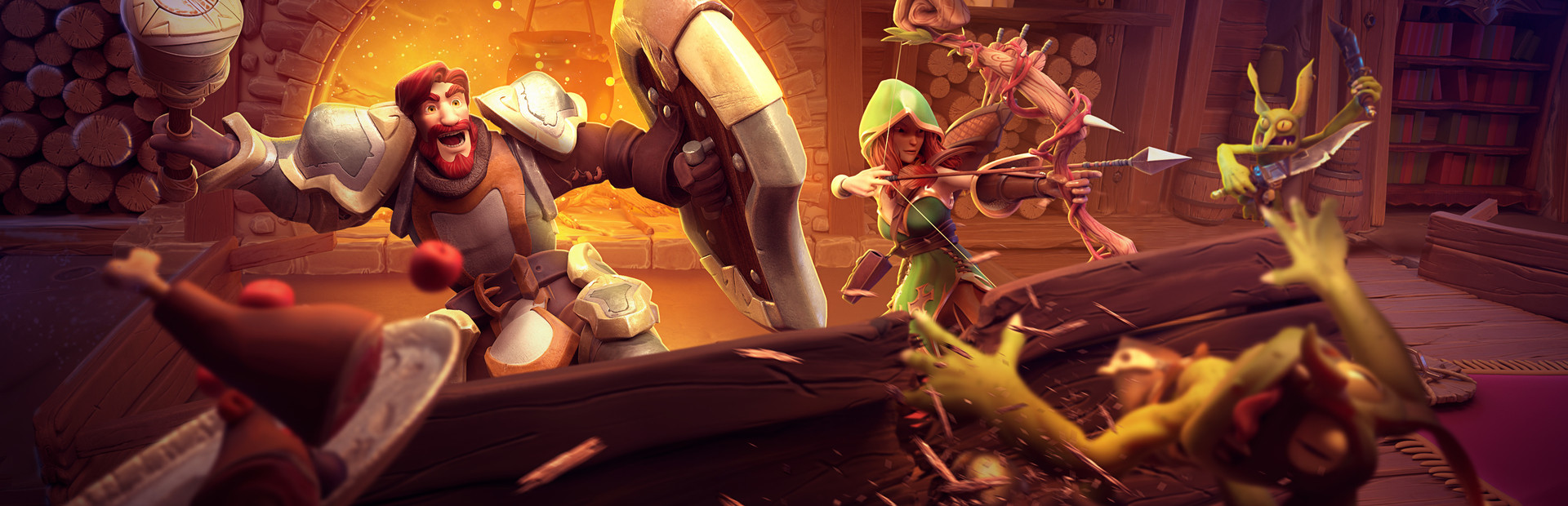
My spreadsheet instincts told me Fort Triumph would either be a hidden gem or a genre tourism trap, and after sitting with it properly, the answer is somewhere usefully in between. The core pitch is real: you manage an overworld that borrows its bones from Heroes of Might and Magic, with fogged maps, resource nodes, and rival factions racing to take your fort, while every skirmish drops you into grid-based, action-point-driven tactical combat that will feel immediately familiar to anyone who has lost a squad member to a 95% miss in XCOM. That genre marriage mostly works, and the fantasy skin, goblins, skeleton warriors, mages, archers, paladins, trolls, makes it friendlier to newcomers who bounced off XCOM's grim sci-fi tone. The genuinely clever hook is the physics layer. Trees can be toppled onto enemies. Rocks get kicked across the battlefield for knockback chains. Pillars collapse and crush. Wooden structures catch fire and burn down over successive turns. The paladin kicks units into objects, the mage blasts with tornadoes, the archer uses a grappling hook to yank enemies into unfavorable positions. Pulling off a clean stun combo through environmental interaction feels genuinely satisfying, and it adds a spatial puzzle dimension that pure XCOM clones rarely attempt. Procedurally generated battle maps mean those physics toys get reshuffled constantly, which keeps individual fights from going stale through the mid-game. Where Fort Triumph lands short of its ambitions is in the strategic layer and the hero system. The overworld resource economy is lean by design: three currencies (Beetcoins, Magic, and Renown) and a fort-building tree that is notably linear. Goblins can unlock a building that adds bleed to their attacks, humans get their own set of stat buffs, and the factions feel different enough to replay, but each tree essentially funnels you down one path regardless. Hero customization has the same issue: skill trees exist, but reviewers across the board flagged that characters tend to end up with most of their skills regardless of choices, reducing build decisions to a formality. The hero-pool randomness at the fort also means you can get unlucky with party composition in ways that feel outside your control. For a strategy player who lives inside optimization loops, that shallowness is a legitimate complaint. Difficulty is the other axis worth understanding before you commit. The early game chance-to-hit numbers are punishing, and the first act of the Human campaign in particular drew complaints about near-miss streaks that felt broken rather than challenging. Permadeath is optional and togglable, which is the right call, but replacement heroes come in under-leveled, creating a grind spiral if you lose senior party members late. The good news is that difficulty settings are flexible, the tutorial is embedded in the campaign mode (the only place it exists, so start there), and the game genuinely opens up once hero abilities start compounding. Four campaigns covering Humans, Goblins, Undead, and Forest Utopians plus a skirmish mode supporting up to eight players gives enough breadth that a single playthrough will not exhaust the content. Post-launch patches improved the strategic AI substantially, with the opponent now building and deploying parties with leveled-up heroes in the mid-to-late game rather than sending fresh recruits in suicidal single-file marches. For the strategy-curious player who wants a lighter on-ramp into the tactics genre, Fort Triumph punches above its indie budget. The parody tone is genuinely funny in spots without overstaying its welcome, the physics combat is a real differentiator, and the procedural maps hold replay interest longer than the story does. Hardcore HoMM fans expecting deep town trees or XCOM veterans expecting tight build ceilings will hit the walls fast. But if your benchmark is a polished, approachable tactics game with a clever gimmick that mostly delivers on it, and you can accept that the meta layer is more checklist than chess, this is a comfortable recommend at a discounted price. Diego, Scout Team

Fort Triumph

Fort Triumph

16 abr 2020CookieByte Entertainment
GamerScout opina

XCOM's tactical chess meets Heroes of Might and Magic's overworld sprawl, wrapped in self-aware fantasy parody. Physics-based combat tricks make it stand out, but shallow fort-building and thin hero variety cap its ceiling.

PCMacLinux
Steam Deck Verified
Mejor precio disponible
€0.00
en N/A
Mínimo histórico: €0.22

Comparar precios(0 tiendas)

Cargando precios...

We may earn a commission when you buy games through links on this page — at no extra cost to you. It never affects our rankings or verdicts.

Historial de precios

Historical low
€0.2226 Jun 2026
Keyshops
€0.19€0.28€0.38€0.4710 Jun15 Jun19 Jun24 Jun28 Jun
Tracking prices since 10 Jun 2026
Create alert

Capturas y multimedia

Acerca de Fort Triumph

My spreadsheet instincts told me Fort Triumph would either be a hidden gem or a genre tourism trap, and after sitting with it properly, the answer is somewhere usefully in between. The core pitch is real: you manage an overworld that borrows its bones from Heroes of Might and Magic, with fogged maps, resource nodes, and rival factions racing to take your fort, while every skirmish drops you into grid-based, action-point-driven tactical combat that will feel immediately familiar to anyone who has lost a squad member to a 95% miss in XCOM. That genre marriage mostly works, and the fantasy skin, goblins, skeleton warriors, mages, archers, paladins, trolls, makes it friendlier to newcomers who bounced off XCOM's grim sci-fi tone. The genuinely clever hook is the physics layer. Trees can be toppled onto enemies. Rocks get kicked across the battlefield for knockback chains. Pillars collapse and crush. Wooden structures catch fire and burn down over successive turns. The paladin kicks units into objects, the mage blasts with tornadoes, the archer uses a grappling hook to yank enemies into unfavorable positions. Pulling off a clean stun combo through environmental interaction feels genuinely satisfying, and it adds a spatial puzzle dimension that pure XCOM clones rarely attempt. Procedurally generated battle maps mean those physics toys get reshuffled constantly, which keeps individual fights from going stale through the mid-game. Where Fort Triumph lands short of its ambitions is in the strategic layer and the hero system. The overworld resource economy is lean by design: three currencies (Beetcoins, Magic, and Renown) and a fort-building tree that is notably linear. Goblins can unlock a building that adds bleed to their attacks, humans get their own set of stat buffs, and the factions feel different enough to replay, but each tree essentially funnels you down one path regardless. Hero customization has the same issue: skill trees exist, but reviewers across the board flagged that characters tend to end up with most of their skills regardless of choices, reducing build decisions to a formality. The hero-pool randomness at the fort also means you can get unlucky with party composition in ways that feel outside your control. For a strategy player who lives inside optimization loops, that shallowness is a legitimate complaint. Difficulty is the other axis worth understanding before you commit. The early game chance-to-hit numbers are punishing, and the first act of the Human campaign in particular drew complaints about near-miss streaks that felt broken rather than challenging. Permadeath is optional and togglable, which is the right call, but replacement heroes come in under-leveled, creating a grind spiral if you lose senior party members late. The good news is that difficulty settings are flexible, the tutorial is embedded in the campaign mode (the only place it exists, so start there), and the game genuinely opens up once hero abilities start compounding. Four campaigns covering Humans, Goblins, Undead, and Forest Utopians plus a skirmish mode supporting up to eight players gives enough breadth that a single playthrough will not exhaust the content. Post-launch patches improved the strategic AI substantially, with the opponent now building and deploying parties with leveled-up heroes in the mid-to-late game rather than sending fresh recruits in suicidal single-file marches. For the strategy-curious player who wants a lighter on-ramp into the tactics genre, Fort Triumph punches above its indie budget. The parody tone is genuinely funny in spots without overstaying its welcome, the physics combat is a real differentiator, and the procedural maps hold replay interest longer than the story does. Hardcore HoMM fans expecting deep town trees or XCOM veterans expecting tight build ceilings will hit the walls fast. But if your benchmark is a polished, approachable tactics game with a clever gimmick that mostly delivers on it, and you can accept that the meta layer is more checklist than chess, this is a comfortable recommend at a discounted price.

Diego
Diego · Scout Team

Strategy & simulation

Etiquetas

singleplayermultiplayercooplocal-coopachievementscontroller-supporttrading-cardscloud-savestier:aaaPhysics CombatPermadeath OptionalFaction CampaignsOverworld ExplorationEnvironmental DestructionParty ManagementSkirmish ModeUp to 8 Players

Requisitos del sistema

Mínimos

OS
Windows 7 SP1+ (64bit)
Memory
8 GB RAM
DirectX
Version 10
Storage
3 GB available space
Graphics
NVIDIA GeForce GT 630 or Equivalent
Processor
Intel I3 4160 processor or equivalent

Recomendados

OS
Windows 10 (64bit)
Memory
8 GB RAM
DirectX
Version 12
Storage
3 GB available space
Graphics
NVIDIA GeForce GTX 660 / Radeon HD 7850 or better
Processor
Intel i7 4770 processor or equivalent

Sigue explorando

Community Discussion

Be the first to comment on Fort Triumph.

Reseñas y valoraciones

Metacritic
74

Información del juego

Desarrolladora
CookieByte Entertainment
Distribuidora
CookieByte Entertainment
Fecha de lanzamiento
16 abr 2020

Alerta de precio

¡Recibe un aviso cuando el precio baje de tu objetivo!

Crear alerta

Compra mejor: guías útiles

¿Buscas más? Mira juegos como Fort Triumph →

Preguntas frecuentes sobre Fort Triumph

¿Cuánto cuesta Fort Triumph?

El precio de Fort Triumph cambia a menudo y varía según la tienda, la edición y la región. La tabla de precios en vivo de esta página compara las ofertas más baratas en stock de tiendas de claves de confianza como Eneba y Kinguin, para que siempre veas el precio más bajo actual antes de comprar.

¿Dónde puedo comprar Fort Triumph más barato?

Compara los precios de Fort Triumph en todas las tiendas verificadas en la tabla de precios de esta página. Listamos las ofertas de claves y tiendas más baratas en stock, actualizadas con frecuencia, para que siempre veas la mejor oferta actual antes de comprar.

¿En qué plataformas está disponible Fort Triumph?

Fort Triumph está disponible en PC, Mac, Linux.

¿Cuándo se lanzó Fort Triumph?

Fort Triumph se lanzó el 16 de abril de 2020.

¿Quién desarrolló Fort Triumph?

Fort Triumph fue desarrollado por CookieByte Entertainment.

¿Merece la pena comprar Fort Triumph?

Fort Triumph tiene una puntuación Metacritic de 74/100, lo que lo convierte en uno de los títulos destacados de Indie. Mira las reseñas completas, las valoraciones y los tiempos de duración en esta página para decidir.