Compara los precios de Eador: Genesis en tiendas de claves de confianza y encuentra la mejor oferta. Desarrollado por Alexey Bokulev. Publicado por Snowbird Games. Lanzado el 14/10/2013. Disponible en PC. Géneros: Indie, Strategy.

One man built a grand-strategy RPG hybrid that out-depths most studio releases, then hid the difficulty setting behind a brutal early game. Proceed with patience and a notepad.

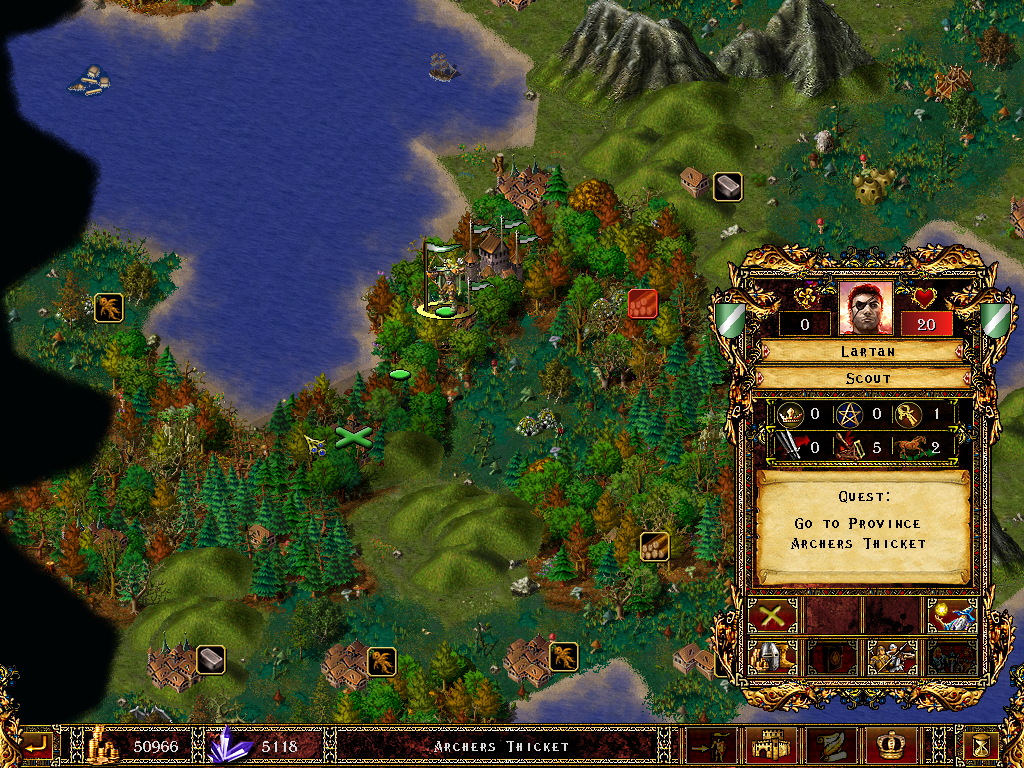
I keep a mental shortlist of indie games that punch so far above their budget they make big-studio strategy look lazy. Eador: Genesis sits near the top of that list. Solo developer Alexey Bokulev built what amounts to a layered hybrid of turn-based grand strategy, hex-grid tactical combat, and RPG hero progression, all wrapped in a persistent campaign where every conquered shard feeds your growing astral empire. The 2D presentation is spartan, the audio is barely adequate, and none of that matters once the systems start talking to each other. The structural loop is the thing to understand before you spend a single turn. On the astral layer you pick which shard to invade, spend Astral energy on pre-invasion bonuses, and watch your kingdom of conquered shards slowly accumulate new buildings, units, and spells. Drop down to a shard and you are running a province-by-province land grab with up to four heroes, each drawn from four base classes: Warrior, Scout, Wizard, and Commander. At level 10 every hero can dual-class, yielding sixteen asymmetric combinations. The Wizard into Necromancer path, for instance, plays nothing like a Warrior shading into Scout, and the community spends real effort mapping which dual-class works on which shard size and difficulty. Castle-building adds another axis: over 200 buildings are available, slots are limited and permanent, and race alliances (dark elves, orcs, and others) gate unique units behind alignment-specific quest chains. That is not complexity for its own sake. Every constraint forces a committed decision, and committed decisions are what strategy games exist to produce. Tactical combat runs on a small 8x8 hex grid that looks unambitious until you realize every non-basic unit carries a special ability that changes the engagement math. There are no chance-to-hit rolls, which means positioning and unit composition carry full weight. Experience is shared across the army including fallen troops, which actively discourages using units as disposable meat shields and rewards careful roster management. The save system enforces discipline in a way that modern games rarely dare: you can roll back one turn at a significant score penalty, or accept the loss and move on. Losing a shard is not a game-ender; the design explicitly accounts for it, and each defeat teaches you something the tutorial never will. Here is the honest warning that reviewers bury: the AI opponent receives compensation bonuses that the human player does not, and the corruption mechanic (which penalizes income as your domain expands) applies to you alone. The strategic AI will feel like it is cheating, because functionally it is. Veterans of Eastern European strategy games will shrug; players conditioned by modern difficulty sliders may not. The tutorial covers fundamentals but leaves the deeper build-tree interactions undocumented, which is where community guides and the New Horizons mod become near-essential reading for newcomers. Anyone prepared to treat the first two shards as a paid tutorial will find a game with twelve possible campaign endings and enough build variation to absorb a significant run of evenings. For HoMM veterans, Master of Magic alumni, or anyone who reads patch notes for fun, Genesis delivers the kind of tightly interlocked decision-making that the genre rarely produces. The graphics will not impress anyone, the AI cheats, and the save system demands respect. All of that is the point. Diego, Scout Team

Eador: Genesis

Eador: Genesis

14 oct 2013Alexey BokulevSnowbird Games
GamerScout opina

One man built a grand-strategy RPG hybrid that out-depths most studio releases, then hid the difficulty setting behind a brutal early game. Proceed with patience and a notepad.

PC
Steam Deck PlayableProtonDB Platinum
Mejor precio disponible
€0.00
en N/A
Mínimo histórico: €2.28

Comparar precios(0 tiendas)

Cargando precios...

We may earn a commission when you buy games through links on this page — at no extra cost to you. It never affects our rankings or verdicts.

Historial de precios

Historical low
€2.2827 Jun 2026
Keyshops
€2.05€2.85€3.66€4.468 Jun13 Jun18 Jun23 Jun28 Jun
Tracking prices since 8 Jun 2026
Create alert

Capturas y multimedia

Captura

Acerca de Eador: Genesis

I keep a mental shortlist of indie games that punch so far above their budget they make big-studio strategy look lazy. Eador: Genesis sits near the top of that list. Solo developer Alexey Bokulev built what amounts to a layered hybrid of turn-based grand strategy, hex-grid tactical combat, and RPG hero progression, all wrapped in a persistent campaign where every conquered shard feeds your growing astral empire. The 2D presentation is spartan, the audio is barely adequate, and none of that matters once the systems start talking to each other. The structural loop is the thing to understand before you spend a single turn. On the astral layer you pick which shard to invade, spend Astral energy on pre-invasion bonuses, and watch your kingdom of conquered shards slowly accumulate new buildings, units, and spells. Drop down to a shard and you are running a province-by-province land grab with up to four heroes, each drawn from four base classes: Warrior, Scout, Wizard, and Commander. At level 10 every hero can dual-class, yielding sixteen asymmetric combinations. The Wizard into Necromancer path, for instance, plays nothing like a Warrior shading into Scout, and the community spends real effort mapping which dual-class works on which shard size and difficulty. Castle-building adds another axis: over 200 buildings are available, slots are limited and permanent, and race alliances (dark elves, orcs, and others) gate unique units behind alignment-specific quest chains. That is not complexity for its own sake. Every constraint forces a committed decision, and committed decisions are what strategy games exist to produce. Tactical combat runs on a small 8x8 hex grid that looks unambitious until you realize every non-basic unit carries a special ability that changes the engagement math. There are no chance-to-hit rolls, which means positioning and unit composition carry full weight. Experience is shared across the army including fallen troops, which actively discourages using units as disposable meat shields and rewards careful roster management. The save system enforces discipline in a way that modern games rarely dare: you can roll back one turn at a significant score penalty, or accept the loss and move on. Losing a shard is not a game-ender; the design explicitly accounts for it, and each defeat teaches you something the tutorial never will. Here is the honest warning that reviewers bury: the AI opponent receives compensation bonuses that the human player does not, and the corruption mechanic (which penalizes income as your domain expands) applies to you alone. The strategic AI will feel like it is cheating, because functionally it is. Veterans of Eastern European strategy games will shrug; players conditioned by modern difficulty sliders may not. The tutorial covers fundamentals but leaves the deeper build-tree interactions undocumented, which is where community guides and the New Horizons mod become near-essential reading for newcomers. Anyone prepared to treat the first two shards as a paid tutorial will find a game with twelve possible campaign endings and enough build variation to absorb a significant run of evenings. For HoMM veterans, Master of Magic alumni, or anyone who reads patch notes for fun, Genesis delivers the kind of tightly interlocked decision-making that the genre rarely produces. The graphics will not impress anyone, the AI cheats, and the save system demands respect. All of that is the point.

Diego
Diego · Scout Team

Strategy & simulation

Etiquetas

singleplayertier:indieHex-Grid TacticsDual-Class HeroesPermadeath-AdjacentGrand CampaignAlignment SystemProvince ManagementCult ClassicHotseat Multiplayer

Requisitos del sistema

Mínimos

OS
Windows XP, Windows Vista or Windows 7
Memory
1 GB RAM
Storage
150 MB available space
Graphics
3D graphics card compatible with DirectX 9.0c
Processor
1 GHz Processor

Recomendados

OS
Windows XP, Windows Vista or Windows 7
Memory
2 GB RAM
Storage
150 MB available space
Graphics
3D graphics card compatible with DirectX 9.0c
Processor
1 GHz Processor

Sigue explorando

Community Discussion

Be the first to comment on Eador: Genesis.

Reseñas y valoraciones

No hay valoraciones disponibles

Información del juego

Desarrolladora
Alexey Bokulev
Distribuidora
Snowbird Games
Fecha de lanzamiento
14 oct 2013

Alerta de precio

¡Recibe un aviso cuando el precio baje de tu objetivo!

Crear alerta

Compra mejor: guías útiles

¿Buscas más? Mira juegos como Eador: Genesis →

Preguntas frecuentes sobre Eador: Genesis

¿Cuánto cuesta Eador: Genesis?

El precio de Eador: Genesis cambia a menudo y varía según la tienda, la edición y la región. La tabla de precios en vivo de esta página compara las ofertas más baratas en stock de tiendas de claves de confianza como Eneba y Kinguin, para que siempre veas el precio más bajo actual antes de comprar.

¿Dónde puedo comprar Eador: Genesis más barato?

Compara los precios de Eador: Genesis en todas las tiendas verificadas en la tabla de precios de esta página. Listamos las ofertas de claves y tiendas más baratas en stock, actualizadas con frecuencia, para que siempre veas la mejor oferta actual antes de comprar.

¿En qué plataformas está disponible Eador: Genesis?

Eador: Genesis está disponible en PC.

¿Cuándo se lanzó Eador: Genesis?

Eador: Genesis se lanzó el 14 de octubre de 2013.

¿Quién desarrolló Eador: Genesis?

Eador: Genesis fue desarrollado por Alexey Bokulev y publicado por Snowbird Games.