Compara los precios de Due Process en tiendas de claves de confianza y encuentra la mejor oferta. Desarrollado por Giant Enemy Crab. Publicado por Annapurna Interactive. Lanzado el 3/11/2020. Disponible en PC. Géneros: Action, Adventure, Indie, Simulation, Strategy, Early Access.

Due Process is a tactical FPS where teams plan raids on procedurally generated maps before every round. Communication is the weapon that actually wins.

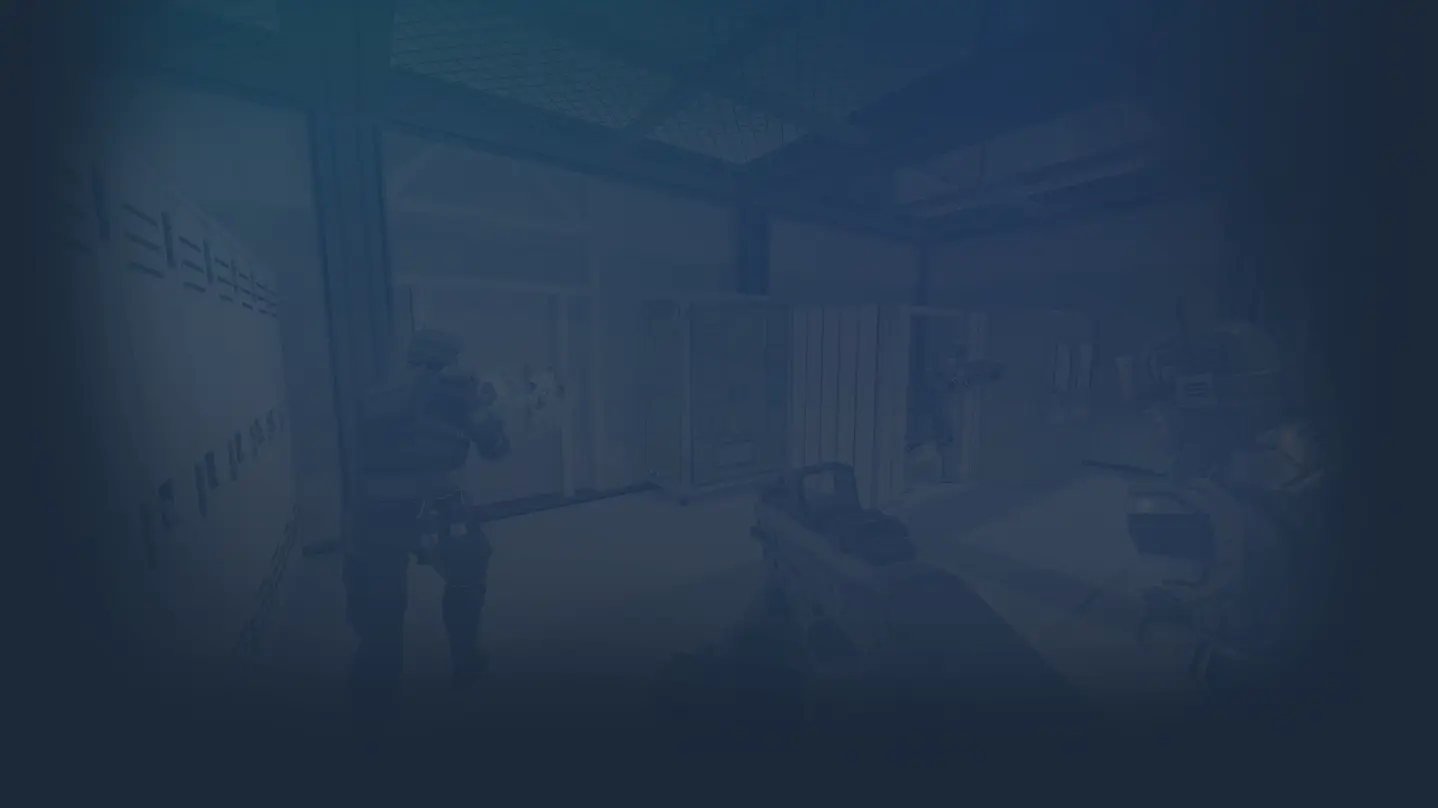
Due Process sits at the intersection of tactical shooter and light strategy game, which is why it landed on my radar even though I usually live in grand-strategy territory. Each match splits into two distinct phases: a planning phase where your team huddles over a top-down map view, marks breach points, assigns roles, and coordinates a route, and then an execution phase where that plan either holds together or falls apart spectacularly in about ninety seconds of corridor gunfire. That two-beat structure is the entire identity of the game, and Giant Enemy Crab commits to it completely. The procedurally generated maps are the mechanical spine holding everything up. Because no two layouts repeat, you cannot lean on memorized callouts or pre-drilled muscle memory the way you can in Counter-Strike or Rainbow Six Siege. Every round forces genuine communication. If your squad is using voice chat and actually listening, the planning phase feels like a real operational briefing. If you queue with strangers who ignore the map screen, the execution phase devolves into a chaotic stumble. The game does very little to paper over that gap, so your experience is almost entirely a function of who you play with. That is not a design failure so much as an honest design statement. From a strategic-depth perspective, Due Process is intentionally lean. There are no deep unlock trees, no meta-shifting gadget loadouts, and no operator abilities to memorize. The decision-making is almost entirely spatial and communicative: where do we stack, which wall do we breach, who peeks first. For players expecting the mechanical ceiling of Valorant or the gear complexity of Escape from Tarkov, the game will feel thin. For players who have spent time with tabletop miniature games or even light wargames, the planning phase scratches a very specific itch. I found myself treating the map screen almost like a puzzle, which is exactly the right headspace. The AI in the single-player or bot-fill scenarios is serviceable but clearly not the point. Due Process is built around human coordination, and the AI exists mostly as a practice dummy rather than a genuine challenge. The tutorial respects your intelligence without throwing you into the deep end, which I appreciate. It covers the planning interface clearly and gets you into live matches without excessive hand-holding. New players willing to spend twenty minutes with the tutorial and then find a patient group will not be lost. The community at launch skewed toward organized squads, so matchmaking with a pre-made group is strongly advised over solo queue. The procedural generation also keeps the moment-to-moment feel fresh in a way that static map pools cannot. A hundred-hour player is on genuinely equal informational footing with a ten-hour player at the start of each planning phase, which is a quiet but real accessibility win. The game has Very Positive Steam reviews across nearly nine thousand ratings, which suggests the core loop satisfies the players who find their way into organized groups. Whether the population remains healthy enough for quick matchmaking is worth checking before committing, since tactical shooters live and die by queue times. If the numbers hold, Due Process offers a genuinely distinct experience in a genre that mostly recycles the same map-pool format. Diego, Scout Team

Due Process

Due Process

3 nov 2020Giant Enemy CrabAnnapurna Interactive
GamerScout opina

Due Process is a tactical FPS where teams plan raids on procedurally generated maps before every round. Communication is the weapon that actually wins.

PC
Steam Deck PlayableProtonDB Silver
Mejor precio disponible
€0.00
en N/A
Mínimo histórico: €0.33

Comparar precios(0 tiendas)

Cargando precios...

We may earn a commission when you buy games through links on this page — at no extra cost to you. It never affects our rankings or verdicts.

Historial de precios

Historical low
€0.3315 Jun 2026
Keyshops
€0.25€0.54€0.82€1.115 Jun11 Jun17 Jun22 Jun28 Jun
Tracking prices since 5 Jun 2026
Create alert

Capturas y multimedia

Acerca de Due Process

Due Process sits at the intersection of tactical shooter and light strategy game, which is why it landed on my radar even though I usually live in grand-strategy territory. Each match splits into two distinct phases: a planning phase where your team huddles over a top-down map view, marks breach points, assigns roles, and coordinates a route, and then an execution phase where that plan either holds together or falls apart spectacularly in about ninety seconds of corridor gunfire. That two-beat structure is the entire identity of the game, and Giant Enemy Crab commits to it completely. The procedurally generated maps are the mechanical spine holding everything up. Because no two layouts repeat, you cannot lean on memorized callouts or pre-drilled muscle memory the way you can in Counter-Strike or Rainbow Six Siege. Every round forces genuine communication. If your squad is using voice chat and actually listening, the planning phase feels like a real operational briefing. If you queue with strangers who ignore the map screen, the execution phase devolves into a chaotic stumble. The game does very little to paper over that gap, so your experience is almost entirely a function of who you play with. That is not a design failure so much as an honest design statement. From a strategic-depth perspective, Due Process is intentionally lean. There are no deep unlock trees, no meta-shifting gadget loadouts, and no operator abilities to memorize. The decision-making is almost entirely spatial and communicative: where do we stack, which wall do we breach, who peeks first. For players expecting the mechanical ceiling of Valorant or the gear complexity of Escape from Tarkov, the game will feel thin. For players who have spent time with tabletop miniature games or even light wargames, the planning phase scratches a very specific itch. I found myself treating the map screen almost like a puzzle, which is exactly the right headspace. The AI in the single-player or bot-fill scenarios is serviceable but clearly not the point. Due Process is built around human coordination, and the AI exists mostly as a practice dummy rather than a genuine challenge. The tutorial respects your intelligence without throwing you into the deep end, which I appreciate. It covers the planning interface clearly and gets you into live matches without excessive hand-holding. New players willing to spend twenty minutes with the tutorial and then find a patient group will not be lost. The community at launch skewed toward organized squads, so matchmaking with a pre-made group is strongly advised over solo queue. The procedural generation also keeps the moment-to-moment feel fresh in a way that static map pools cannot. A hundred-hour player is on genuinely equal informational footing with a ten-hour player at the start of each planning phase, which is a quiet but real accessibility win. The game has Very Positive Steam reviews across nearly nine thousand ratings, which suggests the core loop satisfies the players who find their way into organized groups. Whether the population remains healthy enough for quick matchmaking is worth checking before committing, since tactical shooters live and die by queue times. If the numbers hold, Due Process offers a genuinely distinct experience in a genre that mostly recycles the same map-pool format.

Diego
Diego · Scout Team

Strategy & simulation

Etiquetas

steamTactical ShooterProcedural MapsSquad-BasedPlanning PhaseCommunication-DependentRound-BasedTop-Down PlanningBreach and Clear

Requisitos del sistema

Mínimos

Processor
3000-series Intel i5; 2000-series AMD Ryzen 3
Memory
6 GB RAM
Graphics
Nvidia GeForce GTX 760; ATI RX 570
DirectX
Version 11
Storage
20 GB available space

Recomendados

OS
Windows 10 64 bit
Processor
8000 Series Intel i5; 2000 Series AMD Ryzen 5
Memory
10 GB RAM
Graphics
GeForce GTX 1060; ATI RX 580
DirectX
Version…

Sigue explorando

Community Discussion

Be the first to comment on Due Process.

Reseñas y valoraciones

Steam
81%(8,488)

Información del juego

Desarrolladora
Giant Enemy Crab
Distribuidora
Annapurna Interactive
Fecha de lanzamiento
3 nov 2020

Alerta de precio

¡Recibe un aviso cuando el precio baje de tu objetivo!

Crear alerta

Compra mejor: guías útiles

¿Buscas más? Mira juegos como Due Process →

Preguntas frecuentes sobre Due Process

¿Cuánto cuesta Due Process?

El precio de Due Process cambia a menudo y varía según la tienda, la edición y la región. La tabla de precios en vivo de esta página compara las ofertas más baratas en stock de tiendas de claves de confianza como Eneba y Kinguin, para que siempre veas el precio más bajo actual antes de comprar.

¿Dónde puedo comprar Due Process más barato?

Compara los precios de Due Process en todas las tiendas verificadas en la tabla de precios de esta página. Listamos las ofertas de claves y tiendas más baratas en stock, actualizadas con frecuencia, para que siempre veas la mejor oferta actual antes de comprar.

¿En qué plataformas está disponible Due Process?

Due Process está disponible en PC.

¿Cuándo se lanzó Due Process?

Due Process se lanzó el 3 de noviembre de 2020.

¿Quién desarrolló Due Process?

Due Process fue desarrollado por Giant Enemy Crab y publicado por Annapurna Interactive.