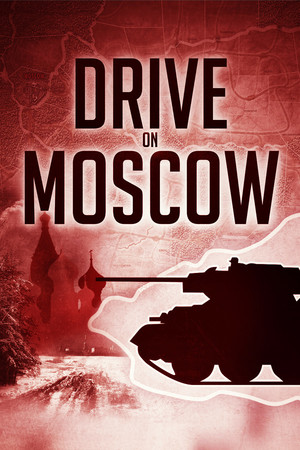
Compara los precios de Drive on Moscow en tiendas de claves de confianza y encuentra la mejor oferta. Desarrollado por Shenandoah Studio. Publicado por Slitherine Ltd.. Lanzado el 27/10/2016. Disponible en PC, Xbox. Géneros: Strategy.

Tabletop wargame sharpness in a digital shell: if supply lines and impulse timing sound like fun, this Operation Typhoon sim will keep you honest across four replayable scenarios.

I have a soft spot for wargames that respect your intelligence without demanding a 400-page rulebook, and Drive on Moscow sits squarely in that narrow band. The premise is Operation Typhoon, late 1941: the German push to seize Moscow before a Russian winter swallows the Wehrmacht whole. You pick a side, manage a sector-based map of roughly 600 kilometres of front, and live or die by decisions made at the impulse level. That last word matters more than anything else in this game. The impulse-based activation system is the mechanical heart of the whole thing. Each turn you activate a single sector, moving and attacking with whatever units occupy it, and once that sector is spent it is done for the turn. Miss a unit, forget a flanking panzer, and that mistake echoes. The rhythm is closer to chess than to the IGO-UGO conventions most wargame veterans grew up on, and it takes a couple of sessions to stop second-guessing the sequencing. Once it clicks, though, the decisions cascade in genuinely interesting ways: do you push the armour forward to threaten supply, or consolidate infantry to hold a forest zone? Germans face a hard clock as weather shifts from offensive conditions to frost and then deep snow, progressively restricting movement to one zone per turn and bringing Soviet Siberian reserves onto the board. Russians, meanwhile, are historically outgunned at the start, but fast cavalry can harass overextended German supply lines and a patient Soviet player can grind the Wehrmacht to a crawl through attrition rather than direct combat. The asymmetry is deliberate and historically grounded, and it produces two genuinely different strategic experiences under the same ruleset. The four scenarios deserve mention specifically. Three shorter campaigns cover the initial German assault, the final push, and the Soviet counteroffensive as standalone sessions, each completable in a single sitting. The fourth combines all three into a full campaign of roughly twenty turns for anyone wanting the complete picture. That structure is smart design: it gives newcomers a low-commitment entry point while giving veterans something substantial to grind through. The map changes visually with weather conditions, shifting hue from autumn mud to frost to snow, and the seasonal sound design adds genuine atmosphere without becoming intrusive. The UI itself won awards on the original iOS release and that pedigree shows; reading the board, checking odds, and committing attacks are all handled cleanly without extra clicks. The AI holds up better than in many indie wargames. Multiple AI personalities exist for both Axis and Soviet commanders, each behaving differently enough that early sessions feel genuinely competitive. Experienced players will eventually start reading the AI's tendencies, which is the genre's oldest problem and not unique here. The real longevity comes from PBEM-style online multiplayer through Slitherine's servers, where human opponents close that gap entirely. The tutorial leans text-heavy, which will frustrate visual learners, and there is a known terminology inconsistency where impulses are sometimes labelled as turns within the UI itself, creating confusion for newcomers who have not read the manual carefully. These are real friction points, not dealbreakers. For anyone asking whether a wargame this focused is worth your time in 2025: the answer depends entirely on appetite. This is not a grand-strategy sandbox. It does one battle, at one scale, with four scenario lenses. If that sounds limiting, look elsewhere. If it sounds like exactly the kind of concentrated, historically grounded decision-making that most sprawling strategy games dilute, Drive on Moscow earns its place on the shortlist without difficulty. Diego, Scout Team

Drive on Moscow

Drive on Moscow

27 oct 2016Shenandoah StudioSlitherine Ltd.
GamerScout opina

Tabletop wargame sharpness in a digital shell: if supply lines and impulse timing sound like fun, this Operation Typhoon sim will keep you honest across four replayable scenarios.

PCXbox
ProtonDB Platinum
Mejor precio disponible
€0.00
en N/A
Mínimo histórico: €4.99

Comparar precios(0 tiendas)

Cargando precios...

We may earn a commission when you buy games through links on this page — at no extra cost to you. It never affects our rankings or verdicts.

Historial de precios

Historical low
€4.998 Jun 2026
Keyshops
€4.59€4.86€5.12€5.398 Jun13 Jun18 Jun23 Jun28 Jun
Tracking prices since 8 Jun 2026
Create alert

Capturas y multimedia

Acerca de Drive on Moscow

I have a soft spot for wargames that respect your intelligence without demanding a 400-page rulebook, and Drive on Moscow sits squarely in that narrow band. The premise is Operation Typhoon, late 1941: the German push to seize Moscow before a Russian winter swallows the Wehrmacht whole. You pick a side, manage a sector-based map of roughly 600 kilometres of front, and live or die by decisions made at the impulse level. That last word matters more than anything else in this game. The impulse-based activation system is the mechanical heart of the whole thing. Each turn you activate a single sector, moving and attacking with whatever units occupy it, and once that sector is spent it is done for the turn. Miss a unit, forget a flanking panzer, and that mistake echoes. The rhythm is closer to chess than to the IGO-UGO conventions most wargame veterans grew up on, and it takes a couple of sessions to stop second-guessing the sequencing. Once it clicks, though, the decisions cascade in genuinely interesting ways: do you push the armour forward to threaten supply, or consolidate infantry to hold a forest zone? Germans face a hard clock as weather shifts from offensive conditions to frost and then deep snow, progressively restricting movement to one zone per turn and bringing Soviet Siberian reserves onto the board. Russians, meanwhile, are historically outgunned at the start, but fast cavalry can harass overextended German supply lines and a patient Soviet player can grind the Wehrmacht to a crawl through attrition rather than direct combat. The asymmetry is deliberate and historically grounded, and it produces two genuinely different strategic experiences under the same ruleset. The four scenarios deserve mention specifically. Three shorter campaigns cover the initial German assault, the final push, and the Soviet counteroffensive as standalone sessions, each completable in a single sitting. The fourth combines all three into a full campaign of roughly twenty turns for anyone wanting the complete picture. That structure is smart design: it gives newcomers a low-commitment entry point while giving veterans something substantial to grind through. The map changes visually with weather conditions, shifting hue from autumn mud to frost to snow, and the seasonal sound design adds genuine atmosphere without becoming intrusive. The UI itself won awards on the original iOS release and that pedigree shows; reading the board, checking odds, and committing attacks are all handled cleanly without extra clicks. The AI holds up better than in many indie wargames. Multiple AI personalities exist for both Axis and Soviet commanders, each behaving differently enough that early sessions feel genuinely competitive. Experienced players will eventually start reading the AI's tendencies, which is the genre's oldest problem and not unique here. The real longevity comes from PBEM-style online multiplayer through Slitherine's servers, where human opponents close that gap entirely. The tutorial leans text-heavy, which will frustrate visual learners, and there is a known terminology inconsistency where impulses are sometimes labelled as turns within the UI itself, creating confusion for newcomers who have not read the manual carefully. These are real friction points, not dealbreakers. For anyone asking whether a wargame this focused is worth your time in 2025: the answer depends entirely on appetite. This is not a grand-strategy sandbox. It does one battle, at one scale, with four scenario lenses. If that sounds limiting, look elsewhere. If it sounds like exactly the kind of concentrated, historically grounded decision-making that most sprawling strategy games dilute, Drive on Moscow earns its place on the shortlist without difficulty.

Diego
Diego · Scout Team

Strategy & simulation

Etiquetas

singleplayermultiplayertier:indieImpulse ActivationArea MovementPBEM MultiplayerHistorical AsymmetryWeather MechanicsSupply Line ManagementEastern FrontShort-Session Scenarios

Requisitos del sistema

Mínimos

OS
Windows Vista/7/8/10
Memory
2 GB RAM
DirectX
Version 9.0a
Storage
1 GB available space
Graphics
512Mb DirectX 9 video card with shader model 2.0
Processor
Pentium 4 or equivalent
Sound Card
DirectX Compatible Sound Card

Sigue explorando

Community Discussion

Be the first to comment on Drive on Moscow.

Reseñas y valoraciones

No hay valoraciones disponibles

Información del juego

Desarrolladora
Shenandoah Studio
Distribuidora
Slitherine Ltd.
Fecha de lanzamiento
27 oct 2016

Alerta de precio

¡Recibe un aviso cuando el precio baje de tu objetivo!

Crear alerta

Más de Shenandoah Studio

Compra mejor: guías útiles

¿Buscas más? Mira juegos como Drive on Moscow →

Preguntas frecuentes sobre Drive on Moscow

¿Cuánto cuesta Drive on Moscow?

El precio de Drive on Moscow cambia a menudo y varía según la tienda, la edición y la región. La tabla de precios en vivo de esta página compara las ofertas más baratas en stock de tiendas de claves de confianza como Eneba y Kinguin, para que siempre veas el precio más bajo actual antes de comprar.

¿Dónde puedo comprar Drive on Moscow más barato?

Compara los precios de Drive on Moscow en todas las tiendas verificadas en la tabla de precios de esta página. Listamos las ofertas de claves y tiendas más baratas en stock, actualizadas con frecuencia, para que siempre veas la mejor oferta actual antes de comprar.

¿En qué plataformas está disponible Drive on Moscow?

Drive on Moscow está disponible en PC, Xbox.

¿Cuándo se lanzó Drive on Moscow?

Drive on Moscow se lanzó el 27 de octubre de 2016.

¿Quién desarrolló Drive on Moscow?

Drive on Moscow fue desarrollado por Shenandoah Studio y publicado por Slitherine Ltd..