Compara los precios de Dominions 4: Thrones of Ascension en tiendas de claves de confianza y encuentra la mejor oferta. Desarrollado por Illwinter Game Design. Publicado por Illwinter Game Design. Lanzado el 5/12/2013. Disponible en PC, Mac, Linux. Géneros: Indie, Strategy.

Read the 100-page manual before your first move, survive the UI fighting back, and you will find one of the most strategically dense turn-based games ever shipped by two people.

I have a rule: if a strategy game makes me read a manual before I touch the tutorial, I take that as a sign of respect, not a warning. Dominions 4 has a manual that runs over 100 pages, and every page earns its place. This is a turn-based grand strategy game built by a two-person studio, set in a fantasy world stitched together from real-world mythologies: Norse vanir, Roman legions, Aztec blood-magic, Kievan Rus spirits, and dozens more spread across three distinct historical ages. Each age carries its own roster of nations, and the total count of playable factions across all three ages exceeds 75. Before a single turn is taken, you design a Pretender God, choosing from arch-mages, colossal titans, dormant monuments, and stranger forms besides. You then allocate dominion scales covering order versus turmoil, productivity versus sloth, heat versus cold, and several others, each scale rippling through your provincial income, research output, and troop morale in measurable, trackable ways. That pretender-building screen alone has more decision weight than the entire mid-games of most 4X releases. The strategic layer is built around three victory conditions: total conquest, extinguishing enemy dominion by spreading your own faith, or controlling a threshold of randomly-placed Thrones of Ascension on the map. That last option is the headline addition over the previous entry and it does genuine work, turning the late game into a contested race for specific high-value provinces rather than a slow mop-up of every last territory. Armies operate through a commander-unit system where mages, priests, and martial leaders each direct squads, and all combat resolves automatically once you submit orders. You script battle formations and commander behaviours before the turn processes, then watch the results. For a numbers-first player, the pre-battle scripting phase is where the game lives: positioning sacred infantry for a bless-rush, scripting a thaumaturge to cast Darkness on turn one so your night-vision troops have the edge, deciding whether to hold a flying chimera in reserve or send it straight at the enemy commander. The magic research tree spans eight schools, roughly 800 spells in total, and the counter-strategy depth is layered enough that veteran players report never finding a single dominant build after hundreds of hours. Here is where I have to be straight with newcomers: the AI is the game's most significant structural flaw. In single-player, it struggles to translate the game's systemic richness into coherent strategy. It will recruit poorly composed armies, ignore useful magic options, and at standard difficulty it folds quickly once you understand province expansion timing. Higher difficulty settings compensate through resource bonuses and sheer numbers rather than smarter play, which keeps single-player viable as a learning environment but not as a long-term competitive test. The game earns its depth in multiplayer, where email-based and hosted asynchronous formats let games run over weeks or months. Diplomacy, betrayal, item trading, and coordinated disciple-nation alliances all emerge from player behaviour rather than system enforcement, which means the design relies on your opponents to supply what the AI cannot. If you have three to five patient, invested human opponents, Dominions 4 runs at a tier almost nothing else reaches. The UI and presentation are honest problems, not exaggerated ones. The interface was dated on release day in December 2013 and has not meaningfully changed since. Sorting through the spell list by school with no alphabetical ordering inside each school, cross-referencing unit stats across dozens of clicks, managing province scripting as your empire scales into the mid-game, all of this creates friction that cannot be dismissed as "part of the charm." It is a real cost of entry. The manual is well-written and thorough, community wikis and tutorial videos fill in the gaps, and the modding tools are genuinely open, allowing custom monsters, spells, and complete nations. But the first five hours will feel hostile regardless of your strategy pedigree. Budget for that explicitly. The payoff, for the right player, is a game you will still be learning after 300 hours. Diego, Scout Team

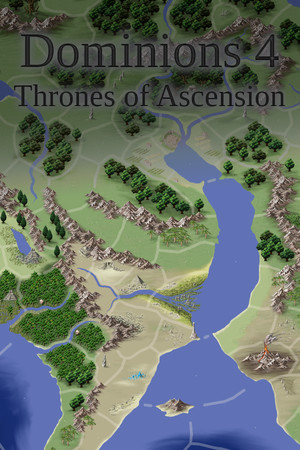
Dominions 4: Thrones of Ascension

Dominions 4: Thrones of Ascension

5 dic 2013Illwinter Game Design
GamerScout opina

Read the 100-page manual before your first move, survive the UI fighting back, and you will find one of the most strategically dense turn-based games ever shipped by two people.

PCMacLinux
Steam Deck Verified
Mejor precio disponible
€0.00
en N/A
Mínimo histórico: €5.93

Comparar precios(0 tiendas)

Cargando precios...

We may earn a commission when you buy games through links on this page — at no extra cost to you. It never affects our rankings or verdicts.

Historial de precios

Historical low
€5.9323 Jun 2026
Keyshops
€5.85€6.12€6.38€6.658 Jun13 Jun18 Jun23 Jun28 Jun
Tracking prices since 8 Jun 2026
Create alert

Capturas y multimedia

Acerca de Dominions 4: Thrones of Ascension

I have a rule: if a strategy game makes me read a manual before I touch the tutorial, I take that as a sign of respect, not a warning. Dominions 4 has a manual that runs over 100 pages, and every page earns its place. This is a turn-based grand strategy game built by a two-person studio, set in a fantasy world stitched together from real-world mythologies: Norse vanir, Roman legions, Aztec blood-magic, Kievan Rus spirits, and dozens more spread across three distinct historical ages. Each age carries its own roster of nations, and the total count of playable factions across all three ages exceeds 75. Before a single turn is taken, you design a Pretender God, choosing from arch-mages, colossal titans, dormant monuments, and stranger forms besides. You then allocate dominion scales covering order versus turmoil, productivity versus sloth, heat versus cold, and several others, each scale rippling through your provincial income, research output, and troop morale in measurable, trackable ways. That pretender-building screen alone has more decision weight than the entire mid-games of most 4X releases. The strategic layer is built around three victory conditions: total conquest, extinguishing enemy dominion by spreading your own faith, or controlling a threshold of randomly-placed Thrones of Ascension on the map. That last option is the headline addition over the previous entry and it does genuine work, turning the late game into a contested race for specific high-value provinces rather than a slow mop-up of every last territory. Armies operate through a commander-unit system where mages, priests, and martial leaders each direct squads, and all combat resolves automatically once you submit orders. You script battle formations and commander behaviours before the turn processes, then watch the results. For a numbers-first player, the pre-battle scripting phase is where the game lives: positioning sacred infantry for a bless-rush, scripting a thaumaturge to cast Darkness on turn one so your night-vision troops have the edge, deciding whether to hold a flying chimera in reserve or send it straight at the enemy commander. The magic research tree spans eight schools, roughly 800 spells in total, and the counter-strategy depth is layered enough that veteran players report never finding a single dominant build after hundreds of hours. Here is where I have to be straight with newcomers: the AI is the game's most significant structural flaw. In single-player, it struggles to translate the game's systemic richness into coherent strategy. It will recruit poorly composed armies, ignore useful magic options, and at standard difficulty it folds quickly once you understand province expansion timing. Higher difficulty settings compensate through resource bonuses and sheer numbers rather than smarter play, which keeps single-player viable as a learning environment but not as a long-term competitive test. The game earns its depth in multiplayer, where email-based and hosted asynchronous formats let games run over weeks or months. Diplomacy, betrayal, item trading, and coordinated disciple-nation alliances all emerge from player behaviour rather than system enforcement, which means the design relies on your opponents to supply what the AI cannot. If you have three to five patient, invested human opponents, Dominions 4 runs at a tier almost nothing else reaches. The UI and presentation are honest problems, not exaggerated ones. The interface was dated on release day in December 2013 and has not meaningfully changed since. Sorting through the spell list by school with no alphabetical ordering inside each school, cross-referencing unit stats across dozens of clicks, managing province scripting as your empire scales into the mid-game, all of this creates friction that cannot be dismissed as "part of the charm." It is a real cost of entry. The manual is well-written and thorough, community wikis and tutorial videos fill in the gaps, and the modding tools are genuinely open, allowing custom monsters, spells, and complete nations. But the first five hours will feel hostile regardless of your strategy pedigree. Budget for that explicitly. The payoff, for the right player, is a game you will still be learning after 300 hours.

Diego
Diego · Scout Team

Strategy & simulation

Etiquetas

singleplayermultiplayercooplocal-coopcross-platformtier:indiePretender God BuilderDominion Spread MechanicAsynchronous MultiplayerMagic School ResearchMythology-Driven FactionsCommander ScriptingThree-Age ProgressionThrones Victory ConditionManual-Required Complexity

Requisitos del sistema

Mínimos

OS
Windows XP/Vista/7
Memory
1024 MB RAM
Storage
500 MB available space
Processor
1 GHz

Sigue explorando

Community Discussion

Be the first to comment on Dominions 4: Thrones of Ascension.

Reseñas y valoraciones

No hay valoraciones disponibles

Información del juego

Desarrolladora
Illwinter Game Design
Distribuidora
Illwinter Game Design
Fecha de lanzamiento
5 dic 2013

Alerta de precio

¡Recibe un aviso cuando el precio baje de tu objetivo!

Crear alerta

Más de Illwinter Game Design

Compra mejor: guías útiles

¿Buscas más? Mira juegos como Dominions 4: Thrones of Ascension →

Preguntas frecuentes sobre Dominions 4: Thrones of Ascension

¿Cuánto cuesta Dominions 4: Thrones of Ascension?

El precio de Dominions 4: Thrones of Ascension cambia a menudo y varía según la tienda, la edición y la región. La tabla de precios en vivo de esta página compara las ofertas más baratas en stock de tiendas de claves de confianza como Eneba y Kinguin, para que siempre veas el precio más bajo actual antes de comprar.

¿Dónde puedo comprar Dominions 4: Thrones of Ascension más barato?

Compara los precios de Dominions 4: Thrones of Ascension en todas las tiendas verificadas en la tabla de precios de esta página. Listamos las ofertas de claves y tiendas más baratas en stock, actualizadas con frecuencia, para que siempre veas la mejor oferta actual antes de comprar.

¿En qué plataformas está disponible Dominions 4: Thrones of Ascension?

Dominions 4: Thrones of Ascension está disponible en PC, Mac, Linux.

¿Cuándo se lanzó Dominions 4: Thrones of Ascension?

Dominions 4: Thrones of Ascension se lanzó el 5 de diciembre de 2013.

¿Quién desarrolló Dominions 4: Thrones of Ascension?

Dominions 4: Thrones of Ascension fue desarrollado por Illwinter Game Design.