Compara los precios de Divinity II: Developer's Cut en tiendas de claves de confianza y encuentra la mejor oferta. Desarrollado por Larian Studios. Publicado por Larian Studios. Lanzado el 29/10/2012. Disponible en PC. Géneros: RPG.

Forget everything you know about Larian from Original Sin onward: this is scrappier, weirder, and it lets you become a literal dragon. Worth the time investment if you can forgive its mid-2000s rough edges.

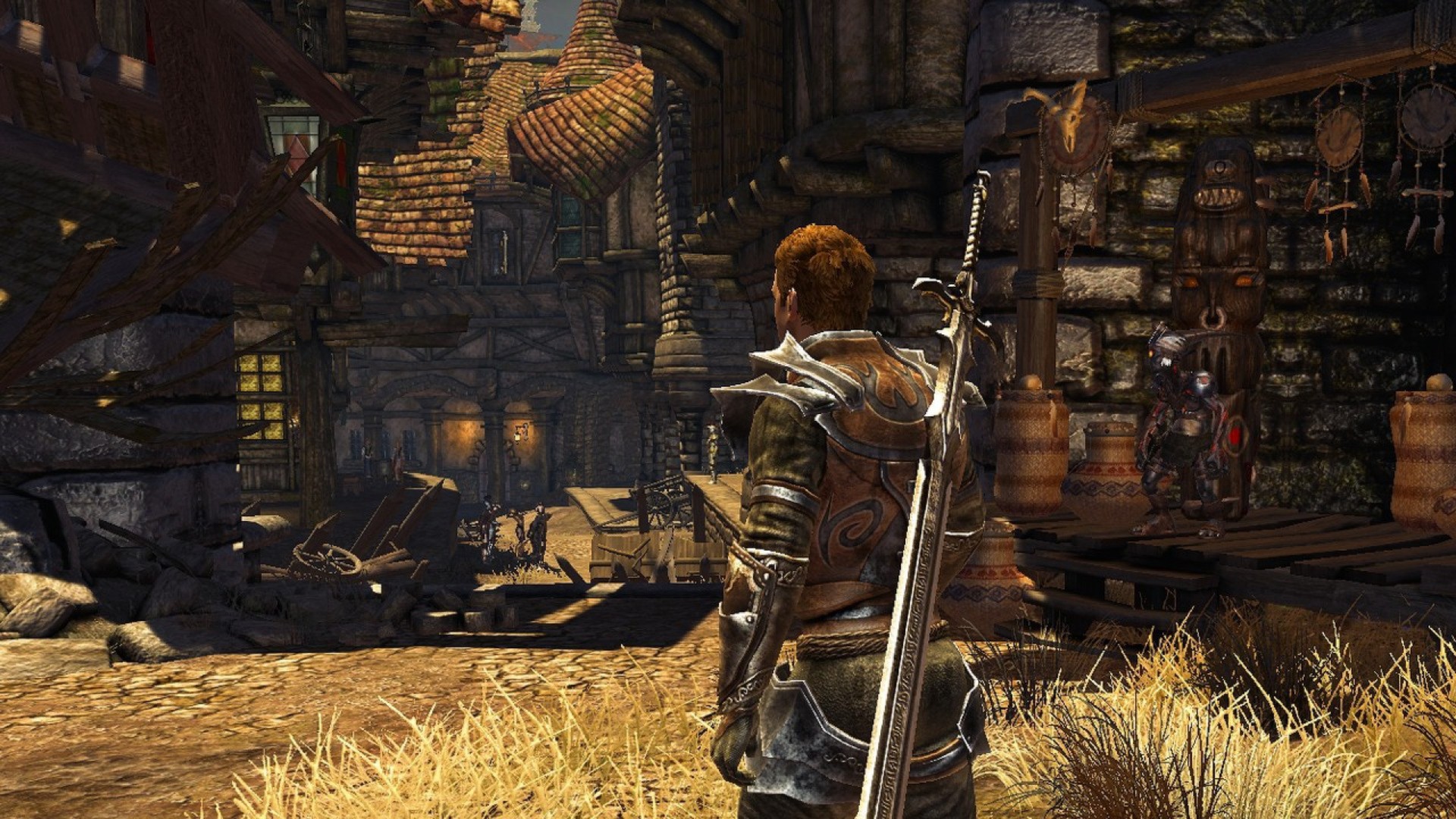
I came to Divinity II: Developer's Cut already knowing how the Larian story ends, which made playing this oddly poignant. This is the studio running hard after action-RPG trends, doing something genuinely unusual with the result, and producing a game that the community spent years quietly calling a hidden gem while the rest of the world ignored it. That reputation is earned, though not without caveats. The hook is the dual-form system. You start as a Dragon Knight, a hunter of dragons who becomes involuntarily converted into the thing you were trained to destroy. In human form, the game plays as a third-person action-RPG with freeform character progression: pick a starting package (knight, ranger, or sorcerer), then spend skill points across five schools however you like, mixing roles freely because no class gate exists to stop you. Alchemy lets you brew potions, enchanting upgrades gear, and a necromancy system lets you assemble and customize a summonable undead creature from body parts you loot off enemies, which is exactly as delightful and strange as it sounds. Midgame you acquire the Battle Tower as a home base, and shortly after that the dragon form unlocks for outdoor areas. As a dragon, combat shifts to three-dimensional aerial engagements with its own skill set and equipment slots, though dragon combat is honestly the weaker half of the experience: serviceable, occasionally thrilling, but a little thin compared to the ground game. The Mindread mechanic is where Divinity II earns its RPG credentials. Spending experience points to read an NPC's mind is one of the more inspired friction mechanics I've seen. It costs you something real, it reveals embarrassing secrets, it unlocks hidden quests and extra dialogue branches, and it rewards the kind of player who actually talks to everybody. The writing throughout has genuine wit: guards bicker, villagers have secrets worth uncovering, and Larian's taste for absurdist comedy is already present here in ways that will feel familiar if you've spent time with their later work. The quest writing is uneven, and some of the side content tips into filler territory, but the main throughline and the world of Rivellon hold up well enough to keep you moving. The Developer's Cut specifically bundles the Flames of Vengeance expansion, which continues directly from the base game's controversial original ending and adds another fifteen to thirty hours. The expansion is more constrained, spending a chunk of time in a single city zone that some players find limiting after the open outdoor areas of Ego Draconis. The base game's balance also has rough spots: a crafted or enchanted weapon can trivialize later content badly, some boss encounters have strange design choices involving percentage-based enemy healing, and a few fights feel like they are testing patience more than skill. Performance on modern hardware occasionally needs a 4GB memory patch to avoid load screen issues, so check the community guides before you start. What holds up best is the atmosphere and the sheer strangeness of the premise. The community on Steam sits at Very Positive across thousands of reviews, and players consistently cite the Mindread system, the freedom of exploration, and the quality of the voice cast across over four hundred characters as the reasons to push through its jank. If you are the kind of RPG player who values discovery over polish, who liked the idea of Rivellon before Divinity: Original Sin gave it a full coat of paint, this is worth your time. Approach it as the rough earlier chapter of a studio that went on to make BG3, and its imperfections become context rather than dealbreakers. Monika, Scout Team

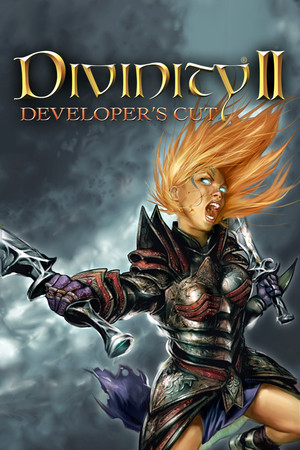
Divinity II: Developer's Cut

Divinity II: Developer's Cut

29 oct 2012Larian Studios
GamerScout opina

Forget everything you know about Larian from Original Sin onward: this is scrappier, weirder, and it lets you become a literal dragon. Worth the time investment if you can forgive its mid-2000s rough edges.

PC
Steam Deck UnsupportedProtonDB Gold
Mejor precio disponible
€0.00
en N/A
Mínimo histórico: €2.64

Comparar precios(0 tiendas)

Cargando precios...

We may earn a commission when you buy games through links on this page — at no extra cost to you. It never affects our rankings or verdicts.

Historial de precios

Historical low
€2.645 Jun 2026
Keyshops
€2.49€3.02€3.54€4.075 Jun11 Jun17 Jun22 Jun28 Jun
Tracking prices since 5 Jun 2026
Create alert

Capturas y multimedia

Captura

Acerca de Divinity II: Developer's Cut

I came to Divinity II: Developer's Cut already knowing how the Larian story ends, which made playing this oddly poignant. This is the studio running hard after action-RPG trends, doing something genuinely unusual with the result, and producing a game that the community spent years quietly calling a hidden gem while the rest of the world ignored it. That reputation is earned, though not without caveats. The hook is the dual-form system. You start as a Dragon Knight, a hunter of dragons who becomes involuntarily converted into the thing you were trained to destroy. In human form, the game plays as a third-person action-RPG with freeform character progression: pick a starting package (knight, ranger, or sorcerer), then spend skill points across five schools however you like, mixing roles freely because no class gate exists to stop you. Alchemy lets you brew potions, enchanting upgrades gear, and a necromancy system lets you assemble and customize a summonable undead creature from body parts you loot off enemies, which is exactly as delightful and strange as it sounds. Midgame you acquire the Battle Tower as a home base, and shortly after that the dragon form unlocks for outdoor areas. As a dragon, combat shifts to three-dimensional aerial engagements with its own skill set and equipment slots, though dragon combat is honestly the weaker half of the experience: serviceable, occasionally thrilling, but a little thin compared to the ground game. The Mindread mechanic is where Divinity II earns its RPG credentials. Spending experience points to read an NPC's mind is one of the more inspired friction mechanics I've seen. It costs you something real, it reveals embarrassing secrets, it unlocks hidden quests and extra dialogue branches, and it rewards the kind of player who actually talks to everybody. The writing throughout has genuine wit: guards bicker, villagers have secrets worth uncovering, and Larian's taste for absurdist comedy is already present here in ways that will feel familiar if you've spent time with their later work. The quest writing is uneven, and some of the side content tips into filler territory, but the main throughline and the world of Rivellon hold up well enough to keep you moving. The Developer's Cut specifically bundles the Flames of Vengeance expansion, which continues directly from the base game's controversial original ending and adds another fifteen to thirty hours. The expansion is more constrained, spending a chunk of time in a single city zone that some players find limiting after the open outdoor areas of Ego Draconis. The base game's balance also has rough spots: a crafted or enchanted weapon can trivialize later content badly, some boss encounters have strange design choices involving percentage-based enemy healing, and a few fights feel like they are testing patience more than skill. Performance on modern hardware occasionally needs a 4GB memory patch to avoid load screen issues, so check the community guides before you start. What holds up best is the atmosphere and the sheer strangeness of the premise. The community on Steam sits at Very Positive across thousands of reviews, and players consistently cite the Mindread system, the freedom of exploration, and the quality of the voice cast across over four hundred characters as the reasons to push through its jank. If you are the kind of RPG player who values discovery over polish, who liked the idea of Rivellon before Divinity: Original Sin gave it a full coat of paint, this is worth your time. Approach it as the rough earlier chapter of a studio that went on to make BG3, and its imperfections become context rather than dealbreakers.

Monika
Monika · Scout Team

RPGs

Etiquetas

singleplayertier:sub-5Dragon Form CombatMindread SystemFreeform Skill TreesBattle Tower Base BuildingNecromancy CraftingAction-RPG HybridIncludes ExpansionDeveloper ModeSingle Playthrough 60hr+

Requisitos del sistema

Mínimos

OS
Windows XP SP3 or higher
Sound
DirectX9.0c compatible
Memory
1 GB RAM
Graphics
Nvidia GeForce 7600 with 256MB RAM or equivalent
DirectX®
9.0c
Processor
Intel Core 2 Duo 1.8Ghz or equivalent
Additional
When running Windows Vista or higher, double the required memory
Hard Drive
15 GB HD space

Recomendados

OS
Windows XP SP3 or higher
Sound
DirectX9.0c compatible
Memory
2 GB RAM
Graphics
Nvidia GeForce 8800 with 512MB RAM or equivalent
DirectX®
9.0c
Processor
Intel Core 2 Duo 2.6Ghz or equivalent
Additional
When running Windows Vista or higher, double the required memory
Hard Drive
15 GB HD space

Sigue explorando

Community Discussion

Be the first to comment on Divinity II: Developer's Cut.

Reseñas y valoraciones

No hay valoraciones disponibles

Información del juego

Desarrolladora
Larian Studios
Distribuidora
Larian Studios
Fecha de lanzamiento
29 oct 2012

Alerta de precio

¡Recibe un aviso cuando el precio baje de tu objetivo!

Crear alerta

Más de Larian Studios

Compra mejor: guías útiles

¿Buscas más? Mira juegos como Divinity II: Developer's Cut →

Preguntas frecuentes sobre Divinity II: Developer's Cut

¿Cuánto cuesta Divinity II: Developer's Cut?

El precio de Divinity II: Developer's Cut cambia a menudo y varía según la tienda, la edición y la región. La tabla de precios en vivo de esta página compara las ofertas más baratas en stock de tiendas de claves de confianza como Eneba y Kinguin, para que siempre veas el precio más bajo actual antes de comprar.

¿Dónde puedo comprar Divinity II: Developer's Cut más barato?

Compara los precios de Divinity II: Developer's Cut en todas las tiendas verificadas en la tabla de precios de esta página. Listamos las ofertas de claves y tiendas más baratas en stock, actualizadas con frecuencia, para que siempre veas la mejor oferta actual antes de comprar.

¿En qué plataformas está disponible Divinity II: Developer's Cut?

Divinity II: Developer's Cut está disponible en PC.

¿Cuándo se lanzó Divinity II: Developer's Cut?

Divinity II: Developer's Cut se lanzó el 29 de octubre de 2012.

¿Quién desarrolló Divinity II: Developer's Cut?

Divinity II: Developer's Cut fue desarrollado por Larian Studios.