
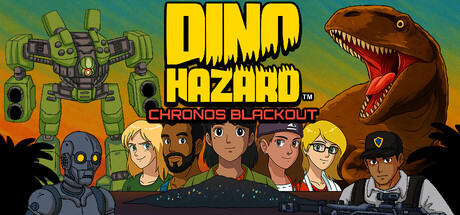
Dino Hazard: Chronos Blackout
A 40-plus-hour cyberpunk JRPG where your party alignment - HATE or LOVE - rewires the entire island, not just the ending cutscene. Worth a look if you have the patience for turn-based systems and a DinoDex to fill.
Comparar precios(0 tiendas)
Cargando precios...
We may earn a commission when you buy games through links on this page — at no extra cost to you. It never affects our rankings or verdicts.
Historial de precios
Capturas y multimedia
Acerca de Dino Hazard: Chronos Blackout
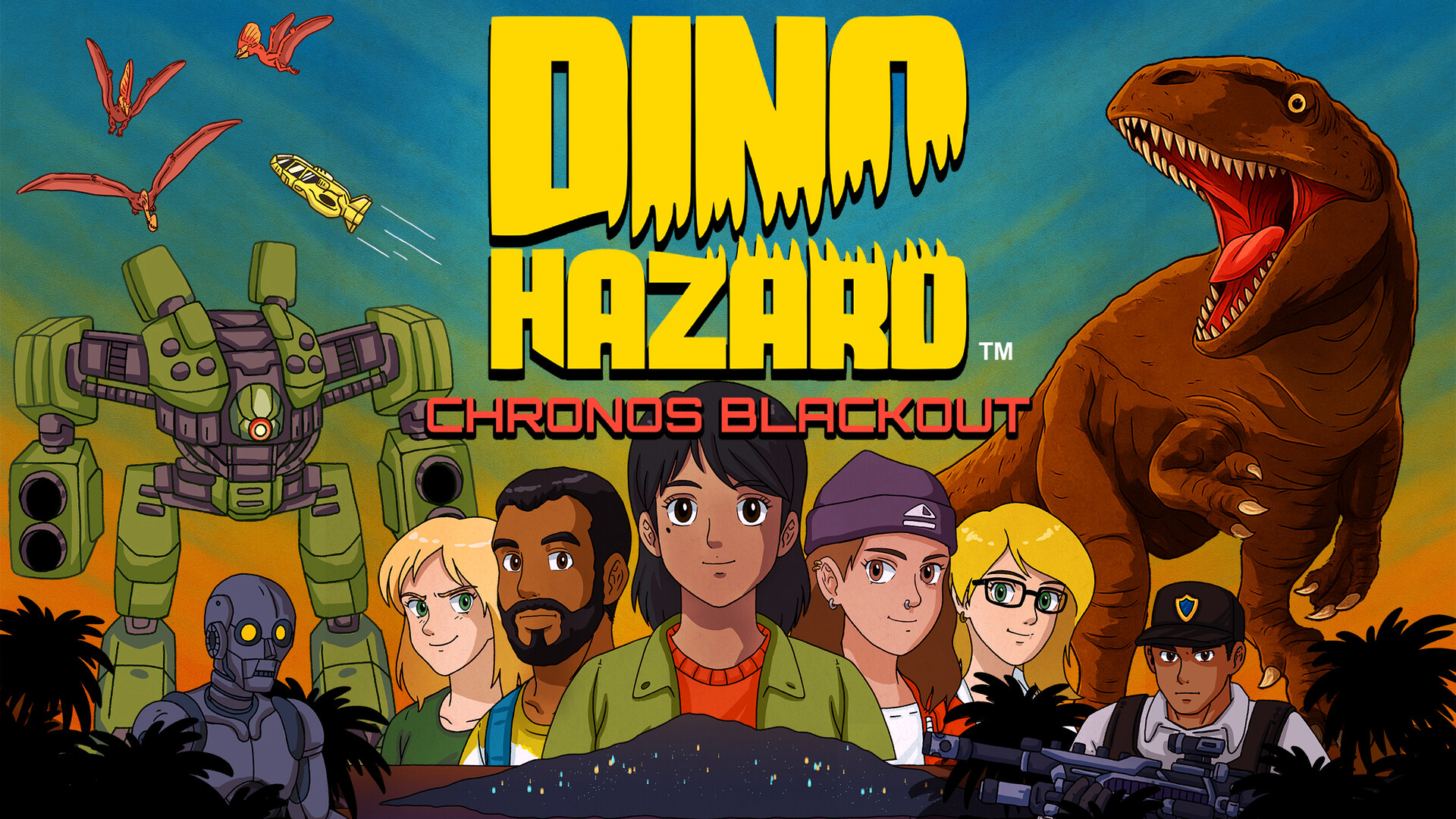
I pulled up the stat sheet on this one expecting a shallow dino-skin pasted over a generic RPG framework, and the reality is more interesting than that. Dino Hazard: Chronos Blackout sits in a clear lineage of 16-bit JRPGs - the kind of Chrono Trigger and Phantasy Star hybridization that the indie scene rarely attempts with any structural ambition - but what sets it apart is the resource-management layer built around facility restoration. You are not grinding through dungeons to unlock gear; you are progressively rebuilding the island's infrastructure, and each restored complex opens new mechanical systems: fishing, crafting, creature capture, and taming all gate in organically rather than front-loading the tutorial. For a strategy-minded player, that pacing structure is satisfying in the same way a tech tree unlock feels satisfying - there is always a next node to chase. The combat runs on a turn-based system with a genuinely interesting axis: HATE and LOVE are not just narrative flavors, they are actual strategic orientations that reshape how enemies and the wider environment respond to your party. Managing seven playable characters, each with distinct ability sets, weapons, and armor slots, means you are constantly making triage decisions about team composition. The game explicitly states that mandatory grinding is not essential, which is a design choice worth trusting - the combat is built around character traits rather than raw level inflation. That alone puts it above a lot of contemporaries in the indie JRPG space that quietly expect you to farm. The creature side of the game is where the development background pays obvious dividends. The team consulted paleontologists during production, and the Dinodex - an in-game catalogue of over 200 prehistoric creatures - reflects that. Scientific accuracy is a genuine design pillar, not a marketing bullet. If you care even slightly about paleontology, this is a more credible dinosaur game than anything a major studio has shipped in years. The creatures behave differently across the island's distinct ecosystems, which supports the nonlinear exploration loop and gives completionists a real reason to backtrack. The weaknesses are real and worth flagging. Community reports mention specific bugs: a black-screen state tied to a hospital sequence, and a crash on the equip menu during a smilodon encounter. The game is built for 60 Hz monitors and higher-refresh displays can trigger instability - a technical footnote that feels out of place for a 2023 release and should be patched. The art style carries a slight inconsistency between the field exploration visuals and the battle screens, where the 16-bit commitment wavers. None of these are dealbreakers, but players expecting a polished AAA release need to recalibrate expectations toward an ambitious indie with some rough edges still showing. The Steam user score is strongly positive across roughly 77 reviews, which suggests the community finds the whole greater than the sum of its flaws. For the right player - someone who finished Undertale and immediately wanted more moral-choice weight in their combat, or who treated the Pokemon Pokedex as a completion checklist - the 40-plus-hour main run here, scaling toward 80-plus for full completionists, represents serious value. The multiple endings are not cosmetic variations; they follow from a cumulative alignment logic that rewards players who think about each encounter as a system input rather than a thing to survive. That is the kind of replayability decision-making I want to see more of in this space.

Strategy & simulation
Etiquetas
Requisitos del sistema
Mínimos
- OS
- Microsoft® Windows® 7/8/8.1/10 (32bit/64bit)
- Memory
- 4 GB RAM
- DirectX
- Version 9.0
- Storage
- 1 GB available space
- Graphics
- OpenGL 4.1 capable GPU
- Processor
- Intel Core2 Duo or better
Recomendados
OpenGL ES 2.0 hardware driver support required for WebGL acceleration. (AMD Catalyst 10.9, nVidia 358.50)
Sigue explorando
Community Discussion
Be the first to comment on Dino Hazard: Chronos Blackout.
Reseñas y valoraciones
No hay valoraciones disponibles
Información del juego
- Desarrolladora
- Bone Collectors
- Distribuidora
- Bone Collectors
- Fecha de lanzamiento
- 22 dic 2023