Compara los precios de Deck of Souls en tiendas de claves de confianza y encuentra la mejor oferta. Desarrollado por Bigboot Studios. Publicado por HeroCraft PC. Lanzado el 10/12/2024. Disponible en PC. Géneros: RPG, Strategy.

Slay the Spire walked so this could limp slightly, then find its footing. A dark-fantasy deckbuilder worth a look if stamina management and boss-soul alchemy scratch your strategy itch.

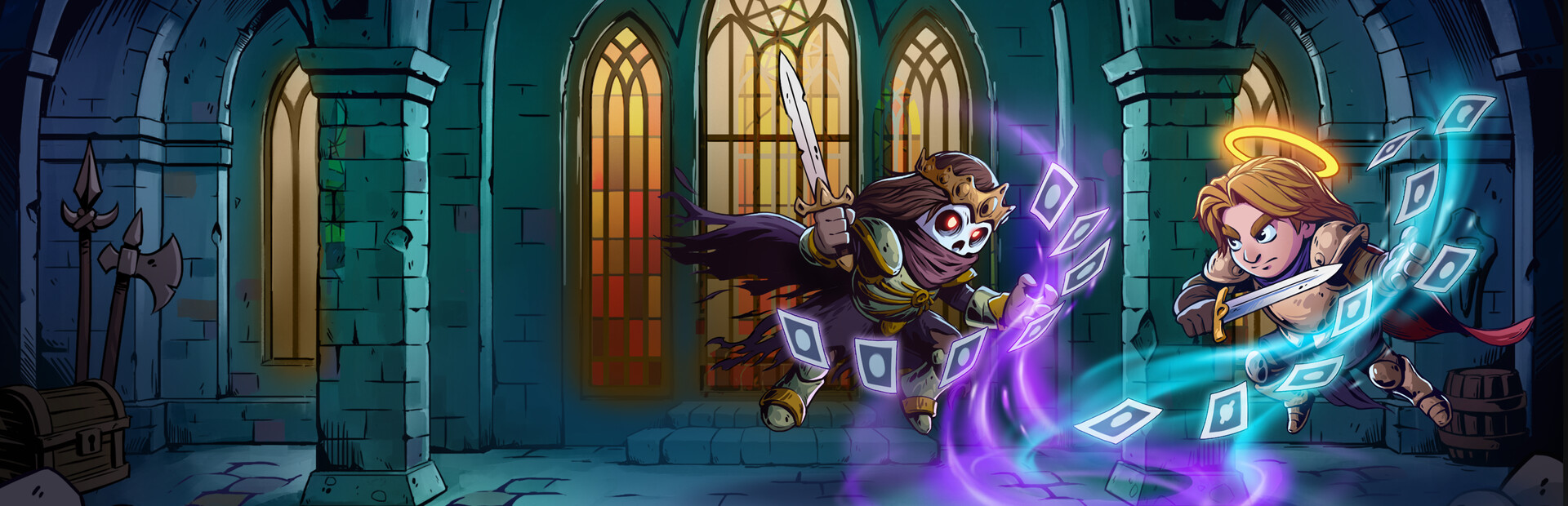
I've spent enough time with turn-based card games to clock a gimmick pitch immediately, and Deck of Souls had me defensive from the start. Souls-like plus deckbuilder is a concept that sounds like a bullet-point marketing exercise. What pulled me back after the first rough run is that Bigboot Studios - reportedly a one-person operation - actually commits to the hybrid rather than grafting a souls aesthetic on top of a Slay the Spire clone and calling it done. The stamina-based card economy is the mechanical heart of everything here. Unlike most deckbuilders where action points fully reset between turns, your stamina bar carries over in a depleted state, which means the back half of longer fights becomes a careful triage of what you can actually afford to play. Roll cards, which let you dodge incoming attacks, are not just a flavour nod to the souls genre - they are a genuine resource you will wish you had more of. Enemies act simultaneously, so prioritising targets matters, and the rule that limits you to one card per enemy per round forces uncomfortable choices when the screen gets crowded. The weight system on equipment is a clean design touch: load yourself down with heavy gear and you draw fewer cards per turn, a mechanical consequence that actually communicates something about how combat momentum shifts. Three classes at launch cover the main archetypes. The Divine Knight is the straightforward damage-and-block option for players who want to learn the stamina loop before adding complexity. Holy Lich leans on spellcasting and requires more precise sequencing. Saint Talon's poison and stealth toolkit rewards aggressive synergy hunting and can feel dominant once a run clicks into place. Classes each hold their own card pool plus access to class-neutral cards, so cross-class mixing is where the real decision depth lives. On top of the card layer sits an inventory system with weapons, armour, and accessories that can be upgraded at a blacksmith or imbued with boss souls to add passive effects. The moral decision system around bosses - execute them for a soul resource gain, or spare them to potentially recruit them as allies - adds a light but meaningful choice axis to major encounters. The warts are real and worth naming. Starting deck randomisation means some runs begin in a genuinely worse position than others, and the unlock curve has attracted criticism for feeling like mandatory early losses rather than rewarding progression. Stamina drain in the late stages of fights can produce a slog where you are watching turns tick by with no cards you can afford to use. Early access previews noted rough pacing and boss damage spikes that border on punishing before your card pool deepens. The full 1.0 release, which shipped December 2024 after a six-month early access period, carries an 84 percent positive rating across 153 Steam reviews - not a cult phenomenon, but a clear signal that the post-launch patch work landed with the player base. For the strategy-minded: this is not a deep-sim with a hundred variables to track, but it is a focused, mechanically honest deckbuilder that respects the genre it borrows from. If you have never touched a roguelite deckbuilder, the structure is approachable enough that a few failed runs will teach you the language. If you are a genre veteran, come for the stamina-carry system and boss-soul crafting, and manage expectations around content volume relative to the price tier. Diego, Scout Team

Deck of Souls

Deck of Souls

10 dic 2024Bigboot StudiosHeroCraft PC
GamerScout opina

Slay the Spire walked so this could limp slightly, then find its footing. A dark-fantasy deckbuilder worth a look if stamina management and boss-soul alchemy scratch your strategy itch.

PC
Steam Deck Playable
Mejor precio disponible
€0.00
en N/A
Mínimo histórico: €1.03

Comparar precios(0 tiendas)

Cargando precios...

We may earn a commission when you buy games through links on this page — at no extra cost to you. It never affects our rankings or verdicts.

Historial de precios

Historical low
€1.039 Jun 2026
Keyshops
€0.95€1.01€1.06€1.128 Jun13 Jun18 Jun23 Jun28 Jun
Tracking prices since 8 Jun 2026
Create alert

Capturas y multimedia

Acerca de Deck of Souls

I've spent enough time with turn-based card games to clock a gimmick pitch immediately, and Deck of Souls had me defensive from the start. Souls-like plus deckbuilder is a concept that sounds like a bullet-point marketing exercise. What pulled me back after the first rough run is that Bigboot Studios - reportedly a one-person operation - actually commits to the hybrid rather than grafting a souls aesthetic on top of a Slay the Spire clone and calling it done. The stamina-based card economy is the mechanical heart of everything here. Unlike most deckbuilders where action points fully reset between turns, your stamina bar carries over in a depleted state, which means the back half of longer fights becomes a careful triage of what you can actually afford to play. Roll cards, which let you dodge incoming attacks, are not just a flavour nod to the souls genre - they are a genuine resource you will wish you had more of. Enemies act simultaneously, so prioritising targets matters, and the rule that limits you to one card per enemy per round forces uncomfortable choices when the screen gets crowded. The weight system on equipment is a clean design touch: load yourself down with heavy gear and you draw fewer cards per turn, a mechanical consequence that actually communicates something about how combat momentum shifts. Three classes at launch cover the main archetypes. The Divine Knight is the straightforward damage-and-block option for players who want to learn the stamina loop before adding complexity. Holy Lich leans on spellcasting and requires more precise sequencing. Saint Talon's poison and stealth toolkit rewards aggressive synergy hunting and can feel dominant once a run clicks into place. Classes each hold their own card pool plus access to class-neutral cards, so cross-class mixing is where the real decision depth lives. On top of the card layer sits an inventory system with weapons, armour, and accessories that can be upgraded at a blacksmith or imbued with boss souls to add passive effects. The moral decision system around bosses - execute them for a soul resource gain, or spare them to potentially recruit them as allies - adds a light but meaningful choice axis to major encounters. The warts are real and worth naming. Starting deck randomisation means some runs begin in a genuinely worse position than others, and the unlock curve has attracted criticism for feeling like mandatory early losses rather than rewarding progression. Stamina drain in the late stages of fights can produce a slog where you are watching turns tick by with no cards you can afford to use. Early access previews noted rough pacing and boss damage spikes that border on punishing before your card pool deepens. The full 1.0 release, which shipped December 2024 after a six-month early access period, carries an 84 percent positive rating across 153 Steam reviews - not a cult phenomenon, but a clear signal that the post-launch patch work landed with the player base. For the strategy-minded: this is not a deep-sim with a hundred variables to track, but it is a focused, mechanically honest deckbuilder that respects the genre it borrows from. If you have never touched a roguelite deckbuilder, the structure is approachable enough that a few failed runs will teach you the language. If you are a genre veteran, come for the stamina-carry system and boss-soul crafting, and manage expectations around content volume relative to the price tier.

Diego
Diego · Scout Team

Strategy & simulation

Etiquetas

singleplayerachievementscloud-savestier:sub-5Stamina EconomyBoss Soul CraftingMoral ChoicesWeight ManagementClass SynergyOne-Dev IndiePost-Launch Patched

Requisitos del sistema

Mínimos

OS
Windows 7-11
Memory
4 GB RAM
Storage
1 GB available space
Graphics
Nvidia GTX 850
Processor
i3

Recomendados

OS
Windows 7-11
Memory
4 GB RAM
Storage
1 GB available space
Graphics
Nvidia GTX 850
Processor
i5

Sigue explorando

Community Discussion

Be the first to comment on Deck of Souls.

Reseñas y valoraciones

No hay valoraciones disponibles

Información del juego

Desarrolladora
Bigboot Studios
Distribuidora
HeroCraft PC
Fecha de lanzamiento
10 dic 2024

Alerta de precio

¡Recibe un aviso cuando el precio baje de tu objetivo!

Crear alerta

Compra mejor: guías útiles

¿Buscas más? Mira juegos como Deck of Souls →

Preguntas frecuentes sobre Deck of Souls

¿Cuánto cuesta Deck of Souls?

El precio de Deck of Souls cambia a menudo y varía según la tienda, la edición y la región. La tabla de precios en vivo de esta página compara las ofertas más baratas en stock de tiendas de claves de confianza como Eneba y Kinguin, para que siempre veas el precio más bajo actual antes de comprar.

¿Dónde puedo comprar Deck of Souls más barato?

Compara los precios de Deck of Souls en todas las tiendas verificadas en la tabla de precios de esta página. Listamos las ofertas de claves y tiendas más baratas en stock, actualizadas con frecuencia, para que siempre veas la mejor oferta actual antes de comprar.

¿En qué plataformas está disponible Deck of Souls?

Deck of Souls está disponible en PC.

¿Cuándo se lanzó Deck of Souls?

Deck of Souls se lanzó el 10 de diciembre de 2024.

¿Quién desarrolló Deck of Souls?

Deck of Souls fue desarrollado por Bigboot Studios y publicado por HeroCraft PC.