Compara los precios de Dead Purge: Outbreak en tiendas de claves de confianza y encuentra la mejor oferta. Desarrollado por Microlith Games. Publicado por Microlith Games. Lanzado el 13/7/2017. Disponible en PC. Géneros: Violent, Gore, Action, Indie.

A solo zombie wave-shooter with fleeting slow-motion kills and a research tree that sounds more interesting than it plays - hard to recommend over the genre's better-stocked alternatives.

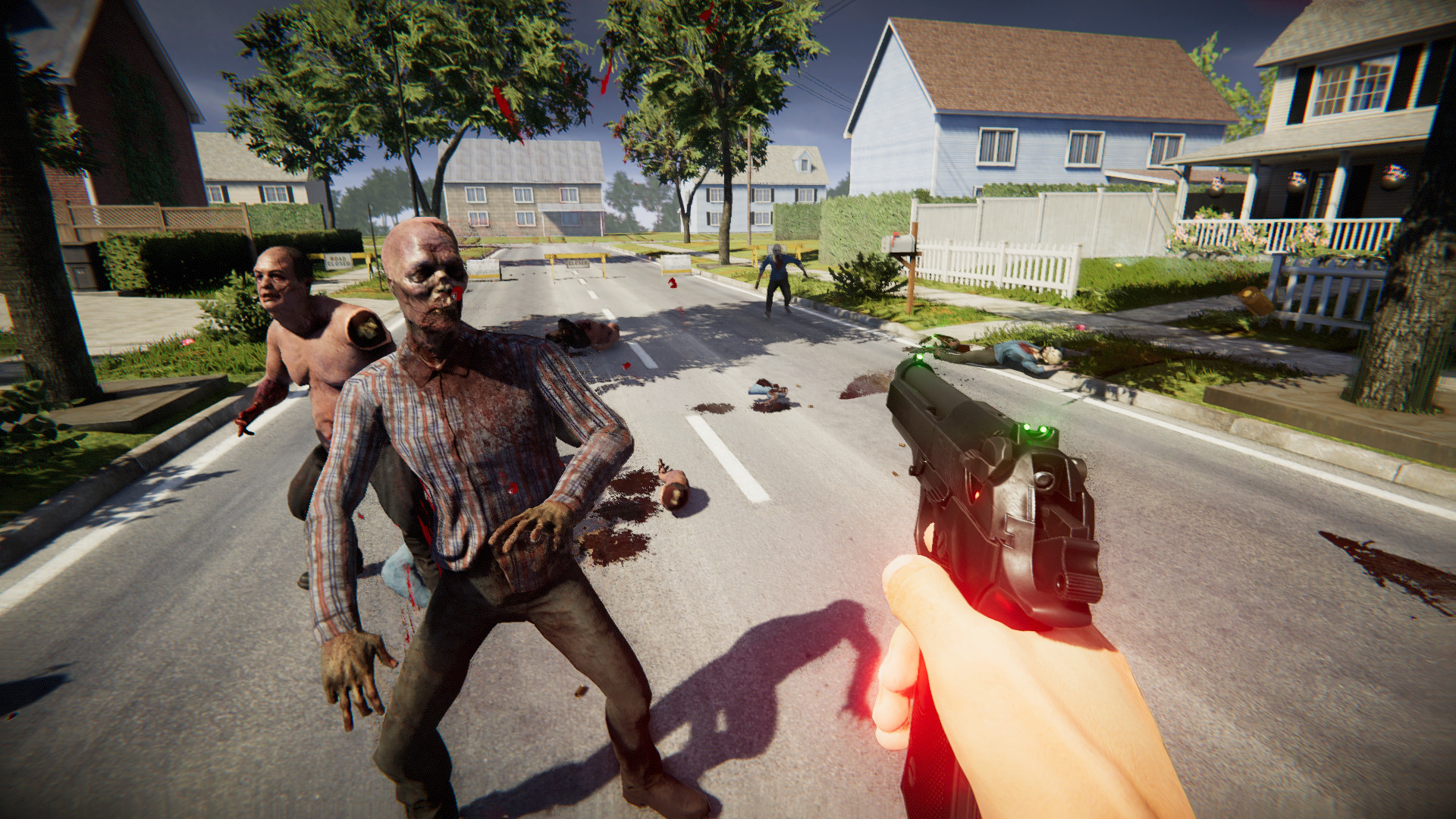
My honest first impression of Dead Purge: Outbreak was a quiet sigh of recognition - not the good kind. This is a solo, PC-only first-person zombie wave-shooter from Microlith Games, a small Budapest-based indie studio, and it wears every limitation of its budget on its sleeve from the moment you reach the mode select screen. Two modes greet you: Horde, where you clear a fixed number of waves before the match simply ends, and Survive, where waves accelerate until you die. That is the entirety of the structure. No campaign, no story, no co-op. Just you, a pistol, a submachine gun, a knife, and eventually shotguns, assault rifles, and sniper rifles with high-velocity ammo unlocked through a research-and-upgrade system that looks more substantial than it feels. Spend your earned points to nudge pistol damage up by ten percent. Try not to feel shortchanged. The slow-motion mechanic is the one genuinely interesting thing here. Kill at the right moment and the game briefly shifts into a Max Payne-adjacent bullet-time, letting heads burst apart in gory detail while a gruff announcer shouts phrases like "Killing Spree" and "Frenzy" at you. It lands with a small jolt of satisfaction the first few times. The problem is that it triggers inconsistently, and the rest of the shooting never supports it. Weapon recoil animates horizontally rather than vertically, hitboxes behave erratically, and movement is the game's most fundamental failure - invisible geometry catches your feet constantly, doorways become geometry puzzles, and the general feel of traversal is floaty in the wrong ways. Three maps exist, each with day and night variants, which brings the total to six visual configurations over the same handful of small environments. It runs thin fast. Visually the game is a curious case. Microlith was upfront on the Steam forums about using purchased asset packs, and some reviewers noted the environments can look surprisingly polished at a glance - realistic lighting, credible architecture. But the illusion frays quickly. Textures are inconsistent, zombie animations are stiff, level boundaries intrude on immersion, and an infamous oversight left unedited "Office Pack" text visible on in-game LCD screens in the police station level. The audio follows the same pattern: weapon sounds are passable, but nothing reacts to its environment, footstep audio doesn't match surface materials, and the electronic soundtrack - which does shift register slightly as waves escalate - is otherwise unremarkable. The craft that I usually love defending in small indie games simply isn't present here in the ways that matter. Where does that leave you? If you love the horde-shooter loop in its most stripped-down form - wave comes, you shoot it, wave ends, you buy a gun upgrade - there are a handful of minutes of mindless decompression in here. The gore is committed, the slow-motion headshots do pop with a brief visceral reward, and the leaderboard integration gives completionists a thin target to chase across the 30 Steam achievements. But the absence of co-op is felt especially hard in a genre where Killing Floor set the template years before this launched, and every mechanical frustration that surfaces - the movement, the hitboxes, the recoil - compounds the sense of a game that was shipped before its foundations were fully solid. There are better zombie shooters at every price point, and this one has not meaningfully evolved since 2017. Kai, Scout Team

Dead Purge: Outbreak
ViolentGoreActionIndie

Dead Purge: Outbreak

13 jul 2017Microlith Games
GamerScout opina

A solo zombie wave-shooter with fleeting slow-motion kills and a research tree that sounds more interesting than it plays - hard to recommend over the genre's better-stocked alternatives.

PC
Mejor precio disponible
€0.00
en N/A
Mínimo histórico: €6.95

Comparar precios(0 tiendas)

Cargando precios...

We may earn a commission when you buy games through links on this page — at no extra cost to you. It never affects our rankings or verdicts.

Historial de precios

Historical low
€6.955 Jun 2026
Keyshops
€6.39€6.76€7.14€7.515 Jun11 Jun17 Jun22 Jun28 Jun
Tracking prices since 5 Jun 2026
Create alert

Capturas y multimedia

Captura

Acerca de Dead Purge: Outbreak

My honest first impression of Dead Purge: Outbreak was a quiet sigh of recognition - not the good kind. This is a solo, PC-only first-person zombie wave-shooter from Microlith Games, a small Budapest-based indie studio, and it wears every limitation of its budget on its sleeve from the moment you reach the mode select screen. Two modes greet you: Horde, where you clear a fixed number of waves before the match simply ends, and Survive, where waves accelerate until you die. That is the entirety of the structure. No campaign, no story, no co-op. Just you, a pistol, a submachine gun, a knife, and eventually shotguns, assault rifles, and sniper rifles with high-velocity ammo unlocked through a research-and-upgrade system that looks more substantial than it feels. Spend your earned points to nudge pistol damage up by ten percent. Try not to feel shortchanged. The slow-motion mechanic is the one genuinely interesting thing here. Kill at the right moment and the game briefly shifts into a Max Payne-adjacent bullet-time, letting heads burst apart in gory detail while a gruff announcer shouts phrases like "Killing Spree" and "Frenzy" at you. It lands with a small jolt of satisfaction the first few times. The problem is that it triggers inconsistently, and the rest of the shooting never supports it. Weapon recoil animates horizontally rather than vertically, hitboxes behave erratically, and movement is the game's most fundamental failure - invisible geometry catches your feet constantly, doorways become geometry puzzles, and the general feel of traversal is floaty in the wrong ways. Three maps exist, each with day and night variants, which brings the total to six visual configurations over the same handful of small environments. It runs thin fast. Visually the game is a curious case. Microlith was upfront on the Steam forums about using purchased asset packs, and some reviewers noted the environments can look surprisingly polished at a glance - realistic lighting, credible architecture. But the illusion frays quickly. Textures are inconsistent, zombie animations are stiff, level boundaries intrude on immersion, and an infamous oversight left unedited "Office Pack" text visible on in-game LCD screens in the police station level. The audio follows the same pattern: weapon sounds are passable, but nothing reacts to its environment, footstep audio doesn't match surface materials, and the electronic soundtrack - which does shift register slightly as waves escalate - is otherwise unremarkable. The craft that I usually love defending in small indie games simply isn't present here in the ways that matter. Where does that leave you? If you love the horde-shooter loop in its most stripped-down form - wave comes, you shoot it, wave ends, you buy a gun upgrade - there are a handful of minutes of mindless decompression in here. The gore is committed, the slow-motion headshots do pop with a brief visceral reward, and the leaderboard integration gives completionists a thin target to chase across the 30 Steam achievements. But the absence of co-op is felt especially hard in a genre where Killing Floor set the template years before this launched, and every mechanical frustration that surfaces - the movement, the hitboxes, the recoil - compounds the sense of a game that was shipped before its foundations were fully solid. There are better zombie shooters at every price point, and this one has not meaningfully evolved since 2017.

Kai
Kai · Scout Team

Indie & narrative

Etiquetas

singleplayerachievementscontroller-supportcloud-savestier:indieWave ShooterSlow-Motion CombatHorde ModeAsset-HeavySolo OnlyGore-HeavyUpgrade Research TreeBudget FPS

Requisitos del sistema

Mínimos

OS
Windows 7 (x64)
Memory
4 GB RAM
DirectX
Version 11
Storage
5 GB available space
Graphics
NVIDIA GeForce GTX 760 or AMD Radeon R7 260X
Processor
Intel Core i5-4460, 2.70GHz or AMD FX-6300

Recomendados

OS
Windows 10 (x64)
Memory
8 GB RAM
DirectX
Version 11
Storage
5 GB available space
Graphics
NVIDIA GeForce GTX 1060 with 3GB VRAM
Processor
Intel Core i7 3770 3.4GHz or AMD equivalent

Sigue explorando

Community Discussion

Be the first to comment on Dead Purge: Outbreak.

Reseñas y valoraciones

No hay valoraciones disponibles

Información del juego

Desarrolladora
Microlith Games
Distribuidora
Microlith Games
Fecha de lanzamiento
13 jul 2017

Alerta de precio

¡Recibe un aviso cuando el precio baje de tu objetivo!

Crear alerta

Más de Microlith Games

Compra mejor: guías útiles

Preguntas frecuentes sobre Dead Purge: Outbreak

¿Cuánto cuesta Dead Purge: Outbreak?

El precio de Dead Purge: Outbreak cambia a menudo y varía según la tienda, la edición y la región. La tabla de precios en vivo de esta página compara las ofertas más baratas en stock de tiendas de claves de confianza como Eneba y Kinguin, para que siempre veas el precio más bajo actual antes de comprar.

¿Dónde puedo comprar Dead Purge: Outbreak más barato?

Compara los precios de Dead Purge: Outbreak en todas las tiendas verificadas en la tabla de precios de esta página. Listamos las ofertas de claves y tiendas más baratas en stock, actualizadas con frecuencia, para que siempre veas la mejor oferta actual antes de comprar.

¿En qué plataformas está disponible Dead Purge: Outbreak?

Dead Purge: Outbreak está disponible en PC.

¿Cuándo se lanzó Dead Purge: Outbreak?

Dead Purge: Outbreak se lanzó el 13 de julio de 2017.

¿Quién desarrolló Dead Purge: Outbreak?

Dead Purge: Outbreak fue desarrollado por Microlith Games.