Compara los precios de Dark Quest 3 en tiendas de claves de confianza y encuentra la mejor oferta. Desarrollado por Brain Seal Ltd. Publicado por Brain Seal Ltd. Lanzado el 24/5/2023. Disponible en PC, Xbox. Géneros: RPG, Strategy.

Sits right at that crossroads of Hand of Fate and Slay the Spire, but stumbles where it counts most - the combat loop runs out of ideas long before your runs do.

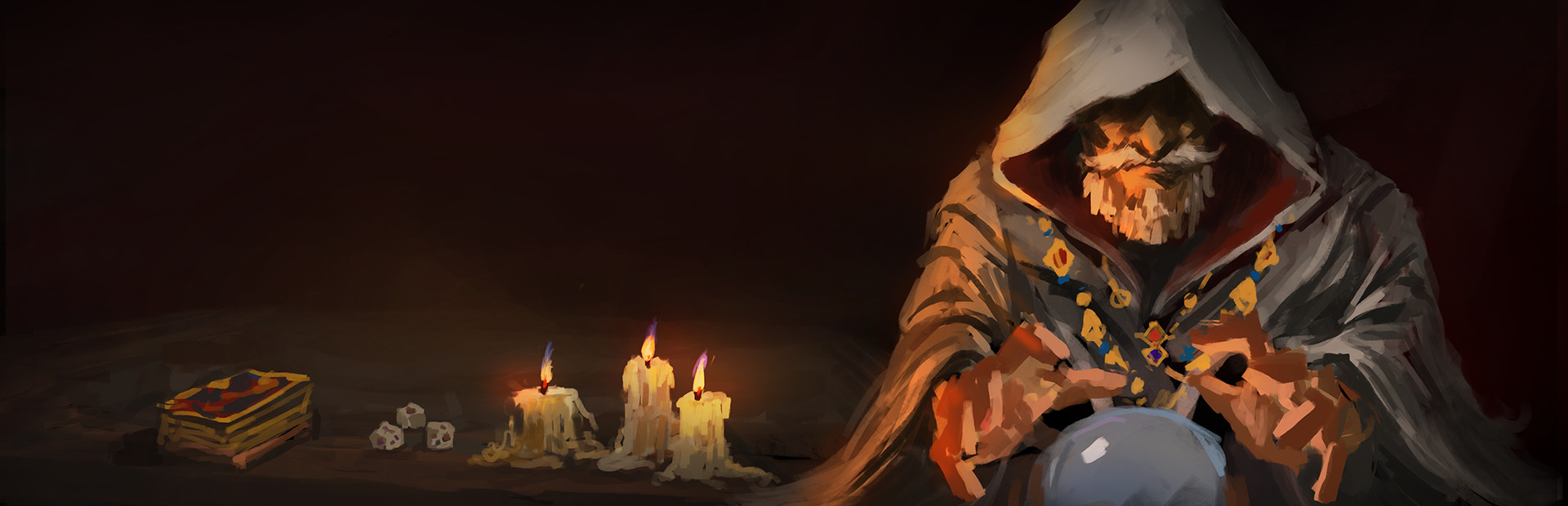
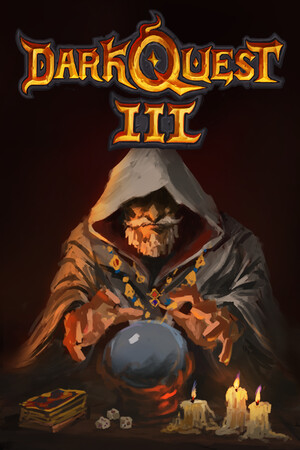
My spreadsheet instincts kicked in the moment I saw Dark Quest 3's party-building screen: twelve heroes, four slots, stat sheets covering strength, dexterity, and a handful of passive and active abilities that unlock as runs progress. That opening screen promises more depth than the game ultimately delivers, but it is worth understanding exactly what kind of game this is before writing it off. Dark Quest 3 is a hard pivot from the earlier entries in the series. Where Dark Quest and Dark Quest 2 drew heavily from HeroQuest-style board game DNA - persistent party, dungeon crawling, incremental loot - the third entry scraps all of that in favour of a roguelite structure closer to Hand of Fate, with a light dusting of Slay the Spire's card-driven feel. You pick four heroes, choose some starting upgrades, and then work through a deck of adventure cards spread across thirteen areas. Those cards can surface combat, trait-check events (think D&D skill rolls against your stat line), loot pickups, and the odd story beat. The procedurally generated order keeps each run feeling distinct, at least for the first handful of attempts. The card-draw layer is where the game earns its goodwill. Flipping an adventure card and not knowing whether you are about to receive a blessed relic or a monster ambush generates genuine tension, and the atmosphere sells it hard. Visually, the game commits to its tabletop conceit: heroes move like figurines on a miniature map, and a sorcerer voiced narrator hovers over the action like a dungeon master calling the shots. The booming DM voice and the dark fantasy soundtrack do a lot of heavy lifting when the mechanical side of things goes quiet. It is a genuinely charming presentation for a small-studio indie release. Then combat shows up, and here is where I have to be honest with strategy players specifically. The turn order is fully random - your archer is as likely to act first as last, with no initiative system to plan around. That single design choice hollows out a surprising amount of tactical depth. You cannot sequence abilities, you cannot protect a wounded hero by acting before the enemy, you cannot build around turn priority at all. Isometric grid movement adds another layer of friction, with the cardinal-direction input on an isometric view producing the kind of navigational confusion that should have been ironed out in playtesting. Worse, there is no option to skip or fast-forward repeated encounters, so when the card deck surfaces the same combat scenario for the fourth time in a run, you sit through every slow animation again. Critics noted the game is capable of making you feel both hooked and genuinely resentful inside the same session, which is an uncomfortable place to spend your leisure time. For newcomers to the roguelite-tabletop hybrid space, the tutorial does the bare minimum. Cards take time to learn by trial and error, and early deaths will feel punishing rather than instructive. That said, the class unlock system gives long-term players something to chase: you start with four heroes available and gradually open the rest of the twelve-strong roster across runs, which creates a meaningful meta-progression loop that keeps the game from feeling completely disposable. The party-composition puzzle - balancing a melee fighter, a ranged archer, a wizard, and something like a prince or dwarf class that bends the usual archetype rules - is genuinely the most satisfying decision space the game offers. If you are a player who gravitates toward optimising builds and testing synergies, that layer will keep you engaged past the point where the combat repetition starts to grate. On Steam, the game sits at roughly 73 percent positive across a modest review count, which tracks with the mixed-but-leaning-positive critical picture. It is not a broken game. The atmosphere is confident, the card exploration is fun in short sessions, and the hero roster gives you enough variety to experiment. But for strategy players used to systems that reward forward planning - initiative queues, positional depth, escalating difficulty curves - Dark Quest 3 will feel like a game that had all the right ingredients and then left half of them in the packet. Diego, Scout Team

Dark Quest 3

Dark Quest 3

24 may 2023Brain Seal Ltd
GamerScout opina

Sits right at that crossroads of Hand of Fate and Slay the Spire, but stumbles where it counts most - the combat loop runs out of ideas long before your runs do.

PCXbox
Steam Deck Playable
Mejor precio disponible
€0.00
en N/A
Mínimo histórico: €13.70

Comparar precios(0 tiendas)

Cargando precios...

We may earn a commission when you buy games through links on this page — at no extra cost to you. It never affects our rankings or verdicts.

Historial de precios

Historical low
€13.708 Jun 2026
Keyshops
€12.60€13.33€14.07€14.808 Jun13 Jun18 Jun23 Jun28 Jun
Tracking prices since 8 Jun 2026
Create alert

Capturas y multimedia

Acerca de Dark Quest 3

My spreadsheet instincts kicked in the moment I saw Dark Quest 3's party-building screen: twelve heroes, four slots, stat sheets covering strength, dexterity, and a handful of passive and active abilities that unlock as runs progress. That opening screen promises more depth than the game ultimately delivers, but it is worth understanding exactly what kind of game this is before writing it off. Dark Quest 3 is a hard pivot from the earlier entries in the series. Where Dark Quest and Dark Quest 2 drew heavily from HeroQuest-style board game DNA - persistent party, dungeon crawling, incremental loot - the third entry scraps all of that in favour of a roguelite structure closer to Hand of Fate, with a light dusting of Slay the Spire's card-driven feel. You pick four heroes, choose some starting upgrades, and then work through a deck of adventure cards spread across thirteen areas. Those cards can surface combat, trait-check events (think D&D skill rolls against your stat line), loot pickups, and the odd story beat. The procedurally generated order keeps each run feeling distinct, at least for the first handful of attempts. The card-draw layer is where the game earns its goodwill. Flipping an adventure card and not knowing whether you are about to receive a blessed relic or a monster ambush generates genuine tension, and the atmosphere sells it hard. Visually, the game commits to its tabletop conceit: heroes move like figurines on a miniature map, and a sorcerer voiced narrator hovers over the action like a dungeon master calling the shots. The booming DM voice and the dark fantasy soundtrack do a lot of heavy lifting when the mechanical side of things goes quiet. It is a genuinely charming presentation for a small-studio indie release. Then combat shows up, and here is where I have to be honest with strategy players specifically. The turn order is fully random - your archer is as likely to act first as last, with no initiative system to plan around. That single design choice hollows out a surprising amount of tactical depth. You cannot sequence abilities, you cannot protect a wounded hero by acting before the enemy, you cannot build around turn priority at all. Isometric grid movement adds another layer of friction, with the cardinal-direction input on an isometric view producing the kind of navigational confusion that should have been ironed out in playtesting. Worse, there is no option to skip or fast-forward repeated encounters, so when the card deck surfaces the same combat scenario for the fourth time in a run, you sit through every slow animation again. Critics noted the game is capable of making you feel both hooked and genuinely resentful inside the same session, which is an uncomfortable place to spend your leisure time. For newcomers to the roguelite-tabletop hybrid space, the tutorial does the bare minimum. Cards take time to learn by trial and error, and early deaths will feel punishing rather than instructive. That said, the class unlock system gives long-term players something to chase: you start with four heroes available and gradually open the rest of the twelve-strong roster across runs, which creates a meaningful meta-progression loop that keeps the game from feeling completely disposable. The party-composition puzzle - balancing a melee fighter, a ranged archer, a wizard, and something like a prince or dwarf class that bends the usual archetype rules - is genuinely the most satisfying decision space the game offers. If you are a player who gravitates toward optimising builds and testing synergies, that layer will keep you engaged past the point where the combat repetition starts to grate. On Steam, the game sits at roughly 73 percent positive across a modest review count, which tracks with the mixed-but-leaning-positive critical picture. It is not a broken game. The atmosphere is confident, the card exploration is fun in short sessions, and the hero roster gives you enough variety to experiment. But for strategy players used to systems that reward forward planning - initiative queues, positional depth, escalating difficulty curves - Dark Quest 3 will feel like a game that had all the right ingredients and then left half of them in the packet.

Diego
Diego · Scout Team

Strategy & simulation

Etiquetas

singleplayerachievementscontroller-supportcloud-savestier:indieRoguelite-TabletopParty CompositionDice-Roll EventsMeta-Progression UnlockDM NarratorCard-Draw ExplorationRandom Turn OrderShort-Session Play

Requisitos del sistema

Mínimos

OS
Windows 7 64-bit
Memory
4 GB RAM
Storage
1 GB available space
Graphics
Any
Processor
Intel Core2 Duo E8400 or AMD Phenom II x2 550
Sound Card
Any

Recomendados

Requires a 64-bit processor and operating system

Sigue explorando

Community Discussion

Be the first to comment on Dark Quest 3.

Reseñas y valoraciones

No hay valoraciones disponibles

Información del juego

Desarrolladora
Brain Seal Ltd
Distribuidora
Brain Seal Ltd
Fecha de lanzamiento
24 may 2023

Alerta de precio

¡Recibe un aviso cuando el precio baje de tu objetivo!

Crear alerta

Compra mejor: guías útiles

¿Buscas más? Mira juegos como Dark Quest 3 →

Preguntas frecuentes sobre Dark Quest 3

¿Cuánto cuesta Dark Quest 3?

El precio de Dark Quest 3 cambia a menudo y varía según la tienda, la edición y la región. La tabla de precios en vivo de esta página compara las ofertas más baratas en stock de tiendas de claves de confianza como Eneba y Kinguin, para que siempre veas el precio más bajo actual antes de comprar.

¿Dónde puedo comprar Dark Quest 3 más barato?

Compara los precios de Dark Quest 3 en todas las tiendas verificadas en la tabla de precios de esta página. Listamos las ofertas de claves y tiendas más baratas en stock, actualizadas con frecuencia, para que siempre veas la mejor oferta actual antes de comprar.

¿En qué plataformas está disponible Dark Quest 3?

Dark Quest 3 está disponible en PC, Xbox.

¿Cuándo se lanzó Dark Quest 3?

Dark Quest 3 se lanzó el 24 de mayo de 2023.

¿Quién desarrolló Dark Quest 3?

Dark Quest 3 fue desarrollado por Brain Seal Ltd.