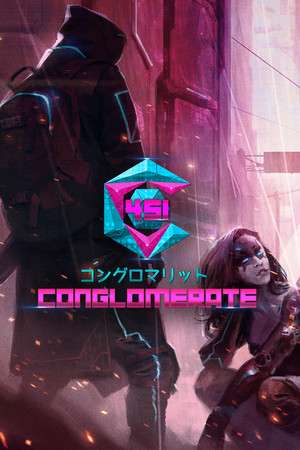
Compara los precios de Conglomerate 451 en tiendas de claves de confianza y encuentra la mejor oferta. Desarrollado por RuneHeads. Publicado por Fulqrum Publishing. Lanzado el 20/2/2020. Disponible en PC, Mac, Linux. Géneros: Indie, RPG. Puntuación Metacritic: 60/100.

Neon corridors, clone squads, and permadeath in a cyberpunk basement few people talk about. Worth the look if grid crawlers are your thing, but go in with calibrated expectations.

My honest first reaction to Conglomerate 451 was a quiet, fond recognition: oh, this is a small studio doing something genuinely specific. RuneHeads, a three-person team, built a first-person grid crawler inside a rain-slicked cyberpunk city, and the care in the atmosphere is palpable even when the systems underneath start to creak. You step in as the director of a clone-manufacturing agency tasked by the Senate to dismantle four rogue megacorporations that have taken over Sector 451. It is a premise soaked in Blade Runner neon and classic Syndicate paranoia, and for the first stretch of hours, that mood carries a lot of weight. The loop has two clear halves. Back at headquarters, you print clones, splice their DNA, pick a class (soldier, infiltrator, drifter, and more unlocked through reputation), choose four skills from a pool of eight per class, then slot SPU data chips into weapons, shields, and cyber limbs to nudge stats. It is genuinely dense tinkering, and players who enjoy min-maxing a roster will find real texture here. The combat system rewards skill synergies: a Drifter applies Death Mark to a target, and an Infiltrator's Death Shot lands with a significant damage bonus against that marked enemy. Building around those chains, targeting specific body parts, and hacking enemies mid-fight gives combat a tactical rhythm that feels satisfying in the early game. Permadeath applies fully - a clone that bleeds out is gone, and the corporation you were raiding regains influence - so every mission carries low-grade dread, which is the correct mood for this genre. Where the game loses altitude is around the midpoint. The 75-week story mode and the separate endless mode share the same five districts and the same narrow mission types: clear all enemies, kill a specific target, retrieve an item, complete a special assignment. Procedural generation handles the maps, but the corporations themselves are thin, assembled from name generators with no meaningful personality differences between them. The story thread, communiques from a rival agent cell that nudge you toward one of three endings, amounts to a handful of text messages. After ten or twelve hours, when the world was still fresh and every research unlock felt meaningful, I was genuinely absorbed. Past that threshold, the repetition becomes harder to ignore. Several reviewers and a mixed Steam user score of around 62 percent positive reflect that same curve. There are smaller friction points worth naming. The hacking mini-games feel underbaked. The battle HUD buries HP, shield, and battery numbers behind a held button rather than displaying them cleanly. Clone faces are expressionless by design (they are clones, so fair enough), but the animations can glitch in ways that break the mood. On the other hand, the audio work is genuinely good: a bass-heavy electronic soundtrack that fits the wet neon corridors, and the visual treatment of combat as bright neon patterns rather than blood keeps everything stylishly abstract. The settings being five distinct aesthetic zones rather than one repeated tileset helps more than you might expect. I will defend Conglomerate 451 to a specific audience: genre veterans who specifically want a cyberpunk-flavored Legend of Grimrock with agency management stapled on, and who can tolerate a campaign that outstays its welcome by about a third. The craft of the first hours is real. The three-person team built something coherent, moody, and mechanically layered enough to respect your attention. It just does not find a second gear. Kai, Scout Team

Conglomerate 451

Conglomerate 451

20 feb 2020RuneHeadsFulqrum Publishing
GamerScout opina

Neon corridors, clone squads, and permadeath in a cyberpunk basement few people talk about. Worth the look if grid crawlers are your thing, but go in with calibrated expectations.

PCMacLinux
Steam Deck VerifiedProtonDB Platinum
Mejor precio disponible
€0.00
en N/A
Mínimo histórico: €0.60

Comparar precios(0 tiendas)

Cargando precios...

We may earn a commission when you buy games through links on this page — at no extra cost to you. It never affects our rankings or verdicts.

Historial de precios

Historical low
€0.6026 Jun 2026
Keyshops
€0.59€0.62€0.65€0.686 Jun12 Jun17 Jun23 Jun28 Jun
Tracking prices since 6 Jun 2026
Create alert

Capturas y multimedia

Acerca de Conglomerate 451

My honest first reaction to Conglomerate 451 was a quiet, fond recognition: oh, this is a small studio doing something genuinely specific. RuneHeads, a three-person team, built a first-person grid crawler inside a rain-slicked cyberpunk city, and the care in the atmosphere is palpable even when the systems underneath start to creak. You step in as the director of a clone-manufacturing agency tasked by the Senate to dismantle four rogue megacorporations that have taken over Sector 451. It is a premise soaked in Blade Runner neon and classic Syndicate paranoia, and for the first stretch of hours, that mood carries a lot of weight. The loop has two clear halves. Back at headquarters, you print clones, splice their DNA, pick a class (soldier, infiltrator, drifter, and more unlocked through reputation), choose four skills from a pool of eight per class, then slot SPU data chips into weapons, shields, and cyber limbs to nudge stats. It is genuinely dense tinkering, and players who enjoy min-maxing a roster will find real texture here. The combat system rewards skill synergies: a Drifter applies Death Mark to a target, and an Infiltrator's Death Shot lands with a significant damage bonus against that marked enemy. Building around those chains, targeting specific body parts, and hacking enemies mid-fight gives combat a tactical rhythm that feels satisfying in the early game. Permadeath applies fully - a clone that bleeds out is gone, and the corporation you were raiding regains influence - so every mission carries low-grade dread, which is the correct mood for this genre. Where the game loses altitude is around the midpoint. The 75-week story mode and the separate endless mode share the same five districts and the same narrow mission types: clear all enemies, kill a specific target, retrieve an item, complete a special assignment. Procedural generation handles the maps, but the corporations themselves are thin, assembled from name generators with no meaningful personality differences between them. The story thread, communiques from a rival agent cell that nudge you toward one of three endings, amounts to a handful of text messages. After ten or twelve hours, when the world was still fresh and every research unlock felt meaningful, I was genuinely absorbed. Past that threshold, the repetition becomes harder to ignore. Several reviewers and a mixed Steam user score of around 62 percent positive reflect that same curve. There are smaller friction points worth naming. The hacking mini-games feel underbaked. The battle HUD buries HP, shield, and battery numbers behind a held button rather than displaying them cleanly. Clone faces are expressionless by design (they are clones, so fair enough), but the animations can glitch in ways that break the mood. On the other hand, the audio work is genuinely good: a bass-heavy electronic soundtrack that fits the wet neon corridors, and the visual treatment of combat as bright neon patterns rather than blood keeps everything stylishly abstract. The settings being five distinct aesthetic zones rather than one repeated tileset helps more than you might expect. I will defend Conglomerate 451 to a specific audience: genre veterans who specifically want a cyberpunk-flavored Legend of Grimrock with agency management stapled on, and who can tolerate a campaign that outstays its welcome by about a third. The craft of the first hours is real. The three-person team built something coherent, moody, and mechanically layered enough to respect your attention. It just does not find a second gear.

Kai
Kai · Scout Team

Indie & narrative

Etiquetas

singleplayerachievementstrading-cardscloud-savestier:sub-5Clone ManagementSkill Synergy CombatPermadeath RosterTurn-Based First-PersonCyberpunk AtmosphereSPU Gear SystemEndless ModeSmall Studio

Requisitos del sistema

Mínimos

OS
Windows: Vista SP1 (64-bit), 7 (64-bit), 8 (64-bit), 10 (64-bit)
Memory
6 GB RAM
DirectX
Version 11
Storage
10 GB available space
Graphics
NVIDIA GeForce GTX 500 series 1GB video card or AMD equivalent
Processor
2.5 Ghz Intel® Core™2 Duo Processor or AMD equivalent
Sound Card
DirectX compatible sound card

Recomendados

OS
Windows: Vista SP1 (64-bit), 7 (64-bit), 8 (64-bit), 10 (64-bit)
Memory
16 GB RAM
DirectX
Version 11
Storage
10 GB available space
Graphics
NVIDIA GeForce GTX 960 2 GB video card or AMD equivalent
Processor
3.5 Ghz Intel® i5 or AMD equivalent
Sound Card
DirectX compatible sound card

Sigue explorando

Community Discussion

Be the first to comment on Conglomerate 451.

Reseñas y valoraciones

Metacritic
60

Información del juego

Desarrolladora
RuneHeads
Distribuidora
Fulqrum Publishing
Fecha de lanzamiento
20 feb 2020

Alerta de precio

¡Recibe un aviso cuando el precio baje de tu objetivo!

Crear alerta

Más de RuneHeads

Compra mejor: guías útiles

¿Buscas más? Mira juegos como Conglomerate 451 →

Preguntas frecuentes sobre Conglomerate 451

¿Cuánto cuesta Conglomerate 451?

El precio de Conglomerate 451 cambia a menudo y varía según la tienda, la edición y la región. La tabla de precios en vivo de esta página compara las ofertas más baratas en stock de tiendas de claves de confianza como Eneba y Kinguin, para que siempre veas el precio más bajo actual antes de comprar.

¿Dónde puedo comprar Conglomerate 451 más barato?

Compara los precios de Conglomerate 451 en todas las tiendas verificadas en la tabla de precios de esta página. Listamos las ofertas de claves y tiendas más baratas en stock, actualizadas con frecuencia, para que siempre veas la mejor oferta actual antes de comprar.

¿En qué plataformas está disponible Conglomerate 451?

Conglomerate 451 está disponible en PC, Mac, Linux.

¿Cuándo se lanzó Conglomerate 451?

Conglomerate 451 se lanzó el 20 de febrero de 2020.

¿Quién desarrolló Conglomerate 451?

Conglomerate 451 fue desarrollado por RuneHeads y publicado por Fulqrum Publishing.

¿Merece la pena comprar Conglomerate 451?

Conglomerate 451 tiene una puntuación Metacritic de 60/100, lo que lo convierte en uno de los títulos destacados de Indie. Mira las reseñas completas, las valoraciones y los tiempos de duración en esta página para decidir.