
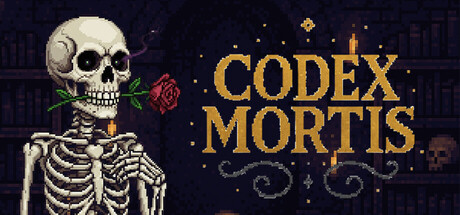
Compara los precios de CODEX MORTIS en tiendas de claves de confianza y encuentra la mejor oferta. Desarrollado por GROLAF. Publicado por CRUNCHFEST. Lanzado el 26/3/2026. Disponible en PC, Linux. Géneros: Action, Indie, RPG, Early Access.

Raises undead armies across five dark magic schools in a Vampire Survivors-style loop, but the headline isn't the necromancy - it's that every pixel, note, and line of code was generated by AI, and that choice divides every person who plays it.

I went in trying hard to ignore the origin story - the "made entirely by AI" banner plastered on every storefront tile - and just play the game. That turned out to be impossible, and not because the gameplay is bad. It's because the origin story is, genuinely, the most interesting thing here, and the mechanics are interesting enough on their own terms to make that a real shame. What you actually do in Codex Mortis is plan a build before each run, then watch it either snowball beautifully or collapse in the first wave. Five schools of dark magic - Necromancy, Summoning, Blood Magic, Soul Magic, and Curses - each bring their own flavour, and the cross-school combinations are where the game earns its keep. Pairing Blood Magic with Necromancy to ignite corpse explosions feels genuinely clever on paper, and when it triggers on a packed screen it produces that satisfying chaos the genre lives for. The pre-run squad assembly, where you slot in heroes and lock in your spell loadout before a single enemy spawns, adds a light tactical layer that most Vampire Survivors imitators skip entirely. On eight procedurally generated levels with three distinct modes - an escape run chasing tomes before an immortal pursuer reaches you, a direct boss confrontation, and an endless grind for artifacts - there is enough structural variety to sustain a weekend of sessions. The post-launch Mutations update added 249 modifications spread across 31 skills, with a rarity system that scales from single-skill Common upgrades all the way to Mythic cards that touch five skills at once with randomised stats. That is a lot of build surface for a title this small, and it meaningfully raises the ceiling above what the Early Access launch offered. The developer has shipped patches at a pace that suggests genuine commitment to the community feedback loop, which is worth noting for anyone weighing an Early Access purchase. Now for the part I cannot talk around. The visuals carry the specific muddy, indistinct quality that AI-generated art tends to produce - enemies blend together in dark fantasy silhouettes, and while a post-launch patch added proper character animation (the launch build had essentially none), the art direction still feels assembled rather than drawn. The soundtrack sets an appropriate dark-fantasy tone without leaving any impression once you close the game. As someone who cares deeply about handcraft and intentional soundscape, I find that genuinely melancholy. The game functions. The loop clicks. But there is a hollowness where authorial voice usually sits, and no number of spell synergies fully fills it. Several Steam reviewers describe the same nagging feeling: the game intrigues you and then something remains stubbornly absent. Who is this for, then? Survivor-genre collectors who want more build depth than the average clone, players curious about where AI-assisted development actually lands in practice right now, or anyone who just wants a cheap local co-op session with a necromancy skin. If you have strong feelings about AI-generated art displacing human artists, the developer is upfront that everything - code, visuals, music, text - came from AI tools, and that transparency should be taken seriously before you spend money. For everyone else, Codex Mortis is a mechanically solid Early Access entry that patches quickly and asks an uncomfortable question about what we value in the games we play. Kai, Scout Team

CODEX MORTIS
ActionIndieRPGEarly Access

CODEX MORTIS

26 mar 2026GROLAFCRUNCHFEST
GamerScout opina

Raises undead armies across five dark magic schools in a Vampire Survivors-style loop, but the headline isn't the necromancy - it's that every pixel, note, and line of code was generated by AI, and that choice divides every person who plays it.

PCLinux
Steam Deck Verified
Mejor precio disponible
€0.00
en N/A
Mínimo histórico: €2.49

Comparar precios(0 tiendas)

Cargando precios...

We may earn a commission when you buy games through links on this page — at no extra cost to you. It never affects our rankings or verdicts.

Historial de precios

Historical low
€2.495 Jun 2026
Keyshops
€2.29€2.42€2.56€2.695 Jun11 Jun17 Jun22 Jun28 Jun
Tracking prices since 5 Jun 2026
Create alert

Capturas y multimedia

Acerca de CODEX MORTIS

I went in trying hard to ignore the origin story - the "made entirely by AI" banner plastered on every storefront tile - and just play the game. That turned out to be impossible, and not because the gameplay is bad. It's because the origin story is, genuinely, the most interesting thing here, and the mechanics are interesting enough on their own terms to make that a real shame. What you actually do in Codex Mortis is plan a build before each run, then watch it either snowball beautifully or collapse in the first wave. Five schools of dark magic - Necromancy, Summoning, Blood Magic, Soul Magic, and Curses - each bring their own flavour, and the cross-school combinations are where the game earns its keep. Pairing Blood Magic with Necromancy to ignite corpse explosions feels genuinely clever on paper, and when it triggers on a packed screen it produces that satisfying chaos the genre lives for. The pre-run squad assembly, where you slot in heroes and lock in your spell loadout before a single enemy spawns, adds a light tactical layer that most Vampire Survivors imitators skip entirely. On eight procedurally generated levels with three distinct modes - an escape run chasing tomes before an immortal pursuer reaches you, a direct boss confrontation, and an endless grind for artifacts - there is enough structural variety to sustain a weekend of sessions. The post-launch Mutations update added 249 modifications spread across 31 skills, with a rarity system that scales from single-skill Common upgrades all the way to Mythic cards that touch five skills at once with randomised stats. That is a lot of build surface for a title this small, and it meaningfully raises the ceiling above what the Early Access launch offered. The developer has shipped patches at a pace that suggests genuine commitment to the community feedback loop, which is worth noting for anyone weighing an Early Access purchase. Now for the part I cannot talk around. The visuals carry the specific muddy, indistinct quality that AI-generated art tends to produce - enemies blend together in dark fantasy silhouettes, and while a post-launch patch added proper character animation (the launch build had essentially none), the art direction still feels assembled rather than drawn. The soundtrack sets an appropriate dark-fantasy tone without leaving any impression once you close the game. As someone who cares deeply about handcraft and intentional soundscape, I find that genuinely melancholy. The game functions. The loop clicks. But there is a hollowness where authorial voice usually sits, and no number of spell synergies fully fills it. Several Steam reviewers describe the same nagging feeling: the game intrigues you and then something remains stubbornly absent. Who is this for, then? Survivor-genre collectors who want more build depth than the average clone, players curious about where AI-assisted development actually lands in practice right now, or anyone who just wants a cheap local co-op session with a necromancy skin. If you have strong feelings about AI-generated art displacing human artists, the developer is upfront that everything - code, visuals, music, text - came from AI tools, and that transparency should be taken seriously before you spend money. For everyone else, Codex Mortis is a mechanically solid Early Access entry that patches quickly and asks an uncomfortable question about what we value in the games we play.

Kai
Kai · Scout Team

Indie & narrative

Etiquetas

singleplayermultiplayercooplocal-coopachievementscontroller-supportcloud-savestier:sub-5Pre-Run Build PlanningSchool Synergy SystemMutation UpgradesAI-Generated ContentNecromancer ClassBoss Chase ModeArtifact Meta-ProgressionCouch Co-op

Requisitos del sistema

Mínimos

OS
Windows 11
Memory
4 GB RAM
Storage
140 MB available space
Graphics
NVIDIA GeForce GTX 650 / AMD Radeon HD 7750 / Intel HD Graphics 4000 / 1 GB VRAM
Processor
Intel Core i3-2100 / AMD FX-4300
Sound Card
Any

Recomendados

Requires a 64-bit processor and operating system

Sigue explorando

Community Discussion

Be the first to comment on CODEX MORTIS.

Reseñas y valoraciones

No hay valoraciones disponibles

Información del juego

Desarrolladora
GROLAF
Distribuidora
CRUNCHFEST
Fecha de lanzamiento
26 mar 2026

Alerta de precio

¡Recibe un aviso cuando el precio baje de tu objetivo!

Crear alerta

Compra mejor: guías útiles

Preguntas frecuentes sobre CODEX MORTIS

¿Cuánto cuesta CODEX MORTIS?

El precio de CODEX MORTIS cambia a menudo y varía según la tienda, la edición y la región. La tabla de precios en vivo de esta página compara las ofertas más baratas en stock de tiendas de claves de confianza como Eneba y Kinguin, para que siempre veas el precio más bajo actual antes de comprar.

¿Dónde puedo comprar CODEX MORTIS más barato?

Compara los precios de CODEX MORTIS en todas las tiendas verificadas en la tabla de precios de esta página. Listamos las ofertas de claves y tiendas más baratas en stock, actualizadas con frecuencia, para que siempre veas la mejor oferta actual antes de comprar.

¿En qué plataformas está disponible CODEX MORTIS?

CODEX MORTIS está disponible en PC, Linux.

¿Cuándo se lanzó CODEX MORTIS?

CODEX MORTIS se lanzó el 26 de marzo de 2026.

¿Quién desarrolló CODEX MORTIS?

CODEX MORTIS fue desarrollado por GROLAF y publicado por CRUNCHFEST.