Compara los precios de Closer the Distance en tiendas de claves de confianza y encuentra la mejor oferta. Desarrollado por Osmotic Studios. Publicado por Skybound Games. Lanzado el 1/8/2024. Disponible en PC, Xbox. Géneros: Casual, Indie, Simulation. Puntuación Metacritic: 85/100.

Playing a ghost who can only nudge the living, not command them, is the most honest grief simulator I've seen packaged as a life-management game. An 11-hour gut-punch with real replay teeth.

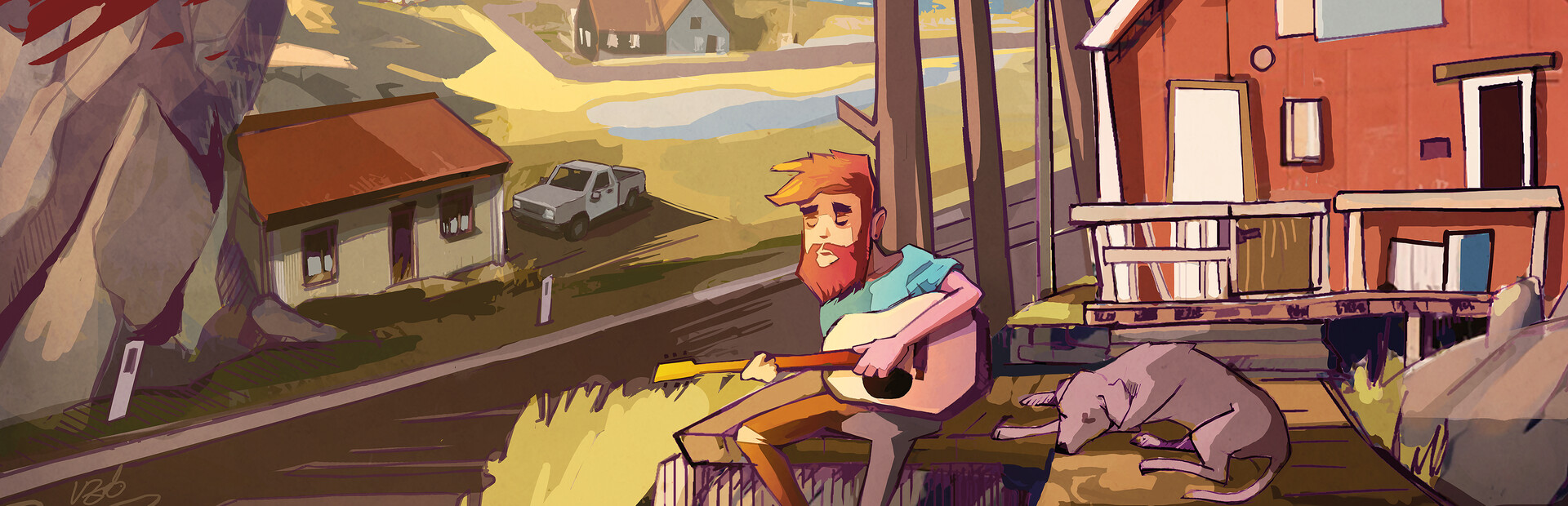
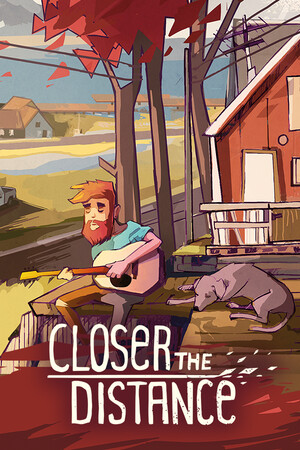
I don't usually gravitate toward life sims, but Closer the Distance caught me off-guard with a structural hook I hadn't seen before: you are dead before the tutorial ends. You play as Angela, a young woman from the small town of Yesterby, killed in a car accident, who persists as an invisible presence trying to hold her community together from beyond. That premise alone earns Osmotic Studios attention, but what keeps the game interesting is how honestly it translates the powerlessness of grief into mechanical form. The core loop sits somewhere between The Sims and a point-and-click adventure, viewed from a rotatable isometric camera where house walls turn transparent to reveal whoever you're watching. You start by influencing Angela's younger sister Conny, the only person who can actually hear Angela's voice, and from there the web expands to include characters like Zek (Angela's boyfriend, guilt-ridden and itching to leave town), physician Galya, and a cast of roughly thirteen townspeople with their own daily routines, need bars, and emotional states. You manage hunger, sleep, self-care, and emotional metrics for each character you're allowed to touch, but the ceiling is capped at five directly influenced characters at any point, which critics noted was a deliberate design choice rather than a shortcoming. You can suggest actions; you cannot force them. When a character's personality conflicts with your guidance, they simply push back, and watching a well-intentioned nudge snowball into a worse outcome is the game's most quietly devastating trick. The time-management layer is real and can stress players who prefer contemplative pacing. Multiple conversations fire simultaneously, and you physically cannot watch all of them at once, so information gaps accumulate. A rewind feature and day-restart option soften the edges for players who want a cleaner narrative pass, but the built-in chaos is part of the point: life in Yesterby does not pause for you to process your feelings. Critics split on this. Some found the urgency an inspired ludonarrative choice; a smaller contingent felt the context-switching clashed with the slow, mournful tone. Both reads are defensible. Where the game earns its 85 Metacritic score and near-89% positive Steam rating is in its writing and voice work. Characters like Conny, Melville (the isolated carpenter burning through alcohol and renovation projects), and River (the project manager haunted by a friend's opposition) feel written, not generated. A single playthrough runs roughly eleven hours, and the choices-matter architecture gives a second run genuine variation rather than cosmetic difference. The autumnal visual style, described by multiple reviewers as a more angular Kentucky Route Zero, and a strong voice cast round out a presentation that punches above its budget. The camera occasionally gets tangled when switching characters quickly, and some players flagged performance choppiness, worth noting if you are on a lower-spec machine (minimum asks for an i5-6600K and a Radeon R9 270-class GPU). For the audience asking whether this is worth buying right now: if you finished Disco Elysium's emotional beats and wished someone would attach them to a lighter management layer, or if Life is Strange's community focus resonated with you, this belongs in the cart. Pure systems players chasing optimization loops will find the action vocabulary too narrow. But Osmotic Studios built something that sits in a category of its own, and that is a genuinely rare thing to say about a sim. Diego, Scout Team

Closer the Distance

Closer the Distance

1 ago 2024Osmotic StudiosSkybound Games
GamerScout opina

Playing a ghost who can only nudge the living, not command them, is the most honest grief simulator I've seen packaged as a life-management game. An 11-hour gut-punch with real replay teeth.

PCXbox
Steam Deck Playable
Mejor precio disponible
€0.00
en N/A
Mínimo histórico: €7.28

Comparar precios(0 tiendas)

Cargando precios...

We may earn a commission when you buy games through links on this page — at no extra cost to you. It never affects our rankings or verdicts.

Historial de precios

Historical low
€7.2823 Jun 2026
Keyshops
€6.78€7.17€7.57€7.968 Jun13 Jun18 Jun23 Jun28 Jun
Tracking prices since 8 Jun 2026
Create alert

Capturas y multimedia

Acerca de Closer the Distance

I don't usually gravitate toward life sims, but Closer the Distance caught me off-guard with a structural hook I hadn't seen before: you are dead before the tutorial ends. You play as Angela, a young woman from the small town of Yesterby, killed in a car accident, who persists as an invisible presence trying to hold her community together from beyond. That premise alone earns Osmotic Studios attention, but what keeps the game interesting is how honestly it translates the powerlessness of grief into mechanical form. The core loop sits somewhere between The Sims and a point-and-click adventure, viewed from a rotatable isometric camera where house walls turn transparent to reveal whoever you're watching. You start by influencing Angela's younger sister Conny, the only person who can actually hear Angela's voice, and from there the web expands to include characters like Zek (Angela's boyfriend, guilt-ridden and itching to leave town), physician Galya, and a cast of roughly thirteen townspeople with their own daily routines, need bars, and emotional states. You manage hunger, sleep, self-care, and emotional metrics for each character you're allowed to touch, but the ceiling is capped at five directly influenced characters at any point, which critics noted was a deliberate design choice rather than a shortcoming. You can suggest actions; you cannot force them. When a character's personality conflicts with your guidance, they simply push back, and watching a well-intentioned nudge snowball into a worse outcome is the game's most quietly devastating trick. The time-management layer is real and can stress players who prefer contemplative pacing. Multiple conversations fire simultaneously, and you physically cannot watch all of them at once, so information gaps accumulate. A rewind feature and day-restart option soften the edges for players who want a cleaner narrative pass, but the built-in chaos is part of the point: life in Yesterby does not pause for you to process your feelings. Critics split on this. Some found the urgency an inspired ludonarrative choice; a smaller contingent felt the context-switching clashed with the slow, mournful tone. Both reads are defensible. Where the game earns its 85 Metacritic score and near-89% positive Steam rating is in its writing and voice work. Characters like Conny, Melville (the isolated carpenter burning through alcohol and renovation projects), and River (the project manager haunted by a friend's opposition) feel written, not generated. A single playthrough runs roughly eleven hours, and the choices-matter architecture gives a second run genuine variation rather than cosmetic difference. The autumnal visual style, described by multiple reviewers as a more angular Kentucky Route Zero, and a strong voice cast round out a presentation that punches above its budget. The camera occasionally gets tangled when switching characters quickly, and some players flagged performance choppiness, worth noting if you are on a lower-spec machine (minimum asks for an i5-6600K and a Radeon R9 270-class GPU). For the audience asking whether this is worth buying right now: if you finished Disco Elysium's emotional beats and wished someone would attach them to a lighter management layer, or if Life is Strange's community focus resonated with you, this belongs in the cart. Pure systems players chasing optimization loops will find the action vocabulary too narrow. But Osmotic Studios built something that sits in a category of its own, and that is a genuinely rare thing to say about a sim.

Diego
Diego · Scout Team

Strategy & simulation

Etiquetas

singleplayerachievementscontroller-supportcloud-savestier:aaaGrief NarrativeIndirect ControlTime ManagementReplayable ChoicesIsometric Life SimCommunity ManagementShort PlaythroughVoice-Acted

Requisitos del sistema

Mínimos

OS
Windows 10
Memory
8 GB RAM
DirectX
Version 11
Graphics
AMD Radeon r9 200
Processor
Intel Core i5-6600K

Recomendados

OS
Windows 10
Memory
16 GB RAM
DirectX
Version 11
Graphics
Nvidia GeForce RTX 2070
Processor
AMD Ryzen 7 2700

Sigue explorando

Community Discussion

Be the first to comment on Closer the Distance.

Reseñas y valoraciones

Metacritic
85

Información del juego

Desarrolladora
Osmotic Studios
Distribuidora
Skybound Games
Fecha de lanzamiento
1 ago 2024

Alerta de precio

¡Recibe un aviso cuando el precio baje de tu objetivo!

Crear alerta

Más de Osmotic Studios

Compra mejor: guías útiles

Closer the Distance en directo en Twitch

¿Buscas más? Mira juegos como Closer the Distance →

Preguntas frecuentes sobre Closer the Distance

¿Cuánto cuesta Closer the Distance?

El precio de Closer the Distance cambia a menudo y varía según la tienda, la edición y la región. La tabla de precios en vivo de esta página compara las ofertas más baratas en stock de tiendas de claves de confianza como Eneba y Kinguin, para que siempre veas el precio más bajo actual antes de comprar.

¿Dónde puedo comprar Closer the Distance más barato?

Compara los precios de Closer the Distance en todas las tiendas verificadas en la tabla de precios de esta página. Listamos las ofertas de claves y tiendas más baratas en stock, actualizadas con frecuencia, para que siempre veas la mejor oferta actual antes de comprar.

¿En qué plataformas está disponible Closer the Distance?

Closer the Distance está disponible en PC, Xbox.

¿Cuándo se lanzó Closer the Distance?

Closer the Distance se lanzó el 1 de agosto de 2024.

¿Quién desarrolló Closer the Distance?

Closer the Distance fue desarrollado por Osmotic Studios y publicado por Skybound Games.

¿Merece la pena comprar Closer the Distance?

Closer the Distance tiene una puntuación Metacritic de 85/100, lo que lo convierte en uno de los títulos destacados de Casual. Mira las reseñas completas, las valoraciones y los tiempos de duración en esta página para decidir.