
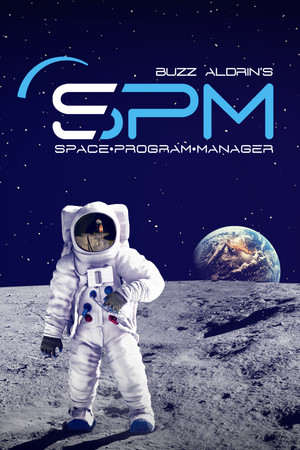
Compara los precios de Buzz Aldrin's Space Program Manager en tiendas de claves de confianza y encuentra la mejor oferta. Desarrollado por Polar Motion. Publicado por Slitherine Ltd.. Lanzado el 31/10/2014. Disponible en PC. Géneros: Simulation, Strategy. Puntuación Metacritic: 62/100.

Cold War bureaucracy has never been this tense: manage budgets, train SET teams, and sweat through mission animations knowing one bad roll can ground your lunar program for two seasons.

My first honest reaction to Space Program Manager was surprise at how much of it lives in personnel rosters rather than rockets. You are running a turn-based agency director sim set from the mid-1950s through the Moon landing era, and the core loop is relentlessly administrative: recruit and cycle Scientists, Engineers, and Technicians through training pipelines, sink R&D funds into hardware reliability ratings, build out your Vehicle Assembly Building and Mission Control Center, then watch a mission animation and either cheer or reload. Each in-game year runs across four seasonal turns, so every decision about whether to advance a staffer to higher training now - losing their output for several seasons - or keep them productive carries real opportunity cost. That tension between short-term throughput and long-term capability is the best thing the game does. The agency choice is the first meaningful fork. NASA and the Soviet Space Agency play as a direct race, with prestige firsts (first satellite, first man in orbit, first spacewalk) mattering as much as the lunar landing itself. Skip a milestone and your subsequent mission safety ratings take a hit - the game does communicate risk escalation clearly, even if it lacks the explicit tech-tree map that would make the sequencing obvious at a glance. The third option, the fictional Global Space Agency, swaps Cold War rivalry for a politician-driven objective system, which suits players who want a sandbox feel without the competitive clock. The PBEM multiplayer uses Slitherine's email relay system, which is a genuinely dated implementation by modern standards - async online lobbies this is not - but it works for the niche audience that wants to race a friend to the Sea of Tranquility over the course of a few weeks. The historical content is a genuine strength. Research objects span real programs like Gemini, Vostok, and the Apollo capsule alongside theoretical hardware that never cleared the drawing board, and each entry carries detailed technical notes developed in consultation with Dr. Buzz Aldrin himself. For anyone who has spent time reading about the Space Race, this is a legitimately impressive reference layer baked into the game. Mission control sequences produce real suspense - watching safety percentages tick up season by season and then finally committing to a launch never fully loses its tension. The soundtrack provides separate playlists per agency, a small touch that reinforces the Cold War atmosphere without being intrusive. The weaknesses are real and worth naming. The in-game tutorial is either absent or so wordy it functions as a roadblock depending on the version you play, and multiple reviewers have noted needing to run the PDF manual on a second screen just to keep track of systems. The UI navigation is clunky - menu pathing is not always intuitive, and the absence of sorting tools when evaluating new hires is an odd omission for a game built around personnel numbers. Visually, the base map is static and functional rather than engaging, and the mission animations - while carrying emotional weight - pass quickly enough that veteran BARIS players will miss the slower tension build of the 1993 original. The Metacritic score of 62 reflects critics who weighed the interface problems heavily; the 74% positive Steam user figure reflects the dedicated community who found the subject matter worth the friction. For newcomers to management sims, SPM is actually an accessible entry point despite its rough edges, as long as you accept the manual as part of the experience rather than evidence of bad design. The turn structure prevents decision overload, and the seasonal rhythm means you are never juggling more than a handful of active programs at once. Treat it like a light grand-strategy rather than a slick tycoon title and the pacing clicks. Veterans of the 1993 BARIS will find a faithful, expanded successor that has not caught up to a decade of UI conventions - but if the space race is your subject matter, that trade-off is probably acceptable. Diego, Scout Team

Buzz Aldrin's Space Program Manager

Buzz Aldrin's Space Program Manager

31 oct 2014Polar MotionSlitherine Ltd.
GamerScout opina

Cold War bureaucracy has never been this tense: manage budgets, train SET teams, and sweat through mission animations knowing one bad roll can ground your lunar program for two seasons.

PC
Steam Deck PlayableProtonDB Platinum
Mejor precio disponible
€0.00
en N/A
Mínimo histórico: €1.11

Comparar precios(0 tiendas)

Cargando precios...

We may earn a commission when you buy games through links on this page — at no extra cost to you. It never affects our rankings or verdicts.

Historial de precios

Historical low
€1.1110 Jun 2026
Keyshops
€1.02€1.08€1.14€1.2010 Jun15 Jun19 Jun24 Jun28 Jun
Tracking prices since 10 Jun 2026
Create alert

Capturas y multimedia

Acerca de Buzz Aldrin's Space Program Manager

My first honest reaction to Space Program Manager was surprise at how much of it lives in personnel rosters rather than rockets. You are running a turn-based agency director sim set from the mid-1950s through the Moon landing era, and the core loop is relentlessly administrative: recruit and cycle Scientists, Engineers, and Technicians through training pipelines, sink R&D funds into hardware reliability ratings, build out your Vehicle Assembly Building and Mission Control Center, then watch a mission animation and either cheer or reload. Each in-game year runs across four seasonal turns, so every decision about whether to advance a staffer to higher training now - losing their output for several seasons - or keep them productive carries real opportunity cost. That tension between short-term throughput and long-term capability is the best thing the game does. The agency choice is the first meaningful fork. NASA and the Soviet Space Agency play as a direct race, with prestige firsts (first satellite, first man in orbit, first spacewalk) mattering as much as the lunar landing itself. Skip a milestone and your subsequent mission safety ratings take a hit - the game does communicate risk escalation clearly, even if it lacks the explicit tech-tree map that would make the sequencing obvious at a glance. The third option, the fictional Global Space Agency, swaps Cold War rivalry for a politician-driven objective system, which suits players who want a sandbox feel without the competitive clock. The PBEM multiplayer uses Slitherine's email relay system, which is a genuinely dated implementation by modern standards - async online lobbies this is not - but it works for the niche audience that wants to race a friend to the Sea of Tranquility over the course of a few weeks. The historical content is a genuine strength. Research objects span real programs like Gemini, Vostok, and the Apollo capsule alongside theoretical hardware that never cleared the drawing board, and each entry carries detailed technical notes developed in consultation with Dr. Buzz Aldrin himself. For anyone who has spent time reading about the Space Race, this is a legitimately impressive reference layer baked into the game. Mission control sequences produce real suspense - watching safety percentages tick up season by season and then finally committing to a launch never fully loses its tension. The soundtrack provides separate playlists per agency, a small touch that reinforces the Cold War atmosphere without being intrusive. The weaknesses are real and worth naming. The in-game tutorial is either absent or so wordy it functions as a roadblock depending on the version you play, and multiple reviewers have noted needing to run the PDF manual on a second screen just to keep track of systems. The UI navigation is clunky - menu pathing is not always intuitive, and the absence of sorting tools when evaluating new hires is an odd omission for a game built around personnel numbers. Visually, the base map is static and functional rather than engaging, and the mission animations - while carrying emotional weight - pass quickly enough that veteran BARIS players will miss the slower tension build of the 1993 original. The Metacritic score of 62 reflects critics who weighed the interface problems heavily; the 74% positive Steam user figure reflects the dedicated community who found the subject matter worth the friction. For newcomers to management sims, SPM is actually an accessible entry point despite its rough edges, as long as you accept the manual as part of the experience rather than evidence of bad design. The turn structure prevents decision overload, and the seasonal rhythm means you are never juggling more than a handful of active programs at once. Treat it like a light grand-strategy rather than a slick tycoon title and the pacing clicks. Veterans of the 1993 BARIS will find a faithful, expanded successor that has not caught up to a decade of UI conventions - but if the space race is your subject matter, that trade-off is probably acceptable.

Diego
Diego · Scout Team

Strategy & simulation

Etiquetas

singleplayermultiplayerpvponline-pvptrading-cardstier:sub-5Turn-Based ManagementCold WarSpace RacePersonnel ManagementPBEM MultiplayerHistorical AccuracyAgency DirectorResource Allocation

Requisitos del sistema

Mínimos

OS
Windows Vista/7/8/10, Windows Server 2008/2003
Memory
2 GB RAM
Storage
3 GB available space
Graphics
256MB Video RAM
Processor
Intel Core Duo 1.33GHz or faster processor (or equivalent)

Sigue explorando

Community Discussion

Be the first to comment on Buzz Aldrin's Space Program Manager.

Reseñas y valoraciones

Metacritic
62

Información del juego

Desarrolladora
Polar Motion
Distribuidora
Slitherine Ltd.
Fecha de lanzamiento
31 oct 2014

Alerta de precio

¡Recibe un aviso cuando el precio baje de tu objetivo!

Crear alerta

Compra mejor: guías útiles

¿Buscas más? Mira juegos como Buzz Aldrin's Space Program Manager →

Preguntas frecuentes sobre Buzz Aldrin's Space Program Manager

¿Cuánto cuesta Buzz Aldrin's Space Program Manager?

El precio de Buzz Aldrin's Space Program Manager cambia a menudo y varía según la tienda, la edición y la región. La tabla de precios en vivo de esta página compara las ofertas más baratas en stock de tiendas de claves de confianza como Eneba y Kinguin, para que siempre veas el precio más bajo actual antes de comprar.

¿Dónde puedo comprar Buzz Aldrin's Space Program Manager más barato?

Compara los precios de Buzz Aldrin's Space Program Manager en todas las tiendas verificadas en la tabla de precios de esta página. Listamos las ofertas de claves y tiendas más baratas en stock, actualizadas con frecuencia, para que siempre veas la mejor oferta actual antes de comprar.

¿En qué plataformas está disponible Buzz Aldrin's Space Program Manager?

Buzz Aldrin's Space Program Manager está disponible en PC.

¿Cuándo se lanzó Buzz Aldrin's Space Program Manager?

Buzz Aldrin's Space Program Manager se lanzó el 31 de octubre de 2014.

¿Quién desarrolló Buzz Aldrin's Space Program Manager?

Buzz Aldrin's Space Program Manager fue desarrollado por Polar Motion y publicado por Slitherine Ltd..

¿Merece la pena comprar Buzz Aldrin's Space Program Manager?

Buzz Aldrin's Space Program Manager tiene una puntuación Metacritic de 62/100, lo que lo convierte en uno de los títulos destacados de Simulation. Mira las reseñas completas, las valoraciones y los tiempos de duración en esta página para decidir.