Compara los precios de Bounty Train en tiendas de claves de confianza y encuentra la mejor oferta. Desarrollado por Corbie Games. Publicado por Daedalic Entertainment. Lanzado el 16/5/2017. Disponible en PC, Mac. Géneros: Indie, Simulation, Strategy. Puntuación Metacritic: 66/100.

A genuinely clever mix of Wild West trading, RPG crew management, and real-time train combat that lands a Metacritic 66 for honest reasons - but hits a satisfying groove for patient sim fans willing to learn the market.

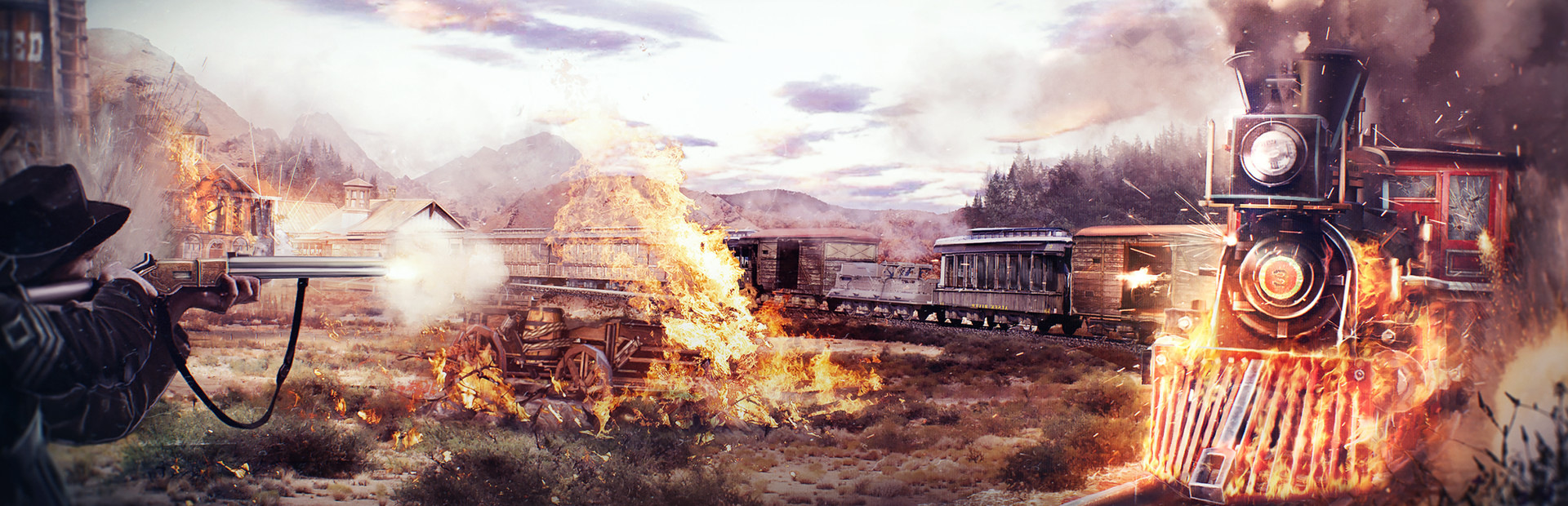
I went in expecting a shallow train-themed curiosity and came out twenty hours later with a colour-coded notebook on which cities buy cotton versus which ones spike steel prices during Confederate blockades. Bounty Train is primarily a trade simulation set across the Eastern United States during the Civil War era, and if you approach it that way - rather than as a combat-forward action game - a surprising amount of depth opens up. You start as Walter Reed with an 11% stake in the family railway company, beginning in Maine with an underpowered engine, and your long-term goal is acquiring a controlling 51% stake before the antagonist Cornelius beats you to it. That clock ticking in the background is what keeps the economy from feeling like idle busywork. The trading layer is where the game earns its keep. Each city runs its own supply-and-demand economy, and critically, the political climate of the Civil War actively shifts what counts as contraband and where prices spike. Cargo carriages have real weight limits measured in tons, so loading up on steel means leaving lighter, cheaper goods behind. Smuggling compartments can be unlocked to move illegal goods through Union checkpoints, and mixing contraband in with legal stock is an actual mechanic for reducing detection odds. The faction system adds another variable: four groups - the Iroquois, the Confederates, the United States Army, and roving bandits - all track your reputation independently, and standing with one affects how the others treat you on the rails. For a Metacritic 66 title, that is a surprising amount of interlocking systems. The difficulty curve is where things get divisive, and fair enough. There are five difficulty modes, from an honestly-named Baby Mode up to Impossible, which strips out saves entirely. The problem is that the game never properly teaches you the market logic that makes the difference between winning and grinding to a halt. Timed contracts are plentiful and punishing - fail a delivery and you lose money plus reputation in both origin and destination cities, and reputation low enough earns you a local bounty. Early-game engines are underpowered, which means the armoured carriages, gatling gun cars, and mortar wagons you want to experiment with have to wait until you can afford a locomotive that can actually pull the weight. That early stretch is where most negative reviews are born. Push through it on a lower difficulty and the mid-game trade loop becomes genuinely addictive. Combat is the weakest pillar, and most critics agree on this. It runs real-time with pause, asks you to position crew members so their vision cones cover the enemy waves, manage coal stoking, and repair fire damage simultaneously. In theory that is tense; in practice the outcomes swing heavily on enemy loadout randomness. A gang carrying incendiary rounds against a train hauling flammable goods is a near-instant loss regardless of tactics. By late game, once you have a mortar carriage and upgraded crew stats, the balance flips the other way and fights become trivial. The character progression system attached to your crew is deeper than it has any right to be - each hired hand can develop up to three skills across strength, agility, and intellect archetypes - but the combat itself never quite rewards that investment the way it should. The better strategic move is usually just paying bandits off and protecting your timetable. The game even lets you do exactly that, which says something about how seriously it takes combat as a core loop. Visually the game sits in a colourful, semi-cartoonish style that reads well at a glance, with a day-night cycle that affects what services are open in each city. The campaign offers a non-linear story structure with side quests that expand playtime, and a separate freemode gives sandbox players a way to ignore the main objective entirely. Modding support is present, though the community around it is small. At a sub-5 dollar price tier this is not a hard sell for anyone who likes the FTL-adjacent structure of managing limited resources across a timed run, but go in knowing the trading spreadsheet is the game, not the gunfights. Diego, Scout Team

Bounty Train

Bounty Train

16 may 2017Corbie GamesDaedalic Entertainment
GamerScout opina

A genuinely clever mix of Wild West trading, RPG crew management, and real-time train combat that lands a Metacritic 66 for honest reasons - but hits a satisfying groove for patient sim fans willing to learn the market.

PCMac
Steam Deck PlayableProtonDB Gold
Mejor precio disponible
€0.00
en N/A
Mínimo histórico: €0.41

Comparar precios(0 tiendas)

Cargando precios...

We may earn a commission when you buy games through links on this page — at no extra cost to you. It never affects our rankings or verdicts.

Historial de precios

Historical low
€0.4110 Jun 2026
Keyshops
€0.38€0.40€0.42€0.4410 Jun15 Jun19 Jun24 Jun28 Jun
Tracking prices since 10 Jun 2026
Create alert

Capturas y multimedia

Acerca de Bounty Train

I went in expecting a shallow train-themed curiosity and came out twenty hours later with a colour-coded notebook on which cities buy cotton versus which ones spike steel prices during Confederate blockades. Bounty Train is primarily a trade simulation set across the Eastern United States during the Civil War era, and if you approach it that way - rather than as a combat-forward action game - a surprising amount of depth opens up. You start as Walter Reed with an 11% stake in the family railway company, beginning in Maine with an underpowered engine, and your long-term goal is acquiring a controlling 51% stake before the antagonist Cornelius beats you to it. That clock ticking in the background is what keeps the economy from feeling like idle busywork. The trading layer is where the game earns its keep. Each city runs its own supply-and-demand economy, and critically, the political climate of the Civil War actively shifts what counts as contraband and where prices spike. Cargo carriages have real weight limits measured in tons, so loading up on steel means leaving lighter, cheaper goods behind. Smuggling compartments can be unlocked to move illegal goods through Union checkpoints, and mixing contraband in with legal stock is an actual mechanic for reducing detection odds. The faction system adds another variable: four groups - the Iroquois, the Confederates, the United States Army, and roving bandits - all track your reputation independently, and standing with one affects how the others treat you on the rails. For a Metacritic 66 title, that is a surprising amount of interlocking systems. The difficulty curve is where things get divisive, and fair enough. There are five difficulty modes, from an honestly-named Baby Mode up to Impossible, which strips out saves entirely. The problem is that the game never properly teaches you the market logic that makes the difference between winning and grinding to a halt. Timed contracts are plentiful and punishing - fail a delivery and you lose money plus reputation in both origin and destination cities, and reputation low enough earns you a local bounty. Early-game engines are underpowered, which means the armoured carriages, gatling gun cars, and mortar wagons you want to experiment with have to wait until you can afford a locomotive that can actually pull the weight. That early stretch is where most negative reviews are born. Push through it on a lower difficulty and the mid-game trade loop becomes genuinely addictive. Combat is the weakest pillar, and most critics agree on this. It runs real-time with pause, asks you to position crew members so their vision cones cover the enemy waves, manage coal stoking, and repair fire damage simultaneously. In theory that is tense; in practice the outcomes swing heavily on enemy loadout randomness. A gang carrying incendiary rounds against a train hauling flammable goods is a near-instant loss regardless of tactics. By late game, once you have a mortar carriage and upgraded crew stats, the balance flips the other way and fights become trivial. The character progression system attached to your crew is deeper than it has any right to be - each hired hand can develop up to three skills across strength, agility, and intellect archetypes - but the combat itself never quite rewards that investment the way it should. The better strategic move is usually just paying bandits off and protecting your timetable. The game even lets you do exactly that, which says something about how seriously it takes combat as a core loop. Visually the game sits in a colourful, semi-cartoonish style that reads well at a glance, with a day-night cycle that affects what services are open in each city. The campaign offers a non-linear story structure with side quests that expand playtime, and a separate freemode gives sandbox players a way to ignore the main objective entirely. Modding support is present, though the community around it is small. At a sub-5 dollar price tier this is not a hard sell for anyone who likes the FTL-adjacent structure of managing limited resources across a timed run, but go in knowing the trading spreadsheet is the game, not the gunfights.

Diego
Diego · Scout Team

Strategy & simulation

Etiquetas

singleplayerachievementstrading-cardstier:sub-5Civil War SettingTrade Route OptimizationCrew RPG ProgressionReal-Time With Pause CombatFaction Reputation SystemTimed ContractsSmuggling MechanicsRoguelite StructureWeight Management

Requisitos del sistema

Mínimos

OS
Windows 7 SP1
Memory
4 GB RAM
DirectX
Version 9.0c
Storage
2 GB available space
Graphics
AMD Radeon HD 6570, GeForce 9600 GT or higher
Processor
2.5 GHz Dual Core CPU
Sound Card
DirectX 9.0c Compatible Sound Card with Latest Drivers

Recomendados

OS
Windows 7 SP1, Windows 8 (32/64 bit versions), Windows 10
Memory
6 GB RAM
DirectX
Version 9.0c
Storage
2 GB available space
Graphics
AMD Radeon HD 6570, GeForce 9600 GT or higher
Processor
2.8 GHz Multi Core CPU
Sound Card
DirectX 9.0c Compatible Sound Card with Latest Drivers

DLC y complementos de Bounty Train1

Expansiones, packs de DLC y contenido adicional de este juego. Haz clic en cualquier elemento para ver las ofertas de las tiendas.

Sigue explorando

Community Discussion

Be the first to comment on Bounty Train.

Reseñas y valoraciones

Metacritic
66

Información del juego

Desarrolladora
Corbie Games
Distribuidora
Daedalic Entertainment
Fecha de lanzamiento
16 may 2017

Alerta de precio

¡Recibe un aviso cuando el precio baje de tu objetivo!

Crear alerta

Más de Corbie Games

Compra mejor: guías útiles

¿Buscas más? Mira juegos como Bounty Train →

Preguntas frecuentes sobre Bounty Train

¿Cuánto cuesta Bounty Train?

El precio de Bounty Train cambia a menudo y varía según la tienda, la edición y la región. La tabla de precios en vivo de esta página compara las ofertas más baratas en stock de tiendas de claves de confianza como Eneba y Kinguin, para que siempre veas el precio más bajo actual antes de comprar.

¿Dónde puedo comprar Bounty Train más barato?

Compara los precios de Bounty Train en todas las tiendas verificadas en la tabla de precios de esta página. Listamos las ofertas de claves y tiendas más baratas en stock, actualizadas con frecuencia, para que siempre veas la mejor oferta actual antes de comprar.

¿En qué plataformas está disponible Bounty Train?

Bounty Train está disponible en PC, Mac.

¿Cuándo se lanzó Bounty Train?

Bounty Train se lanzó el 16 de mayo de 2017.

¿Quién desarrolló Bounty Train?

Bounty Train fue desarrollado por Corbie Games y publicado por Daedalic Entertainment.

¿Merece la pena comprar Bounty Train?

Bounty Train tiene una puntuación Metacritic de 66/100, lo que lo convierte en uno de los títulos destacados de Indie. Mira las reseñas completas, las valoraciones y los tiempos de duración en esta página para decidir.