Compara los precios de Big Journey to Home en tiendas de claves de confianza y encuentra la mejor oferta. Desarrollado por The Light Sword Team. Publicado por The Light Sword Team. Lanzado el 20/8/2015. Disponible en PC, Mac, Linux. Géneros: Indie, RPG, Strategy.

Forty-six percent positive across fifteen Steam reviews tells you most of what you need to know: a solo-dev puzzle-action curiosity worth a look only if you treat it as a modest indie experiment, not a strategy staple.

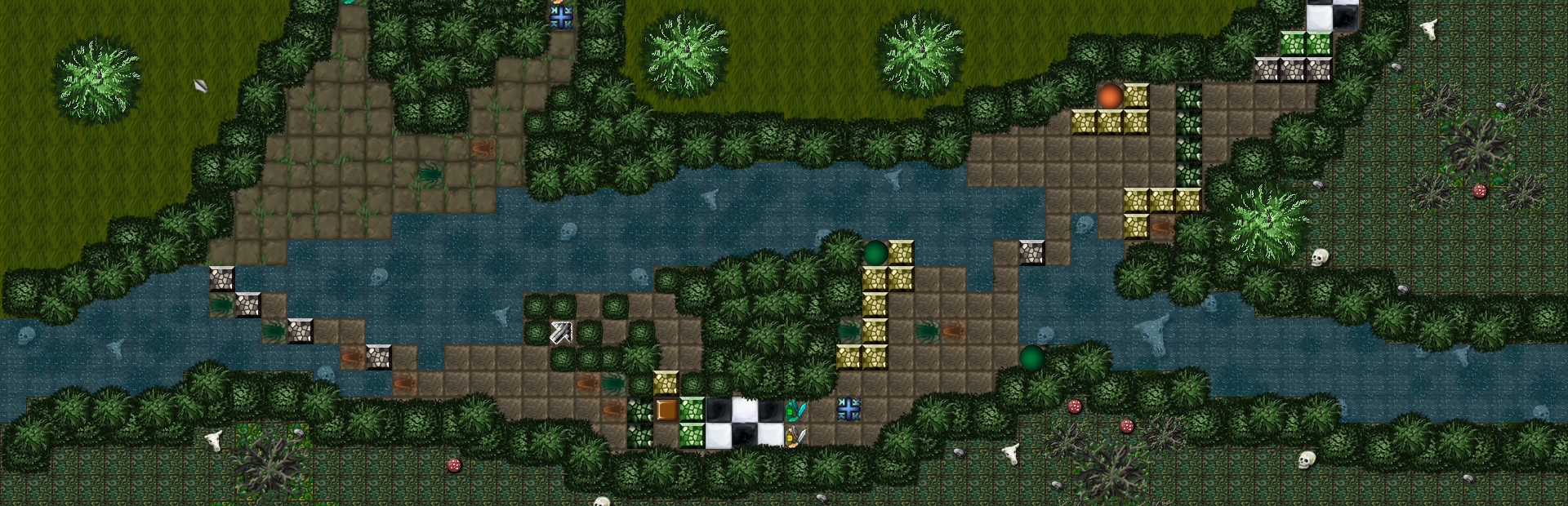
My spreadsheet instincts kicked in the moment I read the tags on this one: RPG, Strategy, Puzzle, Level Editor, Difficult. That combo usually signals meaningful decision-making. What Big Journey to Home actually delivers is closer to a turn-adjacent action-puzzler where you guide Jake through themed biomes - forests, underground tunnels, ice caves, and deserts - slicing through roaches, scorpions, lizards, and the occasional hamster with a single melee blade. The core mechanic is movement-based threat management: monsters stay passive while Jake stands still, so every step is a micro-commitment. On paper that sounds like it rewards planning. In practice, with a small pool of enemy types and limited mechanical variation between zones, the tension deflates faster than you'd hope. The depth ceiling is low, and I want to be straight about that. A Hardcore difficulty mode exists and does apply real pressure, demanding full attention rather than cautious plodding through the standard campaign. There are also Steam Leaderboards and 31 achievements if you want structured goals beyond simply reaching the credits. The built-in level editor is the most genuinely interesting hook for a strategy-minded player - the ability to construct and share custom puzzle rooms adds an open-ended creative layer that the base campaign does not sustain on its own. Co-op is present too, including online and LAN options with cross-platform support, and a separate two-character co-op story lets Jake's brother join the trip. A later update added 40 single-player "Side Story" rooms that previously required two players, which was a sensible quality-of-life move from the sole remaining developer. The development story is worth knowing before you commit. This game was built over roughly five years with a rotating cast of contributors, eventually down to one person: Vyacheslav "Silver Sword" Mironov. That context explains a lot - the uneven production values, the modest scope, and also the quiet dedication evident in post-launch patches that fixed co-op crashes, redesigned dialogue display, and added Apple Silicon support years after the original release. It is a passion project, not a polished commercial release, and the mixed Steam reception (hovering just below half positive from a very small sample) reflects an audience that picked it up expecting more than it offers at its genre label's face value. For the strategy crowd specifically: do not arrive expecting build diversity, faction asymmetry, or any meaningful resource economy. The "Strategy" tag on Steam is doing heavy lifting for what amounts to positional puzzle logic with light combat. If you approach it as a short indie puzzle-action title with a level editor and some co-op value, the expectation gap closes considerably. Newcomers to the game will find the premise accessible - movement rules are simple, the blade is your only tool, and enemy behavior is readable once you spend ten minutes with the patterns. The Hardcore mode is where any staying power lives for players who want to actually sweat. Bottom line: this is a micro-budget solo-dev project with a creative core idea that never quite scales into the strategy depth its tags suggest. The level editor, co-op story mode, and Hardcore difficulty are the three reasons to consider it. The shallow campaign and thin enemy roster are the two reasons to temper expectations hard. Diego, Scout Team

Big Journey to Home

Big Journey to Home

20 ago 2015The Light Sword Team
GamerScout opina

Forty-six percent positive across fifteen Steam reviews tells you most of what you need to know: a solo-dev puzzle-action curiosity worth a look only if you treat it as a modest indie experiment, not a strategy staple.

PCMacLinux
Mejor precio disponible
€0.00
en N/A
Mínimo histórico: €1.10

Comparar precios(0 tiendas)

Cargando precios...

We may earn a commission when you buy games through links on this page — at no extra cost to you. It never affects our rankings or verdicts.

Historial de precios

Historical low
€1.109 Jun 2026
Keyshops
€1.01€1.07€1.13€1.199 Jun14 Jun19 Jun23 Jun28 Jun
Tracking prices since 9 Jun 2026
Create alert

Capturas y multimedia

Acerca de Big Journey to Home

My spreadsheet instincts kicked in the moment I read the tags on this one: RPG, Strategy, Puzzle, Level Editor, Difficult. That combo usually signals meaningful decision-making. What Big Journey to Home actually delivers is closer to a turn-adjacent action-puzzler where you guide Jake through themed biomes - forests, underground tunnels, ice caves, and deserts - slicing through roaches, scorpions, lizards, and the occasional hamster with a single melee blade. The core mechanic is movement-based threat management: monsters stay passive while Jake stands still, so every step is a micro-commitment. On paper that sounds like it rewards planning. In practice, with a small pool of enemy types and limited mechanical variation between zones, the tension deflates faster than you'd hope. The depth ceiling is low, and I want to be straight about that. A Hardcore difficulty mode exists and does apply real pressure, demanding full attention rather than cautious plodding through the standard campaign. There are also Steam Leaderboards and 31 achievements if you want structured goals beyond simply reaching the credits. The built-in level editor is the most genuinely interesting hook for a strategy-minded player - the ability to construct and share custom puzzle rooms adds an open-ended creative layer that the base campaign does not sustain on its own. Co-op is present too, including online and LAN options with cross-platform support, and a separate two-character co-op story lets Jake's brother join the trip. A later update added 40 single-player "Side Story" rooms that previously required two players, which was a sensible quality-of-life move from the sole remaining developer. The development story is worth knowing before you commit. This game was built over roughly five years with a rotating cast of contributors, eventually down to one person: Vyacheslav "Silver Sword" Mironov. That context explains a lot - the uneven production values, the modest scope, and also the quiet dedication evident in post-launch patches that fixed co-op crashes, redesigned dialogue display, and added Apple Silicon support years after the original release. It is a passion project, not a polished commercial release, and the mixed Steam reception (hovering just below half positive from a very small sample) reflects an audience that picked it up expecting more than it offers at its genre label's face value. For the strategy crowd specifically: do not arrive expecting build diversity, faction asymmetry, or any meaningful resource economy. The "Strategy" tag on Steam is doing heavy lifting for what amounts to positional puzzle logic with light combat. If you approach it as a short indie puzzle-action title with a level editor and some co-op value, the expectation gap closes considerably. Newcomers to the game will find the premise accessible - movement rules are simple, the blade is your only tool, and enemy behavior is readable once you spend ten minutes with the patterns. The Hardcore mode is where any staying power lives for players who want to actually sweat. Bottom line: this is a micro-budget solo-dev project with a creative core idea that never quite scales into the strategy depth its tags suggest. The level editor, co-op story mode, and Hardcore difficulty are the three reasons to consider it. The shallow campaign and thin enemy roster are the two reasons to temper expectations hard.

Diego
Diego · Scout Team

Strategy & simulation

Etiquetas

singleplayermultiplayercooponline-coopcross-platformachievementstrading-cardscloud-savestier:sub-5Level EditorTurn-Adjacent PuzzlerHardcore ModeOnline Co-opLAN Co-opSolo DevMelee CombatBiome ProgressionCommunity Levels

Requisitos del sistema

Mínimos

OS
Windows Vista or up
Memory
512 MB RAM
DirectX
Version 11
Storage
60 MB available space
Graphics
DirectX 9-supported videocard, 128MB VRAM
Processor
Intel Pentium III/AMD or newer

Sigue explorando

Community Discussion

Be the first to comment on Big Journey to Home.

Reseñas y valoraciones

No hay valoraciones disponibles

Información del juego

Desarrolladora
The Light Sword Team
Distribuidora
The Light Sword Team
Fecha de lanzamiento
20 ago 2015

Alerta de precio

¡Recibe un aviso cuando el precio baje de tu objetivo!

Crear alerta

Compra mejor: guías útiles

Preguntas frecuentes sobre Big Journey to Home

¿Cuánto cuesta Big Journey to Home?

El precio de Big Journey to Home cambia a menudo y varía según la tienda, la edición y la región. La tabla de precios en vivo de esta página compara las ofertas más baratas en stock de tiendas de claves de confianza como Eneba y Kinguin, para que siempre veas el precio más bajo actual antes de comprar.

¿Dónde puedo comprar Big Journey to Home más barato?

Compara los precios de Big Journey to Home en todas las tiendas verificadas en la tabla de precios de esta página. Listamos las ofertas de claves y tiendas más baratas en stock, actualizadas con frecuencia, para que siempre veas la mejor oferta actual antes de comprar.

¿En qué plataformas está disponible Big Journey to Home?

Big Journey to Home está disponible en PC, Mac, Linux.

¿Cuándo se lanzó Big Journey to Home?

Big Journey to Home se lanzó el 20 de agosto de 2015.

¿Quién desarrolló Big Journey to Home?

Big Journey to Home fue desarrollado por The Light Sword Team.