Compara los precios de Aztech Forgotten Gods en tiendas de claves de confianza y encuentra la mejor oferta. Desarrollado por Lienzo. Publicado por Lienzo. Lanzado el 10/3/2022. Disponible en PC, Xbox. Géneros: Action, Adventure, Indie.

A Mexican indie studio pours genuine cultural love into a futuristic Tenochtitlan, then asks you to fight gods with a mechanical fist. The setting earns its place in your memory; the controls will test your patience getting there.

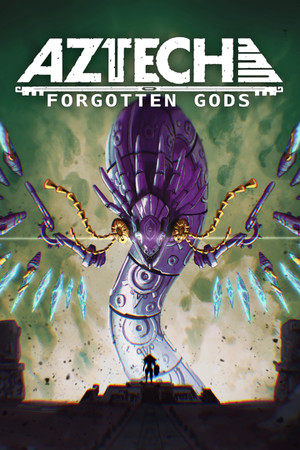
I went into this one rooting hard for Lienzo. Their previous game, Mulaka, earned real indie-scene respect for how carefully it handled indigenous culture, and Aztech Forgotten Gods carries that same sincerity into an entirely different register: a gleaming, alternate-history Aztec metropolis where colonization never happened, and the city of Tenochtitlan grew into a neon-lit technological superpower. That premise alone is worth the price of admission for anyone exhausted by the thousandth Norse-mythology action game. The world design reflects genuine love. The Mesoamerican gods you eventually face are imposing and distinct, their silhouettes pulling from ancient iconography rather than generic fantasy tropes, and the soundtrack leans into something almost ceremonial-heavy that makes those colossal encounters feel appropriately weighted. The central mechanic is the Lightkeeper, a cyber-stone gauntlet Achtli inherits that functions as both weapon and travel device. At its best, blasting off vertically and arcing across the city produces a brief, genuine joy: reviewers have compared the traversal high to Spider-Man-style momentum, and when it clicks, it clicks hard. The gauntlet also upgrades over the course of the roughly seven-to-ten hour campaign, adding new abilities and stat boosts you purchase with gear-currency farmed from smaller enemy encounters. There are three difficulty settings, cosmetic customization for outfits and hairstyles, side challenges, and collectible stone-tablet memories scattered through the open world. The structure is familiar: defeat a Forgotten God, absorb its energy, upgrade the Lightkeeper, move to the next zone. That loop is lean and honest about what the game is. Here is where I have to be honest back. The moment-to-moment feel is rougher than the concept deserves. The camera is the most consistent offender: it frequently loses Achtli during airborne combat, drifts behind scenery during lock-on, and introduces a disorienting delay when the gauntlet zips her toward a target. Wall-running, meant to extend aerial traversal, is unreliable in a way that feels like a collision detection problem rather than an intentional skill curve. Combat itself bottoms out to mashing a single attack button; a timing-based system exists on paper but rarely demands precision because button-mashing accomplishes the same result. The story opens slowly and some players will find the first act heavy on cutscenes before the combat rhythm finds its footing. The character models lack the polish the world art suggests is possible, and the absence of full voice acting puts the entire narrative weight on text dialogue. And yet. The boss encounters themselves, those genuinely colossal fights against six-plus Forgotten Gods, each with distinct attack patterns and environmental weak-point mechanics, carry a Shadow of the Colossus-adjacent sense of scale that briefly elevates the whole thing. Achtli herself is a quietly layered character: grief, self-doubt, and a complicated mother-daughter relationship run underneath the action in ways that reward players who stay engaged with the story. The game ends on a stronger note than it begins, and if you can make peace with the rough controls, you will likely exit with more fondness than frustration. It plays best with a controller, and the PC mouse sensitivity requires manual DPI adjustment to behave at all, so treat a gamepad as mandatory rather than optional. Kai, Scout Team

Aztech Forgotten Gods

Aztech Forgotten Gods

10 mar 2022Lienzo
GamerScout opina

A Mexican indie studio pours genuine cultural love into a futuristic Tenochtitlan, then asks you to fight gods with a mechanical fist. The setting earns its place in your memory; the controls will test your patience getting there.

PCXbox
Steam Deck Verified
Mejor precio disponible
€0.00
en N/A
Mínimo histórico: €2.38

Comparar precios(0 tiendas)

Cargando precios...

We may earn a commission when you buy games through links on this page — at no extra cost to you. It never affects our rankings or verdicts.

Historial de precios

Historical low
€2.3826 Jun 2026
Keyshops
€2.35€2.44€2.53€2.625 Jun11 Jun17 Jun22 Jun28 Jun
Tracking prices since 5 Jun 2026
Create alert

Capturas y multimedia

Acerca de Aztech Forgotten Gods

I went into this one rooting hard for Lienzo. Their previous game, Mulaka, earned real indie-scene respect for how carefully it handled indigenous culture, and Aztech Forgotten Gods carries that same sincerity into an entirely different register: a gleaming, alternate-history Aztec metropolis where colonization never happened, and the city of Tenochtitlan grew into a neon-lit technological superpower. That premise alone is worth the price of admission for anyone exhausted by the thousandth Norse-mythology action game. The world design reflects genuine love. The Mesoamerican gods you eventually face are imposing and distinct, their silhouettes pulling from ancient iconography rather than generic fantasy tropes, and the soundtrack leans into something almost ceremonial-heavy that makes those colossal encounters feel appropriately weighted. The central mechanic is the Lightkeeper, a cyber-stone gauntlet Achtli inherits that functions as both weapon and travel device. At its best, blasting off vertically and arcing across the city produces a brief, genuine joy: reviewers have compared the traversal high to Spider-Man-style momentum, and when it clicks, it clicks hard. The gauntlet also upgrades over the course of the roughly seven-to-ten hour campaign, adding new abilities and stat boosts you purchase with gear-currency farmed from smaller enemy encounters. There are three difficulty settings, cosmetic customization for outfits and hairstyles, side challenges, and collectible stone-tablet memories scattered through the open world. The structure is familiar: defeat a Forgotten God, absorb its energy, upgrade the Lightkeeper, move to the next zone. That loop is lean and honest about what the game is. Here is where I have to be honest back. The moment-to-moment feel is rougher than the concept deserves. The camera is the most consistent offender: it frequently loses Achtli during airborne combat, drifts behind scenery during lock-on, and introduces a disorienting delay when the gauntlet zips her toward a target. Wall-running, meant to extend aerial traversal, is unreliable in a way that feels like a collision detection problem rather than an intentional skill curve. Combat itself bottoms out to mashing a single attack button; a timing-based system exists on paper but rarely demands precision because button-mashing accomplishes the same result. The story opens slowly and some players will find the first act heavy on cutscenes before the combat rhythm finds its footing. The character models lack the polish the world art suggests is possible, and the absence of full voice acting puts the entire narrative weight on text dialogue. And yet. The boss encounters themselves, those genuinely colossal fights against six-plus Forgotten Gods, each with distinct attack patterns and environmental weak-point mechanics, carry a Shadow of the Colossus-adjacent sense of scale that briefly elevates the whole thing. Achtli herself is a quietly layered character: grief, self-doubt, and a complicated mother-daughter relationship run underneath the action in ways that reward players who stay engaged with the story. The game ends on a stronger note than it begins, and if you can make peace with the rough controls, you will likely exit with more fondness than frustration. It plays best with a controller, and the PC mouse sensitivity requires manual DPI adjustment to behave at all, so treat a gamepad as mandatory rather than optional.

Kai
Kai · Scout Team

Indie & narrative

Etiquetas

singleplayerachievementscontroller-supportcloud-savestier:aaaIndigenous-FuturismBoss RushGauntlet CombatAerial TraversalAlternate History Sci-FiMesoamerican MythologyUpgrade ProgressionShort Campaign

Requisitos del sistema

Mínimos

OS
Windows 8
Memory
6 GB RAM
DirectX
Version 12
Storage
3 GB available space
Graphics
Intel iris Pro Graphics 580
Processor
Intel Core i5

Recomendados

OS
Windows 10
Memory
8 GB RAM
DirectX
Version 12
Storage
3 GB available space
Graphics
Nvidia GeForce GTX 780
Processor
Intel Core i7

Sigue explorando

Community Discussion

Be the first to comment on Aztech Forgotten Gods.

Reseñas y valoraciones

No hay valoraciones disponibles

Información del juego

Desarrolladora
Lienzo
Distribuidora
Lienzo
Fecha de lanzamiento
10 mar 2022

Alerta de precio

¡Recibe un aviso cuando el precio baje de tu objetivo!

Crear alerta

Más de Lienzo

Compra mejor: guías útiles

Preguntas frecuentes sobre Aztech Forgotten Gods

¿Cuánto cuesta Aztech Forgotten Gods?

El precio de Aztech Forgotten Gods cambia a menudo y varía según la tienda, la edición y la región. La tabla de precios en vivo de esta página compara las ofertas más baratas en stock de tiendas de claves de confianza como Eneba y Kinguin, para que siempre veas el precio más bajo actual antes de comprar.

¿Dónde puedo comprar Aztech Forgotten Gods más barato?

Compara los precios de Aztech Forgotten Gods en todas las tiendas verificadas en la tabla de precios de esta página. Listamos las ofertas de claves y tiendas más baratas en stock, actualizadas con frecuencia, para que siempre veas la mejor oferta actual antes de comprar.

¿En qué plataformas está disponible Aztech Forgotten Gods?

Aztech Forgotten Gods está disponible en PC, Xbox.

¿Cuándo se lanzó Aztech Forgotten Gods?

Aztech Forgotten Gods se lanzó el 10 de marzo de 2022.

¿Quién desarrolló Aztech Forgotten Gods?

Aztech Forgotten Gods fue desarrollado por Lienzo.