Compara los precios de Aggressors: Ancient Rome en tiendas de claves de confianza y encuentra la mejor oferta. Desarrollado por Kubat Software. Publicado por Kube Games. Lanzado el 30/8/2018. Disponible en PC. Géneros: Strategy. Puntuación Metacritic: 76/100.

Somewhere between Civilization and Europa Universalis lives a turn-based 4X that most strategy players never find - and the ones who do log 200-hour runs without blinking.

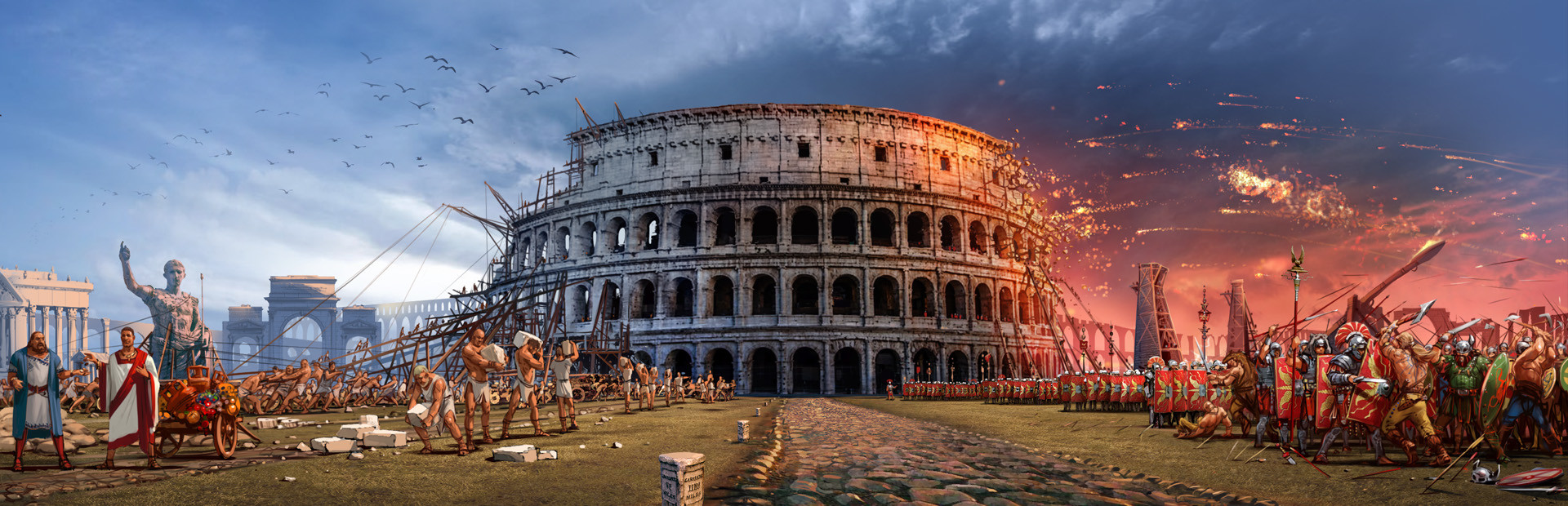
I keep a mental bracket for 4X games that punch well above their production budget, and Aggressors: Ancient Rome sits near the top of that list. Kubat Software, a small Czech indie team, released this in 2018 and it has been quietly eating the hours of anyone patient enough to get past the first few sessions. The pitch is a Mediterranean 4X starting in 282 BC with twenty factions ranging from Rome, Carthage, and Ptolemaic Egypt down to minor barbarian tribes clinging to the map's northern fringes - and the power asymmetry between those factions is not an afterthought, it is the engine that makes the whole thing run. The mechanical depth here is the real story. Territory is not claimed by cultural borders growing organically out of cities as in Civilization. Instead, you physically move military units onto tiles to claim them, or you negotiate annexation, confederation, and federation treaties through a diplomacy system that actually tracks historical faction relationships. Units carry morale modifiers that reflect their battlefield history against specific enemies - lose repeatedly to Carthage and your Roman legions will underperform against Carthaginian troops in future engagements. Supply lines through cities, naval units, and supply wagons all have to be managed on the strategic map. Buildings like blacksmiths and temples are placed on the open map to buff nearby mines and cities within their zone of influence - a spatial puzzle that sits entirely outside your city build queues. Stables produce mounted units, shipyards handle naval construction, and roads knit movement speed across your territory. State decisions, including motivational speeches or oracle consultations, add random positive or negative events that keep the mid-game from going stale. That is a lot of interlocking systems, and the game generally trusts you to learn them. For newcomers I will say this clearly: start with Rome, Carthage, or Ptolemaic Egypt because those three nations are the only ones that come with tutorial access, both a basic walkthrough and an advanced one. The game's complexity sits somewhere between Endless Space and Europa Universalis on the depth scale, and reviewers consistently note that the first three sessions feel opaque before the systems start clicking. The manual is real and worth skimming. The good news is that the AI is genuinely competitive - it does not cheat on resources, it maneuvers armies intelligently even on easier difficulty settings, and the late-game collapses into exactly the kind of two-or-three-superpower standoff that the historical period demands. There is no easy coast to victory, which makes finishing a run actually satisfying. The honest weaknesses are worth naming. Faction differentiation beyond starting position and unit groupings - Romans, Greeks, Barbarians, Persians, Carthaginians - is limited, which dulls the random-map generator mode faster than the handcrafted Ancient Mediterranean scenario. The UI has resolution scaling problems above 1080p, which is an irritating oversight that has not been fully corrected. Default mouse controls are inverted compared to genre convention - swap left-click and right-click actions in settings immediately, and selecting unit stacks remains fiddly regardless. Graphics and audio are functionally adequate but would look dated next to any mid-budget Paradox release. The mod ecosystem through the Steam Workshop exists and is active enough to extend playtime, though it has not grown into the sprawling community that would paper over the faction sameness issue entirely. The two-mode structure is worth understanding before you commit. The Ancient Mediterranean scenario is the stronger of the two: twenty factions starting from an asymmetric, historically grounded position where smaller nations have fog of war over most of the map while Rome starts fully revealed. The Customized World mode generates a random map and lets you dial parameters from opponent distribution to development levels - it functions more like a standard 4X scramble, and it is probably the better learning tool despite being the shallower long-term experience. Between the two modes, the Steam Workshop, and the replayability of trying different factions at vastly different power levels, the hour count can climb well past what most AAA releases offer. Diego, Scout Team

Aggressors: Ancient Rome

Aggressors: Ancient Rome

30 ago 2018Kubat SoftwareKube Games
GamerScout opina

Somewhere between Civilization and Europa Universalis lives a turn-based 4X that most strategy players never find - and the ones who do log 200-hour runs without blinking.

PC
Steam Deck UnsupportedProtonDB Bronze
Mejor precio disponible
€0.00
en N/A
Mínimo histórico: €12.90

Comparar precios(0 tiendas)

Cargando precios...

We may earn a commission when you buy games through links on this page — at no extra cost to you. It never affects our rankings or verdicts.

Historial de precios

Historical low
€12.908 Jun 2026
Keyshops
€11.87€12.56€13.24€13.938 Jun13 Jun18 Jun23 Jun28 Jun
Tracking prices since 8 Jun 2026
Create alert

Capturas y multimedia

Acerca de Aggressors: Ancient Rome

I keep a mental bracket for 4X games that punch well above their production budget, and Aggressors: Ancient Rome sits near the top of that list. Kubat Software, a small Czech indie team, released this in 2018 and it has been quietly eating the hours of anyone patient enough to get past the first few sessions. The pitch is a Mediterranean 4X starting in 282 BC with twenty factions ranging from Rome, Carthage, and Ptolemaic Egypt down to minor barbarian tribes clinging to the map's northern fringes - and the power asymmetry between those factions is not an afterthought, it is the engine that makes the whole thing run. The mechanical depth here is the real story. Territory is not claimed by cultural borders growing organically out of cities as in Civilization. Instead, you physically move military units onto tiles to claim them, or you negotiate annexation, confederation, and federation treaties through a diplomacy system that actually tracks historical faction relationships. Units carry morale modifiers that reflect their battlefield history against specific enemies - lose repeatedly to Carthage and your Roman legions will underperform against Carthaginian troops in future engagements. Supply lines through cities, naval units, and supply wagons all have to be managed on the strategic map. Buildings like blacksmiths and temples are placed on the open map to buff nearby mines and cities within their zone of influence - a spatial puzzle that sits entirely outside your city build queues. Stables produce mounted units, shipyards handle naval construction, and roads knit movement speed across your territory. State decisions, including motivational speeches or oracle consultations, add random positive or negative events that keep the mid-game from going stale. That is a lot of interlocking systems, and the game generally trusts you to learn them. For newcomers I will say this clearly: start with Rome, Carthage, or Ptolemaic Egypt because those three nations are the only ones that come with tutorial access, both a basic walkthrough and an advanced one. The game's complexity sits somewhere between Endless Space and Europa Universalis on the depth scale, and reviewers consistently note that the first three sessions feel opaque before the systems start clicking. The manual is real and worth skimming. The good news is that the AI is genuinely competitive - it does not cheat on resources, it maneuvers armies intelligently even on easier difficulty settings, and the late-game collapses into exactly the kind of two-or-three-superpower standoff that the historical period demands. There is no easy coast to victory, which makes finishing a run actually satisfying. The honest weaknesses are worth naming. Faction differentiation beyond starting position and unit groupings - Romans, Greeks, Barbarians, Persians, Carthaginians - is limited, which dulls the random-map generator mode faster than the handcrafted Ancient Mediterranean scenario. The UI has resolution scaling problems above 1080p, which is an irritating oversight that has not been fully corrected. Default mouse controls are inverted compared to genre convention - swap left-click and right-click actions in settings immediately, and selecting unit stacks remains fiddly regardless. Graphics and audio are functionally adequate but would look dated next to any mid-budget Paradox release. The mod ecosystem through the Steam Workshop exists and is active enough to extend playtime, though it has not grown into the sprawling community that would paper over the faction sameness issue entirely. The two-mode structure is worth understanding before you commit. The Ancient Mediterranean scenario is the stronger of the two: twenty factions starting from an asymmetric, historically grounded position where smaller nations have fog of war over most of the map while Rome starts fully revealed. The Customized World mode generates a random map and lets you dial parameters from opponent distribution to development levels - it functions more like a standard 4X scramble, and it is probably the better learning tool despite being the shallower long-term experience. Between the two modes, the Steam Workshop, and the replayability of trying different factions at vastly different power levels, the hour count can climb well past what most AAA releases offer.

Diego
Diego · Scout Team

Strategy & simulation

Etiquetas

singleplayerachievementsworkshoptier:aaaSupply Line ManagementFaction AsymmetryMap Tile ConquestHistorical DiplomacyAI-ChallengingOpen-Map BuildingsMorale SystemRandom Map GeneratorMediterranean SettingTutorial Gated

Requisitos del sistema

Mínimos

OS
Windows 10
Memory
2 GB RAM
DirectX
Version 9.0
Storage
1500 MB available space
Graphics
DirectX 9 class GPU with 1GB VRAM
Processor
Dual Core 2.0 GHz

Recomendados

OS
Windows 10 or later
Memory
8 GB RAM
DirectX
Version 9.0
Storage
1500 MB available space
Graphics
DirectX 9 class GPU with 2GB VRAM
Processor
Quad Core 2.5GHz

Sigue explorando

Community Discussion

Be the first to comment on Aggressors: Ancient Rome.

Reseñas y valoraciones

Metacritic
76

Información del juego

Desarrolladora
Kubat Software
Distribuidora
Kube Games
Fecha de lanzamiento
30 ago 2018

Alerta de precio

¡Recibe un aviso cuando el precio baje de tu objetivo!

Crear alerta

Compra mejor: guías útiles

¿Buscas más? Mira juegos como Aggressors: Ancient Rome →

Preguntas frecuentes sobre Aggressors: Ancient Rome

¿Cuánto cuesta Aggressors: Ancient Rome?

El precio de Aggressors: Ancient Rome cambia a menudo y varía según la tienda, la edición y la región. La tabla de precios en vivo de esta página compara las ofertas más baratas en stock de tiendas de claves de confianza como Eneba y Kinguin, para que siempre veas el precio más bajo actual antes de comprar.

¿Dónde puedo comprar Aggressors: Ancient Rome más barato?

Compara los precios de Aggressors: Ancient Rome en todas las tiendas verificadas en la tabla de precios de esta página. Listamos las ofertas de claves y tiendas más baratas en stock, actualizadas con frecuencia, para que siempre veas la mejor oferta actual antes de comprar.

¿En qué plataformas está disponible Aggressors: Ancient Rome?

Aggressors: Ancient Rome está disponible en PC.

¿Cuándo se lanzó Aggressors: Ancient Rome?

Aggressors: Ancient Rome se lanzó el 30 de agosto de 2018.

¿Quién desarrolló Aggressors: Ancient Rome?

Aggressors: Ancient Rome fue desarrollado por Kubat Software y publicado por Kube Games.

¿Merece la pena comprar Aggressors: Ancient Rome?

Aggressors: Ancient Rome tiene una puntuación Metacritic de 76/100, lo que lo convierte en uno de los títulos destacados de Strategy. Mira las reseñas completas, las valoraciones y los tiempos de duración en esta página para decidir.