Compare SimCity 4 (Deluxe Edition) prices across 50+ stores and find the best deal. Developed by EA - Maxis. Published by Electronic Arts Inc.. Released on 7/20/2010. Available on PC. Genres: Simulation, Strategy.

The deepest city-builder ever released by Maxis. SimCity 4 Deluxe hands you a region, a budget, and zero mercy, and it's still the genre benchmark two decades later.

SimCity 4 Deluxe Edition is a regional city-builder and infrastructure simulation from EA Maxis in which you sculpt terrain, zone land, lay utilities, manage a municipal budget, and watch decades of urban growth unfold across a tile-based region map. The Deluxe bundle packages in the Rush Hour expansion, which adds vehicle-level traffic simulation, the Network Addon Mod (NAM) compatibility groundwork, and a mission layer that gives early mayors something concrete to accomplish while they learn the zoning basics. This is not the friendly, paint-by-numbers city toy that later entries in the genre became. It is a systems-first simulation that will charge you for every road tile, punish over-zoning commercial before residential demand exists, and let your city silently collapse under a garbage crisis you forgot to budget for three in-game decades ago. The decision-making here is genuinely layered. You manage separate budgets for roads, transit, police, fire, education, health, and utilities, and each line item has ripple effects on your desirability overlays - the color-coded maps that tell you why the high-density residential zones in the northeast quadrant are stubbornly staying at low wealth. Plopping a mayor's house and a few bus lines is not enough; you need to understand the traffic demand curve, the relationship between mass transit funding and commute times, and why industrial zones need direct highway access or your commercial sector will strangle. For players coming from modern builders, the learning curve is a genuine wall. For players willing to consult the data overlays methodically, it is one of the most satisfying feedback loops in strategy gaming. The region system is where the game's longevity lives. A single region holds dozens of city tiles, and neighboring cities share power, water, workers, and tax revenue through inter-city deals. A well-optimized region becomes a macro-strategy puzzle on top of the micro city management: you might run one industrial tile at a loss deliberately to feed cheap residential labor to three adjacent commercial hubs. That kind of multi-tile thinking is rare in the genre and gives the game a grand-strategy flavor that its contemporaries never matched. The Rush Hour missions add structured early goals, but experienced players will skip them quickly and go straight to sandbox region play, which is where the real 200-hour sessions happen. The honest downsides are real and you should know them before buying. The vanilla AI pathfinding is old and the traffic simulation without the community-built Network Addon Mod (NAM) will frustrate anyone who cares about realistic transit. NAM is a free, massive third-party mod that effectively fixes the base game's routing logic, and it is essentially mandatory for serious play - the fact that a community mod is required to make the core simulation work correctly is a legitimate criticism. Installation on modern Windows can also require a compatibility patch or the GOG version adjustments; the Steam release runs but occasionally needs a widescreen fix. None of this is insurmountable, and the modding ecosystem that has grown around this title is one of the most dedicated in PC gaming history, covering custom buildings, terrain textures, transit types, and region packs. Treat the base game as a platform, not a finished product, and the investment pays off at a depth few city-builders ever reach. For newcomers who bounced off older entries or are arriving from Cities: Skylines, the right approach is to start small: pick a medium-sized region tile, follow the demand indicators honestly, and do not try to build a subway before your population hits 100k. The game will teach you its logic if you read the overlays instead of ignoring them. It respects your intelligence enough to give you data rather than handholding, and that is exactly the right call for a simulation with this much under the hood. Diego, Scout Team

SimCity 4 (Deluxe Edition)
SimulationStrategy

SimCity 4 (Deluxe Edition)

Jul 20, 2010EA - MaxisElectronic Arts Inc.
GamerScout Says

The deepest city-builder ever released by Maxis. SimCity 4 Deluxe hands you a region, a budget, and zero mercy, and it's still the genre benchmark two decades later.

PC
Best Price Available
0.00
at N/A
Historical low: $

Compare Prices(0 stores)

Loading prices...

We may earn a commission when you buy games through links on this page — at no extra cost to you. It never affects our rankings or verdicts.

Screenshots & Media
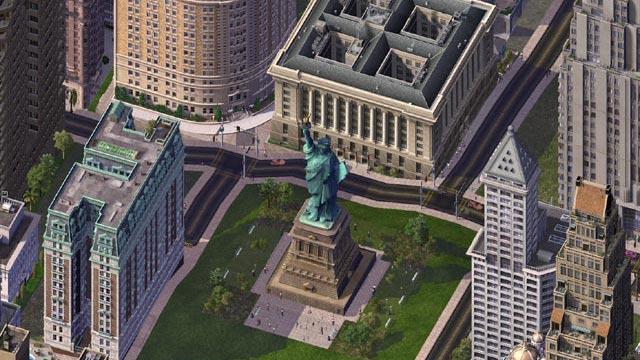
Screenshot

About SimCity 4 (Deluxe Edition)

SimCity 4 Deluxe Edition is a regional city-builder and infrastructure simulation from EA Maxis in which you sculpt terrain, zone land, lay utilities, manage a municipal budget, and watch decades of urban growth unfold across a tile-based region map. The Deluxe bundle packages in the Rush Hour expansion, which adds vehicle-level traffic simulation, the Network Addon Mod (NAM) compatibility groundwork, and a mission layer that gives early mayors something concrete to accomplish while they learn the zoning basics. This is not the friendly, paint-by-numbers city toy that later entries in the genre became. It is a systems-first simulation that will charge you for every road tile, punish over-zoning commercial before residential demand exists, and let your city silently collapse under a garbage crisis you forgot to budget for three in-game decades ago. The decision-making here is genuinely layered. You manage separate budgets for roads, transit, police, fire, education, health, and utilities, and each line item has ripple effects on your desirability overlays - the color-coded maps that tell you why the high-density residential zones in the northeast quadrant are stubbornly staying at low wealth. Plopping a mayor's house and a few bus lines is not enough; you need to understand the traffic demand curve, the relationship between mass transit funding and commute times, and why industrial zones need direct highway access or your commercial sector will strangle. For players coming from modern builders, the learning curve is a genuine wall. For players willing to consult the data overlays methodically, it is one of the most satisfying feedback loops in strategy gaming. The region system is where the game's longevity lives. A single region holds dozens of city tiles, and neighboring cities share power, water, workers, and tax revenue through inter-city deals. A well-optimized region becomes a macro-strategy puzzle on top of the micro city management: you might run one industrial tile at a loss deliberately to feed cheap residential labor to three adjacent commercial hubs. That kind of multi-tile thinking is rare in the genre and gives the game a grand-strategy flavor that its contemporaries never matched. The Rush Hour missions add structured early goals, but experienced players will skip them quickly and go straight to sandbox region play, which is where the real 200-hour sessions happen. The honest downsides are real and you should know them before buying. The vanilla AI pathfinding is old and the traffic simulation without the community-built Network Addon Mod (NAM) will frustrate anyone who cares about realistic transit. NAM is a free, massive third-party mod that effectively fixes the base game's routing logic, and it is essentially mandatory for serious play - the fact that a community mod is required to make the core simulation work correctly is a legitimate criticism. Installation on modern Windows can also require a compatibility patch or the GOG version adjustments; the Steam release runs but occasionally needs a widescreen fix. None of this is insurmountable, and the modding ecosystem that has grown around this title is one of the most dedicated in PC gaming history, covering custom buildings, terrain textures, transit types, and region packs. Treat the base game as a platform, not a finished product, and the investment pays off at a depth few city-builders ever reach. For newcomers who bounced off older entries or are arriving from Cities: Skylines, the right approach is to start small: pick a medium-sized region tile, follow the demand indicators honestly, and do not try to build a subway before your population hits 100k. The game will teach you its logic if you read the overlays instead of ignoring them. It respects your intelligence enough to give you data rather than handholding, and that is exactly the right call for a simulation with this much under the hood. Diego, Scout Team

Tags

steamRegional PlanningBudget ManagementTraffic SimulationModdableSandbox City-BuilderInfrastructure ManagementLong-Session StrategyDemand Overlay System

System Requirements

System requirements for SimCity 4 (Deluxe Edition) aren't listed yet. Check the store page for the latest specs.

Reviews & Ratings

Steam
82%(9,687)

Game Info

Developer
EA - Maxis
Publisher
Electronic Arts Inc.
Release Date
Jul 20, 2010

Price Alert

Get notified when the price drops below your target!

Create Alert

More from EA - Maxis