Compara los precios de Wizardry 8 en tiendas de claves de confianza y encuentra la mejor oferta. Desarrollado por Sir-Tech Canada. Publicado por Drecom Co., Ltd.. Lanzado el 10/9/2013. Disponible en PC, Mac. Géneros: Adventure, RPG. Puntuación Metacritic: 85/100.

Fifteen classes, eleven races, a parser-based dialogue system, and combat that will punish you for blinking: Wizardry 8 is old-school dungeon crawling at its most uncompromising, and it still holds up.

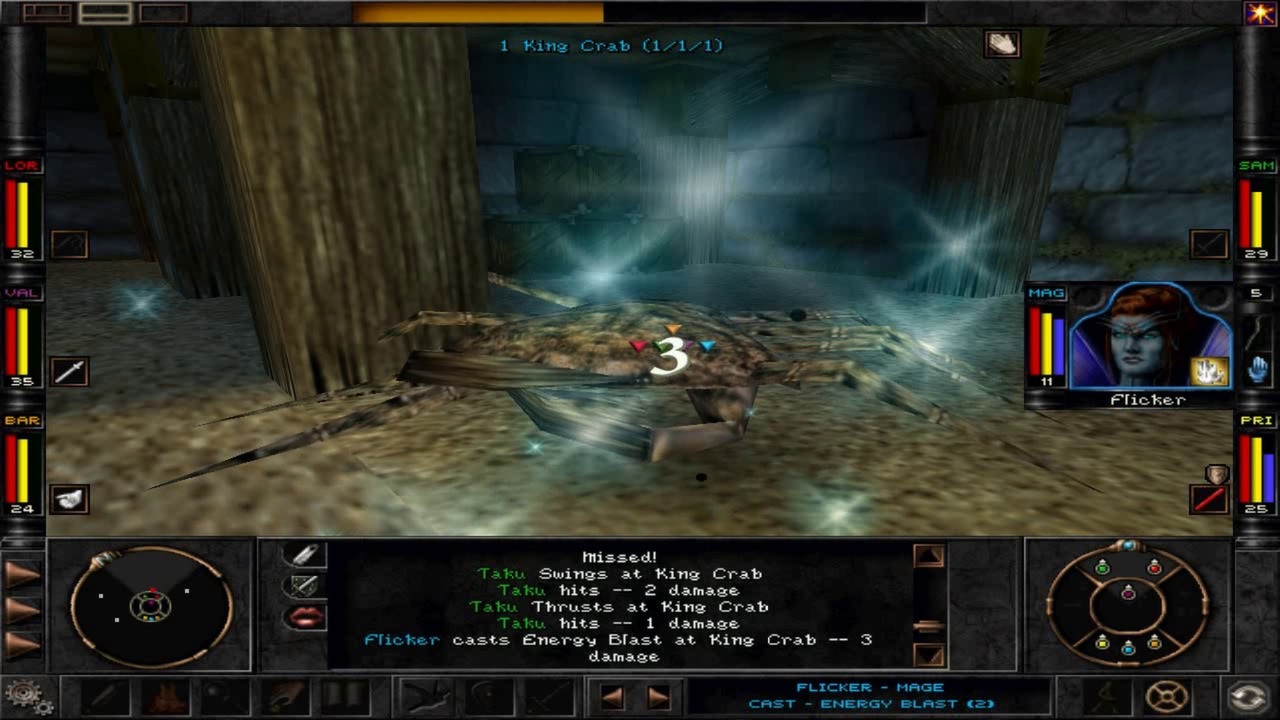
I have a soft spot for RPGs that treat you like an adult who can read a manual, and Wizardry 8 is one of the most extreme examples of that philosophy ever committed to a hard drive. This is a first-person, party-based CRPG that closes out Sir-Tech's original Wizardry trilogy, and it asks you to bring your full attention from the first screen of character creation onward. Build your party wrong and the game will not tell you. It will just quietly make your life miserable for sixty hours. The character creation system alone is a rabbit hole worth losing an afternoon to. You pick from fifteen classes and eleven races, each combination genuinely shifting how your run plays out. A Faerie Ninja and a human Samurai are not cosmetically different choices; they play completely differently, and the multiclassing system adds another layer on top of that for veterans who want to optimize past the point of sanity. Classes like the Gadgeteer, who can combine items into new tools, and the Bishop, who can access all four spellbooks at the cost of being a generalist, reward players who read deeply and plan ahead. The party formation system matters too: you place your front-row fighters, protect your mage in the center, position your Ranger in back to cover rear threats, and then live with those consequences once combat starts. Speaking of combat, the game offers both a phased mode, where you issue orders and watch initiative resolve in sequence, and a continuous mode that blends real-time movement with tactical pausing. Status effects are the real currency of survival here. Sleeping, blinding, paralyzing, hexing, and nauseating enemies is far more effective than raw fireball damage, especially later in the game when monster HP pools become genuinely absurd. Pre-battle buff spells like Armor Plate, Enchanted Blade, and Magic Screen cycling into each other become a whole metagame of their own. What Wizardry 8 does better than almost anything from its era is make the world feel reactive. Dialogue with NPCs is parser-based, meaning you type keywords to ask questions rather than selecting from a menu. There are no dialogue trees to click through; the game expects you to pay attention to what characters say and figure out what to ask next. It is one of the most immersive conversation systems in any RPG I have encountered, even if it demands patience from players raised on modern quest markers. The world of Dominus, with its warring alien factions like the T'Rang and the Umpani, leans hard into the series' signature blend of sword-and-sorcery fantasy with hard science fiction, and that tonal mix remains genuinely distinctive decades on. Now for the honest part. The monster respawn system is the game's biggest recurring friction point. Wandering enemies in many zones do come back, and chaining from one depleted fight into another with no recovery window is a real possibility on normal difficulty and above. Iron Man mode exists for those who want true punishment, and the easy setting smooths things out considerably, but the mid-game especially can tip from challenging into tedious when enemy groups swell to unreasonable sizes. Combat pacing also runs slow, which is a product of the initiative resolution system being genuinely complex under the hood. There is a reason the community spent years reverse-engineering the exact formulas. The late-game balance tilts noticeably toward magic resistance and raw melee power, so parties that leaned heavily into elemental offensive casters may find the final stretch rougher than expected. None of that changes the core truth: Wizardry 8 is one of the last great examples of a style of RPG that basically no longer exists. If you bounced off it because of the UI or the pacing, try the easy difficulty and give the parser dialogue a genuine chance. If you have ever wanted a CRPG that treats party-building as a puzzle worth forty hours of refinement, this is one of the best ever made at exactly that thing. Monika, Scout Team

Wizardry 8

Wizardry 8

10 sept 2013Sir-Tech CanadaDrecom Co., Ltd.
GamerScout opina

Fifteen classes, eleven races, a parser-based dialogue system, and combat that will punish you for blinking: Wizardry 8 is old-school dungeon crawling at its most uncompromising, and it still holds up.

PCMac
Steam Deck UnsupportedProtonDB Gold
Mejor precio disponible
€0.00
en N/A
Mínimo histórico: €3.51

Comparar precios(0 tiendas)

Cargando precios...

We may earn a commission when you buy games through links on this page — at no extra cost to you. It never affects our rankings or verdicts.

Historial de precios

Historical low
€3.5116 Jun 2026
Keyshops
€3.24€4.17€5.11€6.045 Jun11 Jun17 Jun22 Jun28 Jun
Tracking prices since 5 Jun 2026
Create alert

Capturas y multimedia

Captura

Acerca de Wizardry 8

I have a soft spot for RPGs that treat you like an adult who can read a manual, and Wizardry 8 is one of the most extreme examples of that philosophy ever committed to a hard drive. This is a first-person, party-based CRPG that closes out Sir-Tech's original Wizardry trilogy, and it asks you to bring your full attention from the first screen of character creation onward. Build your party wrong and the game will not tell you. It will just quietly make your life miserable for sixty hours. The character creation system alone is a rabbit hole worth losing an afternoon to. You pick from fifteen classes and eleven races, each combination genuinely shifting how your run plays out. A Faerie Ninja and a human Samurai are not cosmetically different choices; they play completely differently, and the multiclassing system adds another layer on top of that for veterans who want to optimize past the point of sanity. Classes like the Gadgeteer, who can combine items into new tools, and the Bishop, who can access all four spellbooks at the cost of being a generalist, reward players who read deeply and plan ahead. The party formation system matters too: you place your front-row fighters, protect your mage in the center, position your Ranger in back to cover rear threats, and then live with those consequences once combat starts. Speaking of combat, the game offers both a phased mode, where you issue orders and watch initiative resolve in sequence, and a continuous mode that blends real-time movement with tactical pausing. Status effects are the real currency of survival here. Sleeping, blinding, paralyzing, hexing, and nauseating enemies is far more effective than raw fireball damage, especially later in the game when monster HP pools become genuinely absurd. Pre-battle buff spells like Armor Plate, Enchanted Blade, and Magic Screen cycling into each other become a whole metagame of their own. What Wizardry 8 does better than almost anything from its era is make the world feel reactive. Dialogue with NPCs is parser-based, meaning you type keywords to ask questions rather than selecting from a menu. There are no dialogue trees to click through; the game expects you to pay attention to what characters say and figure out what to ask next. It is one of the most immersive conversation systems in any RPG I have encountered, even if it demands patience from players raised on modern quest markers. The world of Dominus, with its warring alien factions like the T'Rang and the Umpani, leans hard into the series' signature blend of sword-and-sorcery fantasy with hard science fiction, and that tonal mix remains genuinely distinctive decades on. Now for the honest part. The monster respawn system is the game's biggest recurring friction point. Wandering enemies in many zones do come back, and chaining from one depleted fight into another with no recovery window is a real possibility on normal difficulty and above. Iron Man mode exists for those who want true punishment, and the easy setting smooths things out considerably, but the mid-game especially can tip from challenging into tedious when enemy groups swell to unreasonable sizes. Combat pacing also runs slow, which is a product of the initiative resolution system being genuinely complex under the hood. There is a reason the community spent years reverse-engineering the exact formulas. The late-game balance tilts noticeably toward magic resistance and raw melee power, so parties that leaned heavily into elemental offensive casters may find the final stretch rougher than expected. None of that changes the core truth: Wizardry 8 is one of the last great examples of a style of RPG that basically no longer exists. If you bounced off it because of the UI or the pacing, try the easy difficulty and give the parser dialogue a genuine chance. If you have ever wanted a CRPG that treats party-building as a puzzle worth forty hours of refinement, this is one of the best ever made at exactly that thing.

Monika
Monika · Scout Team

RPGs

Etiquetas

singleplayercloud-savestier:aaaParty-Based CombatParser DialogueMulticlassingFormation StrategyStatus Effect MetaIron Man ModeDungeon CrawlerSci-Fi Fantasy Hybrid

Requisitos del sistema

Mínimos

OS
Windows XP
Memory
64 MB RAM
DirectX
Version 9.0c
Storage
2 GB available space
Graphics
8MB 3D Accelerated Video Card
Processor
Pentium 233MHz Processor
Sound Card
100% DirectX 9 compatible card or onboard sound

Recomendados

OS
Windows 7
Memory
128 MB RAM
DirectX
Version 9.0c
Storage
2 GB available space
Graphics
16MB 3D Accelerated Video Card
Processor
Pentium 333MHz Processor
Sound Card
100% DirectX 9 compatible card or onboard sound

Sigue explorando

Community Discussion

Be the first to comment on Wizardry 8.

Reseñas y valoraciones

Metacritic
85

Información del juego

Desarrolladora
Sir-Tech Canada
Distribuidora
Drecom Co., Ltd.
Fecha de lanzamiento
10 sept 2013

Alerta de precio

¡Recibe un aviso cuando el precio baje de tu objetivo!

Crear alerta

Compra mejor: guías útiles

¿Buscas más? Mira juegos como Wizardry 8 →

Preguntas frecuentes sobre Wizardry 8

¿Cuánto cuesta Wizardry 8?

El precio de Wizardry 8 cambia a menudo y varía según la tienda, la edición y la región. La tabla de precios en vivo de esta página compara las ofertas más baratas en stock de tiendas de claves de confianza como Eneba y Kinguin, para que siempre veas el precio más bajo actual antes de comprar.

¿Dónde puedo comprar Wizardry 8 más barato?

Compara los precios de Wizardry 8 en todas las tiendas verificadas en la tabla de precios de esta página. Listamos las ofertas de claves y tiendas más baratas en stock, actualizadas con frecuencia, para que siempre veas la mejor oferta actual antes de comprar.

¿En qué plataformas está disponible Wizardry 8?

Wizardry 8 está disponible en PC, Mac.

¿Cuándo se lanzó Wizardry 8?

Wizardry 8 se lanzó el 10 de septiembre de 2013.

¿Quién desarrolló Wizardry 8?

Wizardry 8 fue desarrollado por Sir-Tech Canada y publicado por Drecom Co., Ltd..

¿Merece la pena comprar Wizardry 8?

Wizardry 8 tiene una puntuación Metacritic de 85/100, lo que lo convierte en uno de los títulos destacados de Adventure. Mira las reseñas completas, las valoraciones y los tiempos de duración en esta página para decidir.