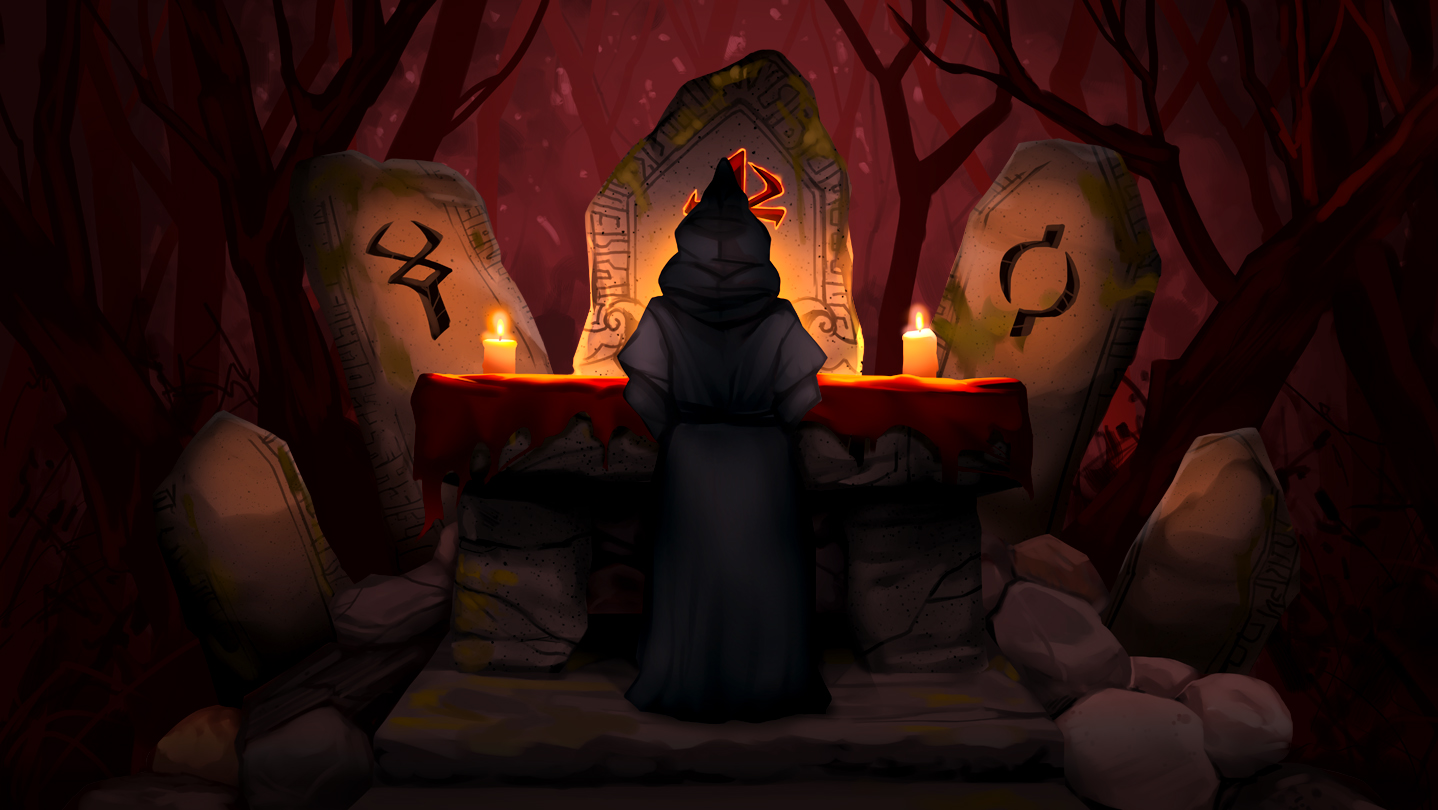
Compara los precios de Wayward en tiendas de claves de confianza y encuentra la mejor oferta. Desarrollado por Unlok. Publicado por Unlok. Lanzado el 22/4/2016. Disponible en PC. Géneros: Adventure, Indie, RPG, Simulation, Early Access.

Wayward is a brutally deep turn-based survival roguelike where every action trains a skill and death means starting over with nothing, no hand-holding, no mercy.

Wayward sits in a strange, comfortable niche between roguelike and hardcore survival sim, and it commits to that identity without apology. It is top-down, turn-based, and set in a procedurally generated wilderness where you arrive with nothing and are expected to figure out the rest. There are no classes. There are no character levels. Instead, every action you perform, chopping wood, hunting animals, crafting tools, eating food, trains a corresponding skill. The more you chop, the better you chop. The more you get mauled by wolves, the more your defensive skills creep upward. It is a system that sounds elegant until you realize it also means your early hours are a prolonged, humbling negotiation with starvation and sharp rocks. The skill system is the heart of Wayward and also its sharpest double edge. On one hand, it produces genuinely organic character progression. A run where you lean into seafaring and fishing produces a fundamentally different survivor than one built around combat and crafting. Build variety is real and it holds up well past the point where most roguelikes start to feel samey. On the other hand, the early game is legitimately punishing in a way that feels less like designed tension and more like the game daring you to read the wiki. The in-game help text exists, but the learning curve is steep enough that first-time players should expect several short, confusing deaths before anything clicks. The crafting and item system is dense in a way RPG tinkerers will find satisfying and casual players will find exhausting. There are hundreds of items, many with layered interactions. Weapon and tool quality matters. Durability matters. Weight matters. The simulation layer running under everything means that the world behaves according to consistent rules you can actually learn and exploit, which is the good kind of complexity. Where Wayward loses points is in its feedback loops: progress can feel slow and opaque, and the absence of quests or narrative structure means motivation is entirely self-generated. If you need a story thread to follow, Wayward will not provide one. If you need a reason to build a better fire pit beyond personal satisfaction, look elsewhere. Visually, the game is functional ASCII-adjacent pixel art that prioritizes information density over beauty. It works. The turn-based structure means there is no reflex pressure, which makes it surprisingly approachable for RPG players who bounced off faster action-survival games. The development has been ongoing for years, and the beta label is honest, not a marketing hedge. Unlok has been consistently updating the game, and the community around it is small but knowledgeable. For an indie survival roguelike with this much systemic depth, that is a meaningful sign of health. Wayward is for players who genuinely enjoy the process of learning a system from the ground up, who find satisfaction in resource loops and organic skill growth, and who do not need narrative scaffolding to stay engaged. It is not for players who want story, guided objectives, or a gentle on-ramp. The 86% positive Steam rating reflects a player base that mostly self-selects into that first camp. If you suspect you belong there, the simulation depth here is legitimate and worth the friction. If you are on the fence, be honest with yourself about whether the phrase "skill-based crafting with no quest log" sounds like a feature or a warning. Monika, Scout Team

Wayward

Wayward

22 abr 2016Unlok
GamerScout opina

Wayward is a brutally deep turn-based survival roguelike where every action trains a skill and death means starting over with nothing, no hand-holding, no mercy.

PC
Steam Deck Playable
Mejor precio disponible
€0.00
en N/A
Mínimo histórico: €1.48

Comparar precios(0 tiendas)

Cargando precios...

We may earn a commission when you buy games through links on this page — at no extra cost to you. It never affects our rankings or verdicts.

Historial de precios

Historical low
€1.4823 Jun 2026
Keyshops
€1.46€1.53€1.60€1.675 Jun11 Jun17 Jun22 Jun28 Jun
Tracking prices since 5 Jun 2026
Create alert

Capturas y multimedia

Acerca de Wayward

Wayward sits in a strange, comfortable niche between roguelike and hardcore survival sim, and it commits to that identity without apology. It is top-down, turn-based, and set in a procedurally generated wilderness where you arrive with nothing and are expected to figure out the rest. There are no classes. There are no character levels. Instead, every action you perform, chopping wood, hunting animals, crafting tools, eating food, trains a corresponding skill. The more you chop, the better you chop. The more you get mauled by wolves, the more your defensive skills creep upward. It is a system that sounds elegant until you realize it also means your early hours are a prolonged, humbling negotiation with starvation and sharp rocks. The skill system is the heart of Wayward and also its sharpest double edge. On one hand, it produces genuinely organic character progression. A run where you lean into seafaring and fishing produces a fundamentally different survivor than one built around combat and crafting. Build variety is real and it holds up well past the point where most roguelikes start to feel samey. On the other hand, the early game is legitimately punishing in a way that feels less like designed tension and more like the game daring you to read the wiki. The in-game help text exists, but the learning curve is steep enough that first-time players should expect several short, confusing deaths before anything clicks. The crafting and item system is dense in a way RPG tinkerers will find satisfying and casual players will find exhausting. There are hundreds of items, many with layered interactions. Weapon and tool quality matters. Durability matters. Weight matters. The simulation layer running under everything means that the world behaves according to consistent rules you can actually learn and exploit, which is the good kind of complexity. Where Wayward loses points is in its feedback loops: progress can feel slow and opaque, and the absence of quests or narrative structure means motivation is entirely self-generated. If you need a story thread to follow, Wayward will not provide one. If you need a reason to build a better fire pit beyond personal satisfaction, look elsewhere. Visually, the game is functional ASCII-adjacent pixel art that prioritizes information density over beauty. It works. The turn-based structure means there is no reflex pressure, which makes it surprisingly approachable for RPG players who bounced off faster action-survival games. The development has been ongoing for years, and the beta label is honest, not a marketing hedge. Unlok has been consistently updating the game, and the community around it is small but knowledgeable. For an indie survival roguelike with this much systemic depth, that is a meaningful sign of health. Wayward is for players who genuinely enjoy the process of learning a system from the ground up, who find satisfaction in resource loops and organic skill growth, and who do not need narrative scaffolding to stay engaged. It is not for players who want story, guided objectives, or a gentle on-ramp. The 86% positive Steam rating reflects a player base that mostly self-selects into that first camp. If you suspect you belong there, the simulation depth here is legitimate and worth the friction. If you are on the fence, be honest with yourself about whether the phrase "skill-based crafting with no quest log" sounds like a feature or a warning.

Monika
Monika · Scout Team

RPGs

Etiquetas

steamTurn-Based SurvivalSkill-Based ProgressionNo ClassesHardcore RoguelikeDeep CraftingProcedural WildernessResource ManagementHigh Learning Curve

Requisitos del sistema

Mínimos

OS
Windows 10, Windows 11
Processor
2.4 GHz dual core or better
Memory
4 GB RAM
Graphics
GPU with WebGL support, 512MB of video memory, and at least 128…

Recomendados

OS
Windows 10, Windows 11
Memory
8 GB RAM
Graphics
GPU with WebGL support, 1GB of video memory, and at least 512 GFLOPS.

Sigue explorando

Community Discussion

Be the first to comment on Wayward.

Reseñas y valoraciones

Steam
86%(1,356)

Información del juego

Desarrolladora
Unlok
Distribuidora
Unlok
Fecha de lanzamiento
22 abr 2016

Alerta de precio

¡Recibe un aviso cuando el precio baje de tu objetivo!

Crear alerta

Compra mejor: guías útiles

¿Buscas más? Mira juegos como Wayward →

Preguntas frecuentes sobre Wayward

¿Cuánto cuesta Wayward?

El precio de Wayward cambia a menudo y varía según la tienda, la edición y la región. La tabla de precios en vivo de esta página compara las ofertas más baratas en stock de tiendas de claves de confianza como Eneba y Kinguin, para que siempre veas el precio más bajo actual antes de comprar.

¿Dónde puedo comprar Wayward más barato?

Compara los precios de Wayward en todas las tiendas verificadas en la tabla de precios de esta página. Listamos las ofertas de claves y tiendas más baratas en stock, actualizadas con frecuencia, para que siempre veas la mejor oferta actual antes de comprar.

¿En qué plataformas está disponible Wayward?

Wayward está disponible en PC.

¿Cuándo se lanzó Wayward?

Wayward se lanzó el 22 de abril de 2016.

¿Quién desarrolló Wayward?

Wayward fue desarrollado por Unlok.