Compara los precios de The 7th Circle - Endless Nightmare en tiendas de claves de confianza y encuentra la mejor oferta. Desarrollado por 68k Studios. Publicado por Gamera Interactive. Lanzado el 10/9/2018. Disponible en PC, Mac, Linux. Géneros: RPG.

Permadeath, grid-based corridors, and a gore-soaked subconscious: a solo dungeon crawler that bites hard in its first few floors and then slowly loses its teeth. Worth a look for old-school diehards, cautiously.

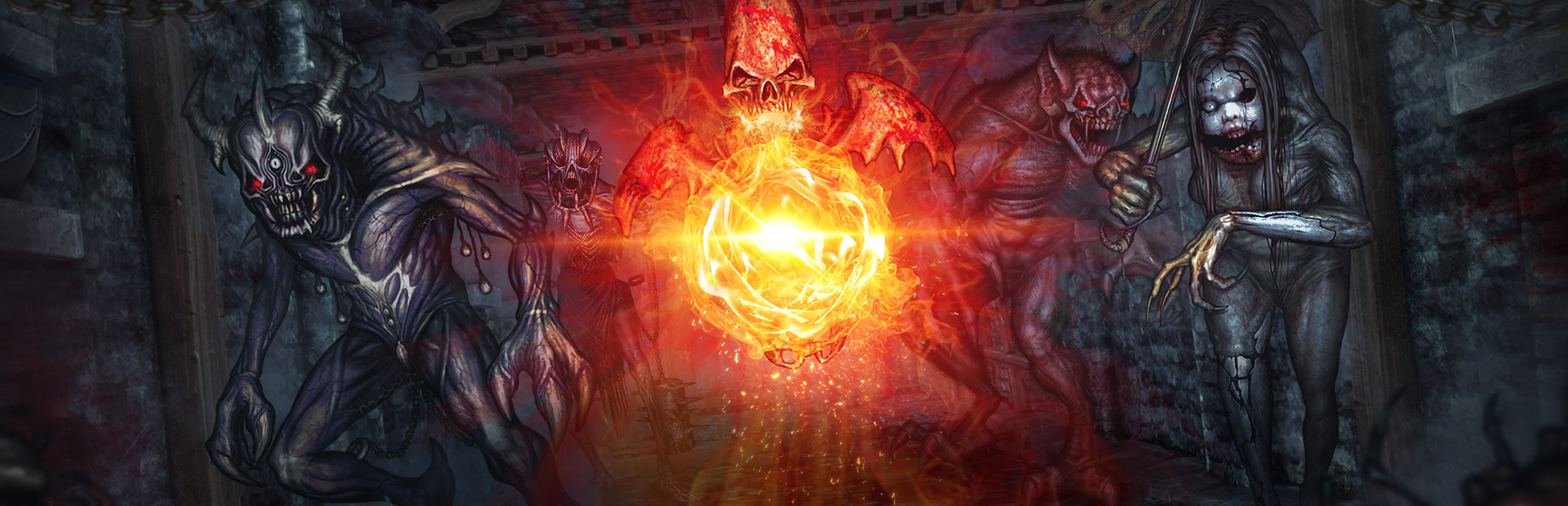
My first few hours with The 7th Circle felt like finding a half-forgotten Amiga game at the back of a drawer - rough around the edges, strangely confident, and way more interesting than it had any right to be. You build a single "Alter Ego" from scratch, picking classes like Soldier, Rogue, or Summoner, then spend the rest of your run distributing stat points into attributes that govern everything from stamina drain per swing to your success rate when typing in one of the game's 60-plus spells. Yes, typing. To cast magic you press a key, enter a four-letter sequence, and confirm. It is exactly as old-school as it sounds, and for a certain kind of player that framing is catnip. The combat system is the game's most divisive element, and honestly the community feedback reflects that split. Exploration follows first-person grid movement - tiles, walls, hidden buttons, teleporters - but every fight rips you out of the dungeon into a separate turn-based encounter screen. Think less Grimrock, more Dragon Quest, then add a positional distance mechanic where closing the gap on a ranged enemy or avoiding combat traps changes your action economy. Melee builds can lean into a combo rush that, when it lands an overkill, is genuinely satisfying. Spellcasters have to budget their Specific Magic Skill stat carefully, because botched casts are a very real punishment. The stat-driven debuff and buff durations, mana regen rates, and bleeding effects give the system more texture than a first look suggests. Where the game stumbles is a difficulty curve that bends sharply in the player's favour once a build hits its stride. By the mid-floors of the dungeon, a melee character with the right perks and a couple of the collectible magic Skulls (hidden relics scattered across levels) can one-shot most enemies without breaking a sweat. A game that opens with genuine tension - the Scarlet Tide mechanic gives you only 12 moon phases per floor before it floods the level and cuts your rest recovery rate - gradually softens into a repetitive march through corridors. Players who love optimising and extracting every advantage from a permadeath loop will find the run-to-run inheritance system compelling: resources and unlocks pass between Alter Egos, so even a death carries forward progress. But players hoping for escalating strategic challenge past floor 8 may find the tension they paid for has quietly left the building. The atmosphere, to its credit, does not quit. The horror-tinged art, the creepy dungeon tone, and the sound design all punch above the budget. There is a genuinely unsettling premise underneath the numbers - each Alter Ego is a fragment of your subconscious descending into psychological darkness - and the world-mix of medieval weapons, strange demons, and out-of-time elements gives the whole thing an eerie, uncategorisable feel. The Forgotten Limbo endless roguelike mode and the Inferno post-game difficulty add replay hooks. Crafting medicines, upgrading weapons with scrap, and managing consumables give sessions a light survival texture that fits the tone well. It is a one-developer passion project, and that ambition is visible in every slightly-rough menu and every corner of lore. If you are an old-school dungeon crawler fan who can forgive a mid-game power plateau and an unconventional turn-based screen, there is real soul here. If you need your combat to stay interesting across 19 floors, the tension tapers off faster than the level count. Monika, Scout Team

The 7th Circle - Endless Nightmare

The 7th Circle - Endless Nightmare

10 sept 201868k StudiosGamera Interactive
GamerScout opina

Permadeath, grid-based corridors, and a gore-soaked subconscious: a solo dungeon crawler that bites hard in its first few floors and then slowly loses its teeth. Worth a look for old-school diehards, cautiously.

PCMacLinux
Mejor precio disponible
€0.00
en N/A
Mínimo histórico: €3.25

Comparar precios(0 tiendas)

Cargando precios...

We may earn a commission when you buy games through links on this page — at no extra cost to you. It never affects our rankings or verdicts.

Historial de precios

Historical low
€3.255 Jun 2026
Keyshops
€2.99€3.16€3.34€3.515 Jun11 Jun17 Jun22 Jun28 Jun
Tracking prices since 5 Jun 2026
Create alert

Capturas y multimedia

Acerca de The 7th Circle - Endless Nightmare

My first few hours with The 7th Circle felt like finding a half-forgotten Amiga game at the back of a drawer - rough around the edges, strangely confident, and way more interesting than it had any right to be. You build a single "Alter Ego" from scratch, picking classes like Soldier, Rogue, or Summoner, then spend the rest of your run distributing stat points into attributes that govern everything from stamina drain per swing to your success rate when typing in one of the game's 60-plus spells. Yes, typing. To cast magic you press a key, enter a four-letter sequence, and confirm. It is exactly as old-school as it sounds, and for a certain kind of player that framing is catnip. The combat system is the game's most divisive element, and honestly the community feedback reflects that split. Exploration follows first-person grid movement - tiles, walls, hidden buttons, teleporters - but every fight rips you out of the dungeon into a separate turn-based encounter screen. Think less Grimrock, more Dragon Quest, then add a positional distance mechanic where closing the gap on a ranged enemy or avoiding combat traps changes your action economy. Melee builds can lean into a combo rush that, when it lands an overkill, is genuinely satisfying. Spellcasters have to budget their Specific Magic Skill stat carefully, because botched casts are a very real punishment. The stat-driven debuff and buff durations, mana regen rates, and bleeding effects give the system more texture than a first look suggests. Where the game stumbles is a difficulty curve that bends sharply in the player's favour once a build hits its stride. By the mid-floors of the dungeon, a melee character with the right perks and a couple of the collectible magic Skulls (hidden relics scattered across levels) can one-shot most enemies without breaking a sweat. A game that opens with genuine tension - the Scarlet Tide mechanic gives you only 12 moon phases per floor before it floods the level and cuts your rest recovery rate - gradually softens into a repetitive march through corridors. Players who love optimising and extracting every advantage from a permadeath loop will find the run-to-run inheritance system compelling: resources and unlocks pass between Alter Egos, so even a death carries forward progress. But players hoping for escalating strategic challenge past floor 8 may find the tension they paid for has quietly left the building. The atmosphere, to its credit, does not quit. The horror-tinged art, the creepy dungeon tone, and the sound design all punch above the budget. There is a genuinely unsettling premise underneath the numbers - each Alter Ego is a fragment of your subconscious descending into psychological darkness - and the world-mix of medieval weapons, strange demons, and out-of-time elements gives the whole thing an eerie, uncategorisable feel. The Forgotten Limbo endless roguelike mode and the Inferno post-game difficulty add replay hooks. Crafting medicines, upgrading weapons with scrap, and managing consumables give sessions a light survival texture that fits the tone well. It is a one-developer passion project, and that ambition is visible in every slightly-rough menu and every corner of lore. If you are an old-school dungeon crawler fan who can forgive a mid-game power plateau and an unconventional turn-based screen, there is real soul here. If you need your combat to stay interesting across 19 floors, the tension tapers off faster than the level count.

Monika
Monika · Scout Team

RPGs

Etiquetas

singleplayertier:sub-5PermadeathGrid-Based Dungeon CrawlerRun InheritanceSolo Character BuildSpell Typing SystemHorror AtmosphereRoguelite ElementsInferno Mode

Requisitos del sistema

Mínimos

OS
Windows 7
Memory
2 GB RAM
DirectX
Version 9.0
Storage
700 MB available space
Graphics
ATI Radeon HD 5850 or better
Processor
Dual Core 2GHz
Sound Card
DirectX 9.0c compatible

Sigue explorando

Community Discussion

Be the first to comment on The 7th Circle - Endless Nightmare.

Reseñas y valoraciones

No hay valoraciones disponibles

Información del juego

Desarrolladora
68k Studios
Distribuidora
Gamera Interactive
Fecha de lanzamiento
10 sept 2018

Alerta de precio

¡Recibe un aviso cuando el precio baje de tu objetivo!

Crear alerta

Más de 68k Studios

Compra mejor: guías útiles

Preguntas frecuentes sobre The 7th Circle - Endless Nightmare

¿Cuánto cuesta The 7th Circle - Endless Nightmare?

El precio de The 7th Circle - Endless Nightmare cambia a menudo y varía según la tienda, la edición y la región. La tabla de precios en vivo de esta página compara las ofertas más baratas en stock de tiendas de claves de confianza como Eneba y Kinguin, para que siempre veas el precio más bajo actual antes de comprar.

¿Dónde puedo comprar The 7th Circle - Endless Nightmare más barato?

Compara los precios de The 7th Circle - Endless Nightmare en todas las tiendas verificadas en la tabla de precios de esta página. Listamos las ofertas de claves y tiendas más baratas en stock, actualizadas con frecuencia, para que siempre veas la mejor oferta actual antes de comprar.

¿En qué plataformas está disponible The 7th Circle - Endless Nightmare?

The 7th Circle - Endless Nightmare está disponible en PC, Mac, Linux.

¿Cuándo se lanzó The 7th Circle - Endless Nightmare?

The 7th Circle - Endless Nightmare se lanzó el 10 de septiembre de 2018.

¿Quién desarrolló The 7th Circle - Endless Nightmare?

The 7th Circle - Endless Nightmare fue desarrollado por 68k Studios y publicado por Gamera Interactive.