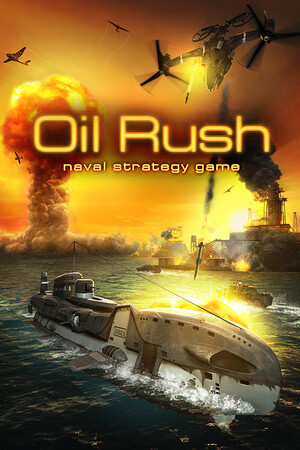
Compara los precios de Oil Rush en tiendas de claves de confianza y encuentra la mejor oferta. Desarrollado por Unigine Corp.. Publicado por Unigine Corp.. Lanzado el 25/1/2012. Disponible en PC, Mac, Linux. Géneros: Indie, Strategy. Puntuación Metacritic: 67/100.

A flooded-world RTS that ditches unit micromanagement for group-order tactics - genuinely different concept, thin online population, and a dead multiplayer scene that undercuts the whole point.

I came into Oil Rush expecting a gimmick dressed up in pretty water effects - Unigine Corp. is best known for their Heaven GPU benchmark, so a game from them always felt like tech demo first, design second. Turns out the game has more going on under the hood than that reputation suggests, though not enough to fully escape it. The core loop is a hybrid of RTS and tower defense set across a flooded post-apocalyptic world where every surviving faction is fighting over oil rigs. You do not control individual units. Instead, you send 25%, 50%, or 100% of the forces sitting on a platform toward a target, they transit across the water autonomously, and you deal with the result. Platforms auto-generate naval and air units up to a cap, and you spend oil - earned from captured rigs and storage facilities - to build up to five turret types around each platform, research technologies from a tech tree, and eventually unlock super-weapons like nukes, napalm strikes, submarines, and convertiplane call-ins. The rhythm is: expand fast, secure oil, fortify what you can afford to fortify, and pick your moments to commit overwhelming force. Destructoid called it "easy to learn, hard to master" and that is about right for the first eight hours. After that, the seams show. The strategic ceiling is lower than it looks. Because you cannot reroute a fleet mid-transit, you cannot close off lanes or set up flanking traps the way a proper RTS lets you. The AI in the 16-mission campaign is pushy but readable, and once you figure out the nuke timing - the AI has access to it constantly in skirmish - you stop being surprised. The campaign also suffers from weak voice acting, grammatical rough patches, and a story that does its job of introducing mechanics but not much else. Optimization was a reported issue at launch, with framerate dips during heavy fire sequences, and the console-style control layout drew criticism from PC players who felt the UI was tuned for a gamepad. These are old wounds on a 2012 game, worth flagging without over-dwelling on them. Where Oil Rush actually comes alive is in multiplayer, up to four players across 15 maps with varied terrain gimmicks - a map with no air units, an arctic maze that punishes large fleet movements, two-player scenarios where oil nodes sit in protected coves. The problem is finding a lobby. The online community has been sparse since launch and is effectively ghost-town territory now. If you have two or three friends willing to buy in together, there are genuinely tense games to be had - stealing a production platform while your opponent's fleet is committed elsewhere, or catching a rallied enemy mob with a nuke - but the matchmaking system is barebones and you will not find random games on demand. For the shooter-brained crowd who usually want fast reflexes and responsive netcode, Oil Rush is a different kind of game entirely. There is no aim, no TTK, no movement tech to grind. What it offers is a compact, accessible strategy experience that respects your time (most matches run 20-40 minutes), looks genuinely good for its age thanks to the Unigine engine, and scratches a casual RTS itch without demanding a wiki. The mixed Steam reception (58% positive across over 500 reviews) and a Metacritic score of 67 are accurate enough signals: this is a solid budget-tier concept that ran out of depth before it ran out of content, and whose best feature - PvP multiplayer - requires friends or luck to access in 2025. Fred, Scout Team

Oil Rush

Oil Rush

25 ene 2012Unigine Corp.
GamerScout opina

A flooded-world RTS that ditches unit micromanagement for group-order tactics - genuinely different concept, thin online population, and a dead multiplayer scene that undercuts the whole point.

PCMacLinux
Mejor precio disponible
€0.00
en N/A
Mínimo histórico: €0.54

Comparar precios(0 tiendas)

Cargando precios...

We may earn a commission when you buy games through links on this page — at no extra cost to you. It never affects our rankings or verdicts.

Historial de precios

Historical low
€0.5423 Jun 2026
Keyshops
€0.50€0.63€0.76€0.895 Jun11 Jun17 Jun22 Jun28 Jun
Tracking prices since 5 Jun 2026
Create alert

Capturas y multimedia

Acerca de Oil Rush

I came into Oil Rush expecting a gimmick dressed up in pretty water effects - Unigine Corp. is best known for their Heaven GPU benchmark, so a game from them always felt like tech demo first, design second. Turns out the game has more going on under the hood than that reputation suggests, though not enough to fully escape it. The core loop is a hybrid of RTS and tower defense set across a flooded post-apocalyptic world where every surviving faction is fighting over oil rigs. You do not control individual units. Instead, you send 25%, 50%, or 100% of the forces sitting on a platform toward a target, they transit across the water autonomously, and you deal with the result. Platforms auto-generate naval and air units up to a cap, and you spend oil - earned from captured rigs and storage facilities - to build up to five turret types around each platform, research technologies from a tech tree, and eventually unlock super-weapons like nukes, napalm strikes, submarines, and convertiplane call-ins. The rhythm is: expand fast, secure oil, fortify what you can afford to fortify, and pick your moments to commit overwhelming force. Destructoid called it "easy to learn, hard to master" and that is about right for the first eight hours. After that, the seams show. The strategic ceiling is lower than it looks. Because you cannot reroute a fleet mid-transit, you cannot close off lanes or set up flanking traps the way a proper RTS lets you. The AI in the 16-mission campaign is pushy but readable, and once you figure out the nuke timing - the AI has access to it constantly in skirmish - you stop being surprised. The campaign also suffers from weak voice acting, grammatical rough patches, and a story that does its job of introducing mechanics but not much else. Optimization was a reported issue at launch, with framerate dips during heavy fire sequences, and the console-style control layout drew criticism from PC players who felt the UI was tuned for a gamepad. These are old wounds on a 2012 game, worth flagging without over-dwelling on them. Where Oil Rush actually comes alive is in multiplayer, up to four players across 15 maps with varied terrain gimmicks - a map with no air units, an arctic maze that punishes large fleet movements, two-player scenarios where oil nodes sit in protected coves. The problem is finding a lobby. The online community has been sparse since launch and is effectively ghost-town territory now. If you have two or three friends willing to buy in together, there are genuinely tense games to be had - stealing a production platform while your opponent's fleet is committed elsewhere, or catching a rallied enemy mob with a nuke - but the matchmaking system is barebones and you will not find random games on demand. For the shooter-brained crowd who usually want fast reflexes and responsive netcode, Oil Rush is a different kind of game entirely. There is no aim, no TTK, no movement tech to grind. What it offers is a compact, accessible strategy experience that respects your time (most matches run 20-40 minutes), looks genuinely good for its age thanks to the Unigine engine, and scratches a casual RTS itch without demanding a wiki. The mixed Steam reception (58% positive across over 500 reviews) and a Metacritic score of 67 are accurate enough signals: this is a solid budget-tier concept that ran out of depth before it ran out of content, and whose best feature - PvP multiplayer - requires friends or luck to access in 2025.

Fred
Fred · Scout Team

Shooters

Etiquetas

singleplayermultiplayerpvponline-pvpcross-platformachievementscloud-savestier:indieTower-Defense HybridGroup-Order ControlPost-Apocalyptic NavalTech Tree ProgressionFriend-Required MultiplayerNo Unit MicroSkirmish ModeCross-Platform PvP

Requisitos del sistema

Mínimos

OS
XP
Memory
1 GB RAM
Graphics
NVIDIA 9600 256 MB or Intel HD 4000
Processor
2 GHz
Hard Drive
3 GB HD space

Recomendados

OS
7
Memory
2 GB RAM
Graphics
NVIDIA GTX 460 512 MB
Processor
2.5 GHz dual-core (Intel)
Hard Drive
3 GB HD space
Other Requirements
Broadband Internet connection

Sigue explorando

Community Discussion

Be the first to comment on Oil Rush.

Reseñas y valoraciones

Metacritic
67

Información del juego

Desarrolladora
Unigine Corp.
Distribuidora
Unigine Corp.
Fecha de lanzamiento
25 ene 2012

Alerta de precio

¡Recibe un aviso cuando el precio baje de tu objetivo!

Crear alerta

Compra mejor: guías útiles

¿Buscas más? Mira juegos como Oil Rush →

Preguntas frecuentes sobre Oil Rush

¿Cuánto cuesta Oil Rush?

El precio de Oil Rush cambia a menudo y varía según la tienda, la edición y la región. La tabla de precios en vivo de esta página compara las ofertas más baratas en stock de tiendas de claves de confianza como Eneba y Kinguin, para que siempre veas el precio más bajo actual antes de comprar.

¿Dónde puedo comprar Oil Rush más barato?

Compara los precios de Oil Rush en todas las tiendas verificadas en la tabla de precios de esta página. Listamos las ofertas de claves y tiendas más baratas en stock, actualizadas con frecuencia, para que siempre veas la mejor oferta actual antes de comprar.

¿En qué plataformas está disponible Oil Rush?

Oil Rush está disponible en PC, Mac, Linux.

¿Cuándo se lanzó Oil Rush?

Oil Rush se lanzó el 25 de enero de 2012.

¿Quién desarrolló Oil Rush?

Oil Rush fue desarrollado por Unigine Corp..

¿Merece la pena comprar Oil Rush?

Oil Rush tiene una puntuación Metacritic de 67/100, lo que lo convierte en uno de los títulos destacados de Indie. Mira las reseñas completas, las valoraciones y los tiempos de duración en esta página para decidir.